
In the advancement of mechanical and aerospace industries, the demand for high-quality, thin-walled, and complex aluminum alloy shell castings has significantly increased. These shell castings are often characterized by intricate geometries, thin sections, and stringent requirements for surface finish, dimensional accuracy, and internal integrity. Traditional casting methods such as sand casting, die casting, or low-pressure casting may face limitations in achieving the desired precision and surface quality, especially for parts with wall thicknesses as low as 2.5 mm. This led me to explore investment casting as a viable solution, despite its perceived challenges with aluminum alloys, such as difficulty in core removal and susceptibility to porosity. Through systematic process optimization, including the use of counter-deformation measures, composite shell systems, and pressure-assisted solidification, I successfully produced aluminum alloy shell castings that meet Grade 1 porosity levels and a surface roughness of Ra 3.2 μm. This article details my first-person perspective on the methodologies, controls, and innovations that enabled this achievement, with a focus on enhancing the quality of shell castings through investment casting.
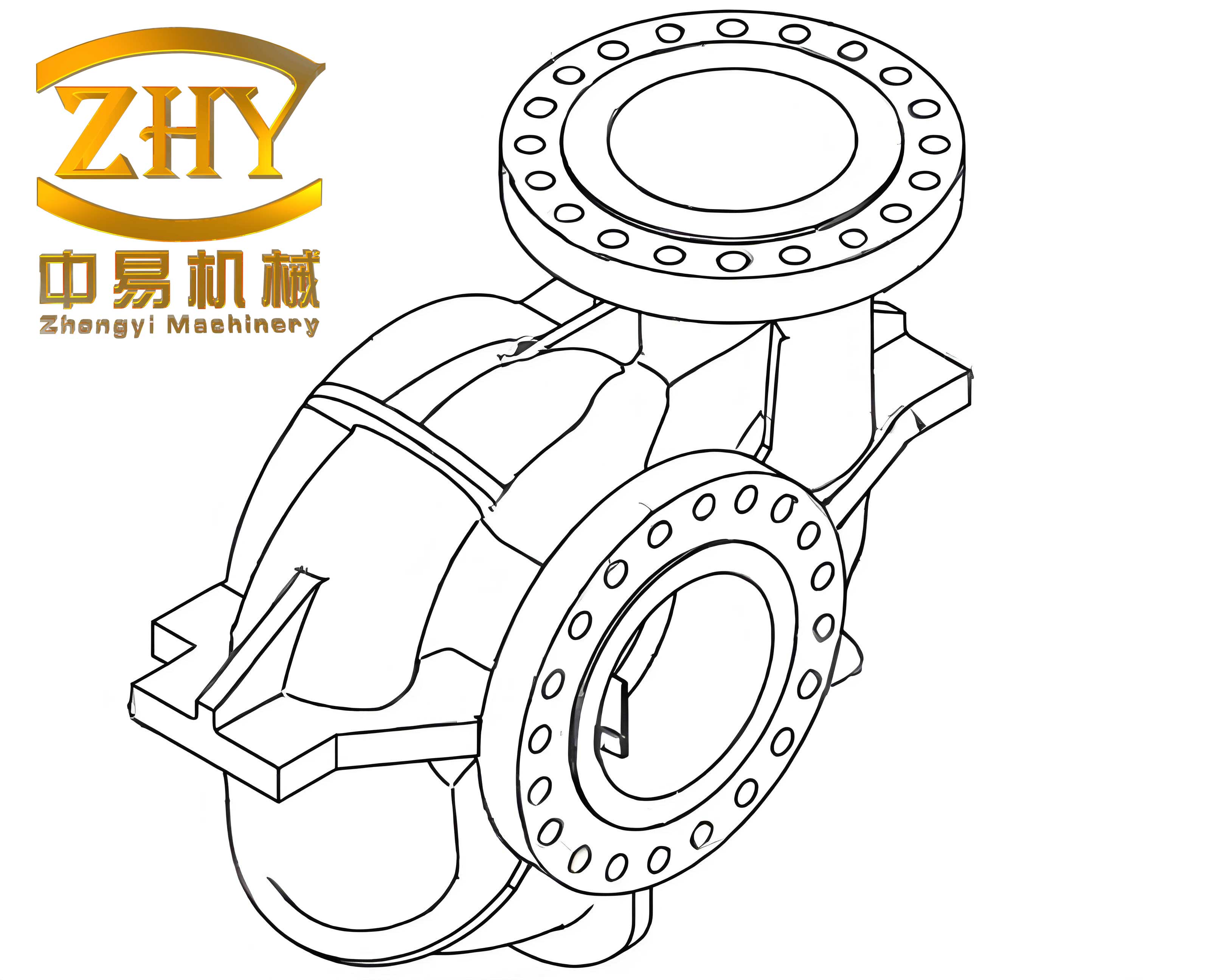
The core of this work revolves around the investment casting process, which involves creating a wax pattern, building a ceramic shell around it, dewaxing, and then pouring molten metal. For thin-walled aluminum alloy shell castings, the process requires meticulous attention to detail to prevent defects like shrinkage, porosity, and distortion. My initial challenge was to design a gating and feeding system that ensures complete filling and adequate feeding for these delicate shell castings. I evaluated four different gating schemes, as summarized in the table below, to determine the optimal configuration for minimizing defects in shell castings.
| Gating Scheme | Description | Shrinkage Size | Surface Roughness (Ra, μm) | Porosity Grade |
|---|---|---|---|---|
| Scheme 1 | Side gating with slit runners + two open risers | Large | 12.5 | 3 |
| Scheme 2 | Top gating + annular riser | Large | 12.5 | 4 |
| Scheme 3 | Side gating with slit runners + annular riser | Very small | 3.2 | 3 |
| Scheme 4 | Side gating + two heightened open risers | Small | 3.2 | 3 |
From this comparison, Scheme 3 emerged as the most promising for shell castings, offering minimal shrinkage and good surface finish. However, porosity remained at Grade 3, which was insufficient for the required Grade 2 specification. To further enhance feeding, I experimented with increasing riser height and using insulated risers combined with alumina-silica fiber covers. The latter proved more efficient, as it reduced wax consumption and improved shell coating operations. Ultimately, I adopted a side gating system with slit runners, an annular insulated riser, and fiber coverage, along with a filter to trap oxides and inclusions. This setup improved porosity to Grade 3, but further refinement was needed to achieve Grade 1 for high-integrity shell castings.
Porosity in aluminum alloy shell castings is often driven by hydrogen entrapment during solidification. The relationship between pressure and hydrogen solubility can be described by Sieverts’ law: $$ C_H = K_H \sqrt{P_{H_2}} $$ where \( C_H \) is the hydrogen concentration, \( K_H \) is the solubility constant, and \( P_{H_2} \) is the partial pressure of hydrogen. By applying external pressure during solidification, the effective \( P_{H_2} \) increases, reducing gas pore formation. To leverage this, I conducted trials with different solidification pressures, leading to the following results for shell castings:
| Solidification Pressure (MPa) | Porosity Grade Achieved | Surface Roughness (Ra, μm) |
|---|---|---|
| 0.3 | 3 | 3.2 |
| 0.5 | 2 | 3.2 |
| 0.7 | 1 | 3.2 |
Thus, I established a final process of pouring into a preheated shell at 750°C under atmospheric conditions, followed by immediate pressurization to 0.7 MPa in an autoclave for solidification. This pressure-assisted solidification was pivotal in eliminating micropores and achieving Grade 1 porosity in the aluminum alloy shell castings. The improvement can be modeled by considering the pressure effect on pore nucleation: $$ r_c = \frac{2\gamma}{P_{ext} – P_i} $$ where \( r_c \) is the critical pore radius for nucleation, \( \gamma \) is the surface tension, \( P_{ext} \) is the external pressure, and \( P_i \) is the internal gas pressure. Higher \( P_{ext} \) suppresses pore formation, enhancing densification in shell castings.
Another critical aspect was preventing distortion in these thin-walled shell castings during wax pattern fabrication and heat treatment. The wax injection process often led to uneven shrinkage, particularly in thicker sections. To compensate, I implemented a counter-deformation strategy by pre-distorting the wax pattern in the opposite direction of expected shrinkage. This involved modifying the pattern geometry based on empirical data, as illustrated by adjusting dimensions by 0.5–1.0 mm in specific areas. Additionally, for the thin-walled tubular sections prone to warping during solidification and heat treatment, I incorporated reinforcing ribs into the wax pattern design. These ribs provided temporary support until removal post-casting, ensuring dimensional stability in the final shell castings. The effectiveness of counter-deformation can be quantified by the reduction in dimensional deviation: $$ \Delta D = D_{nominal} – D_{actual} $$ where \( \Delta D \) approaches zero with proper compensation, confirming the precision achievable for shell castings.
The shell-building process also required optimization to enhance permeability and reduce cleaning difficulty. I employed a composite shell system where the first two layers followed standard investment casting practices, but from the third layer onward, I used a blend of chamotte and high-alumina sand with optimized grain size distribution. This composite mix minimized shell distortion during firing due to reduced thermal expansion mismatch. The slurry formulation included a surfactant (OT) and modified starch (2.5–4% of refractory weight) to improve rheology and green strength. After mixing at 750 rpm for 20 minutes and aging for 2 hours, the slurry was continuously agitated in an L-type mixer at 38–42 rpm. The shell was built up to 7 layers, dried at 25–32°C with 45–55% relative humidity, and then dewaxed using steam. This composite shell exhibited higher permeability, facilitating easier removal and reducing damage during knockout, which is crucial for delicate shell castings.
Wax pattern production involved using urea cores for internal cavities. The wax injection parameters were controlled at 0.45–0.5 MPa air pressure, with wax temperature maintained at 45°C and a hold time of 210 seconds. After assembly and gating, the patterns were cleaned and coated. For melting, I used a resistance crucible furnace with ZL114A aluminum alloy (equivalent to GB1173-95). The charge was melted, and at 680–700°C, magnesium was added. Refining was done at 710–720°C with 0.45% hexachloroethane for 8–10 minutes, followed by slag removal and modification at 750–780°C. The pouring was conducted into shells preheated to 750°C, and immediately after, the autoclave was sealed and pressurized to 0.7 MPa for 30 minutes. This rapid pressurization ensured that the entire solidification occurred under pressure, key to achieving dense shell castings.
Heat treatment played a vital role in attaining the required mechanical properties. The shell castings were subjected to T6 treatment: solutionizing at 540°C with a heating rate of 4–5°C/min, holding for 2 hours, quenching in water at 70–80°C within 12 seconds, and then artificial aging at 160°C for 4 hours followed by air cooling. The quench transfer time was critical to prevent precipitation and ensure supersaturation, as described by the Avrami equation for phase transformation: $$ f = 1 – \exp(-kt^n) $$ where \( f \) is the transformed fraction, \( k \) is a rate constant, and \( n \) is the Avrami exponent. Controlling this process minimized distortion and maximized strength in the shell castings.
Quality assessment confirmed the success of the process. Chemical analysis of test bars showed compliance with GB1173-95: 6.6% Si, 0.45% Mg, 0.14% Fe, 0.16% Ti, 0.014% Zr, Mn < 0.01%. Mechanical testing on a CCS-1120 electronic universal testing machine yielded: $$ \sigma_b = 300 \text{ MPa}, \quad \delta_5 = 3.5\%, \quad HBS = 102 $$ These meet the standard requirements for aluminum alloy shell castings. X-ray inspection using an XXQ2005 system at 130 kV, 5 mA, 3 min exposure, and 1.8 m distance revealed no internal defects, with porosity consistently at Grade 1 across 35 shell castings produced. Surface roughness measured Ra 3.2 μm, exceeding the initial Ra 6.3 μm specification. The table below summarizes the key quality metrics for the shell castings:
| Property | Specification | Achieved Value |
|---|---|---|
| Porosity Grade | ≤ Grade 2 | Grade 1 |
| Surface Roughness (Ra) | ≤ 6.3 μm | 3.2 μm |
| Tensile Strength (σ_b) | Per GB1173-95 | 300 MPa |
| Elongation (δ_5) | Per GB1173-95 | 3.5% |
| Hardness (HBS) | Per GB1173-95 | 102 |
In conclusion, the investment casting of thin-walled aluminum alloy shell castings can be optimized through a combination of advanced techniques. The use of pressure-assisted solidification at 0.7 MPa effectively eliminates porosity, achieving Grade 1 quality in shell castings. Counter-deformation measures ensure dimensional accuracy, while composite shell systems enhance permeability and simplify cleaning. The integration of insulated risers, proper gating design, and controlled heat treatment further contributes to the superior mechanical and surface properties of these shell castings. This holistic approach demonstrates that investment casting is not only feasible but highly effective for producing high-integrity aluminum alloy shell castings, meeting the rigorous demands of modern industries. Future work could explore further refinements, such as numerical simulation of solidification under pressure or advanced shell materials, to push the boundaries of what is possible with shell castings.
Throughout this endeavor, the focus remained on enhancing every aspect of the process to yield flawless shell castings. The success underscores the importance of tailored solutions in investment casting, particularly for challenging applications like thin-walled aluminum alloy shell castings. By continuously iterating on design and process parameters, I believe that even more complex and lightweight shell castings can be reliably manufactured, opening new avenues for innovation in aerospace and beyond.