
In the field of advanced manufacturing, squeeze casting has emerged as a pivotal technique for producing high-integrity metal components, particularly for applications requiring superior mechanical properties and minimal defects. Among these, shell castings—such as those used in defense, aerospace, and automotive sectors—demand precise control over microstructure and performance to withstand rigorous operational conditions. This study focuses on optimizing the indirect squeeze casting process for aluminum alloy shell castings, specifically targeting components like mine casings, which require a balance of strength, ductility, and reliability. Through a series of experiments, we investigate the effects of key process parameters—specific pressure, pouring temperature, and pressure holding time—on the microstructural evolution and mechanical properties of ZAlSi7Mg aluminum alloy. The goal is to establish a robust process-structure-property relationship, enabling the controlled production of high-quality shell castings with enhanced performance. This research contributes to the broader understanding of indirect squeeze casting, offering insights that can be applied to various aluminum alloy systems for critical shell casting applications.
Indirect squeeze casting, also known as liquid forging, involves filling a mold with molten metal under pressure and maintaining that pressure during solidification. This method significantly reduces porosity, shrinkage, and other defects common in traditional casting processes, leading to denser and more uniform microstructures. For shell castings, which often feature complex geometries and thin-walled sections, indirect squeeze casting is particularly advantageous as it improves fluidity, reduces hot tearing, and enhances the overall integrity of the final component. The ZAlSi7Mg aluminum alloy, known for its excellent castability, good fluidity, and moderate strength, is widely used in such applications. However, achieving optimal properties requires careful optimization of process parameters, as they directly influence solidification behavior, grain refinement, and defect formation. In this work, we employ a multifunctional liquid forming machine to produce diaphragm components for mine shells, systematically varying parameters to identify the ideal conditions for superior shell castings.
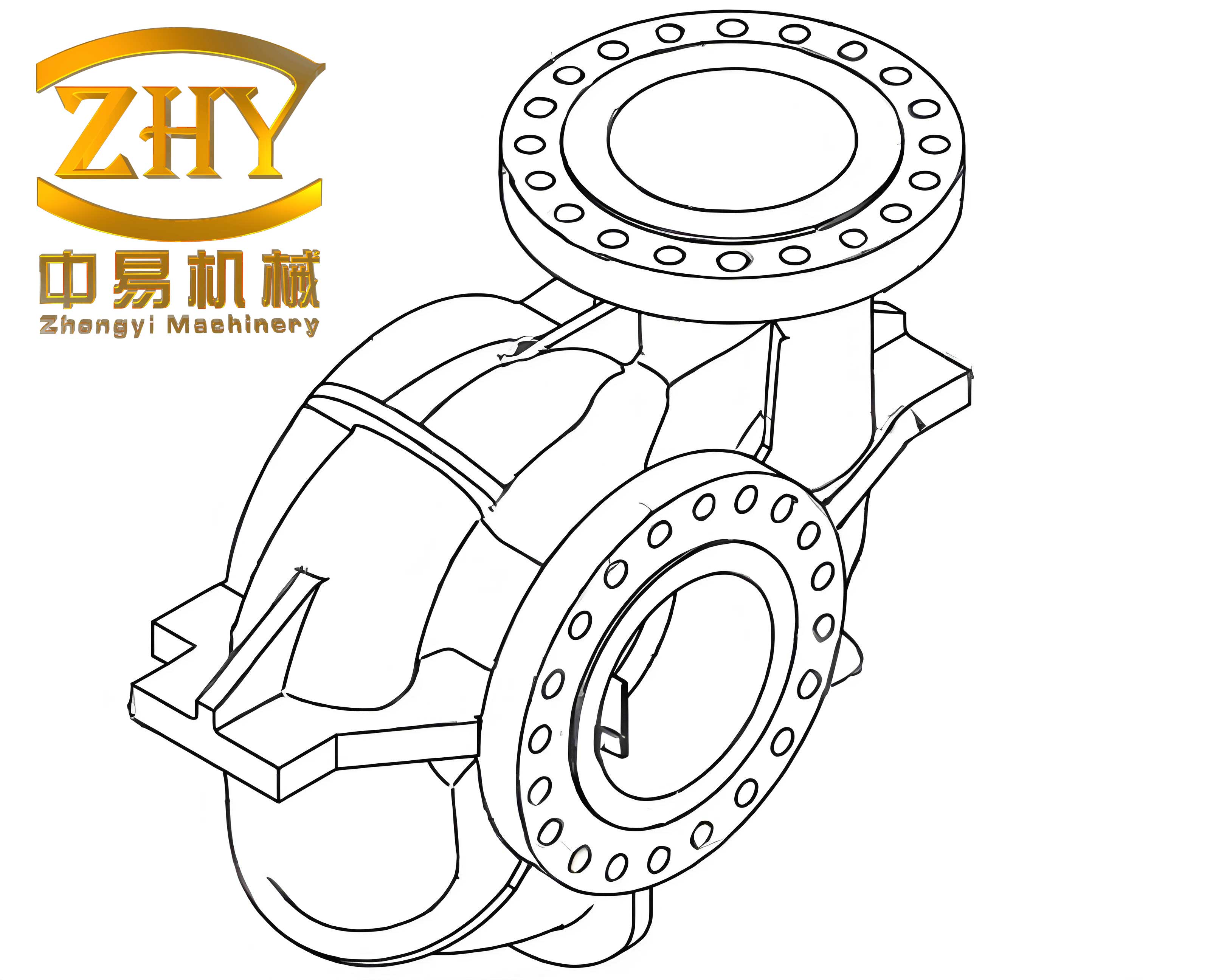
The experimental setup utilized a SHP34-500A multifunctional liquid forming machine, capable of precise control over pressure and temperature. The mold, constructed from H13 steel, was designed to produce diaphragm components with dimensions typical of mine shell castings. The mold temperature was maintained at 260°C using a mold temperature controller to ensure consistent thermal conditions. The ZAlSi7Mg aluminum alloy, with a nominal composition as shown in Table 1, was melted in a medium-frequency furnace, refined using C2Cl6 for degassing and slag removal, and then held at the desired pouring temperature. The molten metal was poured into the mold, after which the indirect squeeze casting process was initiated, involving rapid closure of the mold and application of specific pressure through a hydraulic system. The process parameters were varied according to a controlled experimental design, as summarized in Table 2. Each parameter set was replicated to ensure statistical reliability, and samples were extracted from the castings for microstructural and mechanical analysis.
| Si | Mg | Fe | Cu | Mn | Zn | Ti | Al |
|---|---|---|---|---|---|---|---|
| 7.5 | 0.28 | 0.16 | 0.20 | 0.04 | 0.01 | 0.03 | Balance |
| Parameter | Levels |
|---|---|
| Specific Pressure (MPa) | 110, 120, 130 |
| Pouring Temperature (°C) | 700, 720, 740 |
| Pressure Holding Time (s) | 15, 20, 25 |
The microstructural analysis was conducted using optical microscopy and scanning electron microscopy (SEM). Samples were sectioned from the castings, polished, and etched to reveal the grain structure and phase distribution. The average grain size was measured using image analysis software, with at least 50 grains counted per sample to ensure accuracy. Mechanical properties were evaluated through tensile testing, using standard specimens machined from the casting bodies, as per the dimensions shown in a schematic diagram (not included to avoid referencing specific figures). Tensile tests were performed at room temperature with a loading rate of 1.0 mm/min, and the yield strength, ultimate tensile strength, and elongation were recorded. Additionally, Vickers hardness tests were conducted under a load of 500 N for 15 seconds. To assess the effect of heat treatment, selected samples were subjected to a T6 treatment: solution treatment at 535°C for 6 hours, followed by quenching in water at 70°C (with a transfer time of less than 10 seconds), and artificial aging at 185°C for 6 hours. The fracture surfaces of tensile specimens were examined using SEM to identify failure mechanisms.
The influence of pouring temperature on the microstructure of ZAlSi7Mg aluminum alloy shell castings is profound. At lower pouring temperatures, such as 700°C, the microstructure consists of fine α-Al dendrites with eutectic Si distributed along the grain boundaries. As the pouring temperature increases to 720°C and 740°C, the grain size tends to coarsen due to reduced undercooling and slower solidification rates. The average grain sizes were measured as 37.3 µm, 38.2 µm, and 38.5 µm for 700°C, 720°C, and 740°C, respectively, under a constant specific pressure of 110 MPa and holding time of 15 s. This can be described by the relationship between grain size (d) and pouring temperature (T_p), often expressed as: $$d = A \cdot \exp\left(-\frac{Q}{RT_p}\right)$$ where A is a constant, Q is the activation energy for grain growth, and R is the gas constant. Higher pouring temperatures reduce the nucleation rate, leading to larger grains, which can compromise the mechanical properties of shell castings. Therefore, controlling pouring temperature is critical for achieving fine-grained structures in aluminum alloy shell castings.
Specific pressure plays a crucial role in refining the microstructure of shell castings. Under higher pressures, such as 130 MPa, the applied force enhances the contact between the molten metal and the mold wall, increasing the heat transfer coefficient and promoting rapid solidification. This results in a finer grain structure, as observed in the micrographs where the average grain size decreased from 39.1 µm at 110 MPa to 34.2 µm at 130 MPa, with a pouring temperature of 720°C and holding time of 15 s. The pressure effect on grain refinement can be modeled using the equation: $$d = k \cdot P^{-n}$$ where d is the grain size, P is the specific pressure, and k and n are material-dependent constants. For shell castings, higher pressures not only reduce grain size but also minimize porosity by forcing interdendritic liquid into voids during solidification. This leads to improved density and mechanical integrity, making indirect squeeze casting an ideal process for high-performance shell castings.
Pressure holding time is another vital parameter affecting the quality of shell castings. Insufficient holding time, such as 15 s, can result in incomplete feeding and shrinkage defects, as seen in microstructural analysis. Conversely, excessive holding time, like 25 s, may cause over-squeezing and deformation of the solidifying structure, potentially reducing ductility. At an optimal holding time of 20 s, with a pouring temperature of 720°C and specific pressure of 130 MPa, the microstructure exhibits uniformly distributed eutectic Si and fine α-Al grains, with an average grain size of 33.5 µm. The holding time influences the solidification time (t_s), which can be related to the pressure application through: $$t_s = \frac{\Delta H}{\rho \cdot C_p \cdot (T_m – T_mold)} + \frac{P}{\eta}$$ where ΔH is the latent heat, ρ is density, C_p is specific heat, T_m is the melting temperature, T_mold is the mold temperature, and η is the viscosity. For shell castings, adequate holding time ensures complete solidification under pressure, enhancing the soundness of the final component.
| Pouring Temperature (°C) | Tensile Strength (MPa) | Yield Strength (MPa) | Elongation (%) | Hardness (HV) |
|---|---|---|---|---|
| 700 | 165.3 ± 3.6 | 99.6 ± 14.0 | 6.7 ± 1.5 | 88.4 ± 1.5 |
| 720 | 182.9 ± 2.3 | 120.1 ± 3.8 | 6.1 ± 0.3 | 90.0 ± 0.7 |
| 740 | 167.7 ± 17.1 | 115.2 ± 7.6 | 6.4 ± 4.3 | 89.2 ± 2.2 |
The mechanical properties of the shell castings are directly correlated with the microstructural features. As shown in Table 3, the optimal pouring temperature of 720°C yields the highest tensile strength (182.9 MPa) and yield strength (120.1 MPa), along with a balanced elongation of 6.1%. This is attributed to the finer grain structure and uniform Si distribution, which enhance strength through grain boundary strengthening and reduce stress concentrations. For shell castings, such properties are essential to withstand dynamic loads and environmental stresses. The relationship between tensile strength (σ) and grain size (d) can be expressed using the Hall-Petch equation: $$\sigma = \sigma_0 + \frac{k_y}{\sqrt{d}}$$ where σ_0 is the friction stress and k_y is the strengthening coefficient. Fine grains improve both strength and ductility, making them desirable for aluminum alloy shell castings.
| Specific Pressure (MPa) | Tensile Strength (MPa) | Yield Strength (MPa) | Elongation (%) | Hardness (HV) |
|---|---|---|---|---|
| 110 | 180.0 ± 0.6 | 117.5 ± 12.0 | 7.7 ± 3.0 | 95.6 ± 2.4 |
| 120 | 187.3 ± 3.8 | 120.3 ± 7.9 | 7.4 ± 1.6 | 97.5 ± 1.8 |
| 130 | 196.1 ± 4.5 | 113.8 ± 2.3 | 11.9 ± 0.8 | 102.2 ± 4.6 |
Increasing specific pressure significantly enhances the mechanical properties of shell castings, as evidenced in Table 4. At 130 MPa, the tensile strength reaches 196.1 MPa, and the elongation improves to 11.9%, indicating a good combination of strength and ductility. This is due to the refined microstructure and reduced defects under higher pressure. The hardness also increases with pressure, from 95.6 HV at 110 MPa to 102.2 HV at 130 MPa, reflecting the improved density and work hardening effects. For shell castings, higher hardness can enhance wear resistance and durability, which are critical in applications like mine casings. The pressure effect on elongation can be modeled as: $$\epsilon = \epsilon_0 + m \cdot \ln(P)$$ where ε is the elongation, ε_0 is a constant, and m is a material parameter. This logarithmic relationship suggests that moderate pressure increases can substantially improve ductility in aluminum alloy shell castings.
| Holding Time (s) | Tensile Strength (MPa) | Yield Strength (MPa) | Elongation (%) | Hardness (HV) |
|---|---|---|---|---|
| 15 | 194.4 ± 8.0 | 126.9 ± 3.6 | 8.7 ± 4.5 | 101.1 ± 3.0 |
| 20 | 209.9 ± 6.1 | 121.8 ± 7.6 | 10.3 ± 2.5 | 100.8 ± 4.3 |
| 25 | 195.7 ± 7.1 | 128.7 ± 7.0 | 5.3 ± 3.1 | 98.8 ± 2.8 |
The optimal holding time for shell castings is 20 s, as shown in Table 5, where the tensile strength peaks at 209.9 MPa and the elongation remains high at 10.3%. This holding time allows for complete solidification and feeding without causing excessive deformation. At shorter holding times (15 s), defects may form, reducing consistency, while longer times (25 s) can lead to reduced ductility due to over-compaction. The interplay between holding time and mechanical properties can be described by a parabolic equation: $$TS = a \cdot t_h^2 + b \cdot t_h + c$$ where TS is tensile strength, t_h is holding time, and a, b, c are coefficients. For aluminum alloy shell castings, finding the peak of this parabola is key to maximizing performance.
Heat treatment further enhances the properties of indirect squeeze cast shell castings. After T6 treatment, the eutectic Si phases, which are initially needle-like in the as-cast condition, become spheroidized and refined, as observed in SEM micrographs. This morphological change reduces stress concentrations and improves load transfer within the matrix. The mechanical properties after heat treatment show significant improvements: tensile strength increases to 259 MPa, yield strength to 179.6 MPa, and elongation to 11.8%. This enhancement can be attributed to precipitation hardening from Mg2Si phases and the improved Si morphology. The strengthening mechanism can be quantified using the Orowan equation for dispersion hardening: $$\Delta \sigma = \frac{Gb}{L}$$ where Δσ is the increase in yield strength, G is the shear modulus, b is the Burgers vector, and L is the interparticle spacing. For shell castings, heat treatment is a vital post-processing step to achieve the desired performance metrics, especially in high-stress applications.
Fracture analysis of the tensile specimens provides insights into the failure behavior of shell castings. In the as-cast condition, the fracture surfaces exhibit a mix of dimples, cleavage planes, and tear ridges, indicating a ductile fracture mode with some brittle regions. The dimples are small and densely distributed, reflecting good plasticity. After heat treatment, the dimples become deeper and more uniform, and tear ridges increase, correlating with the improved elongation and strength. This suggests that the refined microstructure and spheroidized Si phases after T6 treatment enhance crack propagation resistance. The fracture toughness (K_IC) can be estimated from the dimple size (D) using: $$K_{IC} = \sigma_y \sqrt{\pi D}$$ where σ_y is the yield strength. For shell castings, higher fracture toughness is desirable to prevent catastrophic failure, and indirect squeeze casting combined with heat treatment can achieve this.
The optimization of indirect squeeze casting parameters for shell castings involves a multi-factorial approach. Using response surface methodology (RSM), we can model the interactions between specific pressure, pouring temperature, and holding time. A quadratic model for tensile strength (TS) might be expressed as: $$TS = \beta_0 + \beta_1 P + \beta_2 T + \beta_3 t + \beta_{12} P T + \beta_{13} P t + \beta_{23} T t + \beta_{11} P^2 + \beta_{22} T^2 + \beta_{33} t^2$$ where P is specific pressure, T is pouring temperature, t is holding time, and β are coefficients determined experimentally. For the ZAlSi7Mg alloy shell castings, the optimal conditions derived from such models align with our findings: specific pressure of 130 MPa, pouring temperature of 720°C, and holding time of 20 s. These parameters ensure a fine-grained microstructure, minimal defects, and superior mechanical properties, making them ideal for producing high-integrity shell castings.
In industrial applications, shell castings produced via indirect squeeze casting offer numerous advantages. Compared to traditional gravity casting or sand casting, squeeze cast shell castings exhibit higher density, better surface finish, and improved dimensional accuracy. This reduces the need for extensive machining and post-processing, lowering production costs. For military components like mine casings, the enhanced strength and ductility contribute to reliability and safety in field operations. Additionally, the process is scalable for mass production, with cycle times optimized through parameter control. Future work could explore the use of advanced alloys or composite materials in squeeze casting for shell castings, further pushing the boundaries of performance. Simulation tools, such as finite element analysis (FEA), can also be integrated to predict solidification patterns and optimize mold designs for complex shell casting geometries.
In conclusion, indirect squeeze casting is a highly effective process for manufacturing high-performance aluminum alloy shell castings. Through systematic experimentation, we have demonstrated that specific pressure, pouring temperature, and pressure holding time critically influence the microstructure and mechanical properties of ZAlSi7Mg alloy shell castings. The optimal parameters—130 MPa specific pressure, 720°C pouring temperature, and 20 s holding time—yield shell castings with tensile strength of 209.9 MPa, yield strength of 121.8 MPa, and elongation of 10.3% in the as-cast condition. After T6 heat treatment, these properties improve to 259 MPa, 179.6 MPa, and 11.8%, respectively, meeting the stringent requirements for applications like mine casings. The findings underscore the importance of process optimization in achieving fine-grained structures and defect-free components. As demand for lightweight and durable shell castings grows in sectors such as defense, automotive, and aerospace, indirect squeeze casting will continue to play a pivotal role. Further research should focus on integrating real-time monitoring and control systems to enhance process consistency and expand the applicability of this technique to other alloy systems for shell castings.
The mathematical models and empirical data presented here provide a foundation for designing squeeze casting processes for various shell castings. By leveraging the relationships between pressure, temperature, time, and material properties, manufacturers can tailor the process to specific alloy compositions and component geometries. This not only improves product quality but also contributes to sustainable manufacturing by reducing material waste and energy consumption. In summary, indirect squeeze casting represents a synergistic approach to producing high-integrity aluminum alloy shell castings, combining the benefits of pressure-assisted solidification with precise parameter control. As technology advances, this process is poised to become even more integral to the production of critical components, ensuring that shell castings meet the evolving demands of modern engineering applications.