
The production of high-quality, sound castings is paramount in foundry engineering. Among the various challenges encountered, the formation of shrinkage cavities and porosity in thick sections or isolated thermal nodes remains a primary concern. In my extensive practice within sand casting, particularly for high-grade nodular cast iron components, the strategic use of chills has proven to be an indispensable technique for mitigating these defects. A chill, defined as a metallic or other heat-absorbing object placed within or against a mold, acts as a localized heat sink, dramatically altering the solidification sequence and promoting directional solidification towards the feeding system. This article delves into the comprehensive engineering principles, material science, and practical methodologies governing the effective application of chills in nodular cast iron casting.
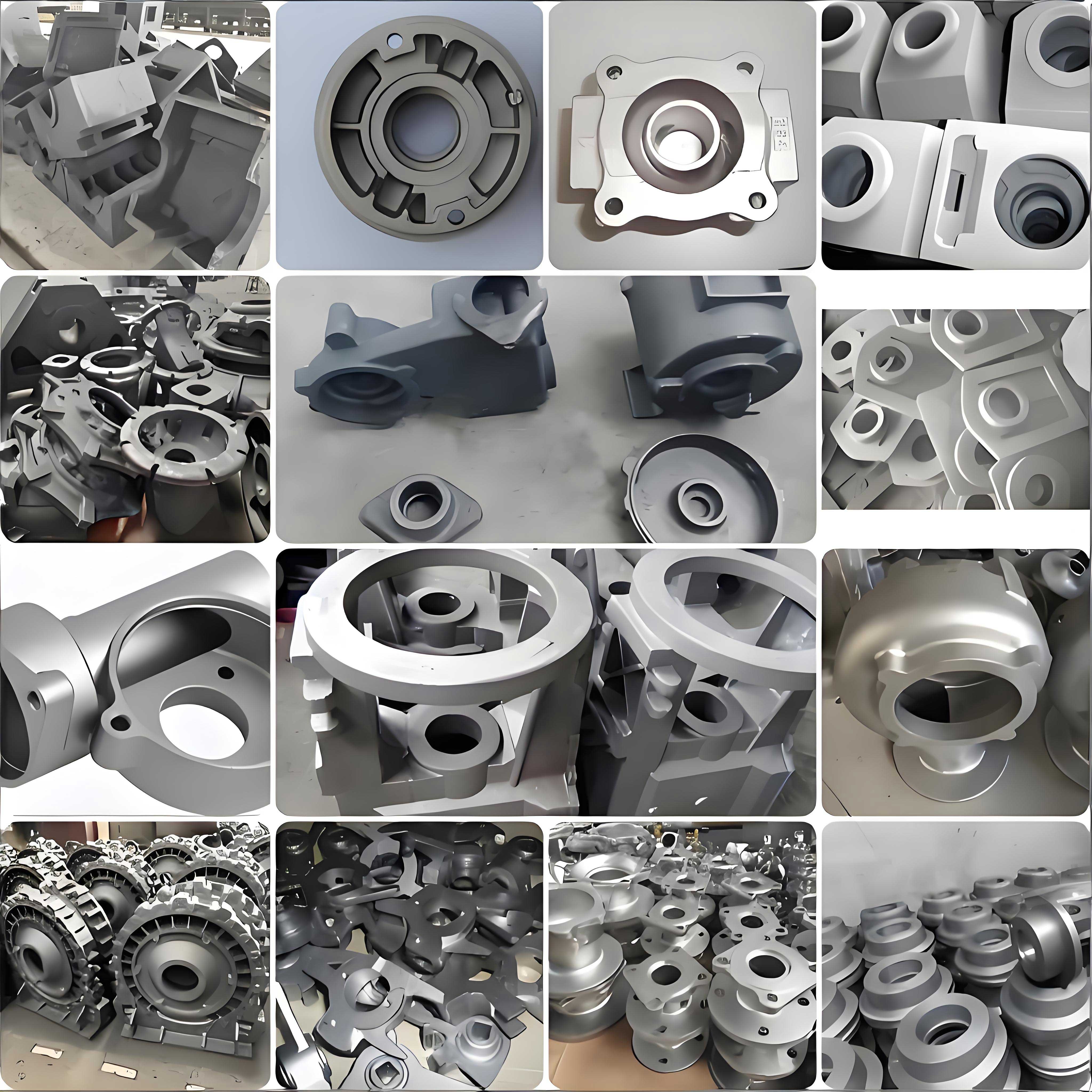
The inherent solidification characteristics of nodular cast iron make it particularly susceptible to shrinkage issues. Unlike flake graphite iron, the graphite in nodular cast iron precipitates as spheroids, which is accompanied by significant volumetric expansion during the eutectic reaction. While this expansion can often compensate for the shrinkage of the austenitic matrix, the delicate balance is easily disrupted in heavy sections or geometrically complex regions where heat dissipation is slow. In these areas, the extended solidification time can lead to the formation of isolated liquid pools, which, upon final contraction, result in macro- or micro-shrinkage porosity. The primary function of a chill is to intervene in this process by rapidly extracting heat from a specific region, thereby accelerating its solidification and ensuring it does not become the last point to freeze, isolated from the feeding source.
1. The Science of Chilling: Heat Transfer Fundamentals
The efficacy of a chill is governed by the fundamental laws of heat transfer. When molten nodular cast iron at a temperature \( T_{melt} \) contacts the chill surface at initial temperature \( T_{chill} \), a rapid heat flux \( \dot{q} \) is established. The initial, most critical phase is the chilling power, which can be approximated by the ability of the chill to absorb heat before its surface temperature rises significantly. A key metric is the volumetric heat capacity \( C_{vol} \), which determines the total heat energy a chill can absorb per unit volume for a given temperature rise.
$$ C_{vol} = \rho \cdot c_p $$
where \( \rho \) is the density of the chill material and \( c_p \) is its specific heat capacity. However, the rate of heat extraction is equally, if not more, important. This is governed by the thermal diffusivity \( \alpha \), which describes how quickly heat propagates through the chill material itself.
$$ \alpha = \frac{k}{\rho \cdot c_p} $$
Here, \( k \) is the thermal conductivity. An ideal chill material possesses a high combination of \( C_{vol} \) (to absorb a large amount of heat) and \( \alpha \) (to rapidly conduct that heat away from the interface, keeping the surface cool). The initial heat flux can be modeled as:
$$ \dot{q} = h \cdot (T_{melt} – T_{interface}) $$
where \( h \) is the interfacial heat transfer coefficient, a complex parameter dependent on surface finish, air gap formation, and the presence of coatings.
2. Chill Materials: A Comparative Engineering Analysis
The selection of chill material is not arbitrary; it is a critical engineering decision based on thermal properties, cost, reusability, and interaction with the casting. For nodular cast iron, several materials are commonly employed, each with distinct advantages and limitations.
| Material | Typical Composition / Grade | Key Thermal Properties | Advantages | Disadvantages | Primary Application in Nodular Cast Iron |
|---|---|---|---|---|---|
| Cast Iron Chill | HT200, Gray Iron | Moderate \( k \) (~50 W/m·K), High \( C_{vol} \) (~3.5 MJ/m³·K) | High heat capacity, good thermal shock resistance, low cost to manufacture, can be cast into complex shapes. | Lower thermal conductivity than copper or graphite; can fuse to casting if overheated; surface oxidizes. | Heavy sections, large flat surfaces, areas requiring very high chilling power. |
| Steel Chill | Low-Carbon Steel (Q235, AISI 1020) | Moderate \( k \) (~50 W/m·K), High \( C_{vol} \) (~3.7 MJ/m³·K) | High heat capacity, readily available, can be machined or welded easily. | Similar to cast iron; potential for fusion and oxidation. | General purpose chilling, often used as external chills on mold walls. |
| Graphite Chill | High-Purity, High-Density (1.8-2.1 g/cm³) | High \( k \) (80-150 W/m·K*), Low \( C_{vol} \) (~1.7 MJ/m·K) | Excellent thermal conductivity, non-wetting (does not fuse to iron), easy to machine, reusable many times. | Lower heat capacity, brittle, more expensive. | Thin-to-thick section transitions, areas where steep thermal gradients are needed without excessive chilling. |
| Copper Chill | Pure Copper or Copper Alloys | Very High \( k \) (~400 W/m·K), Moderate \( C_{vol} \) (~3.4 MJ/m³·K) | Extremely high thermal conductivity for rapid initial chilling. | High cost, low melting point (~1085°C) risks melting/fusion in heavy sections of nodular cast iron. | Limited use; for very rapid chilling of small, critical areas. |
| Exothermic/Chilling Sands | Chromite Sand, Steel Shot + Binder | Granular media; chilling effect from high density and thermal capacity of particles. | Can conform to complex shapes, good chilling power, improves sand burnout. | Preparation and mixing required; less predictable than solid chills. | Filling intricate cores or deep pockets where solid chills cannot be placed or retrieved. |
*Highly anisotropic; value given is approximate in-plane conductivity.
The choice between, for example, a cast iron chill and a graphite chill for a specific job in nodular cast iron casting hinges on the required thermal response. A cast iron chill, with its high volumetric heat capacity, acts like a “thermal battery,” absorbing a massive amount of heat and maintaining a strong chilling effect for a longer duration. This is ideal for very heavy sections that solidify slowly. A graphite chill, with its superior conductivity but lower capacity, creates an extremely steep initial thermal gradient, rapidly freezing a thin shell. It is less effective at continually drawing heat from a deep section but excels at preventing isolated hot spots at junctions. The decision can be guided by a simplified metric, the Chilling Intensity Factor \( I_c \), which attempts to combine these properties:
$$ I_c = k \cdot \sqrt{\alpha} = \frac{k^{3/2}}{\sqrt{\rho \cdot c_p}} $$
While not a perfect predictor, materials with a higher \( I_c \) generally provide a more intense initial chill.
3. Engineering Design and Preparation of Chills
Proper design and preparation are critical to ensure the chill functions as intended and does not create new defects.
3.1 Geometric Design and Dimensioning
The size and shape of the chill must be carefully calculated. As a rule of thumb, the volume (or mass) of the chill should be sufficient to absorb the latent heat of fusion and superheat from the volume of metal it is intended to control, without its working face reaching a critical temperature (e.g., near the solidus of the nodular cast iron). A common empirical guideline is that the chill weight should be 0.5 to 2 times the weight of the metal section being chilled. For shaped chills, like the step chills mentioned for stepped sections, the chill should closely follow the contour of the casting, typically with a clearance of 1-3 mm, to ensure uniform cooling. The thickness of the chill is paramount; it must be thick enough to act as a semi-infinite heat sink during the critical solidification period. A minimum thickness \( d_{min} \) can be estimated from the thermal diffusion distance:
$$ d_{min} \approx 2 \cdot \sqrt{\alpha_{chill} \cdot t_{solid}} $$
where \( t_{solid} \) is the local solidification time of the casting section.
3.2 Surface Preparation and Coating
A clean, dry, and properly coated surface is non-negotiable. Surface contaminants (rust, sand, moisture) drastically reduce the interfacial heat transfer coefficient \( h \), insulating the chill and rendering it ineffective. Standard preparation methods include:
- Cast Iron/Steel Chills: Shot blasting is highly recommended to remove scale and create a uniformly clean, slightly roughened surface that can key well with coatings. Grinding is labor-intensive and less consistent.
- Graphite Chills: Light sanding or brushing to remove any adhered metal or glaze from previous uses.
Following cleaning, a refractory coating must be applied. This serves multiple purposes: it prevents metal/chill fusion (especially critical for ferrous chills in nodular cast iron casting), facilitates chill removal after shakeout, and can provide a consistent, known thermal barrier to fine-tune the chilling effect. Common coatings include alcohol-based graphite washes or zirconia-based paints. The coating should be thin, even, and fully dried. Pre-heating the chill before coating application improves adherence. Prior to mold assembly, chills are often heated with a torch or hot air to around 50-150°C to eliminate any residual moisture from the coating or atmosphere, which could cause gas defects.
3.3 Securing Mechanisms (Anti-Drop Measures)
A chill that moves or falls during mold handling, closing, or pouring is catastrophic. Robust mechanical anchoring is essential. The method depends on the material and location of the chill. Integral cast lugs or handles on cast iron chills, welded tabs or rods on steel chills, and machined undercuts or dovetail slots in graphite chills are all effective. The key principle is to provide a positive mechanical interlock with the surrounding sand or core. The anchorage must be designed on the non-working (back) surface of the chill to avoid disrupting the critical thermal interface.
4. Advanced Application Strategy and Simulation-Guided Selection
The decision of which chill material to use for a specific feature in a nodular cast iron casting is greatly enhanced by modern solidification simulation (CAE). Software can model the thermal interaction between the casting and different chill materials, predicting the evolution of solid fraction and identifying isolated liquid regions. The examples from practice illustrate a fundamental principle: the optimal chill material depends on the specific thermal geometry of the problem.
Case for High-Heat-Capacity Chill (e.g., Cast Iron): Consider a thick flange between two thinner walls, forming a classic “T-section” or isolated thermal mass. The goal is to make this flange solidify before or in conjunction with the thinner sections, preventing it from becoming an isolated hot spot. A high-heat-capacity material like cast iron is often superior. Its ability to absorb a large amount of heat energy over an extended period ensures the flange section is continuously cooled throughout its entire solidification. A graphite chill, while creating a rapid initial freeze at the surface, may not have the capacity to continually draw heat from the center of the thick flange, potentially leaving a shrinking core isolated from feed metal. Simulation will show that with a graphite chill, an isolated liquid region may persist in the center of the flange, whereas a cast iron chill of sufficient size promotes a more progressive solidification front.
Case for High-Conductivity Chill (e.g., Graphite): Conversely, consider a thin cylindrical section attached to a thicker disk or hub. The junction is a hot spot. The goal here is not necessarily to chill the entire thick hub, but to aggressively cool the thin cylinder immediately at the junction to break the thermal connection and allow the cylinder to freeze rapidly, establishing directional solidification from the cylinder tip back towards the thicker hub, which is fed by a riser. Here, the high thermal conductivity of graphite is advantageous. It creates an extremely sharp thermal gradient right at the interface, “pinching off” the thin section and quickly establishing a solid bridge. A cast iron chill in the same location, due to its lower conductivity, might not extract heat quickly enough from the thin wall to prevent it from remaining thermally linked to the hub, resulting in a shrinkage-prone isolated area at the junction. Simulation clearly shows the disappearance of the isolated liquid pocket when graphite is used versus its persistence with cast iron.
This can be conceptualized by analyzing the “Chilling Depth” \( \delta_c \) for a given time \( t \):
$$ \delta_c \propto \sqrt{\alpha_{chill} \cdot t} $$
For rapid, shallow chilling (to freeze a thin section), a high \( \alpha \) (graphite) is needed. For deep, sustained chilling (to freeze a thick section), a high \( C_{vol} \) (cast iron) is paramount, though \( \alpha \) must still be sufficient to draw heat inward from the interface.
5. Limitations, Best Practices, and Concluding Synthesis
While powerful, chills are not a panacea. Their misuse can induce defects such as:
- Chill Tears: Overly severe chilling can create hard, brittle white iron or carbidic layers at the surface, which may crack under thermal stress during cooling.
- Excessive Hardness: The rapidly chilled zone will have a finer microstructure and higher hardness, which may complicate machining and must be accounted for in component design.
- Gas Porosity: Improperly dried or coated chills can generate steam or gas, leading to surface pinholes or sub-surface blows.
- Fusion: If the chill surface temperature approaches or exceeds the solidus of the nodular cast iron, the two can weld together, causing a severe surface defect.
Best practices to mitigate these risks include:
- Simulation-First Approach: Always use solidification simulation to evaluate the need for, placement, size, and material of chills before committing to tooling.
- Conservative Start: It is often better to begin with a slightly undersized chill and increase its size in subsequent trials than to risk severe chilling defects.
- Meticulous Preparation: Never compromise on chill cleaning, coating, drying, and pre-heating protocols.
- Integration with Overall Feeding Design: Chills are a tool to enable effective feeding. They must be part of a holistic gating and risering strategy designed to promote directional solidification.
- Process Documentation: Record the type, size, coating, and placement of every chill used for each casting. This is critical for process control and troubleshooting.
In conclusion, the application of chills in nodular cast iron casting is a sophisticated engineering discipline that blends materials science, heat transfer theory, and practical foundry craft. The selection between materials like cast iron, steel, and graphite is not merely a matter of availability but a calculated decision based on the required thermal dynamics—whether the situation demands the deep, sustained heat extraction of a high-capacity material or the rapid, gradient-sharpening effect of a high-conductivity material. Through rigorous preprocessing, secure placement, and, most importantly, simulation-guided design, chills transform from simple pieces of metal or graphite into precise thermal management tools. They remain a cornerstone technology for achieving soundness in complex and highly stressed nodular cast iron castings, ensuring reliability in demanding applications by proactively eliminating the internal voids that would otherwise serve as failure initiation sites.