
In the realm of modern casting technologies, lost foam casting (LFC) has emerged as a pivotal method for producing complex geometries with excellent surface finish, dimensional accuracy, and high yield. My research focuses on applying this technique to nodular cast iron components, specifically reducer housings, which are critical in mechanical transmission systems due to their demand for high strength, toughness, wear resistance, and vibration damping. The material of choice is QT450-10 nodular cast iron, known for its superior mechanical properties. However, during initial production runs using LFC, we encountered persistent defects such as inclusions on the end faces and shrinkage holes in thermal junction areas. This article delves into a comprehensive study aimed at addressing these issues through innovative process modifications, emphasizing the role of material science and casting mechanics. The findings highlight practical solutions that enhance product quality while maintaining process simplicity and economic viability.
The reducer housing in question weighs approximately 112 kg, with wall thicknesses ranging from 14 mm to 54 mm, creating concentrated geometric hot spots that predispose the casting to shrinkage-related defects. The original LFC process involved using a copolymer foam pattern (a blend of EPS and EPMMA) to balance gas evolution and solid carbon content, thereby mitigating risks of carbon defects and porosity. The chemical composition of the QT450-10 nodular cast iron was meticulously controlled, as summarized in Table 1, ensuring compliance with standard specifications for mechanical performance and nodularization grade. Despite these precautions, batch production revealed夹杂 (inclusions) on the end faces and缩孔 (shrinkage cavities) in thick sections, necessitating a deeper investigation into their root causes and remedial measures.
| Element | Range |
|---|---|
| Carbon (C) | 3.5–4.0 |
| Silicon (Si) | 2.0–3.0 |
| Manganese (Mn) | ≤0.45 |
| Phosphorus (P) | ≤0.05 |
| Sulfur (S) | ≤0.025 |
| Magnesium (Mg) | 0.02–0.06 |
| Rare Earth (RE) | 0.015–0.040 |
The formation of inclusions in LFC of nodular cast iron is intrinsically linked to the pyrolysis behavior of foam patterns. When heated, the copolymer undergoes decomposition, producing gaseous, liquid, and solid residues. The chemical reactions for common foam materials can be represented as follows:
For EPS (expandable polystyrene):
$$ \text{C}_8\text{H}_8 (s) \rightarrow 8\text{C} (s) + 4\text{H}_2 (g) $$
For EPMMA (expandable polymethyl methacrylate):
$$ \text{C}_5\text{O}_2\text{H}_8 (s) \rightarrow 3\text{C} (s) + 2\text{CO}_2 (g) + 4\text{H}_2 (g) $$
The copolymer used, often termed STMMA, combines these characteristics, yielding intermediate levels of gas and solid carbon. The solid carbon residues, if not adequately expelled during casting, can manifest as inclusions in the final nodular cast iron component. These inclusions are particularly prevalent on upper surfaces due to buoyancy effects and pattern degradation dynamics. In our case, analysis indicated that inclusion depths did not exceed 8 mm, prompting a straightforward yet effective solution: increasing the machining allowance on the end faces from 4 mm to 8 mm. This approach allows inclusions to be confined within the excess material, which is subsequently removed during machining, thereby yielding a defect-free nodular cast iron part. Statistical data from production batches demonstrated a significant improvement, with the qualified rate of machined housings rising from 88% to 97.96%, validating this method as a reliable countermeasure against inclusion defects in nodular cast iron castings.
Shrinkage holes, on the other hand, stem from the inherent solidification characteristics of nodular cast iron. Unlike traditional cast irons, nodular cast iron exhibits a pronounced tendency for volumetric shrinkage during the liquid-to-solid transition, especially in regions with high modulus (i.e., thermal centers). The carbon equivalent (CE) of nodular cast iron, calculated using the formula:
$$ \text{CE} = \%\text{C} + \frac{\%\text{Si} + \%\text{P}}{3} $$
typically ranges from 4.3 to 4.6 for QT450-10, promoting graphite precipitation but also exacerbating shrinkage if proper feeding is not ensured. In LFC, conventional remedies like risers or external chills are often impractical due to process constraints—risers reduce yield and complicate pattern assembly, while rigid chills can cause pattern deformation or displacement during vibration compaction. To overcome this, we pioneered two novel techniques: the heat dissipation fin process and the flexible chill process, both tailored for LFC of nodular cast iron.
The heat dissipation fin process involves attaching foam fins to the pattern at identified hot spots. These fins, typically sized at 50 mm × 30 mm × 7 mm, increase the surface area-to-volume ratio, thereby enhancing heat extraction during the negative pressure stage of casting. The underlying principle can be modeled using heat transfer equations. The rate of heat loss (Q) from a fin can be expressed as:
$$ Q = h A_s (T_s – T_\infty) $$
where \( h \) is the convective heat transfer coefficient, \( A_s \) is the surface area, \( T_s \) is the surface temperature, and \( T_\infty \) is the ambient temperature. In LFC, the negative pressure environment (maintained at -0.04 to -0.06 MPa) facilitates forced convection, with cold air ingress through the sand bed absorbing heat from the fins and adjacent sand. This creates a micro-channel cooling effect, effectively reducing the local modulus (M) of the nodular cast iron section, defined as:
$$ M = \frac{V}{A} $$
where \( V \) is volume and \( A \) is cooling surface area. By lowering M, the solidification mode shifts from pasty to directional, minimizing shrinkage porosity. For our reducer housing, we applied 12 such fins to bolt hole regions, which were prone to defects. Post-casting inspection confirmed the absence of shrinkage holes, and a batch of 2,000 units produced consistently defect-free nodular cast iron housings.
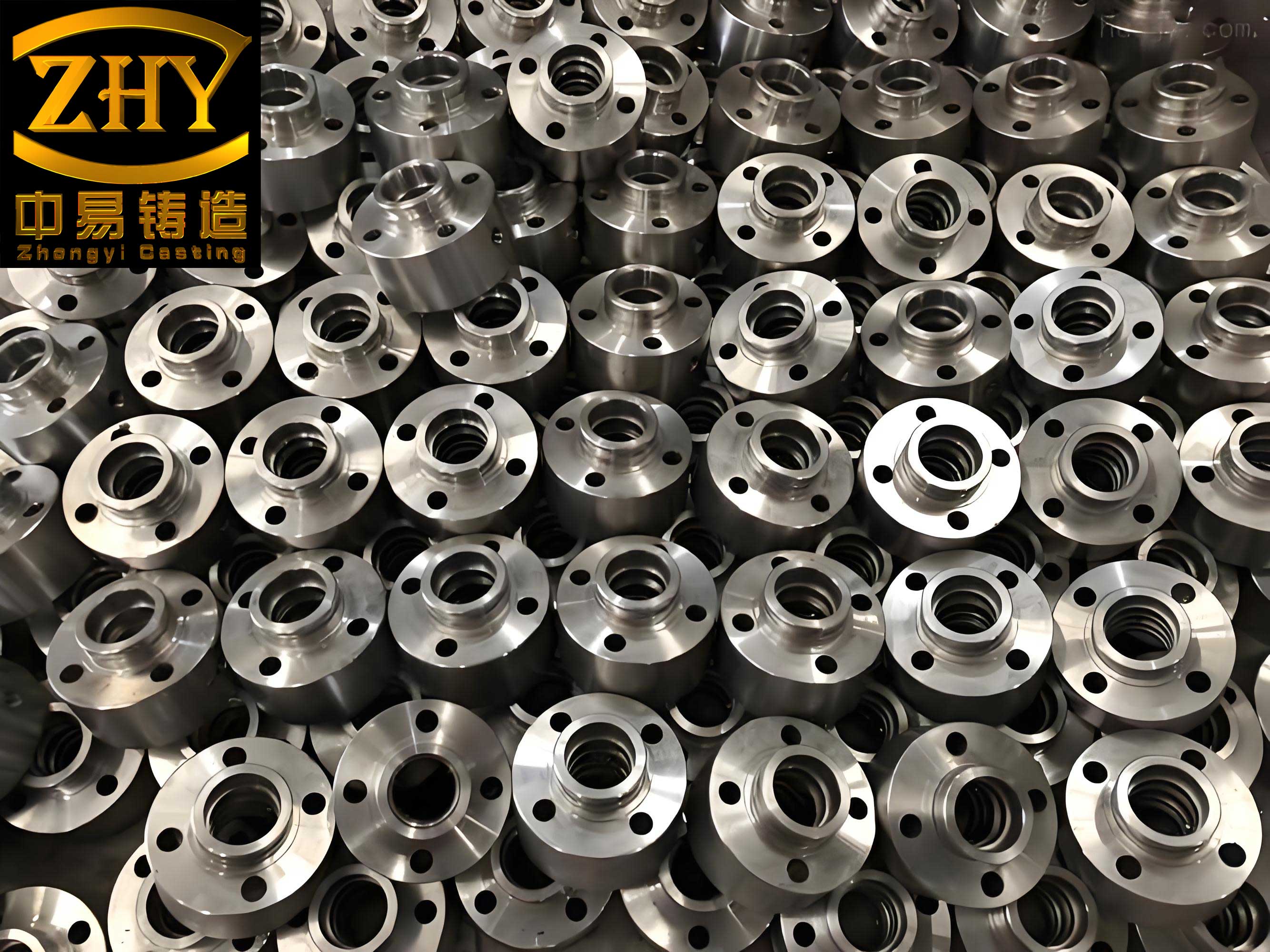
The flexible chill process employs steel shots as replaceable chill materials, placed in sand pockets near hot spots and sealed with heat-resistant tape before molding. This method mimics the function of traditional chills but accommodates LFC’s flexibility requirements. The chilling power (P) of steel shots can be approximated by:
$$ P = k \rho c_p \Delta T $$
where \( k \) is a geometry factor, \( \rho \) is density, \( c_p \) is specific heat capacity, and \( \Delta T \) is temperature difference. During solidification of nodular cast iron, the shots absorb latent heat, promoting faster cooling in critical zones. However, this process is more suited to components with accessible recesses for shot placement; for our housing, it proved feasible but required precise control over shot quantity and distribution. Small-scale trials affirmed its efficacy in eliminating shrinkage defects in nodular cast iron, though the heat dissipation fin process was adopted for bulk production due to its simplicity and higher yield.
To further elucidate the process parameters, Table 2 summarizes key variables in the optimized LFC process for nodular cast iron reducer housings. These parameters were rigorously monitored to ensure reproducibility and quality consistency.
| Parameter | Value/Range |
|---|---|
| Pattern Material | Copolymer (STMMA) |
| Pouring Temperature | 1,370–1,440 °C |
| Melting Temperature | 1,580–1,600 °C |
| Negative Pressure | -0.04 to -0.06 MPa |
| Pressure Holding Time | 900 s |
| End Face Allowance | 8 mm |
| Heat Dissipation Fin Dimensions | 50 mm × 30 mm × 7 mm |
| Number of Fins per Housing | 12 |
| Nodularization Treatment | Mg-FeSi alloy with RE |
| Molding Sand | Silica sand, dry vibration |
The mechanical properties of the resulting nodular cast iron were evaluated using Y-block specimens, confirming compliance with QT450-10 standards: tensile strength ≥ 450 MPa, elongation ≥ 10%, and nodularity grade 2-3. Microstructural analysis revealed well-distributed graphite spheroids in a ferritic-pearlitic matrix, corroborating the efficacy of our process adjustments. Notably, the heat dissipation fin process not only resolved shrinkage but also improved the overall integrity of nodular cast iron by reducing residual stresses, as inferred from hardness mapping across sections.
From a thermodynamic perspective, the success of these innovations can be rationalized through the concept of thermal gradient (∇T) manipulation. In LFC, the negative pressure system acts as a heat sink, with the finned areas enhancing ∇T according to Fourier’s law:
$$ q = -k \nabla T $$
where \( q \) is heat flux and \( k \) is thermal conductivity. For nodular cast iron, which has a thermal conductivity of approximately 40 W/m·K, increasing ∇T accelerates solidification front advancement, thereby mitigating shrinkage. Comparative studies with conventional casting methods underscore the advantages of LFC for nodular cast iron: lower pattern costs, reduced machining allowances, and higher design freedom, albeit with unique defect challenges that demand tailored solutions.
In addition to process tweaks, we explored the influence of alloy chemistry on defect formation in nodular cast iron. While the base composition was kept constant, minor variations in silicon and magnesium were tested to assess their impact on shrinkage propensity. The results, encapsulated in Table 3, indicate that within the specified ranges, chemical adjustments had negligible effect compared to geometric and thermal modifications, reinforcing the primacy of casting process control in managing defects for nodular cast iron components.
| Si Content (wt%) | Mg Content (wt%) | Shrinkage Index* |
|---|---|---|
| 2.2 | 0.03 | 0.85 |
| 2.5 | 0.04 | 0.82 |
| 2.8 | 0.05 | 0.88 |
*Shrinkage index: lower values indicate reduced shrinkage (normalized scale 0-1).
The economic implications of our findings are substantial. By adopting the heat dissipation fin process, the process yield for nodular cast iron reducer housings increased from an initial 85% to over 95%, translating to significant material and energy savings. Moreover, the elimination of post-casting repair operations like welding or impregnation reduced labor costs and cycle times. Lifecycle assessments further suggest that nodular cast iron parts produced via this optimized LFC method exhibit enhanced durability in service, owing to the absence of internal defects that could act as stress concentrators.
Looking ahead, the principles established here can be extrapolated to other nodular cast iron applications in automotive, aerospace, and heavy machinery sectors. Future research could focus on computational modeling of foam pyrolysis and solidification in LFC, using finite element analysis (FEA) to predict inclusion and shrinkage sites with greater accuracy. For instance, simulating the temperature field (T) during casting involves solving the heat conduction equation:
$$ \rho c_p \frac{\partial T}{\partial t} = \nabla \cdot (k \nabla T) + \dot{q} $$
where \( \dot{q} \) represents internal heat sources from phase changes. Integrating such models with real-time process monitoring could enable closed-loop control, further elevating the quality consistency of nodular cast iron castings.
In conclusion, this study demonstrates that inclusions and shrinkage holes in nodular cast iron reducer housings produced by lost foam casting can be effectively eliminated through strategic process interventions. The increase in end face allowance addresses inclusion defects by containing carbonaceous residues within machinable excess, while the novel heat dissipation fin and flexible chill processes tackle shrinkage by enhancing localized cooling and modifying solidification patterns. Both methods are simple, cost-effective, and high-yielding, making them valuable additions to the foundry toolkit for nodular cast iron. As industries continue to demand lighter, stronger, and more complex components, the synergy between advanced materials like nodular cast iron and innovative casting techniques like LFC will undoubtedly drive progress in manufacturing technology.
To contextualize our work within broader metallurgical trends, nodular cast iron remains a material of choice for critical applications due to its unique combination of castability, mechanical properties, and economic viability. The persistent challenge of defects in casting processes necessitates continuous innovation, and our contributions underscore the importance of holistic approaches that consider material behavior, process physics, and practical constraints. As we refine these techniques, the potential for scaling up to mass production of nodular cast iron parts looks promising, with implications for sustainability through reduced waste and improved resource efficiency.
Finally, it is worth noting that the success of these methods relies on stringent control over process variables, particularly negative pressure, pouring temperature, and pattern quality. Regular audits and statistical process control (SPC) charts are recommended for maintaining standards in nodular cast iron production. By sharing these insights, we hope to foster collaboration across the foundry community, advancing the state-of-the-art in casting nodular cast iron and similar alloys for the benefit of global engineering endeavors.