
In my research, I focus on enhancing the surface properties of nodular cast iron, a material widely used in automotive and industrial applications due to its excellent strength, wear resistance, and machinability. However, to meet increasing demands for durability and performance, surface modification techniques are essential. Among these, laser surface hardening stands out as a precise and efficient method. This article presents my comprehensive study on optimizing laser surface hardening parameters for nodular cast iron using response surface methodology. I aim to establish mathematical models that relate process variables to key performance indicators, enabling the prediction and improvement of hardening outcomes. Throughout this work, I emphasize the importance of nodular cast iron as a substrate and explore how laser processing can tailor its surface characteristics for enhanced applications.
Nodular cast iron, also known as ductile iron, is characterized by its spherical graphite nodules embedded in a metallic matrix, which impart a unique combination of toughness and strength. This makes nodular cast iron ideal for components subjected to high stress and wear, such as engine parts, gears, and molds. Despite its advantages, the surface of nodular cast iron often requires further hardening to resist abrasive and adhesive wear in harsh environments. Traditional hardening methods, like induction or flame hardening, can lead to distortions, coarse microstructures, and environmental concerns. In contrast, laser surface hardening offers localized treatment, minimal thermal distortion, rapid processing, and the ability to handle complex geometries. My investigation delves into this advanced technique, seeking to optimize it for nodular cast iron to achieve superior surface hardness, controlled roughness, and adequate hardening depth.
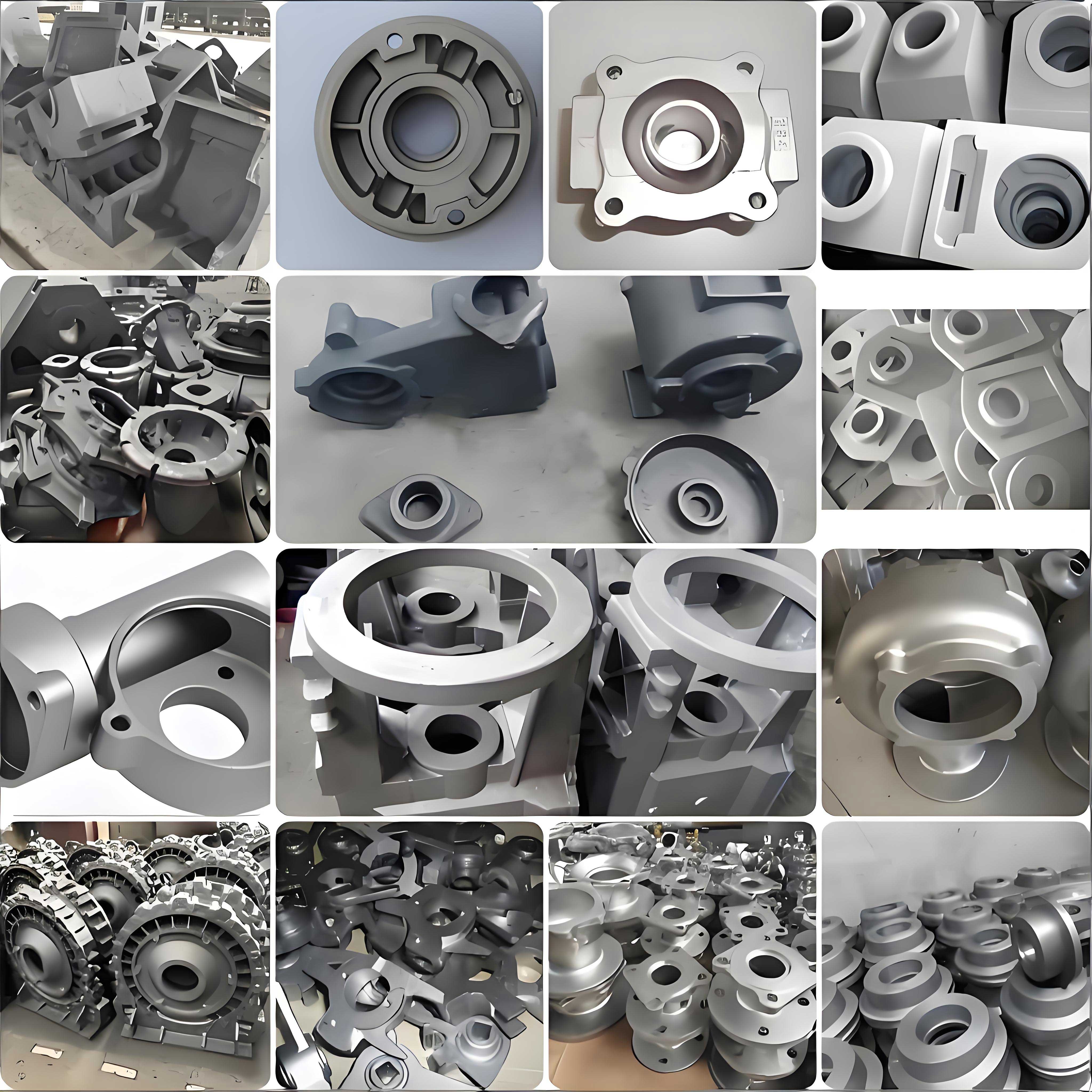
The core of my study involves applying response surface methodology (RSM) to model and optimize the laser hardening process for nodular cast iron. RSM is a statistical and mathematical approach that helps in designing experiments, building models, and evaluating the effects of multiple factors. Here, I consider two critical process parameters: laser power (P) and scanning speed (V). These parameters directly influence the energy input during laser treatment, which in turn affects the microstructural transformations and resulting properties of nodular cast iron. To capture their effects, I measure three response variables: surface hardness (y₁), surface roughness (y₂), and hardening depth (y₃). By developing predictive models, I can identify optimal parameter combinations that maximize hardness and depth while minimizing roughness, thereby improving the overall performance of nodular cast iron components.
My experimental setup uses QT600-3A nodular cast iron as the substrate, a common grade in industrial applications. The chemical composition of this nodular cast iron includes elements like carbon, silicon, manganese, and trace alloys, which contribute to its pearlitic matrix and graphite nodules. Before laser treatment, I prepare samples by machining them into specific dimensions, followed by surface cleaning to remove oxides and contaminants. The laser system consists of a fiber-coupled diode laser with a rectangular beam spot, controlled by a robotic arm for precise movement. This setup ensures consistent and reproducible hardening tracks on the nodular cast iron surface.
To design the experiments, I employ a central composite design (CCD) within RSM, which is efficient for exploring factor interactions and quadratic effects. The factors, laser power and scanning speed, are varied at five levels, as summarized in Table 1. This design allows me to conduct a series of trials that cover a wide range of energy densities, calculated using the formula:
$$E = \frac{P}{V \cdot W}$$
where E is the energy density (J/mm²), P is the laser power (W), V is the scanning speed (mm/s), and W is the beam width (mm). The energy density is a crucial parameter in laser processing of nodular cast iron, as it determines the extent of heating and phase transformations. By manipulating P and V, I can control E and thus the hardening outcomes for nodular cast iron.
| Level | Scanning Speed V (mm/s) | Laser Power P (W) |
|---|---|---|
| -1.414 | 2.6 | 1440 |
| -1 | 3.0 | 1450 |
| 0 | 4.0 | 1475 |
| 1 | 5.0 | 1500 |
| 1.414 | 5.4 | 1510 |
Table 1: Factor levels for the central composite design in laser hardening of nodular cast iron.
After performing the laser hardening trials on nodular cast iron samples, I measure the response variables. Surface hardness is assessed using a Rockwell hardness tester, surface roughness with a profilometer, and hardening depth via microstructural examination according to standard methods. Each measurement is repeated to ensure reliability. The experimental results are compiled in Table 2, which shows the variations in responses across different parameter sets. These data form the basis for building the RSM models, allowing me to analyze how nodular cast iron behaves under various laser conditions.
| Run | V (mm/s) | P (W) | E (J/mm²) | y₁ (HRC) | y₂ (μm) | y₃ (μm) |
|---|---|---|---|---|---|---|
| 1 | 3.0 | 1450 | 24.17 | 59.74 | 6.226 | 1334.96 |
| 2 | 5.0 | 1450 | 14.50 | 53.17 | 2.386 | 957.34 |
| 3 | 3.0 | 1500 | 25.00 | 59.47 | 5.565 | 1390.91 |
| 4 | 5.0 | 1500 | 15.00 | 54.34 | 3.229 | 971.33 |
| 5 | 2.6 | 1475 | 28.37 | 59.58 | 5.894 | 1579.72 |
| 6 | 5.4 | 1475 | 13.66 | 51.78 | 1.386 | 824.48 |
| 7 | 4.0 | 1440 | 18.00 | 55.40 | 3.963 | 1097.20 |
| 8 | 4.0 | 1510 | 18.88 | 56.28 | 4.787 | 1069.23 |
| 9 | 4.0 | 1475 | 18.44 | 55.98 | 4.484 | 1111.19 |
| 10 | 4.0 | 1475 | 18.44 | 56.06 | 4.816 | 1125.17 |
| 11 | 4.0 | 1475 | 18.44 | 56.18 | 4.217 | 1139.16 |
| 12 | 4.0 | 1475 | 18.44 | 57.94 | 4.707 | 1083.22 |
| 13 | 4.0 | 1475 | 18.44 | 57.72 | 4.214 | 1055.24 |
Table 2: Experimental design and results for laser hardening of nodular cast iron, showing scanning speed (V), laser power (P), energy density (E), surface hardness (y₁), surface roughness (y₂), and hardening depth (y₃).
Using statistical software, I perform analysis of variance (ANOVA) on the data to develop quadratic regression models for each response. The general form of the model for nodular cast iron hardening can be expressed as:
$$y = \beta_0 + \beta_1 V + \beta_2 P + \beta_3 V^2 + \beta_4 P^2 + \beta_5 V \cdot P + \epsilon$$
where y is the response variable, β coefficients represent the model terms, and ε is the error. After refining the models by removing insignificant terms, I obtain the following equations for nodular cast iron:
For surface hardness (y₁):
$$y_1 = 132.514 – 21.7975V – 0.0468P – 0.2873V^2 + 0.0144V \cdot P$$
For surface roughness (y₂):
$$y_2 = 84.0828 – 21.0015V – 0.0534P – 0.3449V^2 + 0.0150V \cdot P$$
For hardening depth (y₃):
$$y_3 = 234.473 – 66.9524V + 1.8339P + 56.463V^2 – 0.4196V \cdot P$$
These models demonstrate that scanning speed has a more pronounced effect on the responses compared to laser power for nodular cast iron, as indicated by the larger coefficients for V. The ANOVA results, summarized in Table 3, confirm the significance of the models, with high R² values indicating good fit. For instance, the surface hardness model for nodular cast iron has an R² of 92.33%, meaning it explains most of the variability in the data.
| Response | Model p-value | Lack of Fit p-value | R² (%) | Adjusted R² (%) |
|---|---|---|---|---|
| Surface Hardness | 0.001 | 0.630 | 92.33 | 86.85 |
| Surface Roughness | 0.000 | 0.313 | 96.90 | 94.69 |
| Hardening Depth | 0.000 | 0.126 | 96.48 | 93.97 |
Table 3: ANOVA summary for the response surface models in laser hardening of nodular cast iron, showing statistical significance and fit quality.
To visualize the effects of laser parameters on nodular cast iron, I generate 3D response surface plots. These plots reveal that surface hardness increases with higher laser power and lower scanning speed. This is because higher energy density promotes austenitization and subsequent martensitic transformation in nodular cast iron. At low scanning speeds, the surface may even melt, forming ledeburite, which further enhances hardness. Surface roughness, on the other hand, decreases with lower laser power and higher scanning speed, as reduced energy input minimizes surface melting and irregularities. Hardening depth follows a similar trend to hardness, increasing with higher power and lower speed due to greater heat penetration into the nodular cast iron substrate.
The microstructural analysis of laser-hardened nodular cast iron supports these findings. Under optimal conditions, the hardened layer consists of three zones: a melt-solidified layer with fine ledeburite, a transition zone with martensite and ledeburite, and a phase-transformed zone with fine martensite and retained austenite. The presence of graphite nodules in nodular cast iron influences heat conduction and carbon diffusion, affecting the hardening outcome. For example, at high energy densities, the nodules may partially dissolve, contributing to carbide formation and increased hardness. This microstructural evolution is key to understanding the performance of laser-hardened nodular cast iron in wear applications.
For multi-objective optimization, I employ the desirability function approach, which combines individual responses into a composite desirability score (D). The goal is to maximize surface hardness and hardening depth while minimizing surface roughness for nodular cast iron. The desirability function for each response is defined as follows:
For maximize (hardness and depth):
$$d_i = \begin{cases} 0 & \text{if } \hat{y}_i < L_i \\ \left( \frac{\hat{y}_i – L_i}{T_i – L_i} \right)^r & \text{if } L_i \leq \hat{y}_i \leq T_i \\ 1 & \text{if } \hat{y}_i > T_i \end{cases}$$
For minimize (roughness):
$$d_i = \begin{cases} 1 & \text{if } \hat{y}_i < T_i \\ \left( \frac{H_i – \hat{y}_i}{H_i – T_i} \right)^r & \text{if } T_i \leq \hat{y}_i \leq H_i \\ 0 & \text{if } \hat{y}_i > H_i \end{cases}$$
where dᵢ is the individual desirability, ŷᵢ is the predicted response, Lᵢ and Hᵢ are lower and upper bounds, Tᵢ is the target, and r is a weight. The composite desirability for nodular cast iron is calculated as:
$$D = \left( \prod_{i=1}^{n} d_i^{w_i} \right)^{1 / \sum w_i}$$
with wᵢ as importance weights. Setting w₁=10 for hardness, w₂=1 for roughness, and w₃=5 for depth, I optimize the parameters to achieve a balance. The optimal solution for nodular cast iron is found at laser power P = 1510 W and scanning speed V = 2.6 mm/s, yielding a composite desirability of 0.8776. At this point, the predicted responses are: hardness = 59.72 HRC, roughness = 5.539 μm, and depth = 1563.87 μm.
I conduct verification experiments with these optimal parameters on nodular cast iron samples. The results show surface hardness of 58.59 HRC, surface roughness of 5.897 μm, and hardening depth of 1450.74 μm, which align closely with the predictions, with relative errors below 10%. This confirms the robustness of the RSM models for nodular cast iron. The hardened layer exhibits a high microhardness profile, averaging 695 HV, about 2.5 times the substrate hardness, due to the formation of martensite and ledeburite in nodular cast iron. The microhardness distribution, as shown in Table 4, indicates a gradual decrease from the surface to the core, with a slight softening zone in the transition region attributed to coarse martensite and retained austenite in nodular cast iron.
| Distance from Surface (μm) | Microhardness (HV) | Microstructural Zone |
|---|---|---|
| 0-200 | 750-800 | Melt-solidified layer |
| 200-600 | 700-750 | Transition zone |
| 600-1200 | 650-700 | Phase-transformed zone |
| 1200+ | ~280 | Base nodular cast iron |
Table 4: Microhardness distribution across the hardened layer of nodular cast iron under optimal laser parameters.
The implications of this optimization are significant for industrial applications of nodular cast iron. By fine-tuning laser power and scanning speed, manufacturers can enhance the wear resistance and lifespan of nodular cast iron components, such as molds, crankshafts, and gears, without compromising surface quality. The energy density formula serves as a useful tool for estimating hardening outcomes for nodular cast iron under different conditions. For instance, if the beam width W is altered, the energy density E can be recalculated to maintain consistent results. This flexibility makes laser hardening a versatile process for nodular cast iron.
In comparison to other studies on nodular cast iron, my research adds depth by integrating multiple responses and using RSM for optimization. Previous works often focus on single objectives, but here I address the trade-offs between hardness, roughness, and depth for nodular cast iron. The models I developed can be adapted to similar grades of nodular cast iron, with adjustments for composition variations. For example, higher silicon content in nodular cast iron might affect austenitization kinetics, requiring parameter tweaks. Future research could explore additional factors like beam shape or pre-heating for nodular cast iron to further improve hardening efficiency.
From a practical perspective, the optimal parameters I identified—1510 W and 2.6 mm/s—may require careful control to avoid excessive melting on nodular cast iron surfaces. In industrial settings, real-time monitoring systems can be implemented to adjust parameters dynamically, ensuring consistent quality for nodular cast iron parts. The surface roughness, though higher than untreated surfaces, is acceptable for many applications, especially if post-processing like grinding is planned. For nodular cast iron components in automotive engines, the enhanced hardness and depth can reduce friction and wear, leading to better fuel efficiency and durability.
To summarize, my study demonstrates the effectiveness of response surface methodology in optimizing laser surface hardening for nodular cast iron. The mathematical models accurately predict surface hardness, roughness, and depth based on laser power and scanning speed, with scanning speed being the more influential factor. The multi-objective optimization via desirability functions yields a parameter set that balances all responses, validated through experiments. This approach provides a systematic framework for improving the surface properties of nodular cast iron, contributing to advancements in materials engineering. As industries continue to seek high-performance materials, nodular cast iron remains a key candidate, and laser hardening offers a precise way to unlock its full potential.
In conclusion, the optimization of laser surface hardening for nodular cast iron is a complex but rewarding endeavor. By leveraging statistical design and modeling, I have shown how to achieve desired surface characteristics in nodular cast iron through controlled laser processing. The insights gained from this work can guide engineers and researchers in applying laser technology to nodular cast iron and similar materials, fostering innovation in manufacturing and maintenance. As I reflect on this research, I am confident that the methods and findings will support the ongoing development of durable and efficient components made from nodular cast iron, meeting the evolving demands of modern industry.