
In this study, we explore the application of laser cladding technology to improve the surface properties of nodular cast iron, a material widely used in automotive and industrial components due to its excellent castability, ductility, and strength. However, nodular cast iron often suffers from premature failure under high-temperature wear and corrosive environments, limiting its service life. To address this, we developed a Ni-Co composite coating via laser cladding, focusing on reducing the formation of brittle white iron structures at the interface and enhancing the overall performance. Here, I present our comprehensive investigation into the microstructure, microhardness, elevated-temperature friction and wear behavior, and corrosion resistance of the coating, with an emphasis on the role of the nodular cast iron substrate.
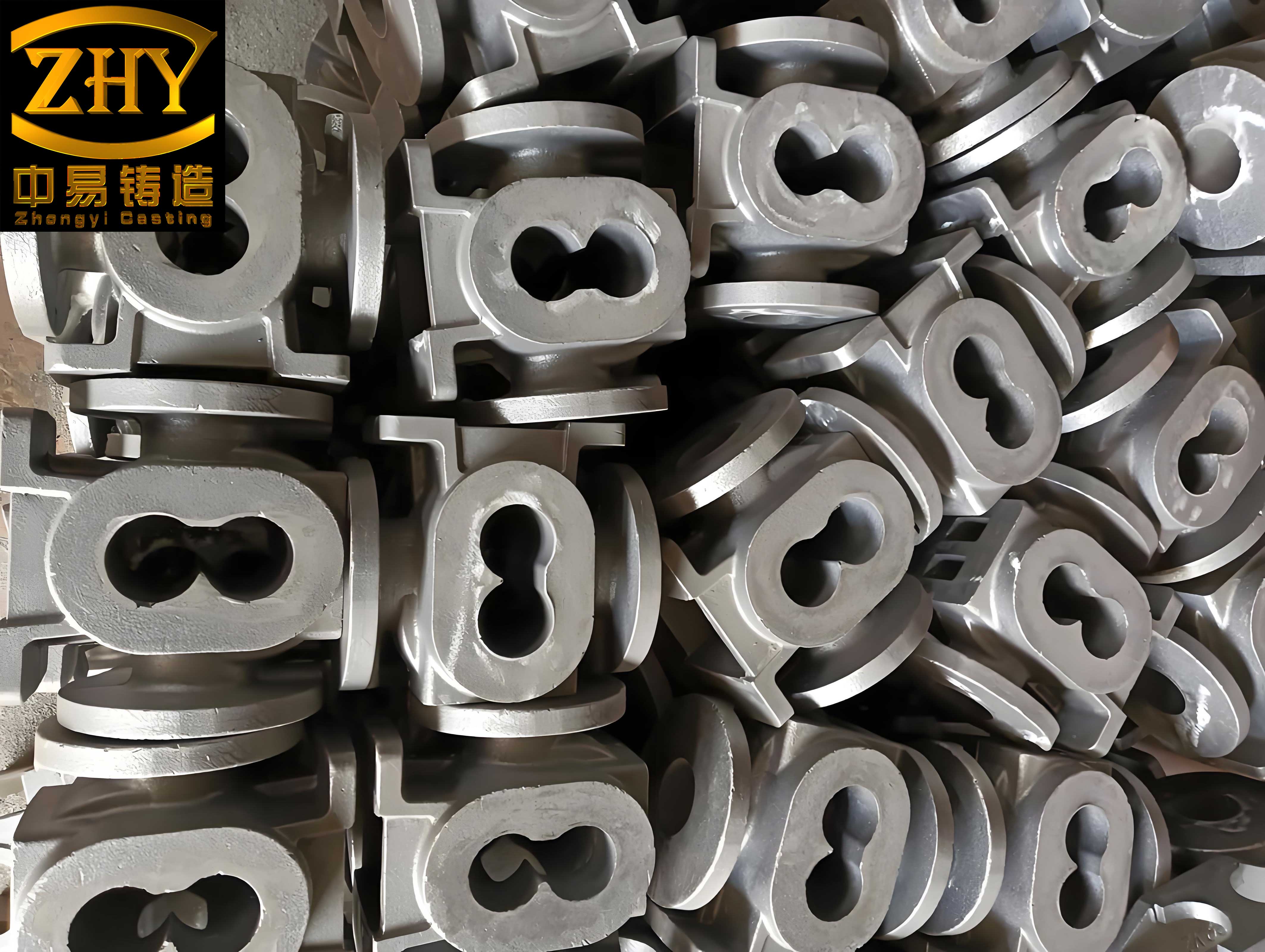
Nodular cast iron, also known as ductile iron, is a key material in engine parts like cylinder heads and pistons, but its susceptibility to wear and corrosion at elevated temperatures necessitates surface modification. Laser cladding offers a promising solution by depositing a metallurgically bonded coating with minimal dilution. We selected a Co-based alloy for the functional layer due to its high-temperature stability and wear resistance, and a Ni-based transition layer to inhibit carbon diffusion from the nodular cast iron substrate, thereby mitigating the formation of undesirable phases. Our approach aims to provide a robust coating system that extends the lifespan of nodular cast iron components in harsh conditions.
The nodular cast iron substrate used was QT500-7, with a composition rich in carbon and silicon. We prepared two types of alloy powders: a Ni-based powder for the transition layer and a CoCrW-based powder for the functional coating. The chemical compositions of these powders are summarized in Table 1. Laser cladding was performed using a fiber laser system, with optimized parameters to ensure defect-free deposition. For the Ni-based transition layer, we set a laser power of 1.3 kW, scan speed of 600 mm/min, and powder thickness of 2.0 mm. For the Co-based coating, the parameters were 1.9 kW, 500 mm/min, and 2.5 mm thickness, with a 50% overlap ratio. This multi-layer strategy was crucial for achieving good adhesion and reducing thermal stress on the nodular cast iron.
| Powder | Ni | Co | Cr | Fe | W | Si | B | C |
|---|---|---|---|---|---|---|---|---|
| Ni-based alloy | 88.19 | – | 4.15 | 3.35 | – | 2.20 | 1.13 | 0.98 |
| Co-based alloy | – | 60.59 | 27.87 | 0.23 | 4.25 | 0.95 | – | 6.11 |
We characterized the coatings using X-ray diffraction (XRD), scanning electron microscopy (SEM), and energy-dispersive spectroscopy (EDS). The microhardness was measured across the cross-section, and elevated-temperature tribological tests were conducted from 30°C to 800°C against a Si3N4 counterpart. Corrosion resistance was evaluated via electrochemical tests in a 3.5% NaCl solution. All experiments were designed to compare the coated nodular cast iron with the untreated substrate, highlighting the improvements.
The XRD analysis revealed that the Ni-based transition layer consisted primarily of γ-Ni solid solution and minor Ni3Si ceramic phases, while the Co-based coating was composed of γ-Co solid solution and abundant Cr7C3 carbides. These phases are critical for enhancing mechanical properties. The SEM images showed a dense, three-layer structure without cracks or pores, confirming the effectiveness of our laser cladding parameters. The interface between the coating and the nodular cast iron substrate exhibited a planar zone, indicating metallurgical bonding. Importantly, the Ni layer successfully suppressed carbon diffusion from the nodular cast iron, minimizing white iron formation—a common issue when coating nodular cast iron directly.
Microstructural evolution varied across the layers due to thermal gradients during solidification. In the Ni transition layer, we observed cellular crystals near the interface, columnar grains in the middle, and equiaxed grains at the top. Similarly, the Co-based layer displayed mixed cellular and columnar grains at the bottom, aligned columnar grains in the center, and equiaxed-columnar mixtures at the surface. EDS mapping confirmed element distribution: Fe and Ni were enriched in dendrites, while Cr and C formed Cr7C3 precipitates in interdendritic regions. This uniform dispersion of hard phases contributes to the coating’s performance on nodular cast iron.
Microhardness profiles demonstrated a significant enhancement. The Co-based coating had an average hardness of 471.1 HV0.2, approximately 2.1 times higher than the nodular cast iron substrate (220.9 HV0.2). The Ni transition layer showed intermediate hardness of 260.3 HV0.2, facilitating a gradual transition and reducing stress concentration. The hardness improvement is attributed to the strengthening effect of Cr7C3 carbides, which hinder dislocation motion. This is particularly beneficial for nodular cast iron applications where wear resistance is paramount.
| Region | Average Microhardness (HV0.2) | Relative to Nodular Cast Iron |
|---|---|---|
| Co-based Coating | 471.1 | 2.1× |
| Ni-based Transition Layer | 260.3 | 1.2× |
| Nodular Cast Iron Substrate | 220.9 | 1.0× |
The elevated-temperature friction and wear tests yielded insightful data. We measured the mean friction coefficient and wear rate of both the coated and uncoated nodular cast iron at various temperatures. The results are summarized in Table 3. For the Co-based coating, the friction coefficient initially increased with temperature, peaking at 0.52 at 200°C, then decreased to 0.34 at 800°C. In contrast, the nodular cast iron substrate showed a steady rise in friction coefficient, reaching 0.89 at 800°C. At temperatures above 200°C, the coating outperformed the substrate in both friction and wear. The wear rate of the coating followed a similar trend, with a maximum of 23.13 mm3/(N·m) at 200°C and a minimum of 0.26 mm3/(N·m) at 800°C, whereas the substrate’s wear rate peaked at 62.00 mm3/(N·m) at 600°C. This indicates that the Co-based coating significantly improves the tribological performance of nodular cast iron at high temperatures.
| Temperature (°C) | Co-based Coating: Friction Coefficient | Nodular Cast Iron: Friction Coefficient | Co-based Coating: Wear Rate (mm3/(N·m)) | Nodular Cast Iron: Wear Rate (mm3/(N·m)) |
|---|---|---|---|---|
| 30 | 0.45 | 0.22 | 15.42 | 9.62 |
| 200 | 0.52 | 0.35 | 23.13 | 12.50 |
| 400 | 0.48 | 0.60 | 18.75 | 35.20 |
| 600 | 0.40 | 0.75 | 5.10 | 62.00 |
| 800 | 0.34 | 0.89 | 0.26 | 25.80 |
Wear mechanisms were analyzed through SEM and Raman spectroscopy. At low to medium temperatures (≤400°C), the Co-based coating experienced adhesive wear and abrasive wear, characterized by shear layers and grooves. As temperature increased, oxidative wear became dominant. Raman spectra confirmed the formation of oxides such as Fe2O3, Fe3O4, Cr2O3, and CoO at 400°C and above. At 800°C, a continuous oxide layer acted as a solid lubricant, reducing friction and wear. This transition is crucial for nodular cast iron components operating in high-temperature environments.
The wear rate (W) can be expressed mathematically as:
$$ W = \frac{V}{P \cdot S} $$
where V is the wear volume in mm3, P is the applied load in N, and S is the total sliding distance in m. Using this formula, we calculated the wear rates presented in Table 3. The low wear rate of the coating at high temperatures underscores its protective capability on nodular cast iron.
Corrosion resistance was evaluated using potentiodynamic polarization tests. The Co-based coating exhibited a higher self-corrosion potential (-362.36 mV) and a lower self-corrosion current density (13.95 nA/cm2) compared to the nodular cast iron substrate (-787.28 mV and 5.51 μA/cm2, respectively). These electrochemical parameters, detailed in Table 4, indicate that the coating provides effective barrier protection against corrosive media. The presence of Cr in the coating promotes passivation, forming a stable oxide film that isolates the nodular cast iron from the electrolyte. This is a significant advantage for nodular cast iron parts exposed to saline or acidic conditions.
| Material | Self-Corrosion Potential (mV) | Self-Corrosion Current Density |
|---|---|---|
| Nodular Cast Iron | -787.28 | 5.51 μA/cm2 |
| Co-based Coating | -362.36 | 13.95 nA/cm2 |
To further quantify the performance improvements, we can model the hardness enhancement using a rule-of-mixtures approach. The effective hardness Heff of the coating can be approximated as:
$$ H_{\text{eff}} = f_{\text{matrix}} \cdot H_{\text{matrix}} + f_{\text{carbide}} \cdot H_{\text{carbide}} $$
where f represents the volume fraction and H the hardness of each phase. Given the abundance of Cr7C3 (hardness ~2000 HV), even a small fraction significantly boosts the overall hardness. For nodular cast iron, this coating strategy mitigates the softness inherent in the ferritic-pearlitic matrix.
In discussion, we attribute the superior performance of the Ni-Co composite coating to several factors. First, the Ni transition layer acts as a buffer, preventing carbon saturation and white iron formation at the interface with the nodular cast iron. Second, the Co-based matrix with Cr7C3 carbides offers high hardness and thermal stability. Third, the formation of oxide layers at elevated temperatures reduces friction and wear. These synergies make the coating ideal for enhancing nodular cast iron components in engines and machinery. However, we note that at room temperature and 200°C, the coating’s friction and wear are slightly higher than the substrate, likely due to the lubricating effect of graphite in nodular cast iron. Future work could optimize the coating composition to address this.
In conclusion, our study demonstrates that laser cladding a Ni-Co composite coating onto nodular cast iron effectively improves its surface properties. The coating exhibits enhanced microhardness, excellent elevated-temperature tribological behavior, and superior corrosion resistance. By inhibiting carbon diffusion, the Ni layer ensures good adhesion and reduces brittleness. The Co-based functional layer provides durable protection against wear and corrosion, extending the service life of nodular cast iron parts. This approach has promising applications in automotive and industrial sectors where nodular cast iron is prevalent. Further research could explore different alloy systems or post-treatment processes to optimize performance across all temperature ranges.
To summarize key data, we present Table 5 with a comparative overview of properties between the coated and uncoated nodular cast iron. This highlights the transformative impact of the laser cladding technique on nodular cast iron.
| Property | Nodular Cast Iron Substrate | Ni-Co Composite Coating | Improvement Factor |
|---|---|---|---|
| Microhardness (HV0.2) | 220.9 | 471.1 | 2.1× |
| Friction Coefficient at 800°C | 0.89 | 0.34 | ~2.6× reduction |
| Wear Rate at 800°C (mm3/(N·m)) | 25.80 | 0.26 | ~99× reduction |
| Corrosion Potential (mV) | -787.28 | -362.36 | More noble |
| Corrosion Current Density | 5.51 μA/cm2 | 13.95 nA/cm2 | ~395× reduction |
Throughout this work, the importance of nodular cast iron as a substrate has been emphasized. Its unique microstructure, with spherical graphite nodules, poses challenges for coating but also offers opportunities for improvement via surface engineering. The Ni-Co composite coating effectively addresses these challenges, making nodular cast iron more viable for demanding applications. We believe that our findings contribute to the broader field of material science, particularly in enhancing the performance of nodular cast iron through advanced laser cladding techniques.