
In the manufacturing of engine components, grey iron casting is extensively utilized due to its excellent castability, damping capacity, and cost-effectiveness. However, the presence of graphite in grey iron casting poses significant challenges for surface treatments, particularly phosphating, which is commonly employed as a pre-paint corrosion protection method. Phosphating forms a crystalline conversion coating that enhances adhesion and corrosion resistance. Traditional phosphating techniques for steel, such as high-temperature manganese-based and medium-temperature zinc-based processes, are not fully optimized for grey iron casting because the graphite phase can hinder the formation of a uniform and adherent phosphate layer. This study focuses on optimizing a medium-temperature zinc-calcium-manganese phosphating process specifically for grey iron casting HT250, aiming to achieve a fine and dense microstructure that ensures superior corrosion performance.
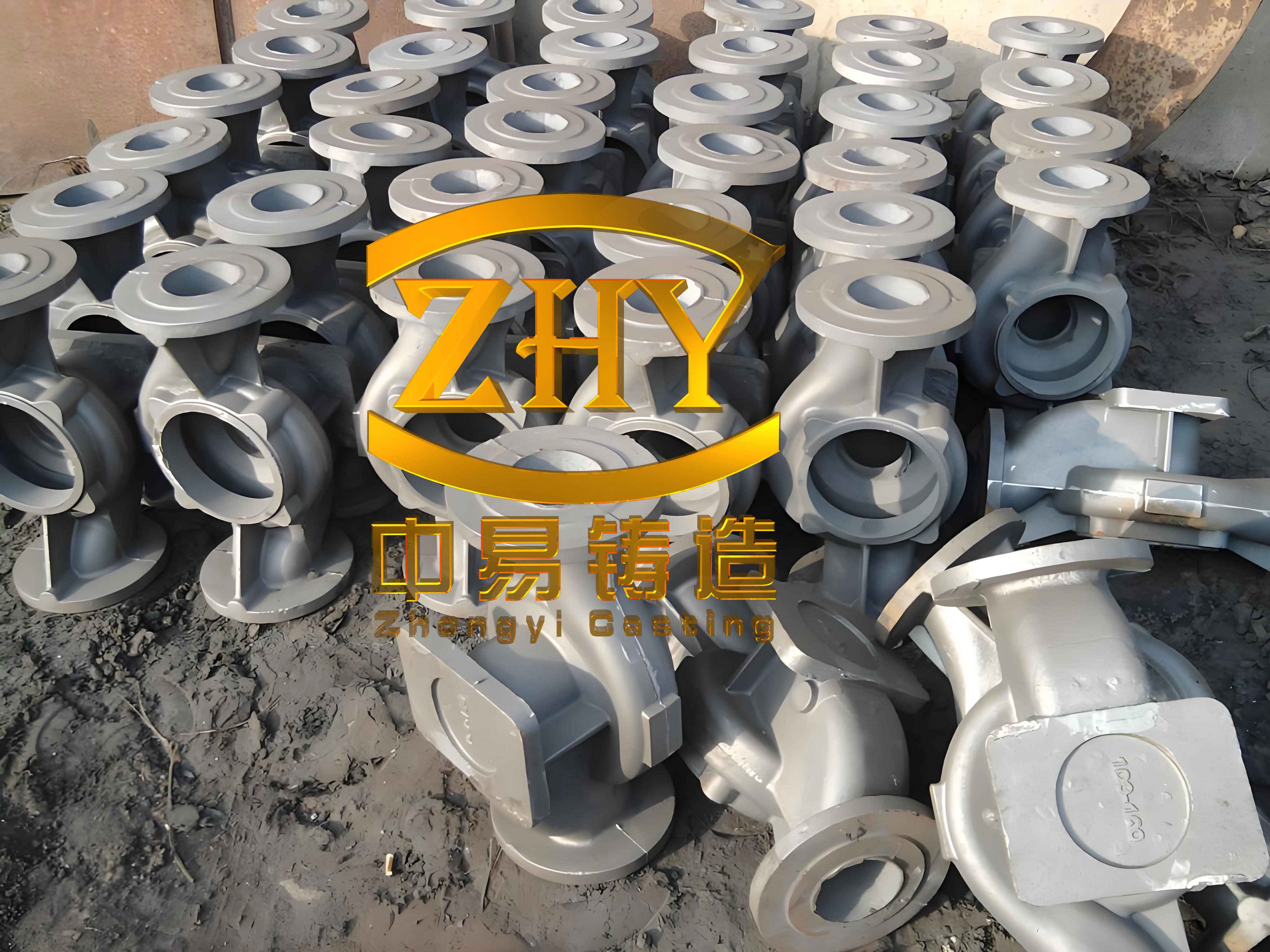
The grey iron casting used in this investigation is HT250, with a typical composition (by weight percentage) of 2.5–4.0% C, 1.0–1.3% Si, 0.9–1.3% Mn, 0.3% P, 0.15% S, and the balance Fe. This composition is representative of many industrial grey iron casting applications. Prior to phosphating, the substrates were mechanically ground using 240-grit and 400-grit sandpapers to ensure a smooth surface. They were then degreased with a phosphate-free detergent at room temperature for 5 minutes, followed by acid pickling in a 50 g/L phosphoric acid solution at room temperature to remove rust and scale. After each step, the samples were rinsed thoroughly with flowing自来水 for 1 minute to eliminate residues.
The phosphating bath formulation was based on a medium-temperature zinc-calcium-manganese system, comprising 32 g/L Zn(NO3)2, 10 g/L Ca(H2PO4)2, 9.5 g/L acid manganese phosphate, and 1 g/L tartaric acid. The bath was maintained at a temperature range of 70–80°C during processing. To optimize the process for grey iron casting, an orthogonal experimental design was employed, considering four critical factors: total acid (TA), acid ratio (TA/FA, where FA is free acid), acid pickling time, and phosphating time. The levels for each factor are summarized in Table 1.
| Factor | Level 1 | Level 2 | Level 3 | Level 4 |
|---|---|---|---|---|
| Total Acid (TA), points | 20 | 30 | 40 | 50 |
| Acid Ratio (TA/FA) | 18.0 | 14.0 | 10.0 | 6.0 |
| Acid Pickling Time (s) | 20 | 30 | 40 | 50 |
| Phosphating Time (min) | 5 | 10 | 15 | 20 |
The orthogonal array L16(410) was used, with corrosion resistance as the evaluation index. Corrosion resistance was assessed via the drop test according to QB/T 3824-1999, using a solution composed of 0.25 mol/L CuSO4·5H2O, 10% NaCl, and 0.1 mol/L HCl in a volume ratio of 40.0:20.0:0.8. The time until red rust spots appeared was recorded at multiple points on each phosphated grey iron casting sample under standard conditions of (25 ± 2)°C. Additionally, the surface morphology of the phosphate coatings was examined using a TESCAN VEGAII Czech scanning electron microscope (SEM) to correlate microstructure with performance.
The results of the orthogonal experiments are presented in Table 2, which includes the measured corrosion resistance times for each trial. The analysis of these data reveals the influence of each factor on the phosphating outcome for grey iron casting.
| Trial No. | Total Acid (points) | Acid Ratio (TA/FA) | Acid Pickling Time (s) | Phosphating Time (min) | Corrosion Resistance Time (s) |
|---|---|---|---|---|---|
| 1 | 20 | 18.0 | 20 | 5 | 61 |
| 2 | 20 | 14.0 | 30 | 10 | 35 |
| 3 | 20 | 10.0 | 40 | 15 | 24 |
| 4 | 20 | 6.0 | 50 | 20 | 20 |
| 5 | 30 | 18.0 | 40 | 20 | 445 |
| 6 | 30 | 14.0 | 50 | 15 | 937 |
| 7 | 30 | 10.0 | 20 | 10 | 90 |
| 8 | 30 | 6.0 | 30 | 5 | 25 |
| 9 | 40 | 18.0 | 50 | 10 | 572 |
| 10 | 40 | 14.0 | 40 | 5 | 70 |
| 11 | 40 | 10.0 | 30 | 20 | 324 |
| 12 | 40 | 6.0 | 20 | 15 | 69 |
| 13 | 50 | 18.0 | 30 | 15 | 80 |
| 14 | 50 | 14.0 | 20 | 20 | 280 |
| 15 | 50 | 10.0 | 50 | 5 | 30 |
| 16 | 50 | 6.0 | 40 | 10 | 40 |
To quantify the effects, the range analysis was performed. The sum of corrosion resistance times for each level of every factor was calculated, denoted as Ii, IIi, IIIi, and IVi, where i represents the factor. The range Ri for each factor is the difference between the maximum and minimum of these sums, indicating the factor’s influence magnitude. The results are summarized in Table 3.
| Factor | Ii | IIi | IIIi | IVi | Range Ri |
|---|---|---|---|---|---|
| Total Acid (TA) | 140 | 1497 | 1035 | 330 | 750.5 |
| Acid Ratio (TA/FA) | 1158 | 1322 | 468 | 154 | 775.3 |
| Acid Pickling Time | 251 | 464 | 1559 | 579 | 713.3 |
| Phosphating Time | 186 | 727 | 1110 | 1069 | 773.0 |
The order of influence on corrosion resistance is: Acid Ratio > Phosphating Time > Total Acid > Acid Pickling Time. This indicates that for grey iron casting, controlling the acid ratio and phosphating time is crucial for achieving optimal phosphating results. The acid ratio, defined as $$ R = \frac{TA}{FA} $$, directly affects the kinetics of phosphate deposition. A higher acid ratio (lower free acid) slows down hydrogen evolution at the micro-cathodic sites on the grey iron casting surface, allowing for a more gradual pH rise at the metal-solution interface, which promotes finer crystal growth. Conversely, a low acid ratio accelerates hydrogen evolution, leading to coarse and porous coatings.
The total acid (TA) represents the concentration of hydrolyzable phosphate species in the bath. An optimal TA ensures sufficient nucleation sites for phosphate crystals without causing excessive growth that incorporates impurities. The relationship between TA and corrosion resistance can be modeled approximately as a quadratic function: $$ T_c = a \cdot TA^2 + b \cdot TA + c $$ where \( T_c \) is the corrosion resistance time, and a, b, c are constants derived from experimental data. For the grey iron casting HT250, the maximum \( T_c \) occurs at TA = 30 points, as shown in the data.
The phosphating time \( t_p \) influences coating thickness and density. The growth of phosphate film on grey iron casting follows a logarithmic trend: $$ \delta(t_p) = \delta_{\infty} \left(1 – e^{-k t_p}\right) $$ where \( \delta(t_p) \) is the coating thickness at time \( t_p \), \( \delta_{\infty} \) is the limiting thickness, and k is a rate constant. Prolonged phosphating beyond an optimal point leads to over-etching by free acid, increasing porosity. From the orthogonal results, the best phosphating time for grey iron casting is 15 minutes.
Acid pickling time \( t_a \) in 50 g/L H3PO4 affects surface activation. Insufficient pickling leaves oxides that impede adhesion, while excessive pickling exposes graphite flakes, hindering phosphate bonding. The effect can be described by: $$ \eta = \alpha \ln(t_a) – \beta t_a $$ where \( \eta \) is an adhesion efficiency parameter, and \( \alpha \), \( \beta \) are coefficients. For grey iron casting, the optimal \( t_a \) is between 30 and 40 seconds.
Based on the orthogonal optimization, the best phosphating parameters for grey iron casting HT250 are: total acid 30 points, acid ratio 14.0, acid pickling time 30 s in 50 g/L phosphoric acid, and phosphating time 15 min at 70–80°C. This combination yields a corrosion resistance time of 937 seconds in the drop test, indicating excellent performance.
To further understand the microstructure, SEM analysis was conducted on four representative samples with varying corrosion resistance, as detailed in Table 4. The morphological differences highlight the importance of crystal size and packing density in grey iron casting phosphating.
| Sample | Total Acid (points) | Acid Ratio | Acid Pickling Time (s) | Phosphating Time (min) | Corrosion Resistance | Time (s) |
|---|---|---|---|---|---|---|
| A | 30 | 14.0 | 50 | 15 | Excellent | 937 |
| B | 40 | 18.0 | 50 | 10 | Good | 572 |
| C | 40 | 10.0 | 30 | 20 | Moderate | 324 |
| D | 50 | 6.0 | 40 | 10 | Poor | 40 |
Sample A, with the highest corrosion resistance, exhibits a uniform and dense phosphate layer composed of flat block-like crystals sized 2–3 μm. The compact stacking minimizes porosity, enhancing barrier protection. Sample B shows feather-like and sheet-like crystals of 4–5 μm, with interlocked packing providing good but inferior density. Sample C consists of rectangular block crystals of 1–2 μm, but the coating is looser with some voids. Sample D displays irregular spherical particles ranging from 0.5 to 3.0 μm, resulting in a porous and uneven morphology. These observations confirm that for grey iron casting, a fine and tightly packed crystal structure is essential for corrosion resistance.
The phosphating mechanism on grey iron casting involves several simultaneous reactions. Initially, acid pickling dissolves the oxide layer and slightly etches the iron matrix, exposing fresh metal: $$ \text{Fe}_2\text{O}_3 + 6\text{H}^+ \rightarrow 2\text{Fe}^{3+} + 3\text{H}_2\text{O} $$ and $$ \text{Fe} + 2\text{H}^+ \rightarrow \text{Fe}^{2+} + \text{H}_2 \uparrow $$. During phosphating, the dissolution of zinc, calcium, and manganese phosphates releases ions that react at the surface. The primary deposition reaction can be represented as: $$ 3\text{Zn}^{2+} + 2\text{H}_2\text{PO}_4^- + 4\text{H}_2\text{O} \rightarrow \text{Zn}_3(\text{PO}_4)_2 \cdot 4\text{H}_2\text{O} + 4\text{H}^+ $$. Similarly, calcium and manganese phosphates contribute to mixed crystal formation. The presence of graphite in grey iron casting complicates this process by creating non-conductive zones that disrupt current flow, necessitating optimized parameters to ensure complete coverage.
The acid ratio plays a pivotal role in controlling pH locally. The free acid concentration [H+] affects the dissolution rate of iron, which can be expressed as: $$ r_{\text{diss}} = k_d [\text{H}^+]^n $$ where \( k_d \) is a rate constant and n is an exponent. A lower [H+] (higher acid ratio) reduces \( r_{\text{diss}} \), allowing phosphate precipitation to dominate. This balance is critical for grey iron casting to avoid excessive hydrogen evolution that could loosen the coating.
Furthermore, the total acid influences the supersaturation level \( S \) of phosphate ions, defined as: $$ S = \frac{[\text{Zn}^{2+}][\text{PO}_4^{3-}]}{K_{sp}} $$ where \( K_{sp} \) is the solubility product of zinc phosphate. Higher TA increases S, accelerating nucleation but potentially leading to coarse crystals if unchecked. The optimal TA of 30 points for grey iron casting provides moderate supersaturation for fine crystal growth.
Phosphating time integrates these kinetics. The coating weight \( W \) as a function of time can be approximated by: $$ W(t_p) = W_{\text{max}} \left(1 – \exp(-k_p t_p)\right) – \lambda t_p $$ where \( W_{\text{max}} \) is the maximum achievable weight, \( k_p \) is the deposition rate constant, and \( \lambda \) accounts for dissolution by free acid. The optimal time maximizes W, which for grey iron casting is 15 minutes.
In industrial applications, grey iron casting components often have complex geometries, making uniform phosphating challenging. The optimized medium-temperature zinc-calcium-manganese process offers advantages over high-temperature manganese systems in energy efficiency and over medium-temperature zinc systems in coating quality for grey iron casting. The reduced temperature (70–80°C) lowers energy consumption while maintaining performance, making it suitable for large-scale production of grey iron casting parts like engine blocks and manifolds.
To validate the robustness of the optimized process, additional tests could include salt spray testing according to ASTM B117, adhesion tests, and analysis of coating composition via EDS. Moreover, the effect of grey iron casting microstructure, such as graphite flake size and distribution, on phosphating should be investigated further. Variability in grey iron casting compositions across batches may require slight adjustments in TA or acid ratio to maintain consistency.
In conclusion, through orthogonal experimentation, the medium-temperature zinc-calcium-manganese phosphating process for grey iron casting HT250 has been successfully optimized. The key parameters are total acid 30 points, acid ratio 14.0, acid pickling time 30 s in 50 g/L phosphoric acid, and phosphating time 15 min at 70–80°C. This combination yields a phosphate coating with fine, dense crystals that provide excellent corrosion resistance, addressing the challenges posed by graphite in grey iron casting. The findings emphasize the importance of tailored surface treatments for grey iron casting to ensure durability in demanding applications. Future work could explore the integration of nano-additives or post-treatment sealing to further enhance the performance of phosphated grey iron casting components.