
In my extensive experience with foundry processes, I have encountered numerous challenges in producing high-quality gray iron casting components, particularly when dealing with tall and complex geometries. The evaporative pattern casting (EPC) method, often referred to as lost foam casting, has emerged as a pivotal technique for such applications, offering advantages in design flexibility and reduced machining. However, achieving defect-free gray iron casting in EPC requires meticulous control over various parameters. Through years of hands-on work, I have analyzed common defects and developed strategies to mitigate them, which I will elaborate on in this comprehensive discussion. This article delves into the intricacies of defect formation, preventive measures, and theoretical underpinnings, with a focus on enhancing the reliability of gray iron casting in industrial settings.
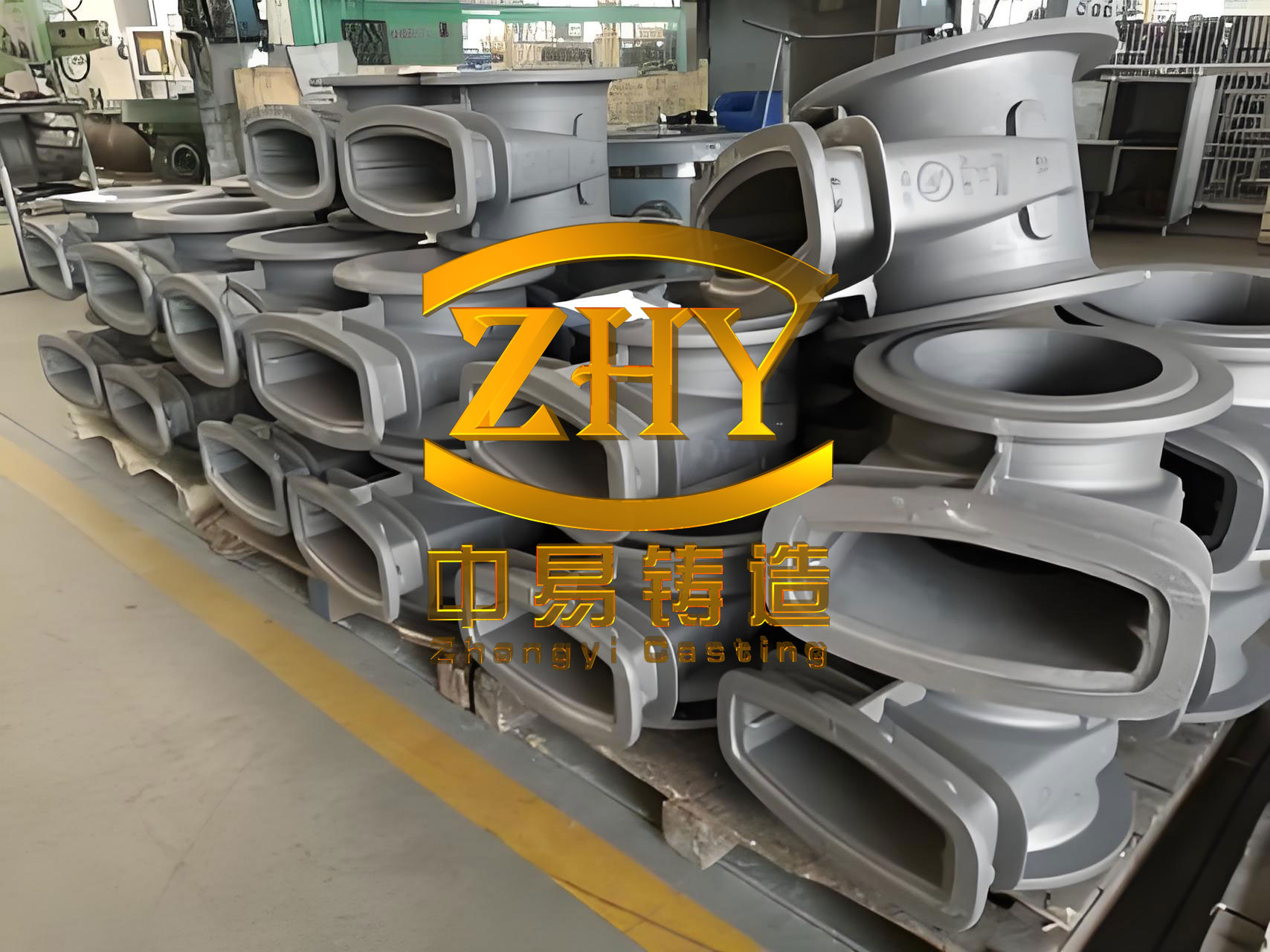
The gray iron casting process in EPC involves using expandable polystyrene (EPS) patterns that vaporize upon contact with molten metal, leaving behind the desired shape. This method is especially beneficial for intricate parts, such as those with thin walls (e.g., 12 mm) and significant heights (e.g., 720 mm), where traditional green sand molding falls short. However, the decomposition of EPS patterns can introduce defects like wrinkles, gas porosity, and shrinkage, compromising the integrity of gray iron casting products. In my practice, I have observed that defects often manifest as surface imperfections, internal voids, or leakage during pressure testing, leading to high rejection rates. To address this, I have conducted thorough analyses and implemented改进措施 that significantly improve yield, as I will detail below.
One of the primary defects in gray iron casting via EPC is the formation of wrinkles or carbonaceous deposits on large planar surfaces. These defects arise from incomplete vaporization of the EPS pattern, resulting in residual carbon that gets trapped at the metal-mold interface. During machining, these areas may reveal black carbon spots, pinholes, or shrinkage cavities, rendering the gray iron casting unsuitable for critical applications. Another common issue is the occurrence of gas porosity and sand inclusions in machined holes, such as threaded sections, which can cause thread stripping or failure under load. Additionally, internal defects like micro-porosity or shrinkage can lead to leakage during hydrostatic testing at pressures around 3 MPa, a critical concern for components like valves or pumps. These defects, whether isolated or combined, can reduce production yields to below 50%, underscoring the need for robust process optimization in gray iron casting.
To understand these defects, I have analyzed various factors influencing the EPC process for gray iron casting. The gating system plays a crucial role: bottom gating can lead to thermal gradients and carbon enrichment on upper surfaces, while top gating may entrain coating debris or pattern residues into the melt. Ideally, a stepped gating system is preferred, but practical limitations often necessitate alternatives. Pouring temperature and speed are equally critical; for instance, at temperatures between 1350°C and 1420°C, EPS tends to pyrolyze into crystalline carbon, increasing the risk of wrinkles. Faster pouring helps reduce residual carbon by promoting rapid pattern vaporization. The vacuum level applied during casting affects gas evolution and flow dynamics: higher vacuum (e.g., 30–35 kPa) enhances removal of decomposition products but can induce turbulence and gas entrapment if excessive. Moreover, the density of the EPS pattern is vital—too high, and it generates excessive gases and residues; too low, and it causes rough surfaces that trap impurities. Through systematic evaluation, I have formulated改进措施 that address these variables holistically.
In my approach to improving gray iron casting quality, I have redesigned the gating system to incorporate a mid-lower closed configuration. This design balances temperature distribution across critical sections, such as machined holes, while allowing for thicker sections on large planes to facilitate feeding and minimize wrinkles. The closed system prevents air ingestion, and I always maintain a full sprue basin during pouring to ensure steady flow. Additionally, I include a slag trap or riser at the gating junction to capture coating debris and pyrolysis residues, which also aids in minor feeding. To reduce gas generation, I use hollow patterns for the sprue, cutting down on EPS material. Pouring parameters are tightly controlled: I aim for temperatures of 1450–1480°C to ensure complete pattern vaporization, and I employ a pouring sequence that starts slow, accelerates, and tapers off to minimize turbulence. The EPS pattern density is maintained at approximately 0.02 g/cm³, consistent across the entire system, to optimize surface finish and gas evolution. Vacuum levels are set at 30–35 kPa, providing sufficient suction without causing flow instability. These adjustments, combined with strict process controls—such as ensuring pattern dryness, using low-emission adhesives sparingly, and applying coatings with thicknesses under 1.5 mm for adequate permeability—have elevated the success rate of gray iron casting to around 85%, with stable performance across batches.
Beyond practical measures, I have developed theoretical frameworks to model defect formation in gray iron casting. For example, the rate of EPS decomposition can be described by Arrhenius-type equations, where the vaporization speed $v$ depends on temperature $T$ and activation energy $E_a$:
$$ v = A \exp\left(-\frac{E_a}{RT}\right) $$
Here, $A$ is a pre-exponential factor, and $R$ is the gas constant. Higher pouring temperatures increase $v$, reducing carbon residues. Similarly, gas generation during gray iron casting can be quantified using the ideal gas law, where the volume of gas $V_g$ produced from EPS decomposition is:
$$ V_g = \frac{nRT}{P} $$
with $n$ as moles of gas, $T$ as temperature, and $P$ as pressure. In EPC, vacuum pressure $P_v$ reduces $V_g$, minimizing porosity risks. I often use such equations to predict optimal parameters for gray iron casting runs.
| Defect Type | Primary Causes | Impact on Gray Iron Casting |
|---|---|---|
| Wrinkles/Carbon Deposits | Low pouring temperature, high EPS density, improper gating | Surface imperfections, machining issues, reduced strength |
| Gas Porosity | Excessive gas generation, high vacuum turbulence, moist patterns | Internal voids, leakage, failure under pressure |
| Shrinkage Cavities | Inadequate feeding, thermal gradients, low carbon equivalent | Localized weakness, machining defects |
| Sand Inclusions | Coating breakdown, rough pattern surfaces, entrained debris | Machining flaws, thread damage |
To further elaborate, the carbon equivalent (CE) in gray iron casting is a key factor influencing shrinkage and graphitization. CE is calculated as:
$$ \text{CE} = \text{C} + 0.3(\text{Si} + \text{P}) $$
where C, Si, and P are weight percentages of carbon, silicon, and phosphorus, respectively. Lowering CE can reduce shrinkage tendency but must be balanced with fluidity requirements. In my gray iron casting practices, I adjust charge materials to achieve an optimal CE range, typically around 3.9–4.1, to minimize defects while maintaining castability. Additionally, the cooling rate $ \frac{dT}{dt} $ in EPC affects microstructure; for gray iron casting, faster cooling promotes finer graphite flakes, enhancing strength. This can be modeled using Fourier’s law:
$$ q = -k \nabla T $$
where $q$ is heat flux, $k$ is thermal conductivity, and $\nabla T$ is temperature gradient. By controlling sand compaction and vacuum, I manipulate $q$ to achieve desired properties in gray iron casting components.
| Parameter | Optimal Range | Rationale for Gray Iron Casting |
|---|---|---|
| Pouring Temperature | 1450–1480°C | Enhances EPS vaporization, reduces carbon residues |
| Vacuum Level | 30–35 kPa | Balances gas removal and flow stability |
| EPS Pattern Density | 0.02 g/cm³ | Minimizes gas generation and surface roughness |
| Coating Thickness | < 1.5 mm | Ensures permeability and strength |
| Gating Design | Mid-lower closed system | Improves temperature distribution, reduces defects |
In my experience, implementing these改进措施 requires a holistic view of the gray iron casting process. For instance, pattern assembly must use minimal adhesive to avoid additional gas sources, and coatings should be formulated for high permeability to allow decomposition products to escape. I often conduct trial runs to fine-tune parameters, using statistical methods like design of experiments (DOE) to analyze interactions between variables. The goal is to achieve a robust gray iron casting process that consistently delivers parts meeting stringent specifications, such as pressure tightness and dimensional accuracy. By integrating theoretical insights with practical adjustments, I have managed to transform challenging gray iron casting projects into reliable production streams, reducing waste and cost.
Looking ahead, advancements in simulation software offer promising avenues for optimizing gray iron casting in EPC. Computational fluid dynamics (CFD) models can predict metal flow and temperature fields, helping to design gating systems that minimize defects. For example, the Navier-Stokes equations for incompressible flow:
$$ \rho \left( \frac{\partial \mathbf{u}}{\partial t} + \mathbf{u} \cdot \nabla \mathbf{u} \right) = -\nabla p + \mu \nabla^2 \mathbf{u} + \mathbf{f} $$
where $\rho$ is density, $\mathbf{u}$ is velocity, $p$ is pressure, $\mu$ is viscosity, and $\mathbf{f}$ represents body forces, can be solved to visualize filling patterns in gray iron casting. Coupled with heat transfer analyses, these tools enable proactive defect prevention. In my work, I leverage such simulations to validate gating designs before physical trials, saving time and resources in gray iron casting development.
Moreover, material science plays a pivotal role in enhancing gray iron casting performance. The microstructure of gray iron, characterized by graphite flakes in a ferritic or pearlitic matrix, dictates mechanical properties. During solidification, the growth of graphite can be described by diffusion-controlled kinetics:
$$ \frac{dr}{dt} = \frac{D}{r} (C_\infty – C_s) $$
where $r$ is graphite radius, $t$ is time, $D$ is diffusion coefficient, $C_\infty$ is bulk concentration, and $C_s$ is surface concentration. By controlling cooling rates and inoculant additions, I promote uniform graphite distribution, reducing shrinkage and porosity in gray iron casting. This is especially critical for complex geometries where thermal gradients are pronounced.
In conclusion, the journey to defect-free gray iron casting in evaporative pattern casting is multifaceted, involving a blend of empirical knowledge and scientific principles. Through persistent analysis and adaptation, I have identified key levers—such as gating design, pouring parameters, and pattern quality—that govern the success of gray iron casting operations. By sharing these insights, I hope to contribute to the broader foundry community’s efforts in producing high-integrity gray iron casting components. As industries demand more sophisticated parts, continued innovation in process control and modeling will be essential for advancing gray iron casting technologies, ensuring they meet ever-higher standards of quality and reliability.