
In my extensive experience with foundry processes, I have encountered numerous defects that compromise the integrity of cast components. Among these, hot cracks in gray iron castings are particularly perilous, especially in critical applications such as engine blocks. These defects, if undetected, can propagate under operational stresses, leading to catastrophic failures like coolant or oil leaks, or even complete engine disintegration. This article delves into my systematic study of hot cracks in a specific V-type engine block, exploring the underlying mechanisms, statistical patterns, and effective preventive measures. Throughout this discussion, I will emphasize the unique challenges and solutions associated with gray iron casting, a material widely used for its excellent castability and damping capacity.
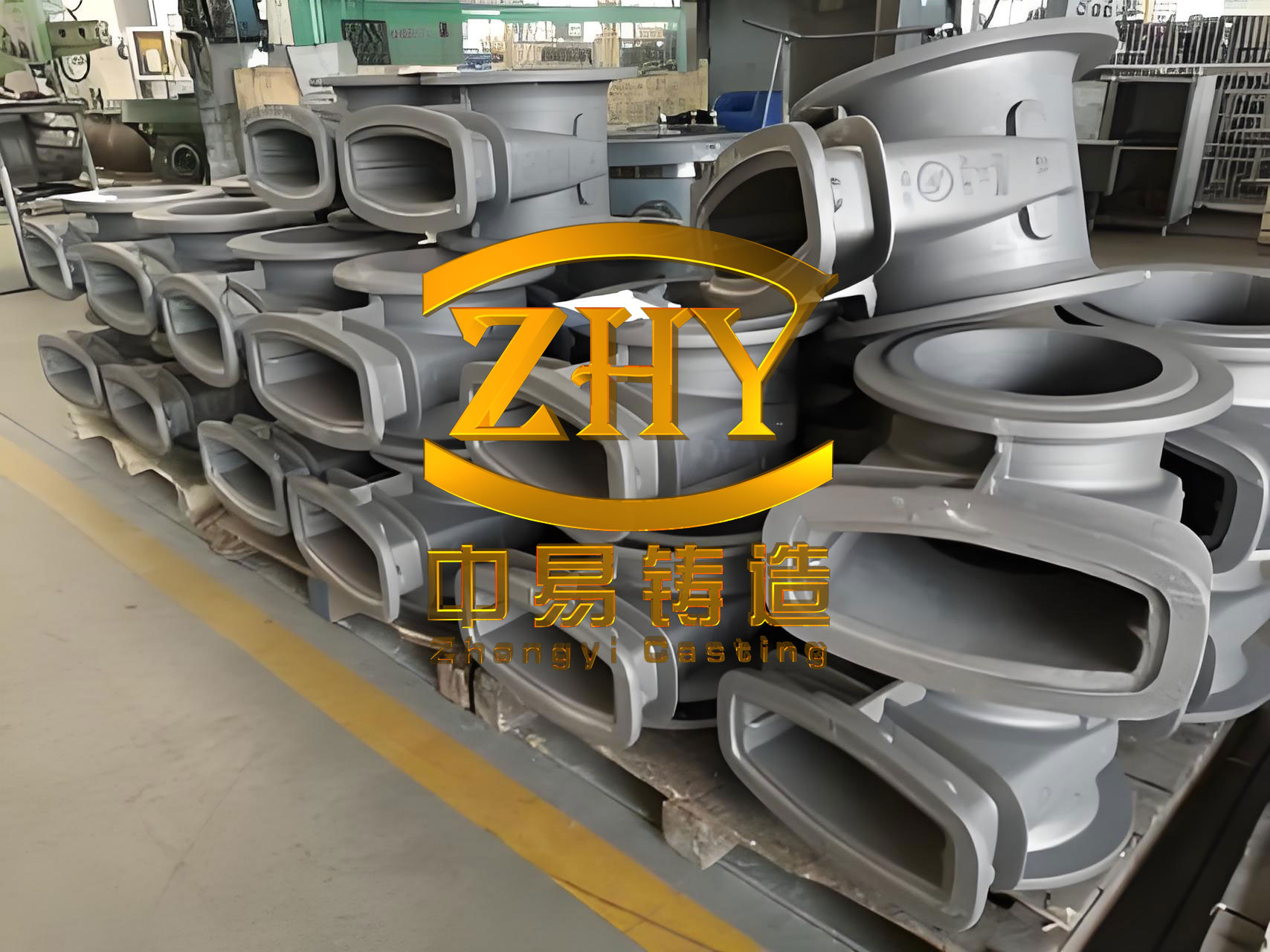
Cracks in castings are broadly categorized into hot tears and cold cracks based on their formation temperature range. Hot cracks occur during the final stages of solidification when a coherent solid skeleton exists but interdendritic liquid films remain. If tensile stresses act on this mushy zone and the liquid cannot feed the incipient tear, a hot crack forms. These cracks are typically wide, jagged, and exhibit oxidized surfaces due to exposure to high temperatures. In contrast, cold cracks form after complete solidification when localized stresses exceed the material’s strength at that temperature. Their appearance can range from oxidized at higher temperatures to metallic and bright at lower temperatures, and the crack faces can often be mated perfectly. Distinguishing between these crack types is crucial for root cause analysis. The gray iron casting under investigation here, a 12-cylinder V-engine block weighing 1172 kg and made of HT280 gray iron, was produced using a cold-box core process for the cores and an alkaline phenolic resin no-bake sand for the molds. The pouring orientation was with the oil pan joint face upward, employing a bottom-gating system. A persistent issue was the appearance of cracks in the thick sections between cylinder banks on this joint face, identified through morphological analysis as hot cracks.
To quantify the problem, I conducted a detailed statistical analysis. The crack locations on the casting were systematically labeled, as illustrated in the schematic. Over a four-month production period, data was collected on every defective gray iron casting. The table below summarizes the crack occurrences by date and position, revealing insightful patterns.
| Sequence | Production Date | Defect Location | Sequence | Production Date | Defect Location |
|---|---|---|---|---|---|
| 1 | July 2 | Left 1 | 19 | September 11 | Right 3 |
| 2 | July 2 | Right 2 | 20 | September 11 | Right 3 |
| 3 | July 19 | Left 3 | 21 | September 11 | Left 3 |
| 4 | July 27 | Left 2 | 22 | September 12 | Right 3 |
| 5 | August 12 | Right 4 | 23 | September 24 | Left 4 |
| 6 | August 13 | Left 1 | 24 | September 24 | Right 4 |
| 7 | August 13 | Right 4 | 25 | September 25 | Left 4 |
| 8 | August 13 | Right 4 | 26 | September 28 | Left 3 |
| 9 | August 13 | Right 3 | 27 | September 28 | Right 3 |
| 10 | August 15 | Right 2 | 28 | October 7 | Right 1 |
| 11 | August 15 | Right 1 | 29 | October 9 | Right 4 |
| 12 | August 26 | Right 3 | 30 | October 12 | Right 4 |
| 13 | August 28 | Right 3 | 31 | October 13 | Right 1 |
| 14 | September 2 | Left 3 | 32 | October 14 | Right 3 |
| 15 | September 9 | Right 2 | 33 | October 14 | Right 4 |
| 16 | September 11 | Right 2 | 34 | October 23 | Right 3 |
| 17 | September 11 | Right 3 | 35 | October 24 | Left 3 |
| 18 | September 11 | Left 4 & Right 4 |
The data clearly indicates a higher propensity for hot cracks on the right side of the gray iron casting, with a right-to-left ratio of approximately 2.4:1. Furthermore, clustering was observed on specific dates, such as August 13 and September 11, where defect rates spiked dramatically. An analysis by positional frequency showed that the central sections (particularly the second and third banks) were most vulnerable, accounting for over 72% of all cracks. This pattern suggested that the issue was not random but tied to specific thermal and mechanical conditions during solidification of the gray iron casting. A thorough review of process parameters, including molten metal chemistry and pouring practices, ruled out compositional fluctuations as a primary cause, directing focus toward solidification dynamics.
The formation mechanism of hot cracks in this gray iron casting is intrinsically linked to the casting geometry and the bottom-gating pouring technique. The problematic sections are thick, isolated regions surrounded by sand cores, which retard heat extraction and prolong the solidification time within the critical mushy zone. In a bottom-gated system, the upper sections of the mold fill first but with cooler metal, while the lower sections receive hotter metal later. Consequently, solidification initiates at the top. As the top sections cool and contract, they impose compressive stresses on the still-molten or mushy zones. However, the subsequent solidification of the massive lower section generates significant contraction—both liquid and solid. This contraction creates a tensile force that, due to the lever-like action of the rigidified upper structure and the restraining sand cores, is transmitted upward. If the top sections, especially the thick junctions, have not yet fully solidified and gained sufficient strength, this transmitted tensile stress can exceed the material’s hot tearing resistance, leading to crack initiation. This mechanism explains why hot cracks are external and appear in these specific locations.
To substantiate this theory, I performed dimensional measurements on the cracked and sound junctions of the gray iron casting. The hypothesis was that if tensile stretching occurred during the mushy stage, the cracked sections would be slightly thicker. The measurement method involved comparing the web thickness at identical locations. The results are summarized below.
| Sample Pair | Thickness at Cracked Location (mm) | Thickness at Sound Location (mm) | Thickness Difference (mm) |
|---|---|---|---|
| 1 | 46.1 | 44.4 | 1.7 |
| 2 | 45.7 | 44.5 | 1.2 |
| 3 | 45.9 | 44.3 | 1.6 |
| 4 | 46.4 | 44.3 | 2.1 |
| 5 | 45.9 | 44.5 | 1.4 |
| 6 | 46.1 | 44.5 | 1.6 |
| 7 | 46.3 | 44.5 | 1.8 |
| 8 | 45.8 | 44.4 | 1.4 |
| 9 | 46.2 | 44.5 | 1.7 |
| 10 | 45.9 | 44.4 | 1.5 |
| 11 | 46.2 | 44.5 | 1.7 |
| Average | 46.05 | 44.44 | 1.61 |
The consistent positive difference of about 1.6 mm confirms that the cracked sections in the gray iron casting were indeed plastically stretched during solidification. This deformation occurred because the sand core’s resistance was insufficient to counteract the transmitted tensile stress, allowing the core to deflect inward and the semi-solid metal to stretch, culminating in a hot crack. This finding perfectly aligns with the proposed mechanistic model.
The core of the problem in this gray iron casting is the interplay between thermal gradients, solidification sequence, and stress development. The fundamental driving force for stress generation is constrained thermal contraction. The thermal stress ($\sigma$) developed in a material undergoing cooling can be approximated by:
$$\sigma = E \cdot \alpha \cdot \Delta T \cdot f(C)$$
where $E$ is the Young’s modulus (which for gray iron casting is temperature-dependent and relatively low in the mushy zone), $\alpha$ is the coefficient of thermal expansion, $\Delta T$ is the temperature drop causing contraction, and $f(C)$ is a constraint factor that depends on geometry and mold rigidity. For the hot tearing condition, the critical parameter is the strain rate ($\dot{\varepsilon}$) in the coherent mush versus its ductility or critical strain to fracture ($\varepsilon_c$). A hot tear forms when:
$$\int_{t_{coh}}^{t_{solid}} \dot{\varepsilon}(t) \, dt > \varepsilon_c(T)$$
Here, $t_{coh}$ is the time when coherency is established, and $t_{solid}$ is the time of complete solidification. The strain rate is driven by the differential contraction between sections of the gray iron casting. In our case, the bottom section’s delayed solidification creates a strain rate peak in the top junctions during their vulnerable mushy stage. The susceptibility of gray iron casting to hot tearing is also influenced by its microstructure. The presence of graphite flakes generally improves damping and reduces stress concentration, but excessive interdendritic liquid enriched with low-melting-point elements like sulfur and phosphorus can severely weaken the mush. The tendency can be modeled by considering the solid fraction ($f_s$) profile. Hot cracks are likely when tensile stresses are applied while the solid fraction is between a critical coherency point ($f_s^{coh}$, typically ~0.6-0.8) and complete solidity ($f_s=1$). The local solidification time ($t_f$) for a section of thickness $d$ can be estimated using Chvorinov’s rule:
$$t_f = B \cdot \left( \frac{V}{A} \right)^n = B \cdot \left( \frac{d}{2} \right)^n$$
where $B$ and $n$ are constants dependent on the mold material and metal properties. For the thick webs in our gray iron casting, $t_f$ is large, extending the vulnerable time window. The key to prevention is to either reduce the stress $\sigma$ or shorten the time window $t_f – t_{coh}$ for the critical sections.
Based on this mechanistic understanding, I devised and tested several solutions for the gray iron casting. The primary constraint was the existing tooling and established bottom-gating process, which were not easily altered. The considered approaches included: (1) Modifying the solidification environment of the hot spot by adding chills to accelerate cooling, thereby increasing the local solid fraction and strength before the peak tensile stress arrival. (2) Adjusting the alloy composition to reduce the freezing range and the amount of detrimental low-strength eutectics, though this was less practical due to material specification limits. (3) Employing lower pouring temperatures to decrease total contraction, albeit with the risk of mist runs in thin sections of the complex gray iron casting. The most direct and controllable method was the application of chills.
I initiated a series of production trials, applying steel chills only to the more crack-prone right-side junctions of the gray iron casting. This allowed for a direct within-casting comparison. The chills were placed in the mold cavity adjacent to the thick webs to extract heat rapidly. The table below outlines the experimental batches and outcomes.
| Batch Number | Number of Castings | Chill Location | Hot Cracks on Right Side (Chilled) | Hot Cracks on Left Side (Unchilled) | Conclusion |
|---|---|---|---|---|---|
| 1 | 8 | Right-side junctions | 0 | 1 | Effective on chilled side |
| 2 | 10 | Right-side junctions | 0 | 1 | Effective on chilled side |
| 3 | 9 | Right-side junctions | 0 | 1 | Effective on chilled side |
| 4 | 8 | Right-side junctions | 0 | 1 | Effective on chilled side |
| Total | 35 | 0 | 4 | 100% prevention on chilled side |
The results were unequivocal: not a single hot crack occurred on the chilled right-side junctions of the gray iron casting. However, four cracks did appear on the unchilled left side, confirming both the efficacy of the chill and the persistence of the problem in untreated areas. The chill works by increasing the local cooling rate, which can be expressed by enhancing the effective heat transfer coefficient. The solidification time for the chilled section ($t_{f,chill}$) is reduced significantly:
$$t_{f,chill} = \frac{\rho L}{h_{eff} (T_m – T_0)} \cdot \frac{V}{A}$$
where $\rho$ is density, $L$ is latent heat, $h_{eff}$ is the effective heat transfer coefficient (much higher with a metal chill), $T_m$ is the melting temperature, and $T_0$ is the initial chill temperature. By reducing $t_f$, the section solidifies earlier, increasing its solid fraction $f_s$ and strength $S(f_s)$ before the critical tensile stress $\sigma_{crit}$ from the bottom section arrives. The condition for safety becomes:
$$S(f_s(t)) > \sigma_{crit}(t) \quad \text{for all } t \in [t_{coh}, t_{solid}]$$
The chill ensures this inequality holds by shifting the $S(t)$ curve upward in time relative to the $\sigma_{crit}(t)$ curve.
Following the successful trials, the process was finalized for full-scale production of the gray iron casting. To ensure chill stability during mold compaction, strong magnets were embedded in the pattern at the chill locations. This guaranteed precise positioning and repeatability. The finalized chill layout was applied to all critical junctions on both sides of the casting. Since implementation, the occurrence of hot cracks in these gray iron castings has been virtually eliminated, validating the robustness of the solution. This case underscores a critical principle: the root cause of most casting cracks, especially in complex gray iron castings, is the development and concentration of stress during solidification. A holistic approach to process design, considering thermal profiles, solidification sequences, and stress trajectories, is essential for defect prevention.
In conclusion, my investigation into the hot crack defect in this V-type engine block, a prime example of a demanding gray iron casting, yielded several key insights. First, the defect was fundamentally linked to the bottom-gating process, which created an adverse solidification sequence where the top sections, though solidifying first, were subjected to tensile stresses from the later-shrinking massive bottom section. Second, statistical and metrological evidence confirmed the mechanism, showing a clear positional bias and measurable deformation at crack sites. Third, the application of localized chills proved to be a highly effective countermeasure. By dramatically increasing the cooling rate at the susceptible thick sections, the chills promoted earlier solidification and strength development, enabling the gray iron casting to withstand the imposed tensile stresses without tearing. This study reinforces that managing solidification stress is paramount in gray iron casting production. Whether through strategic chilling, modified gating design, or alloy adjustment, the goal is to synchronize the strength development of vulnerable sections with the evolution of internal stresses. The methodologies and principles discussed here—root cause analysis through combined statistical and mechanistic modeling, followed by targeted process intervention—are broadly applicable to enhancing quality and reliability in the field of gray iron casting and cast metallurgy as a whole.
The broader implications of this work touch upon the optimization of casting processes for heavy-section gray iron components. Future research could involve numerical simulation to predict stress fields more accurately, or explore the effect of inoculant types and cooling rates on the hot tearing susceptibility of gray iron casting. The fundamental equation governing heat transfer and stress evolution in a casting can be represented by coupled differential equations. The temperature field $T(\mathbf{x}, t)$ is governed by the heat conduction equation with phase change:
$$\rho c_p \frac{\partial T}{\partial t} = \nabla \cdot (k \nabla T) + \rho L \frac{\partial f_s}{\partial t}$$
where $c_p$ is specific heat, $k$ is thermal conductivity, and $f_s$ is solid fraction, which is a function of temperature for a given alloy like gray iron. The stress field $\boldsymbol{\sigma}(\mathbf{x}, t)$ evolves according to the equilibrium and constitutive equations, which for the elastic-visco-plastic behavior of solidifying mush can be complex. However, a simplified criterion for hot cracking risk in gray iron casting can be formulated as an integral over the vulnerable temperature range $[T_{coh}, T_{solid}]$:
$$Risk \, Index = \int_{T_{solid}}^{T_{coh}} \frac{\dot{\sigma}(T)}{\sigma_{UTS}(T)} \, dT$$
where $\dot{\sigma}(T)$ is the stress development rate as a function of temperature, and $\sigma_{UTS}(T)$ is the ultimate tensile strength of the material at that temperature, which is very low in the mushy zone. Process modifications like chilling directly reduce this index by lowering the local temperature quickly, thereby minimizing the integral’s value. This theoretical framework provides a quantitative basis for process improvement in gray iron casting operations worldwide.