
In my extensive experience within the mechanical manufacturing sector, casting defects represent a persistent and costly challenge, often referred to as the “common ailment” of the industry. These casting defects, ranging from surface irregularities to internal flaws, can severely compromise the integrity, performance, and longevity of cast components. Traditionally, for superficial casting defects, welding repair has been the go-to method. However, this approach is fraught with limitations, especially when dealing with deep-seated issues like porosity, thin-walled castings, complex geometries, or materials with poor weldability. The heat input from welding can induce thermal stresses, distortion, and even cracking, rendering the repair ineffective or, worse, causing further damage. It was in the face of such challenges that my team and I explored and adopted a revolutionary solution: cold repair technology, specifically the system developed by a European company, which offers a thermomechanically benign alternative for rectifying casting defects.
The core premise of cold repair technology lies in its ability to address casting defects without the application of heat. This eliminates the heat-affected zone (HAZ) entirely, preventing thermal distortion and microstructural changes that are inherent to welding processes. Regardless of the depth of porosity, the complexity of the casting’s shape, or the inherent weldability of the base material, this technique can be applied successfully. This universality makes it an indispensable tool in our foundry and repair workshop. The economic implications are substantial; salvaging a high-value casting that would otherwise be scrapped and remelted translates to significant cost savings and resource conservation. In one notable instance, we faced a batch of slurry pump casings severely affected by deep gas porosity. Traditional weld repair was deemed impossible due to the risk of cracking and distortion. The financial loss from scrapping these components was considerable. We turned to cold repair technology, and the results were remarkable, successfully restoring all defective units to full serviceability.
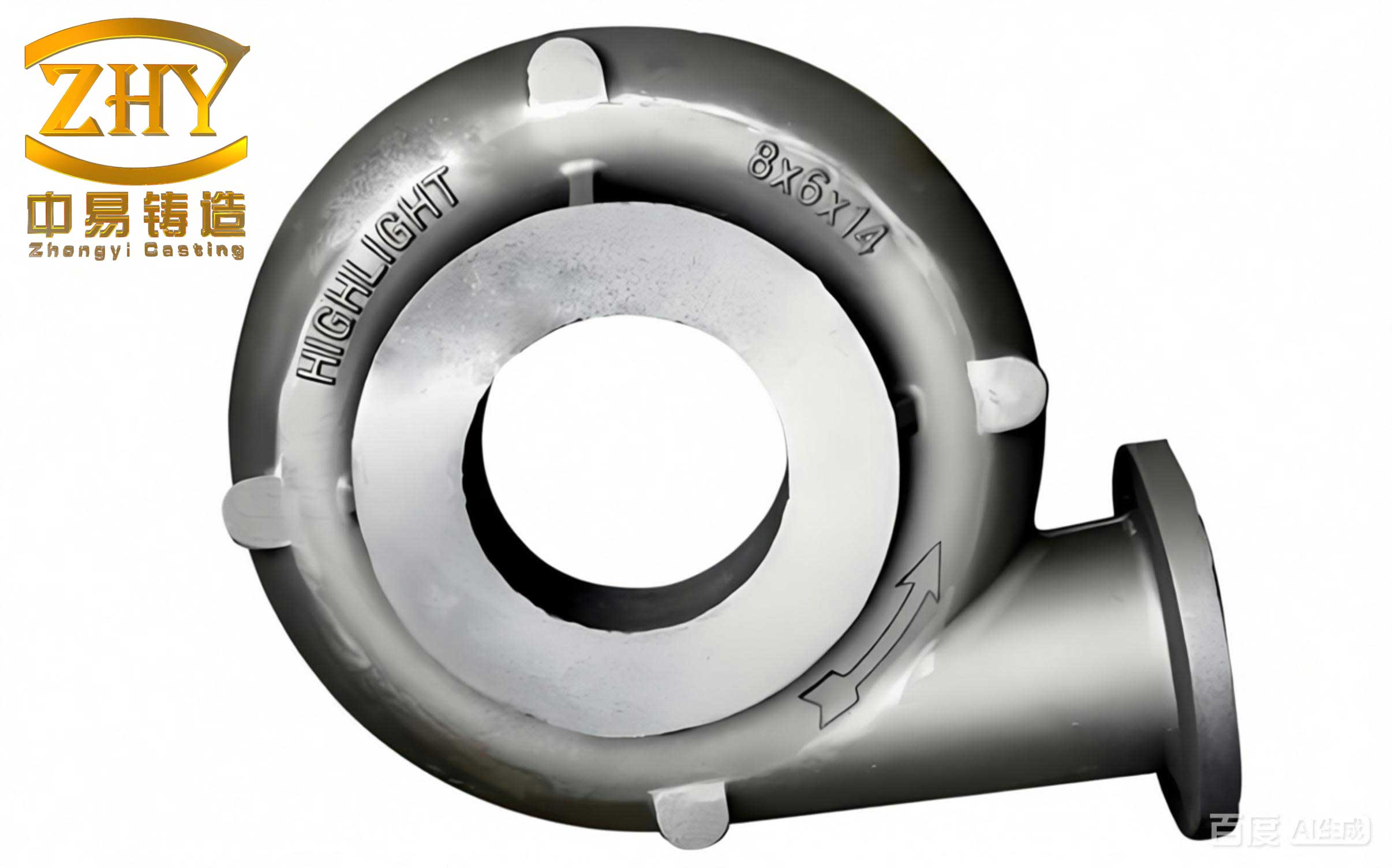
To understand the application of cold repair, one must first appreciate the taxonomy of casting defects. These imperfections arise from various stages of the casting process—pattern making, molding, melting, pouring, and solidification. A comprehensive classification is essential for diagnosing the root cause and selecting the appropriate repair strategy. The table below summarizes the primary types of casting defects we commonly encounter.
| Defect Category | Specific Types | Typical Causes | Relevance to Cold Repair |
|---|---|---|---|
| Gas-Related Defects | Blowholes, Pinholes, Porosity | Entrapped air, moisture in molds, gas evolution from metal | Ideal for deep and interconnected porosity. |
| Shrinkage Defects | Shrinkage Cavity, Microporosity | Inadequate feeding during solidification | Can be filled if accessible from surface. |
| Mold-Related Defects | Sand Inclusions, Cut, Swell | Erosion of mold walls, improper sand properties | Effective for filling voids left by removed inclusions. |
| Pouring/Metal Defects | Cold Shuts, Misruns, Slag Inclusions | Low pouring temperature, interrupted flow, slag entrapment | Suitable for surface discontinuities and gaps. |
| Metallurgical Defects | Cracks, Hot Tears, Segregation | Thermal stresses, improper cooling, composition issues | Cracks can be sealed, but underlying stress may remain. |
The decision to use cold repair technology often stems from a quantitative assessment of the casting defects’ characteristics versus the limitations of thermal methods. We can model the thermal stress induced during welding using a simplified formula for stress generation: $$ \sigma_{thermal} = E \cdot \alpha \cdot \Delta T $$ where $\sigma_{thermal}$ is the induced thermal stress, $E$ is the Young’s modulus of the casting material, $\alpha$ is the coefficient of thermal expansion, and $\Delta T$ is the temperature gradient caused by welding. For materials with high $E$ and $\alpha$, or for complex geometries where $\Delta T$ is non-uniform, $\sigma_{thermal}$ can easily exceed the material’s yield strength, leading to plastic deformation or crack initiation. Cold repair, by definition, sets $\Delta T \approx 0$, thus $\sigma_{thermal} \approx 0$, making it safe for delicate castings.
The cornerstone of this technology is the specialized cold-curing polymeric compound, often a two-part epoxy system engineered with fillers for specific properties like wear resistance, chemical inertness, or thermal conductivity. Selecting the correct material is paramount for a durable repair. The performance of these materials is governed by their mechanical and physical properties, which can be summarized as follows.
| Material Property | Typical Range/Value | Significance for Repair | Measurement Standard |
|---|---|---|---|
| Tensile/Bonding Strength | 15 – 30 MPa | Determines load-bearing capacity of the repaired zone. | ASTM D638 / ISO 527 |
| Compressive Strength | 50 – 90 MPa | Crucial for defects in load-compression areas. | ASTM D695 |
| Hardness (Shore D) | 75 – 85 | Indicates wear resistance and machinability. | ASTM D2240 |
| Operating Temperature Range | -50°C to 150°C (continuous) | Defines the service environment limits. | Material datasheet |
| Pot Life / Working Time | 10 – 45 minutes at 25°C | Critical for application process planning. | ISO 11357 |
| Full Cure Time | 4 – 24 hours at 25°C | Determines when the component can be put into service. | ISO 6721 |
For the slurry pump casing project mentioned earlier, the primary service requirement was abrasion resistance. Therefore, we selected a ceramic-filled epoxy compound with a bonding strength exceeding 20 MPa and a hardness of Shore D 80. The adhesion strength $\sigma_a$ of such a repair can be estimated based on the surface energy and mechanical interlocking: $$ \sigma_a = \frac{1}{A} \int_S \gamma_{SL} \, dS + \mu \cdot P $$ where $A$ is the nominal bonded area, $\gamma_{SL}$ is the solid-liquid interfacial energy during application (related to wettability), $S$ is the actual contact area (increased by surface roughness), $\mu$ is a friction coefficient, and $P$ is a pressure component from curing shrinkage. Proper surface preparation maximizes $S$ and optimizes $\gamma_{SL}$.
The operational protocol for cold repairing casting defects is methodical and demands strict adherence to ensure a bond that often surpasses the strength of the parent material in shear. The process can be broken down into sequential stages, each with its own critical control parameters.
Stage 1: Surface Preparation. This is arguably the most critical step. The goal is to create a chemically clean, mechanically sound, and active surface for the adhesive to bond to. For defects like gas porosity or sand inclusions, all loose debris, oxides, and moisture must be removed. We employ a multi-step cleaning procedure: First, dry compressed air is used to blow out loose particles from the cavity of the casting defects. Second, a volatile solvent like acetone is applied via brush or spray to dissolve and remove organic contaminants and oils. For optimal results, a dedicated industrial cleaner (often a citrus-based or alkaline solution) is used in a third step to ensure absolute degreasing. The effectiveness of cleaning can be quantified by the water break-free test, but in practice, visual inspection under good lighting is standard. The geometry of the defect also matters; for deep, narrow casting defects, we sometimes use miniature abrasive blasting nozzles or ultrasonic cleaning to access the interior surfaces.
Stage 2: Adhesive Mixing and Application. The two-component adhesive (resin and hardener) must be mixed in the exact ratio specified by the manufacturer, usually by weight or volume. Inhomogeneous mixing leads to incomplete curing and weak spots. The mixing process itself introduces air bubbles, which must be minimized. The working time ($t_w$) is temperature-dependent and can be modeled by an Arrhenius-type equation: $$ t_w = A \cdot e^{\frac{E_a}{R T}} $$ where $A$ is a pre-exponential factor, $E_a$ is the activation energy for the curing reaction, $R$ is the universal gas constant, and $T$ is the absolute temperature in Kelvin. We always mix small batches to stay well within $t_w$. Application uses specialized tools—syringes, spatulas, or vacuum infusion setups for very deep casting defects. The key is to fill the cavity progressively from the bottom up, expelling trapped air. This is often done with a pointed tool, manipulating the viscous adhesive to wet all internal surfaces and force air out through the opening.
Stage 3: Curing and Finishing. After filling, the adhesive is left to cure. Ambient temperature cure is common, but accelerated curing at elevated temperatures (e.g., 60-80°C) is possible for some systems, following the cure kinetics: $$ \alpha(t) = 1 – \exp(-k t^n) $$ where $\alpha(t)$ is the degree of cure (from 0 to 1), $k$ is a rate constant, $t$ is time, and $n$ is the Avrami exponent. Full mechanical properties are only achieved after $\alpha \approx 1$. Once cured, the excess material is removed using grinding, filing, or machining to restore the original contour of the casting. The repaired surface can often be finished to a machined or even polished state, making the casting defects visually undetectable.
The superiority of cold repair over traditional methods for specific casting defects can be summarized in a comparative analysis.
| Aspect | Cold Repair Technology | Traditional Welding Repair |
|---|---|---|
| Heat Input | None. $\Delta T \approx 0$. | High, localized heat source. |
| Thermal Distortion | Virtually eliminated. | Highly probable, requires post-weld straightening. |
| Heat-Affected Zone (HAZ) | Non-existent. | Created, can alter material properties. |
| Material Limitations | Universal: all cast metals, including gray iron, Al, Mg. | Limited by weldability (e.g., poor for some cast irons). |
| Skill Requirement | Moderate, focus on cleanliness and procedure. | High, requires certified welders. |
| Post-Repair Machining | Often easier, material is machinable. | May be difficult due to hardened HAZ. |
| Residual Stress | Minimal, only from adhesive shrinkage. | Significant, may require stress relief annealing. |
| Application Depth | Effective for very deep casting defects. | Limited by heat conduction and access. |
From a quality assurance perspective, repaired casting defects must be evaluated. We employ non-destructive testing (NDT) methods such as dye penetrant inspection (DPI) to check for surface-breaking discontinuities in the repair itself or ultrasonic testing (UT) to assess the internal soundness of the filled cavity. The bond strength can be validated using simple shear or peel tests on witness samples prepared alongside the actual repair. The long-term durability under cyclic loading is assessed using fatigue life models, where the stress concentration factor $K_t$ at the repair boundary is a key parameter: $$ K_t = 1 + 2\sqrt{\frac{a}{\rho}} $$ for an elliptical flaw, where $a$ is the defect depth and $\rho$ is the radius of curvature at the tip. A well-executed cold repair, with a smooth transition and full bonding, minimizes $K_t$, thereby restoring the fatigue life close to that of a flawless casting.
The economic model for implementing cold repair technology is compelling. Let $C_{scrap}$ be the cost of a new casting (including material, energy, and labor for remelting and recasting), $C_{repair}$ be the direct cost of the cold repair (materials, labor, and overhead), and $P_{success}$ be the probability of a successful repair. The expected saving $S$ per defective casting is: $$ S = C_{scrap} – \frac{C_{repair}}{P_{success}} $$ In our experience, for high-value castings, $C_{repair}$ is often less than 10% of $C_{scrap}$, and with proper technique, $P_{success}$ approaches 0.95. Therefore, the savings are substantial. Furthermore, it supports sustainability goals by reducing waste and energy consumption associated with remelting.
Looking forward, the development of cold repair materials is advancing rapidly. New formulations with nano-reinforcements (e.g., graphene, carbon nanotubes) promise even higher strength and thermal stability. Hybrid systems that combine polymeric matrices with metallic powders are being researched for repairs requiring electrical conductivity or higher thermal endurance. The integration of this technology with digital tools like 3D scanning and automated dispensing robots is also on the horizon, allowing for precise volumetric filling of complex casting defects identified by AI-driven inspection systems.
In conclusion, the prevalence of casting defects in industrial manufacturing necessitates robust and versatile repair solutions. Cold repair technology has proven itself as a powerful, reliable, and economically sound method for salvaging components afflicted by a wide array of casting defects. Its ability to operate without thermal input eliminates the risks of distortion and metallurgical damage, making it suitable for the most challenging scenarios—deep porosity, thin sections, and unweldable alloys. Through meticulous surface preparation, careful material selection, and controlled application, we have consistently restored critical castings to full operational status, achieving significant cost savings and contributing to more sustainable manufacturing practices. As material science progresses, the scope and capability of this technology will only expand, further solidifying its role as an essential tool in the battle against casting defects.