
In the manufacturing industry, cast components serve as the foundational elements for machinery, directly influencing performance, precision stability, and lifespan. As a researcher focused on quality improvement, I have extensively studied casting defects to identify root causes and implement effective solutions. This article delves into the analysis of casting defects, emphasizing resin sand casting processes, and proposes optimization strategies to reduce scrap rates and enhance product quality. Through statistical analysis and practical insights, I aim to provide a comprehensive guide for mitigating common casting defects, which are prevalent in foundry operations.
Casting processes vary widely, but resin sand casting is particularly notable for its efficiency and versatility. This method utilizes synthetic resins as binders, enabling rapid mold hardening without drying, typically within minutes to hours. The key characteristics include excellent flowability, good compaction, and easy reclamation of sand, making it suitable for both batch and mass production. However, the process is sensitive to environmental factors like temperature and humidity, requiring stringent control to prevent defects. The general workflow involves three stages: metal preparation (melting), mold preparation (molding), and post-processing (cleaning and heat treatment). Each stage comprises multiple steps, such as pattern making, sand mixing, core production, assembly, pouring, and finishing. A streamlined process is essential to minimize variability and ensure consistent output.
Casting defects are imperfections that arise during the casting process, adversely affecting the integrity and functionality of components. Based on my analysis of scrap data over a year, approximately 600 tons of defective castings were recorded, with defects categorized as follows: porosity and sand inclusions accounted for about 70%, shrinkage-related issues (like shrinkage cavities and porosity) for 15%, and other defects such as slag inclusions, distortion, and cracks for the remaining 15%. This statistical breakdown highlights the critical areas requiring intervention. To understand these casting defects, I have compiled a detailed table summarizing their primary causes, which often stem from process deviations or material inadequacies.
| Defect Type | Primary Causes |
|---|---|
| Porosity (Gas Holes) | Excessive moisture in sand, poor permeability, over-wetting during molding, inadequately dried cores, low pouring temperature, or high pouring speed. |
| Sand Inclusions | Insufficient compaction of molds or cores, damage during assembly, low strength of sand mixtures, or improper gating system design causing erosion. |
| Shrinkage Cavities | Unfavorable component geometry with thick sections, inappropriate gating or riser design, high pouring temperature, or incorrect chemical composition leading to excessive contraction. |
| Shrinkage Porosity | Poor structural design, wide solidification range, low pouring temperature, high impurity content, or suboptimal gating system layout. |
| Slag Inclusions | Impure molten metal, improper pouring techniques, or inadequate gating systems that fail to filter slag. |
| Distortion | Unbalanced component design, uneven mold placement, or premature shakeout. |
| Cracks | Geometric stress concentrations from uneven wall thickness, early removal from molds, or thermal stresses during cooling. |
| Misruns or Cold Shuts | Interrupted pouring, slow pouring speed, low pouring temperature, or poorly designed gating systems. |
The formation of casting defects can often be modeled mathematically to predict and control their occurrence. For instance, shrinkage defects relate to volumetric changes during solidification. The total shrinkage volume \( V_s \) can be expressed as:
$$ V_s = V_0 \cdot \beta $$
where \( V_0 \) is the initial liquid volume and \( \beta \) is the linear shrinkage coefficient, typically ranging from 1% to 2% for cast iron. Similarly, gas porosity formation depends on the solubility of gases in molten metal, described by Sievert’s law:
$$ C_g = k \sqrt{P_g} $$
Here, \( C_g \) is the gas concentration, \( k \) is a constant, and \( P_g \) is the partial pressure of the gas. Controlling these parameters is vital to reducing casting defects. Additionally, the cooling rate influences defect formation; a simplified thermal model can be:
$$ T(t) = T_0 \cdot e^{-kt} $$
where \( T(t) \) is temperature at time \( t \), \( T_0 \) is initial pouring temperature, and \( k \) is a cooling constant dependent on mold material and geometry.
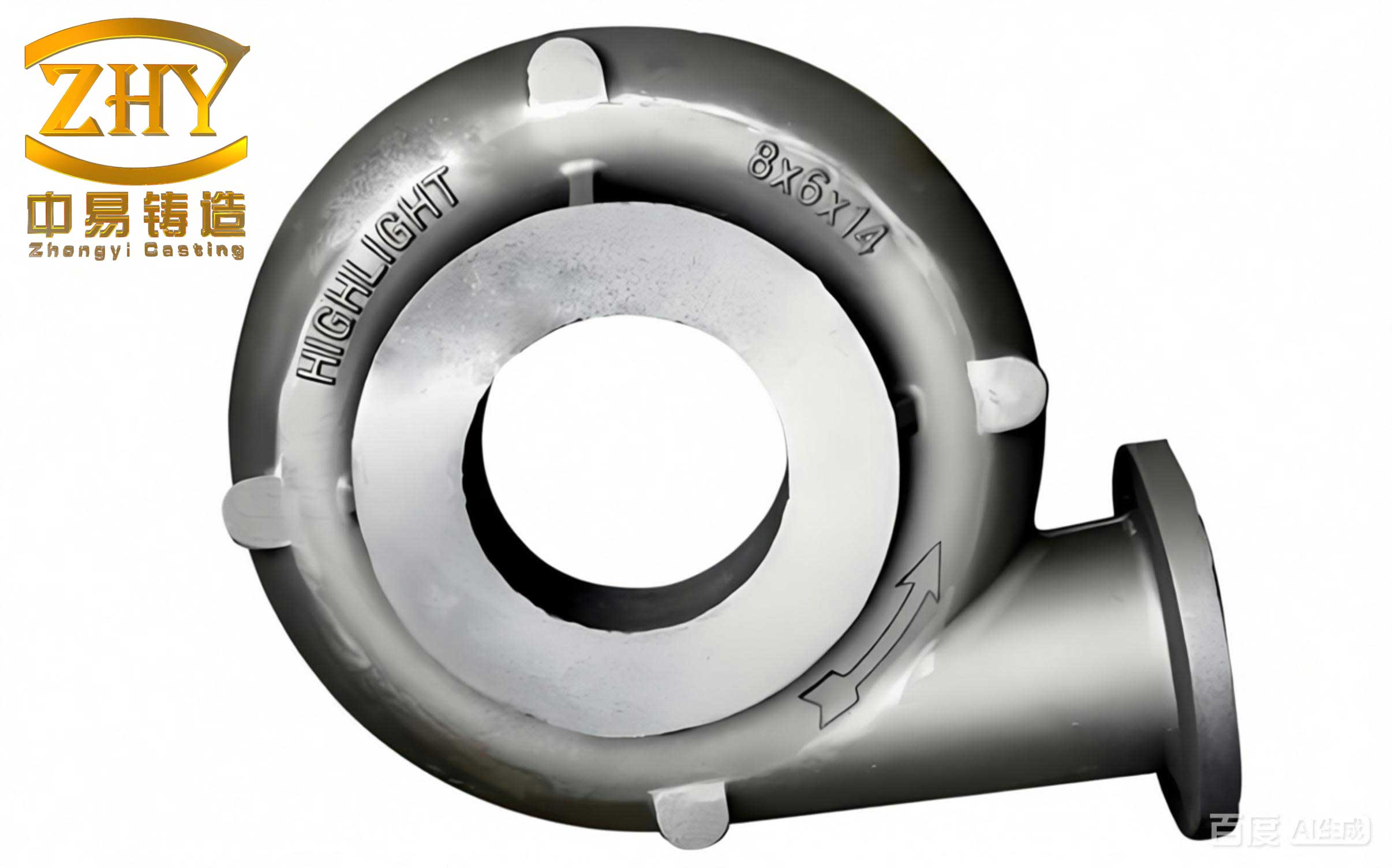
To effectively mitigate casting defects, it is crucial to identify and address key influencing factors. My investigation reveals that the main contributors include不合理 process design, suboptimal component geometry, inferior raw material quality, uncontrolled pouring parameters, and deviations from standard operating procedures. Below, I outline specific improvement measures, supported by a table that correlates factors with actions, ensuring a systematic approach to quality enhancement.
| Key Factor | Impact on Casting Defects | Optimization Measure |
|---|---|---|
| Process Design | Poor gating or riser placement leads to shrinkage cavities and sand inclusions. | Optimize parting lines and pouring positions; use simulation software to validate designs before production. |
| Component Geometry | Uneven wall thickness causes thermal stresses, resulting in cracks or porosity. | Collaborate with designers to modify structures, adding fillets or ribs to distribute stress evenly. |
| Raw Material Quality | Contaminated or out-of-spec materials introduce gas porosity and slag inclusions. | Implement stringent inbound inspection for sand, metals, and binders per international standards (e.g., GB/T 9442-2010). |
| Pouring Parameters | Incorrect temperature or speed induces cold shuts, porosity, or erosion defects. | Establish strict protocols: pour at 1350-1450°C for cast iron, with a “slow-fast-slow” sequence to minimize turbulence. |
| Process Control | Lack of monitoring in critical steps increases variability and defect rates. | Set quality control points at melting, molding, and assembly stages; use statistical process control (SPC) charts. |
Mathematical optimization can further refine these measures. For example, the optimal pouring time \( t_p \) for a given casting volume \( V \) and cross-sectional area \( A \) of the gating system can be estimated as:
$$ t_p = \frac{V}{A \cdot v} $$
where \( v \) is the flow velocity, typically kept below 0.5 m/s to avoid turbulence. Additionally, the riser sizing to compensate for shrinkage can be calculated using Chvorinov’s rule:
$$ t_s = k \left( \frac{V}{A} \right)^n $$
Here, \( t_s \) is solidification time, \( V \) is volume, \( A \) is surface area, and \( k \) and \( n \) are constants based on mold material. By applying such formulas, foundries can proactively design systems that minimize casting defects.
Raw material management is a cornerstone of defect prevention. I recommend a comprehensive quality assurance program that includes regular testing of sand for grain size, moisture content, and SiO₂ levels, as well as chemical analysis of metals like pig iron, scrap steel, and alloys. For instance, the carbon equivalent (CE) for cast iron, which influences shrinkage behavior, can be computed as:
$$ CE = \%C + \frac{\%Si + \%P}{3} $$
Maintaining CE within 3.8-4.2 helps control contraction and reduce shrinkage-related casting defects. Similarly, resin and hardener ratios must be calibrated to environmental conditions; the curing reaction can be modeled as:
$$ \frac{d\alpha}{dt} = k (1-\alpha)^m $$
where \( \alpha \) is conversion degree, \( k \) is rate constant, and \( m \) is reaction order. This ensures proper mold strength and reduces gas evolution.
Process control points are essential for real-time intervention. In my experience, setting checkpoints at stages like sand mixing, core making, and mold assembly allows for early detection of anomalies. For example, the compactability of sand can be measured using a standard test, with target values between 35-45%. Statistical tools like Pareto charts can prioritize defect types, focusing efforts on the most frequent casting defects. Furthermore, automated monitoring systems can log pouring temperatures and speeds, triggering alerts if they deviate from setpoints. The relationship between defect rate \( D \) and control parameters can be expressed as:
$$ D = f(T, v, C) $$
where \( T \) is temperature, \( v \) is pouring speed, and \( C \) is material composition. Through regression analysis, optimal operating windows can be defined.
Training and adherence to procedures are equally vital. I advocate for regular workshops to educate operators on the impact of minor deviations, such as over-wetting molds or incorrect riser removal. Documented work instructions, supplemented with visual aids, can standardize operations. Additionally, implementing a corrective action system for non-conformities ensures continuous improvement. For instance, each incident of porosity or sand inclusion should be investigated using root cause analysis (RCA), with findings integrated into process updates.
In conclusion, reducing casting defects requires a multifaceted approach that combines sound process design, rigorous material control, precise parameter management, and robust quality systems. By leveraging statistical data, mathematical models, and targeted interventions, foundries can significantly lower scrap rates and enhance product reliability. My analysis underscores that proactive measures, such as optimizing gating systems and setting control points, are more effective than reactive fixes. Ultimately, a deep understanding of casting defects and their drivers enables sustainable quality gains, supporting the production of high-integrity castings for critical applications. As technology advances, integrating digital twins and AI-based prediction tools may further revolutionize defect prevention, but the fundamentals of process discipline and material excellence remain paramount.
The journey to minimize casting defects is ongoing, and I encourage foundries to embrace a culture of data-driven decision-making. Through collaborative efforts between designers, engineers, and operators, the incidence of common defects like porosity, shrinkage, and inclusions can be drastically reduced. By prioritizing these strategies, manufacturers will not only improve economic outcomes but also contribute to the advancement of durable and precision machinery components worldwide.