
In my experience at a foundry specializing in heavy machinery, I have extensively worked on front cylinder products, which are critical components in the steam turbine industry. These products are cast from a high-grade steel that is challenging to melt and are designed to operate under high temperature and pressure conditions, demanding exceptional internal quality. However, due to their large volume and complex geometry, casting these components often leads to significant casting defects, including shrinkage porosity, sand burning (mechanical sand adhesion), and cracking. These casting defects not only compromise product integrity but also increase production costs and lead times. In this article, I will delve into the types, causes, and solutions for these casting defects, leveraging first-hand insights and technical analyses. To illustrate a common manifestation of such issues, consider the following visual representation of typical casting defects:
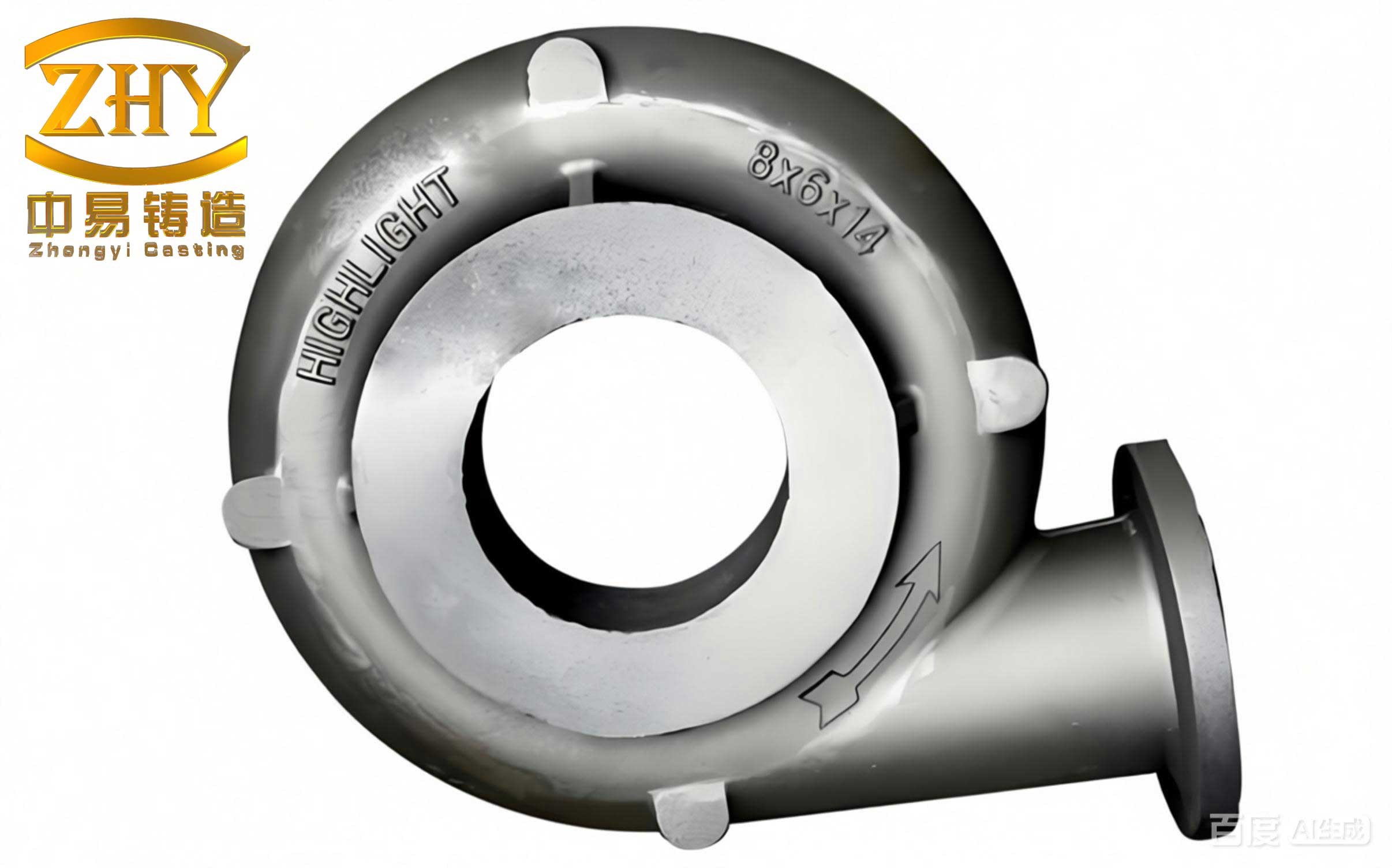
This image underscores the pervasive nature of casting defects in complex castings, motivating the need for robust solutions.
Casting defects are a major concern in the manufacturing of front cylinders, as they directly impact performance and safety. The primary casting defects encountered include shrinkage porosity, which affects material density; sand burning, which leads to surface imperfections; and cracking, which compromises structural integrity. Each of these casting defects stems from specific process-related factors, and addressing them requires a comprehensive understanding of metallurgy, fluid dynamics, and solidification mechanics. In our operations, we have systematically analyzed these casting defects to develop effective countermeasures. The following sections detail our approach, incorporating tables for clarity and mathematical models to quantify the phenomena. By emphasizing the term ‘casting defects’ throughout, we aim to highlight the centrality of this issue in foundry practice.
Types, Locations, and Causes of Casting Defects
The identification and categorization of casting defects are crucial for implementing targeted solutions. Based on our investigations, the casting defects in front cylinder products can be classified into three main types, each with distinct characteristics and root causes.
Shrinkage Porosity
Shrinkage porosity is the most prevalent among the casting defects in front cylinders. It typically occurs near the neck of the riser and at the parting line, where solidification dynamics are complex. This type of casting defect is essentially a void or porous region formed due to inadequate feeding during solidification. The causes can be attributed to three primary factors:
- Negative Impact of Riser Placement: Risers are essential for feeding molten metal to compensate for shrinkage, but improper placement can create localized hot spots and hinder directional solidification.
- Sand Corner Effect: Sharp corners in the mold act as heat accumulators, leading to delayed solidification and porosity.
- Errors in Riser Design: Inadequate riser size or geometry fails to provide sufficient feed metal, exacerbating shrinkage-related casting defects.
To model the solidification process and predict shrinkage porosity, we use the Chvorinov’s rule, which relates solidification time to casting geometry:
$$ t = C \left( \frac{V}{A} \right)^2 $$
where \( t \) is the solidification time, \( V \) is the volume of the casting, \( A \) is the surface area, and \( C \) is a constant dependent on mold material and casting conditions. Shorter solidification times in certain regions can lead to shrinkage defects if not properly managed. Table 1 summarizes the causes and effects of shrinkage porosity as a key casting defect.
| Cause | Mechanism | Typical Location |
|---|---|---|
| Riser placement | Creates thermal gradients that impede feeding | Riser neck, parting line |
| Sand corner effect | Heat accumulation in sharp corners delays solidification | Geometric transitions |
| Riser design errors | Insufficient feed metal volume or poor geometry | Adjacent to risers |
Sand Burning (Mechanical Sand Adhesion)
Sand burning, a common surface-related casting defect, involves the adhesion of sand grains to the casting surface due to excessive heat and metal penetration. This casting defect frequently occurs near ingates and surrounding areas, where molten metal flow is intense. The root causes include:
- Insufficient Sand Fineness: Coarse sand grains have larger pores, allowing metal infiltration and leading to this casting defect.
- Poor Model Surface Finish: Rough patterns transfer imperfections to the mold, increasing the risk of sand burning.
- Unreasonable Ingate Design: Concentrated ingates cause prolonged metal冲刷, overheating the mold and promoting sand adhesion.
The permeability of the sand mold plays a critical role in sand burning defects. Permeability \( P \) can be estimated using the Kozeny-Carman equation:
$$ P = \frac{d^2}{180} \frac{\epsilon^3}{(1 – \epsilon)^2} $$
where \( d \) is the sand grain diameter and \( \epsilon \) is the porosity. Higher permeability reduces metal penetration, but finer sand (smaller \( d \)) may decrease permeability, requiring a balance to avoid casting defects. Table 2 outlines the factors contributing to sand burning casting defects.
| Factor | Impact on Casting Defect | Mitigation Strategy |
|---|---|---|
| Sand grain size | Coarse grains increase penetration risk | Use finer sand or additives |
| Model surface roughness | Rough surfaces enhance adhesion | Improve pattern finish |
| Ingate design | Concentration causes localized overheating | Optimize ingate number and position |
Cracking (Hot Tearing)
Cracking, particularly hot tearing, is a severe casting defect that affects the structural integrity of front cylinders. It often appears at fillet transitions between the cylinder body and flanges, where stress concentrations occur during cooling. The causes of this casting defect are multifaceted:
- External Restraints: Mold or core resistance restricts free contraction, inducing tensile stresses that lead to cracking.
- Large Section Thickness Variations: Differential cooling rates between thick and thin sections create internal stresses, promoting this casting defect.
- Inadequate Fillet Radii: Sharp transitions act as stress risers, exacerbating crack initiation.
- Secondary Effects from Sand Burning: During cleaning, sand adhesion removal via气割 can introduce thermal stresses and microcracks.
Hot tearing susceptibility can be assessed using thermal stress models. The induced stress \( \sigma \) during cooling is given by:
$$ \sigma = E \alpha \Delta T $$
where \( E \) is the elastic modulus, \( \alpha \) is the coefficient of thermal expansion, and \( \Delta T \) is the temperature gradient. When \( \sigma \) exceeds the material’s hot strength, cracking casting defects occur. Table 3 summarizes the cracking mechanisms.
| Cause | Stress Generation Mechanism | Common Locations |
|---|---|---|
| External restraints | Restricted contraction leads to tensile stress | Core-mold interfaces |
| Section thickness variations | Differential cooling causes thermal stresses | Fillet regions, flange junctions |
| Poor fillet design | Geometric discontinuities concentrate stress | Transition areas |
Solutions and Measures for Casting Defects
Addressing these casting defects requires a holistic approach, combining theoretical principles with practical adjustments. Below, I present our implemented solutions, emphasizing economic feasibility and technical efficacy.
Solutions for Shrinkage Porosity
To combat shrinkage porosity casting defects, we evaluated three potential solutions based on the identified causes:
- Enlarging Riser Size: This increases feed metal volume but may require dual-furnace melting, raising costs prohibitively.
- Modifying Model Fillet Radii: Reducing sharp corners mitigates the sand corner effect, though its impact on shrinkage is minor.
- Optimizing Riser Design with Internal Chills: Adding chills enhances directional solidification without extra molten metal, improving feeding efficiency.
We adopted the third solution as it aligns with our foundry’s capabilities. Internal chills, placed strategically, act as heat sinks to promote faster solidification in critical areas. The effectiveness can be quantified using the feeding distance formula:
$$ L_f = k \sqrt{t_f} $$
where \( L_f \) is the feeding distance, \( k \) is a material constant, and \( t_f \) is the solidification time. By adding chills, we reduce \( t_f \) in riser necks, extending \( L_f \) and minimizing shrinkage casting defects. This approach reduced weld repair due to shrinkage porosity by approximately 80%, significantly enhancing internal quality and reducing casting defects.
Solutions for Sand Burning
For sand burning casting defects, we proposed four solutions, each targeting specific root causes:
- Adjusting Sand Grain Fineness: Using finer sand reduces permeability but may require binder adjustments.
- Improving Model Surface Finish: Smoother patterns yield better mold surfaces, lowering adhesion risks.
- Relocating Ingates to End Faces: This changes flow dynamics but necessitates larger模具, increasing sand consumption uneconomically.
- Redesigning Ingates with Step Gates and Pads: Implementing multiple ingates in a stepped arrangement reduces localized overheating, and using refractory pads (e.g., steel bricks) protects cores from metal冲刷.
We implemented the fourth solution, as it effectively addresses both overheating and冲刷. The heat transfer during pouring can be modeled using the Fourier’s law:
$$ q = -k \frac{dT}{dx} $$
where \( q \) is the heat flux, \( k \) is thermal conductivity, and \( \frac{dT}{dx} \) is the temperature gradient. Step gates distribute heat more evenly, reducing \( q \) at ingate areas, thereby preventing sand burning casting defects. This reduced cleaning workload by about 70%, improving surface quality and mitigating these casting defects.
Solutions for Cracking
To tackle cracking casting defects, especially hot tearing, we developed three tailored solutions:
- Controlling Core Sand Thickness with Yielding Materials: Reducing core stiffness by adding退让性 materials (e.g., cork or vermiculite) allows for more contraction, alleviating external restraints.
- Placing Internal Chills at Thick Sections: Chills accelerate cooling in thick areas, reducing thermal gradients and stresses.
- Using External Chills at Fillet Transitions: External chills placed on mold surfaces promote rapid solidification at critical fillets, preventing crack initiation.
These solutions address the stress mechanisms behind cracking casting defects. For instance, the thermal stress reduction from chills can be expressed as:
$$ \Delta \sigma = E \alpha (\Delta T_{\text{initial}} – \Delta T_{\text{with chill}}) $$
where \( \Delta T_{\text{with chill}} \) is the reduced temperature gradient due to chilling. By combining these measures, we lowered crack-related weld repairs by 85%, enhancing overall integrity and reducing casting defects.
Verification of Results
To validate the effectiveness of our solutions for casting defects, we employed rigorous inspection methods, including rough machining and ultrasonic testing. The results demonstrated a substantial reduction in all types of casting defects. Specifically, shrinkage porosity casting defects decreased by nearly 80%, sand burning casting defects by approximately 70%, and cracking casting defects by about 85%. These improvements underscore the success of our integrated approach, which prioritizes practical adaptations over costly overhauls. The use of mathematical models, such as solidification simulations and stress analyses, further supported our decisions, ensuring that casting defects were minimized efficiently.
Conclusion
In summary, casting defects in front cylinder products, including shrinkage porosity, sand burning, and cracking, pose significant challenges in foundry operations. Through systematic analysis and targeted interventions, we have developed effective solutions that leverage internal chills, optimized gating systems, and controlled core designs. These measures not only address the root causes of casting defects but also align with economic constraints, enhancing product quality without excessive cost increases. The repeated emphasis on ‘casting defects’ throughout this discussion highlights their pervasive impact and the necessity for continuous improvement in casting processes. By integrating theoretical principles with hands-on experience, we have achieved notable reductions in casting defects, paving the way for more reliable and efficient manufacturing of critical components. Future work may explore advanced simulation tools to further predict and prevent casting defects, ensuring sustained excellence in foundry practice.
Throughout this article, I have shared insights from my first-hand involvement in tackling these casting defects, hoping to contribute to the broader knowledge base on defect mitigation in casting. The journey from identifying casting defects to implementing solutions is complex, but with a methodical approach, significant improvements are attainable, ultimately leading to higher-quality castings and more sustainable production systems.