
In recent years, magnesium alloys have garnered significant attention as the lightest structural metallic materials, owing to their high specific strength and stiffness, excellent damping capacity, electromagnetic shielding properties, good machinability, and recyclability. These advantages make them ideal for applications in automotive, aerospace, military, and communication industries. However, conventional cast magnesium alloys, such as Mg-Al-RE, Mg-Al-Si, and Mg-Al-Ca systems, typically exhibit tensile strengths below 180 MPa at room temperature and less than 140 MPa at 175°C, limiting their use in high-temperature environments above 200°C. This inadequacy has driven research toward novel Mg-RE alloys, particularly Mg-Gd-based systems, which demonstrate superior room-temperature and high-temperature strength, along with remarkable creep resistance. The sand casting process is widely employed for manufacturing large-scale and complex structural components in aerospace and military sectors due to its flexibility and cost-effectiveness. In this study, I investigate the influence of Gd content on the microstructure and mechanical properties of sand cast Mg-Gd-Y alloys, emphasizing the role of sand casting in shaping these characteristics.
The fundamental appeal of Mg-Gd alloys lies in the high solid solubility of gadolinium in magnesium at elevated temperatures. At 548°C, the solubility reaches approximately 23.49 wt.%, but it decreases sharply to about 3.82 wt.% at 200°C, creating substantial potential for age-hardening through precipitation. Additionally, the incorporation of yttrium (Y) enhances covalent bonding between Mg-Gd and Mg-Y, strengthening the overall matrix. The precipitation sequence in Mg-Gd-Y-Zr alloys during isothermal aging involves the formation of metastable phases such as β” (D019), β’ (cbco), and β1 (fcc), culminating in the equilibrium β (fcc) phase. The β’ phase, appearing as lenticular precipitates, effectively hinders basal dislocation slip, contributing to strength retention up to 250°C. Previous studies have shown that Mg-10Gd-2Y-0.5Zr alloys can achieve tensile strengths exceeding 300 MPa at 250°C, highlighting their high-temperature capabilities. However, most research focuses on permanent mold casting, leaving a gap in understanding the effects of sand casting, which involves slower cooling rates and larger thermal gradients, thereby influencing microstructure evolution and mechanical performance. This work aims to fill that gap by systematically exploring Gd variations in sand cast Mg-Gd-Y alloys, with WE54 alloy as a benchmark for comparison.
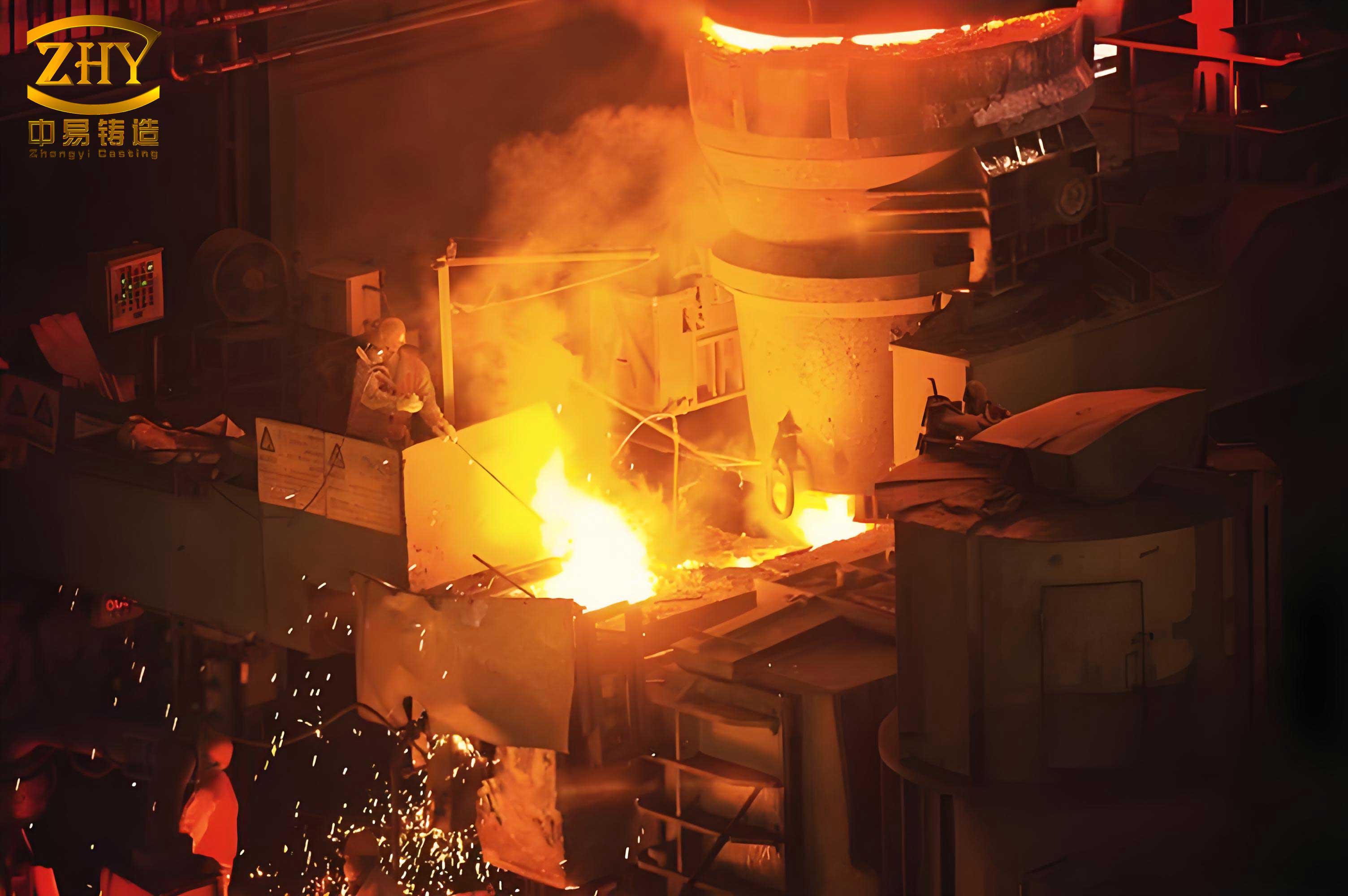
The sand casting process used in this study involves preparing sand molds to produce single-cast tensile bars. The slower cooling rate inherent to sand casting results in reduced undercooling and coarser microstructures compared to metal mold casting, which is critical for understanding performance in real-world applications. Alloys were designated as GW94, GW74, GW54, and WE54, with compositions detailed in Table 1. High-purity magnesium ingots (≥99.95 wt.%), pure yttrium (≥99 wt.%), pure gadolinium (≥99 wt.%), pure neodymium (≥99 wt.%), and Mg-30Zr master alloy were melted and poured into pre-prepared sand molds under protective RJ6 flux and gas atmosphere. After solidification, the molds were removed to obtain tensile bars with a gauge length of 72 mm and diameter of 12 mm. This sand casting approach ensures reproducibility and simulates industrial conditions for large components.
| Alloy Designation | Gd | Y | Nd | Zr | Mg |
|---|---|---|---|---|---|
| GW94 | 9.53 | 4.22 | – | 0.50 | Balance |
| GW74 | 7.06 | 4.12 | – | 0.36 | Balance |
| GW54 | 3.85 | 3.78 | – | 0.55 | Balance |
| WE54 | 1.93 | 5.10 | 1.84 | 0.50 | Balance |
Microstructural characterization was performed using optical microscopy (OM), scanning electron microscopy (SEM), and energy-dispersive spectroscopy (EDS). Samples were sectioned from the gauge portion of tensile bars, ground with SiC paper up to 5000 grit, polished with 1.0 μm diamond paste, and etched with 4.9 vol.% nitric alcohol. Quantitative analysis was conducted using ImageJ software, with grain size measured by the intercept method: $d = 1.74L$, where $L$ is the average intercept length. For SEM, samples were only polished without etching. Tensile tests were carried out at room temperature with an initial strain rate of $1 \times 10^{-3}$ s−1, using three valid specimens per condition to ensure reliability. The sand casting process inherently leads to slower solidification, which I considered when interpreting results.
The as-cast microstructure of Mg-Gd-Y alloys primarily consists of equiaxed dendritic α-Mg solid solution, island-like eutectic phases at grain boundaries, isolated square particles, and Zr-rich cores acting as grain refiners. With increasing Gd content, the volume fraction of grain boundary phases rises significantly. For instance, GW94, GW74, GW54, and WE54 alloys exhibited average grain sizes of 109 μm, 157 μm, 104 μm, and 105 μm, respectively. The larger grain size in GW74 is attributed to lower Zr content, as Zr serves as an effective heterogeneous nucleation site in sand casting. The slow cooling in sand casting promotes solute segregation, leading to the formation of secondary phases. EDS analysis identified the island-like eutectic as Mg24(Gd,Y)5 with a bcc structure (lattice parameter $a = 1.126$ nm), the square particles as Mg5(Gd,Y) with an fcc structure ($a = 2.223$ nm), and the Zr-rich cores as nucleation sites. The volume fractions of these phases are summarized in Table 2, showing a clear trend with Gd addition.
| Alloy | α-Mg Matrix | Mg24(Gd,Y)5 | Mg5(Gd,Y) | Zr-rich Cores |
|---|---|---|---|---|
| GW94 | 92.53 | 7.25 | 0.21 | ≈0 |
| GW74 | 96.43 | 3.36 | 0.20 | ≈0 |
| GW54 | 98.30 | 1.50 | 0.20 | ≈0 |
In contrast, WE54 alloy features a lamellar eutectic structure at grain boundaries, comprising α-Mg, Mg24(Gd,Y)5, and Mg12Nd phases. This morphology arises from the lower solid solubility of Nd in Mg, leading to pronounced eutectic formation even at lower total rare-earth content. The sand casting process accentuates these microstructural differences due to varying cooling rates, which influence phase distribution and morphology. The relationship between cooling rate ($\dot{T}$) and secondary phase size can be approximated by: $$ d_p = k \dot{T}^{-n} $$ where $d_p$ is the phase size, $k$ is a material constant, and $n$ is an exponent typically between 0.3 and 0.5 for sand casting. This equation highlights how slower cooling in sand casting results in coarser phases, affecting mechanical properties.
Room-temperature tensile properties revealed a strong dependence on Gd content. As shown in Table 3, ultimate tensile strength (UTS) and yield strength (YS) increased with higher Gd, while elongation decreased. For example, GW94 alloy achieved the highest UTS of 213.7 MPa and YS of 156 MPa, but with an elongation of only 1.29%. In comparison, WE54 alloy exhibited superior ductility (3.41% elongation) due to its lamellar eutectic, which better accommodates plastic deformation. The strength enhancement in Mg-Gd-Y alloys is primarily attributed to the increased volume fraction of Mg24(Gd,Y)5 phases, which act as barriers to dislocation motion. The Hall-Petch relationship describes the grain boundary strengthening: $$ \sigma_y = \sigma_0 + k_y d^{-1/2} $$ where $\sigma_y$ is the yield strength, $\sigma_0$ is the friction stress, $k_y$ is the strengthening coefficient, and $d$ is the grain size. However, in sand cast alloys, the contribution from secondary phases often dominates, modifying this equation to: $$ \sigma_y = \sigma_0 + k_y d^{-1/2} + \sigma_{ph} $$ where $\sigma_{ph}$ represents phase strengthening, proportional to the square root of phase volume fraction $f$: $$ \sigma_{ph} = \alpha G b \sqrt{f} $$ Here, $\alpha$ is a constant, $G$ is the shear modulus, and $b$ is the Burgers vector. For GW94, the high $f$ value from Table 2 explains its peak strength.
| Alloy | Ultimate Tensile Strength (MPa) | Yield Strength (MPa) | Elongation (%) |
|---|---|---|---|
| GW94 | 213.7 ± 5.2 | 156.0 ± 4.8 | 1.29 ± 0.15 |
| GW74 | 186.3 ± 4.1 | 136.2 ± 3.9 | 1.85 ± 0.20 |
| GW54 | 186.0 ± 4.0 | 128.8 ± 3.5 | 2.10 ± 0.18 |
| WE54 | 195.5 ± 4.5 | 142.3 ± 4.2 | 3.41 ± 0.25 |
Fracture analysis via SEM indicated quasi-cleavage failure for all alloys, with cleavage facets and microcracks prevalent in Mg-Gd-Y systems. In GW94, cracks initiated at sharp corners of Mg5(Gd,Y) particles and propagated along Mg24(Gd,Y)5 phases, leading to brittle fracture. The stress concentration factor at particle corners can be modeled as: $$ K_t = 1 + 2\sqrt{\frac{a}{\rho}} $$ where $a$ is the particle size and $\rho$ is the radius of curvature. For square particles, $\rho$ is small, resulting in high $K_t$ values that promote crack initiation. In WE54, the lamellar structure reduced stress concentrations, yielding more tearing ridges and shallow dimples, hence higher ductility. The sand casting process exacerbates these fracture characteristics due to coarser phases, emphasizing the need for microstructure control in sand cast components.
To further elucidate the strengthening mechanisms, I considered solid solution strengthening from Gd and Y atoms. The increase in strength due to solute atoms can be expressed by: $$ \Delta \sigma_{ss} = k_{ss} C^{2/3} $$ where $k_{ss}$ is a constant and $C$ is the solute concentration. For Gd in Mg, $k_{ss}$ is relatively high, contributing significantly to initial strength. However, in sand cast alloys, the formation of secondary phases reduces the solute content in the matrix, shifting the strengthening contribution to precipitation. The overall strength can be integrated as: $$ \sigma_{total} = \sigma_0 + \Delta \sigma_{ss} + \Delta \sigma_{gb} + \Delta \sigma_{ph} $$ where $\Delta \sigma_{gb}$ is grain boundary strengthening and $\Delta \sigma_{ph}$ is phase strengthening. For GW94, $\Delta \sigma_{ph}$ dominates due to the high volume fraction of Mg24(Gd,Y)5.
The effect of sand casting on cooling rate can be quantified using the Fourier number: $$ Fo = \frac{\alpha t}{L^2} $$ where $\alpha$ is thermal diffusivity, $t$ is time, and $L$ is characteristic length. In sand casting, $Fo$ is larger due to slower heat extraction, leading to longer solidification times and coarser microstructures. This directly impacts phase morphology, as seen in the transition from isolated islands in GW54 to semi-continuous networks in GW94. The relationship between cooling rate and eutectic spacing $\lambda$ is given by: $$ \lambda = b \dot{T}^{-1/2} $$ where $b$ is a constant. For sand casting, $\dot{T}$ is lower, resulting in larger $\lambda$, which reduces interfacial area and weakens phase boundary strengthening. However, the increased phase volume fraction in high-Gd alloys compensates for this, maintaining strength.
Comparative analysis with WE54 alloy underscores the importance of phase morphology. The lamellar eutectic in WE54, resulting from Nd addition and sand casting conditions, provides a more compliant interface that delays crack propagation. The fracture toughness $K_{IC}$ can be approximated by: $$ K_{IC} = \sigma \sqrt{\pi a_c} $$ where $\sigma$ is applied stress and $a_c$ is critical crack length. In WE54, the lamellar structure increases $a_c$ by deflecting cracks, thereby enhancing toughness. In contrast, the brittle Mg24(Gd,Y)5 phases in Mg-Gd-Y alloys lead to lower $a_c$ and reduced ductility. This highlights how alloy design and sand casting parameters can be optimized to balance strength and ductility.
In summary, this study demonstrates that Gd content significantly influences the microstructure and mechanical properties of sand cast Mg-Gd-Y alloys. The sand casting process, with its inherent slow cooling, promotes the formation of coarse secondary phases, which enhance strength but compromise ductility. GW94 alloy exhibited the highest strength due to a high volume fraction of Mg24(Gd,Y)5 phases, while WE54 alloy showed better ductility from its lamellar eutectic. Fracture modes were quasi-cleavage, with crack initiation at phase boundaries. These findings emphasize the critical role of sand casting in microstructure development and provide insights for tailoring alloys for specific applications. Future work could explore heat treatments to refine phases in sand cast components, potentially improving ductility without sacrificing strength.
To further contextualize these results, I considered the broader implications for industrial sand casting. The versatility of sand casting allows for complex geometries, but microstructure control is challenging. By adjusting Gd content and incorporating elements like Zr for grain refinement, manufacturers can optimize properties. For instance, in aerospace components subjected to high temperatures, high-Gd alloys like GW94 may be preferred, whereas WE54 could be suitable for parts requiring better formability. The mathematical models presented here offer a framework for predicting performance based on composition and sand casting parameters. Ultimately, this research underscores the importance of integrated approachs, combining alloy design with process optimization, to advance magnesium alloy technology through sand casting.