
In the context of modern manufacturing, sand casting remains a pivotal process for producing complex metal components across industries such as automotive, aerospace, and machinery. The grinding or finishing stage in sand casting is critical, as it ensures the surface quality and dimensional accuracy of castings, directly impacting product performance and customer satisfaction. However, in multi-variety, small-batch sand casting enterprises, the grinding process often faces significant scheduling challenges. These include unbalanced task allocation among workers, accumulation of castings at specific stations, and inefficient resource utilization due to manual scheduling practices. As part of the broader initiative towards smart manufacturing and digital transformation in foundries, there is a pressing need to develop intelligent scheduling systems that optimize production flow, reduce bottlenecks, and enhance overall efficiency. This article presents my research on addressing these issues through a novel optimization approach, focusing on the parallel machine scheduling problem inherent in sand casting grinding operations. I propose an Improved Discrete Artificial Bee Colony Algorithm (IDABC) to generate balanced and scientific task assignments, leveraging computational intelligence to overcome the limitations of traditional human-led scheduling.
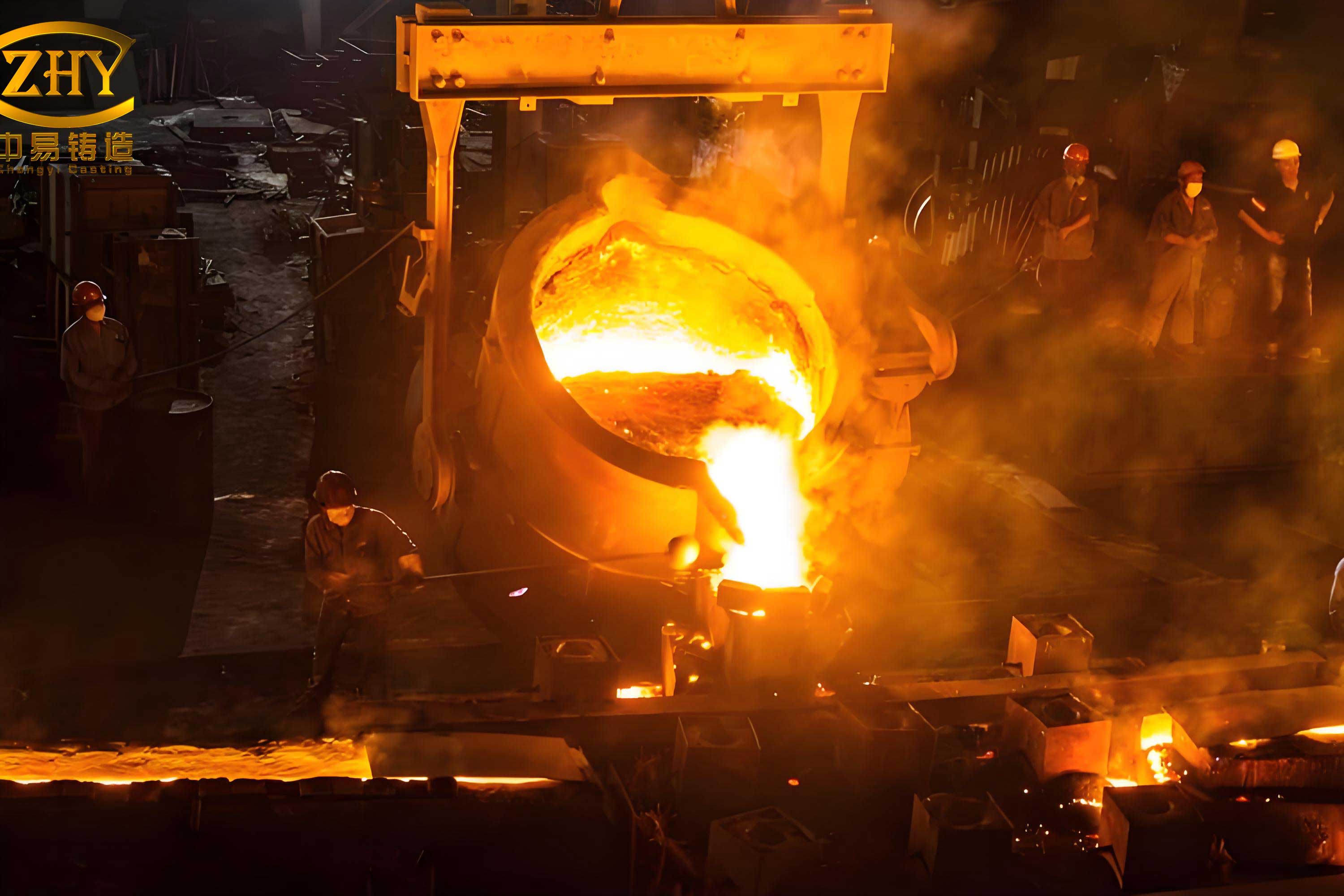
The grinding process in sand casting involves removing excess material, such as gates, risers, and surface imperfections, from cast components to meet specified quality standards. Each casting varies in attributes like weight, material composition, surface roughness requirements, and post-processing needs (e.g., acid washing), making the scheduling task highly complex. In typical sand casting workshops, multiple workers operate in parallel, each capable of handling various casting types, but with differing skill levels. For instance, high-skill workers can process castings with stringent surface finish demands (e.g., Class D roughness), while low-skill workers may be restricted to less critical tasks. The core problem is to assign a set of castings to available workers in a way that balances workloads, minimizes delays, and adheres to operational constraints—a classic unrelated parallel machine scheduling problem with multi-objective optimization. Traditional manual scheduling in sand casting environments often leads to disparities in task distribution, causing some workers to be overburdened while others are underutilized. This not only affects throughput but also results in quality inconsistencies and increased lead times. To tackle this, I formulated a mathematical model that quantifies grinding tasks using a “grinding coefficient” and aims to optimize both workload and task count equity among workers. My approach integrates advanced metaheuristic techniques, specifically an enhanced version of the Artificial Bee Colony algorithm, tailored for discrete combinatorial optimization in sand casting contexts.
In sand casting production, the grinding coefficient serves as a comprehensive metric to evaluate the difficulty and effort required for each casting. It is derived from multiple factors: weight coefficient ($F_w$), surface roughness coefficient ($F_r$), material coefficient ($F_m$), and acid washing coefficient ($F_p$). The formula is expressed as:
$$F_j = F_w \times F_r \times F_m \times F_p$$
where $F_j$ represents the grinding coefficient for casting $j$. This coefficient encapsulates the intricacies of sand casting components, allowing for a standardized measure across diverse casting types. For example, heavier castings or those with tougher materials may have higher $F_w$ and $F_m$ values, while stringent surface finishes (e.g., Class D in sand casting) increase $F_r$. By incorporating these sand casting-specific parameters, the model effectively translates physical attributes into schedulable units, facilitating optimized task allocation. The optimization objectives are twofold: first, to minimize the variance in total grinding coefficients across workers, ensuring equitable distribution of demanding tasks; and second, to minimize the variance in the number of castings assigned to each worker, preventing pile-ups and promoting smooth workflow in sand casting shops. These objectives align with the goal of achieving balanced resource utilization, a key concern in sand casting enterprises where labor is a critical asset.
To formalize the problem, let $i = 1, \ldots, m$ denote the workers, and $j = 1, \ldots, n$ denote the castings to be ground. The decision variable $G_{ij}$ is defined as:
$$G_{ij} =
\begin{cases}
1 & \text{if casting } j \text{ is assigned to worker } i \\
0 & \text{otherwise}
\end{cases}$$
The total grinding coefficient for worker $i$, denoted $F_i$, is the sum of coefficients of all castings assigned to that worker: $F_i = \sum_{j=1}^{n} G_{ij} \cdot F_j$. Similarly, the number of castings assigned to worker $i$ is $S_i = \sum_{j=1}^{n} G_{ij}$. The average total grinding coefficient across all workers is $\bar{F} = \frac{1}{m} \sum_{i=1}^{m} F_i$, and the average number of castings is $\bar{S} = \frac{1}{m} \sum_{i=1}^{m} S_i$. The objective function $f$ combines the variances of these metrics:
$$f = T_1 \cdot \frac{1}{m} \sum_{i=1}^{m} (F_i – \bar{F})^2 + T_2 \cdot \frac{1}{m} \sum_{i=1}^{m} (S_i – \bar{S})^2$$
where $T_1$ and $T_2$ are weight factors that reflect the relative importance of each objective in sand casting operations. Typically, $T_1 = 0.7$ and $T_2 = 0.3$ are used to emphasize workload balance, but these can be adjusted based on specific sand casting shop policies. The constraints include:
- Each casting must be assigned to exactly one worker: $\sum_{i=1}^{m} G_{ij} = 1$ for all $j$.
- Class D castings (high surface roughness requirements) can only be assigned to high-skill workers, reflecting sand casting quality standards.
- Work-in-progress limits: $S_i \leq 25$ and $E_i \leq 8000$ kg for each worker $i$, where $E_i$ is the total weight of uncompleted castings, preventing overloading in sand casting grinding stations.
- Monthly cumulative limits: $S_{c_i} \leq 100$ and $E_{c_i} \leq 30000$ kg per worker, ensuring long-term workload management in sand casting production cycles.
This mathematical framework provides a robust foundation for optimizing sand casting grinding schedules, but solving it requires efficient algorithms due to its NP-hard nature. Exact methods are impractical for real-world sand casting scenarios with dozens of workers and hundreds of castings, necessitating heuristic or metaheuristic approaches. I developed an Improved Discrete Artificial Bee Colony Algorithm (IDABC) specifically tailored for this sand casting scheduling problem, incorporating several enhancements to boost performance.
| Casting ID | Weight (kg) | Surface Roughness Class | Material Type | Acid Washing Required | Grinding Coefficient ($F_j$) |
|---|---|---|---|---|---|
| 1 | 168 | D | Steel | Yes | 1.728 |
| 2 | 18 | C | Iron | No | 1.400 |
| 3 | 30 | B | Aluminum | Yes | 3.024 |
| 4 | 2000 | A | Copper | No | 0.158 |
| 5 | 25 | A | Steel | Yes | 0.396 |
The Artificial Bee Colony algorithm is a swarm intelligence metaheuristic inspired by the foraging behavior of honey bees. It consists of three groups of bees: employed bees, onlooker bees, and scout bees, which collaborate to search for optimal solutions (food sources). In the standard ABC, solutions are represented as continuous vectors, but for combinatorial problems like sand casting grinding scheduling, a discrete encoding is more appropriate. My IDABC introduces four key improvements: discrete encoding based on casting permutations, a heuristic decoding rule for task assignment, a crossover operator that prevents “inbreeding” between similar solutions, and a scout bee phase enhanced with Tabu Search for local intensification. These modifications address the unique challenges of sand casting environments, such as the need for equitable distribution and constraint handling.
In the discrete encoding scheme, each food source (solution) is represented as a permutation of casting indices, e.g., [2, 6, 1, 3, 7, 4, 8, 9, 5, 10] for a set of 10 sand casting tasks. This sequence dictates the priority order for assigning castings to workers. The decoding process uses a heuristic rule: castings are selected from the permutation in order, and each is assigned to the worker who currently has the smallest cumulative grinding coefficient, provided that worker meets the skill and capacity constraints for that sand casting. This greedy approach ensures a balanced load from the outset, aligning with the optimization objectives. The fitness of a solution is computed as the reciprocal of the objective function $f$, since lower variance indicates better quality:
$$\text{Fitness} = \frac{1}{f + \epsilon}$$
where $\epsilon$ is a small constant to avoid division by zero. Higher fitness values correspond to more balanced schedules in sand casting grinding.
| Worker ID | Skill Level | Current Grinding Coefficient Sum ($F_i$) | Current Number of Castings ($S_i$) | Monthly Cumulative Castings ($S_{c_i}$) |
|---|---|---|---|---|
| 1 | High | 2.770 | 8 | 45 |
| 2 | High | 1.404 | 1 | 38 |
| 3 | Low | 1.220 | 1 | 52 |
| 4 | Low | 5.770 | 8 | 60 |
| 5 | Low | 1.608 | 3 | 41 |
The employed bee phase in IDABC involves neighborhood search through crossover operations. Instead of the continuous perturbation used in standard ABC, I employ a two-point order crossover (TP) between two parent solutions. To maintain population diversity and avoid stagnation—common issues in sand casting scheduling due to similar casting batches—I introduce a similarity check based on fitness difference. Crossover is only performed if the absolute difference in fitness between the two solutions exceeds a threshold (e.g., 0.01), preventing “near-relative” mating that could hinder exploration. The crossover produces offspring solutions that combine segments of parent permutations, potentially yielding novel assignment sequences for sand casting tasks.
In the onlooker bee phase, solutions are selected probabilistically using roulette wheel selection based on fitness. Selected solutions undergo mutation to explore nearby regions of the search space. I implement three mutation operators tailored for sand casting scheduling: swap mutation (exchanging two random casting positions), insertion mutation (moving a casting to a different position), and inversion mutation (reversing a subsequence). These operators are applied with equal probability, ensuring diverse perturbations that can escape local optima. After mutation, a greedy selection retains the better solution between the original and mutated version, promoting steady improvement.
The scout bee phase is activated when a solution fails to improve over a predetermined number of iterations (LIMIT). Rather than randomly generating a new solution, as in standard ABC, I integrate Tabu Search to enhance local search capability. The current stagnant solution serves as the initial point for Tabu Search, which explores a neighborhood defined by the mutation operators while maintaining a tabu list of recently visited solutions to avoid cycling. This hybrid approach leverages the intensification strengths of Tabu Search, making it particularly effective for refining schedules in complex sand casting scenarios where fine-tuning is crucial. The overall flowchart of IDABC includes initialization, iterative cycles of employed, onlooker, and scout bees, and termination after a maximum number of generations.
| Dataset | Number of Castings (n) | Surface Roughness Class Distribution | Skill Level Requirements | Typical Sand Casting Batch Size |
|---|---|---|---|---|
| P1 | 10 | Mostly Class D | High-skill only | Small prototype runs |
| P2 | 20 | Mix of Classes C and D | High and low skill | Medium batches |
| P3 | 30 | Classes B, C, D | High and low skill | Typical production lot |
| P4 | 40 | Wide range from A to D | High and low skill | Large orders |
| P5 | 50 | Predominantly Classes A and B | Mostly low skill | Bulk sand casting parts |
To evaluate the performance of IDABC, I conducted extensive simulation experiments using five datasets of varying sizes, reflecting real-world sand casting production scales. Each dataset comprises sand casting tasks with attributes generated based on historical data from foundries, including grinding coefficients derived from weight, material, and surface finish parameters. The algorithm parameters were set as follows: population size (NP) = 60, maximum iterations = 100, and LIMIT = 10. Comparisons were made against standard ABC and a Genetic Algorithm (GA) with similar computational effort, using the same fitness function and constraints. All algorithms were implemented in Python and run on a standard workstation, with each dataset solved independently 10 times to account for stochastic variability.
The results demonstrate that IDABC consistently outperforms both standard ABC and GA in terms of solution quality, convergence speed, and stability. For smaller datasets like P1 (10 castings), all algorithms achieved similar fitness values, but as the problem scale increased—common in sand casting shops with dozens of tasks—IDABC showed significant advantages. The convergence curves indicate that IDABC reaches near-optimal solutions within 30 iterations, thanks to its heuristic decoding and Tabu Search enhancements, whereas ABC and GA often require more iterations and may get trapped in local optima. The average fitness values and standard deviations over 10 runs are summarized below, highlighting IDABC’s robustness for sand casting scheduling.
| Dataset | Algorithm | Average Fitness (Avg.) | Standard Deviation (Std.) | Average Runtime (Tavg, seconds) |
|---|---|---|---|---|
| P1 (n=10) | GA | 0.9151 | 0.0038 | 1.6271 |
| ABC | 0.9142 | 0.0007 | 1.6372 | |
| IDABC | 0.9164 | 0.0009 | 1.6932 | |
| P2 (n=20) | GA | 1.5771 | 0.0821 | 1.7024 |
| ABC | 1.5817 | 0.0792 | 1.9023 | |
| IDABC | 1.6033 | 0.0737 | 1.8073 | |
| P3 (n=30) | GA | 2.0395 | 0.2466 | 1.8321 |
| ABC | 2.2192 | 0.2713 | 1.8143 | |
| IDABC | 2.2963 | 0.1882 | 1.7490 | |
| P4 (n=40) | GA | 2.8427 | 0.5132 | 2.4157 |
| ABC | 2.8321 | 0.5462 | 2.4257 | |
| IDABC | 3.2362 | 0.5308 | 2.3252 | |
| P5 (n=50) | GA | 3.1305 | 0.6924 | 1.9714 |
| ABC | 3.5675 | 0.7113 | 1.8831 | |
| IDABC | 3.9781 | 0.4944 | 1.8031 |
The superior performance of IDABC is attributed to its tailored mechanisms for sand casting scheduling. The discrete encoding and heuristic decoding directly address the combinatorial nature of task assignment, while the crossover with similarity check preserves diversity in the population—a critical factor when dealing with repetitive sand casting batches. The integration of Tabu Search in the scout bee phase provides deep local exploration, enabling the algorithm to refine solutions effectively, especially for larger datasets where the search space is vast. In contrast, standard ABC and GA lack these problem-specific adaptations, leading to slower convergence and higher variability. The runtime of IDABC is competitive, often lower than ABC for larger problems due to its efficient search strategy, making it suitable for real-time scheduling in dynamic sand casting environments where quick decisions are needed.
Beyond simulations, I validated the practical efficacy of IDABC through a case study at a medium-sized sand casting enterprise specializing in multi-variety, small-batch production. Over one month, the grinding shop handled 543 castings with diverse requirements, including 237 high-precision Class D castings that demanded skilled workers. The existing manual scheduling method relied on foremen’s experience, often resulting in uneven workloads and bottlenecks. I implemented an IDABC-assisted scheduling system that generated daily task assignments based on real-time worker availability and cumulative loads. The system considered all constraints, such as skill matching and capacity limits, and produced schedules within minutes on a standard computer.
The outcomes were striking: the IDABC-assisted approach achieved a more balanced distribution compared to manual scheduling. Key metrics included the standard deviation of grinding coefficients among workers and the standard deviation of casting counts, both of which decreased significantly. Additionally, the maximum number of castings accumulated at any worker’s station dropped, reducing congestion and potential delays in the sand casting workflow. Another important metric, the maximum proportion of low-requirement castings assigned to high-skill workers, also improved, indicating better alignment between task demands and worker capabilities—a crucial aspect for quality control in sand casting. These results underscore the value of intelligent scheduling in enhancing operational efficiency and resource utilization in sand casting shops.
| Metric | Manual Scheduling | IDABC-Assisted Scheduling | Improvement |
|---|---|---|---|
| Standard Deviation of Grinding Coefficients | 45.7 | 28.3 | 38.1% reduction |
| Standard Deviation of Casting Counts per Worker | 12.4 | 7.9 | 36.3% reduction |
| Maximum Castings Piled at a Worker | 18 | 11 | 38.9% reduction |
| Maximum Proportion of Low-Req Castings to High-Skill Workers | 0.65 | 0.42 | 35.4% reduction |
| Average Daily Scheduling Time | ~2 hours | ~5 minutes | 96% time saving |
The successful application of IDABC in this sand casting context highlights its potential for broader adoption in foundries seeking digital transformation. By automating the scheduling process, the algorithm not only improves balance and reduces pile-ups but also frees up managerial time for strategic tasks. Workers benefit from clearer task lists and fairer workloads, which can boost morale and productivity. Moreover, the system’s adaptability allows it to handle fluctuations in sand casting orders, such as sudden rush jobs or changes in casting specifications, by quickly recalculating schedules based on updated parameters. This responsiveness is invaluable in today’s competitive manufacturing landscape, where agility and efficiency are paramount.
Looking ahead, several avenues exist for extending this research in sand casting scheduling. First, the mathematical model could be refined to incorporate additional real-world factors, such as worker learning curves (where efficiency improves with repetition) and fatigue effects (where performance declines over time). These dynamics are relevant in labor-intensive sand casting grinding operations and could lead to more human-centric schedules. Second, the algorithm itself can be further enhanced by hybridizing with other metaheuristics like Simulated Annealing or Ant Colony Optimization, potentially improving exploration and exploitation balance for even larger sand casting problems. Third, developing a comprehensive intelligent scheduling system integrated with Enterprise Resource Planning (ERP) software would enable seamless data flow from order entry to production tracking, creating a fully digital ecosystem for sand casting management. Such a system could include features like real-time monitoring of worker progress, dynamic rescheduling based on machine breakdowns or absenteeism, and predictive analytics for demand forecasting—all contributing to a smarter, more resilient sand casting enterprise.
In conclusion, the grinding process in sand casting presents a complex parallel machine scheduling challenge that impacts productivity, quality, and resource utilization. My work demonstrates that an Improved Discrete Artificial Bee Colony Algorithm, with its discrete encoding, heuristic decoding, diversity-preserving crossover, and Tabu Search enhancement, offers an effective solution for optimizing task assignments. Through simulations and practical implementation, IDABC has proven superior to standard ABC and GA in achieving balanced workloads, minimizing casting accumulations, and aligning tasks with worker skills in sand casting environments. As the foundry industry continues to embrace smart manufacturing principles, such algorithmic approaches will play a crucial role in driving efficiency and competitiveness. Future efforts should focus on integrating these techniques into holistic digital platforms, ultimately paving the way for autonomous, data-driven decision-making in sand casting and beyond.