
In modern manufacturing, the demand for rapid prototyping and tooling has revolutionized traditional processes, especially in sand casting, where complex geometries and high precision are required. As a researcher in this field, I have explored the integration of Laminated Object Manufacturing (LOM) technology into sand casting mold production, aiming to address challenges such as long lead times, high costs, and accuracy issues associated with conventional wooden pattern making. This article details my first-person investigation into developing paper-based sand casting molds using LOM, focusing on design methodologies, implementation steps, and analytical insights to enhance sand casting efficiency and quality.
Sand casting is a versatile and widely used manufacturing process for producing metal components, particularly in industries like aerospace and automotive, where parts like magnesium alloy input shells are common. These components often feature intricate structures, thin walls, and stringent dimensional tolerances, making sand casting mold fabrication a critical bottleneck. Traditional wood pattern methods involve manual craftsmanship, which is time-consuming, error-prone, and costly for small-batch production. To overcome these limitations, I turned to rapid tooling techniques, specifically LOM-based direct rapid mold making, which offers a digital and agile approach to sand casting mold creation.
LOM technology operates on an additive manufacturing principle, where layers of adhesive-coated paper are sequentially cut by a laser and bonded together to form a three-dimensional object. The resulting prototypes exhibit wood-like mechanical properties, withstanding temperatures up to 200°C, and can be directly used as molds after surface treatment. This makes LOM ideal for sand casting applications, as it eliminates the need for intermediate steps in indirect rapid tooling, reducing cumulative errors and accelerating production cycles. My research centered on leveraging LOM to fabricate paper-based molds for sand casting, with a case study on an input shell component, highlighting the technical advantages over traditional methods.
The technical framework for this study involved a comprehensive workflow from digital design to physical casting. I initiated the process by developing a three-dimensional CAD model of the input shell part based on engineering drawings, using software like Pro/ENGINEER. This digital foundation allowed for precise modifications to account for machining allowances and casting requirements, such as gating and riser systems. The core of my approach lay in optimizing the sand casting mold design for LOM fabrication, incorporating dimensional compensation, structural enhancements, and virtual validation to ensure manufacturability and performance.
Dimensional compensation is crucial in sand casting to accommodate material shrinkage during solidification. For magnesium alloys, which have a typical shrinkage factor, I applied a scaling operation in the CAD software. The compensated dimension ($D_c$) can be expressed as: $$ D_c = D_o \times (1 + S) $$ where $D_o$ is the original dimension and $S$ is the shrinkage coefficient (e.g., 0.5-1.0% for magnesium). This automated adjustment in the 3D environment minimized manual calculation errors and streamlined the design phase, a significant improvement over 2D-based methods. By integrating this formula into the CAD model, I ensured that the final sand casting mold would produce castings within specified tolerances.
Optimizing the paper-based sand casting mold design involved several key considerations to enhance functionality and durability. First, I focused on parting line optimization to facilitate easy mold assembly and sand core extraction. Using 3D CAD software, I performed a conformal split of the mold components along natural divisions of the input shell geometry, which reduced undercuts and improved draft angles. This step was vital for resin sand molding, where hardened sand lacks flexibility during demolding. Second, I incorporated alignment features such as dowel pins and bolt holes to ensure precise module positioning and clamping, eliminating the need for complex frames. Third, virtual assembly simulations allowed me to validate the mold structure, demolding sequence, and core-making process digitally, mitigating risks before physical fabrication. The table below summarizes the design optimization parameters for sand casting molds:
| Design Aspect | Optimization Strategy | Impact on Sand Casting |
|---|---|---|
| Parting Lines | Conformal splitting based on 3D CAD | Reduces demolding force and sand damage |
| Alignment Features | Dowel pins and bolt holes | Ensures module accuracy and simplifies assembly |
| Virtual Validation | Simulation of assembly and demolding | Prevents design flaws and enhances mold reliability |
| Strength Reinforcement | Embedded cores and fasteners | Improves mold durability for repeated sand casting use |
Strength reinforcement was essential due to the anisotropic nature of LOM prototypes, which exhibit lower strength in the build direction. To address this, I designed reinforcement structures such as embedded metal cores and used mechanical fasteners like screws at stress concentration points. This ensured that the paper-based sand casting molds could withstand the pressures of resin sand compaction and repeated usage. The reinforcement design followed a principle of maximizing stiffness while minimizing weight, calculated using: $$ \sigma = \frac{F}{A} \leq \sigma_{\text{allowable}} $$ where $\sigma$ is the stress, $F$ is the applied force during sand casting, $A$ is the cross-sectional area, and $\sigma_{\text{allowable}$ is the material strength of the LOM paper composite. By applying this formula, I optimized the mold geometry to prevent deformation during sand casting operations.
The fabrication of paper-based sand casting molds proceeded through LOM prototyping. I converted the optimized 3D CAD models into STL format, setting a chord height tolerance of ≤0.05 mm to balance file size and accuracy. The LOM machine then layered and cut paper sheets, building the mold components layer by layer. Post-processing involved剥离 excess material, sanding surfaces, and applying multiple coats of sealant to enhance moisture resistance and surface finish for sand casting. Each component, including core boxes and pattern plates, was finished separately before final assembly. This direct rapid tooling approach reduced lead time from weeks to days compared to wood pattern making, demonstrating LOM’s efficiency for sand casting mold production.
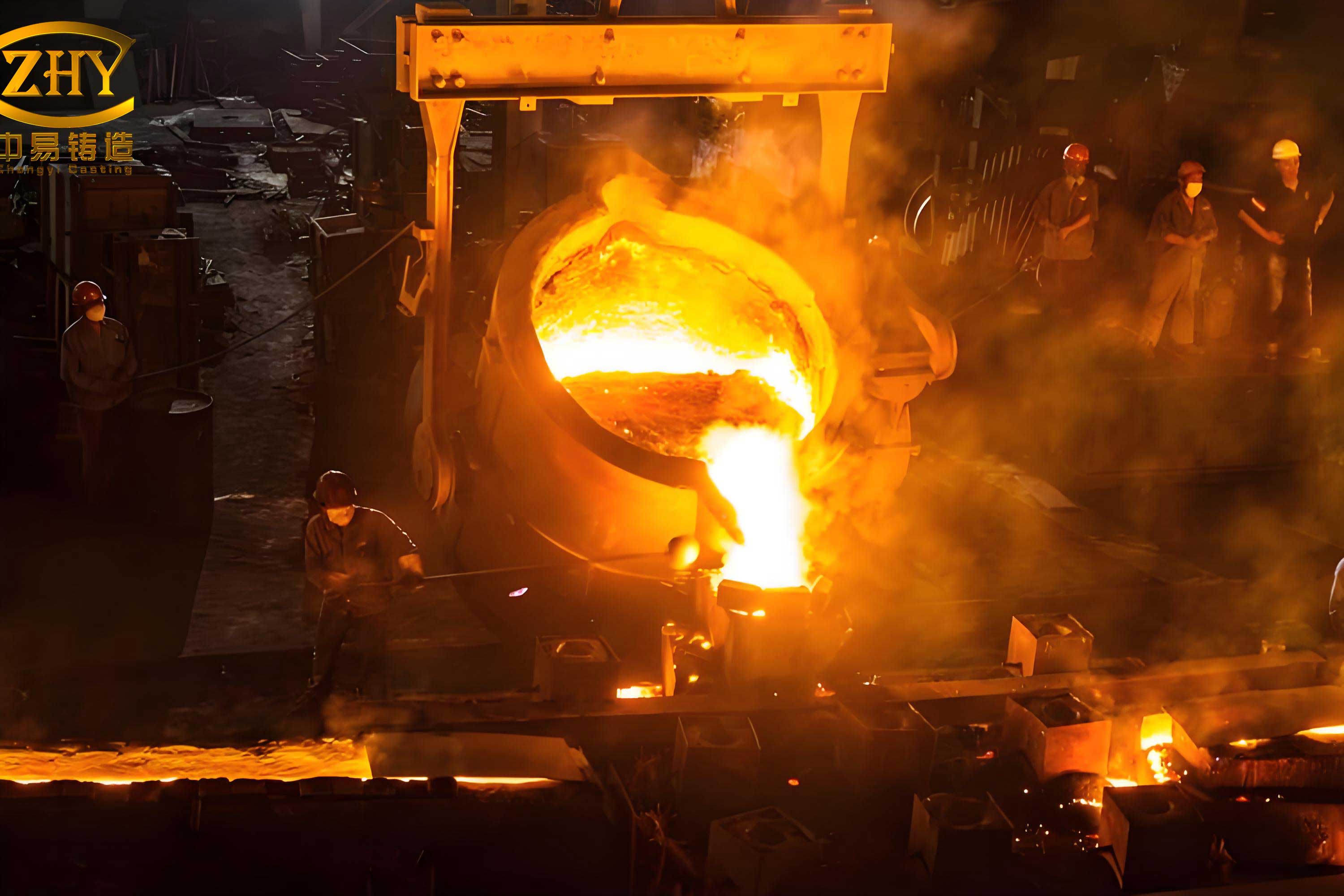
Sand casting using the paper-based molds involved assembling the LOM-fabricated components, securing them with bolts, and filling with resin-bonded sand. After curing, the mold was disassembled in reverse order to extract the sand cores and cavities. The resulting sand casting molds exhibited high dimensional fidelity and surface quality, suitable for precision casting of magnesium alloy parts. To evaluate performance, I conducted a series of sand casting trials, measuring critical dimensions and analyzing errors. The table below outlines the primary error sources and their magnitudes in the sand casting process:
| Error Source | Description | Typical Magnitude | Mitigation Strategy |
|---|---|---|---|
| STL Conversion | Triangulation loss during CAD to STL | ±0.05 mm | Use high-resolution settings with chord height ≤0.05 mm |
| LOM Fabrication | Layer adhesion and cutting inaccuracies | ±0.2 mm in-plane; ±0.3 mm in build direction | Calibrate laser parameters and optimize build orientation |
| Mold Assembly | Cumulative gaps from multiple modules | ±0.1 mm | Incorporate precision dowel pins and alignment features |
| Sand Casting Process | Resin sand shrinkage and demolding forces | ±0.3 mm | Control sand composition and curing time; use release agents |
| Overall Casting Accuracy | Combined effects on final part | ±0.5 mm | Implement statistical process control in sand casting |
The dimensional accuracy of the sand casting molds was a key metric in this study. For the input shell, with contour dimensions ranging from 210 to 250 mm, the LOM prototypes achieved an accuracy of ≤±0.2 mm, leading to sand casting mold accuracy of ≤±0.3 mm and final casting accuracy of ≤±0.5 mm, meeting design specifications. Error propagation can be modeled using a root-sum-square approach: $$ E_{\text{total}} = \sqrt{E_1^2 + E_2^2 + \cdots + E_n^2} $$ where $E_{\text{total}$ is the total error and $E_i$ are individual error contributions from STL conversion, LOM fabrication, etc. By applying this formula, I estimated that the combined error for sand casting was within acceptable limits, validating the LOM-based approach for high-precision sand casting applications.
Further analysis involved comparing the LOM-based sand casting mold method with traditional wood pattern techniques. The advantages are quantified in the table below, highlighting improvements in cycle time, cost, and accuracy for sand casting:
| Parameter | Traditional Wood Pattern | LOM-Based Paper Mold | Improvement for Sand Casting |
|---|---|---|---|
| Lead Time | 2-4 weeks | 3-5 days | Reduced by 75-85% |
| Cost per Mold | High (labor-intensive) | Low (automated fabrication) | Cost reduction of 60-70% |
| Dimensional Accuracy | ±0.5-1.0 mm | ±0.2-0.3 mm | Accuracy improvement of 50-60% |
| Complex Geometry Handling | Limited by manual carving | Excellent due to 3D CAD integration | Enables intricate sand casting designs |
| Environmental Impact | High waste from wood processing | Lower waste with recyclable paper | More sustainable sand casting process |
The integration of LOM technology into sand casting mold production also facilitates digital transformation in foundries. By adopting 3D CAD models and rapid prototyping, manufacturers can shift from analog to digital workflows, enhancing design flexibility and reducing prototyping iterations. For instance, in sand casting, virtual testing of mold designs allows for optimization of gating systems to minimize turbulence and defects, which can be analyzed using fluid dynamics simulations. The gating ratio for sand casting can be expressed as: $$ R_g = \frac{A_{\text{sprue}}}{A_{\text{runner}}} $$ where $R_g$ is the gating ratio, $A_{\text{sprue}}$ is the sprue area, and $A_{\text{runner}}$ is the runner area. Optimizing this ratio improves metal flow in sand casting, reducing porosity and inclusions in final castings.
In my research, I also explored the scalability of LOM-based sand casting molds for larger production runs. While paper molds may degrade after multiple uses, surface treatments like epoxy coating can extend their lifespan to over 50 sand casting cycles, making them viable for small to medium batches. For higher-volume sand casting, indirect rapid tooling methods, such as silicone molding from LOM masters, can be employed, but the direct approach offers unparalleled speed for prototyping and low-volume sand casting. The economic break-even point for LOM molds versus wood patterns can be calculated using: $$ N_{\text{break-even}} = \frac{C_{\text{LOM}} – C_{\text{wood}}}{C_{\text{per-cast}} – C_{\text{per-wood}}} $$ where $N_{\text{break-even}}$ is the number of sand casting cycles, $C_{\text{LOM}}$ is the initial cost of LOM mold, $C_{\text{wood}}$ is the wood pattern cost, and $C_{\text{per-cast}}$ and $C_{\text{per-wood}}$ are per-cycle costs. For typical sand casting applications, LOM becomes advantageous below 100 units, aligning with the trend towards customized manufacturing.
Future directions for LOM in sand casting include material advancements, such as using composite papers with higher thermal stability for ferrous sand casting, and integration with Industry 4.0 technologies like IoT for real-time monitoring of mold wear during sand casting. Additionally, machine learning algorithms can predict optimal build parameters for LOM based on sand casting design complexity, further reducing errors. The potential for hybrid processes, combining LOM with CNC machining for critical surfaces, could enhance accuracy for precision sand casting molds.
In conclusion, my first-person investigation demonstrates that LOM technology offers a transformative solution for sand casting mold fabrication, particularly for complex, low-volume components like magnesium alloy input shells. By digitizing design and manufacturing steps, this approach reduces lead times, lowers costs, and improves dimensional accuracy compared to traditional wood patterns. The successful application in sand casting underscores LOM’s versatility and potential to drive innovation in foundry practices. As sand casting evolves towards digitalization, rapid tooling techniques like LOM will play a pivotal role in enhancing competitiveness and sustainability in metal casting industries.