
In my extensive practice within the foundry industry, I have consistently observed that sand casting remains a cornerstone of metal component manufacturing due to its versatility and cost-effectiveness. However, the process is fraught with potential defects that can compromise integrity, with porosity being among the most prevalent and challenging. This article delves deeply into one specific category: endogenous reaction porosity. My aim is to synthesize practical observations with theoretical principles, employing tables and formulas for clarity, to provide a robust framework for understanding and mitigating these defects in sand casting operations.
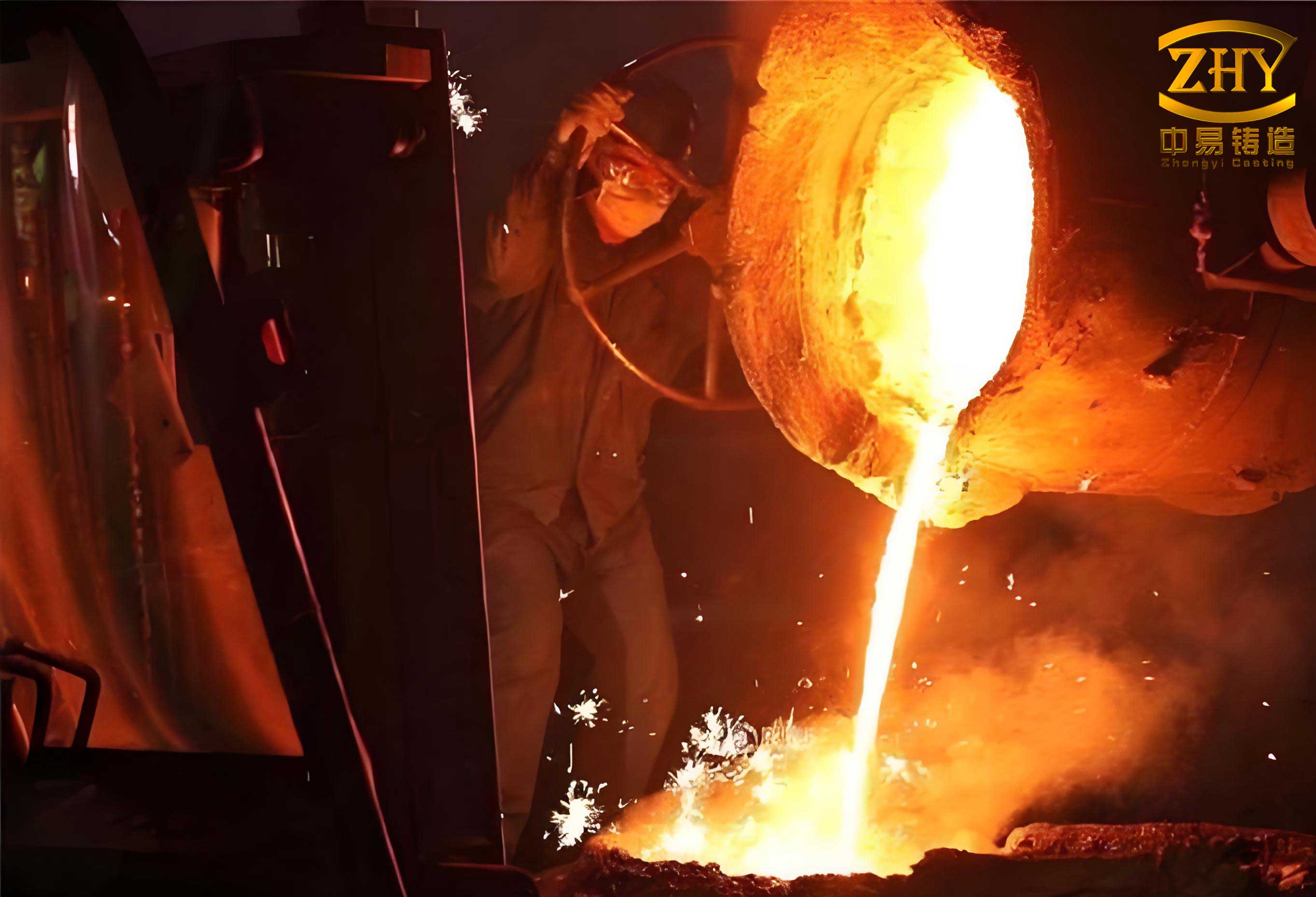
The fundamental principle of sand casting involves creating a mold from a sand aggregate, into which molten metal is poured. The subsequent solidification dictates the final properties of the casting. A critical phase during solidification is the potential for gas formation within the metal itself, leading to endogenous pores. Unlike gas porosity from mold gases, endogenous pores originate from chemical reactions within the melt. This distinction is crucial for effective diagnosis and remedy in sand casting processes.
Through my work, I have categorized the visual characteristics of endogenous reaction porosity. These features are paramount for initial identification on the foundry floor.
| Characteristic | Description | Typical Manifestation in Sand Casting |
|---|---|---|
| Size & Shape | Large cavities, often several millimeters in diameter. Irregular shapes: spherical, globular, or elongated. | After machining, the surface reveals sizable, irregular holes scattered across the section. |
| Distribution | Dispersed or clustered throughout the entire cross-section of the casting. | A honeycomb-like appearance on machined surfaces, indicative of widespread internal porosity. |
| Pore Wall Appearance | Smooth and often bright, metallic, and shiny. | Contrasts with the darker, oxidized walls of shrinkage or subsurface pores. |
| Location | Primarily internal, becoming visible only after machining or sectioning. | Confirms the endogenous nature, as opposed to surface-breaking defects from mold-gas interaction. |
| Consistency Across Batch | Defect appears in all castings from a single heat or ladle, regardless of mold condition (green sand or dry sand). | Points to a fundamental issue with the melt chemistry rather than a mold variable in the sand casting line. |
The formation mechanism is rooted in metallurgical reactions. During the final stages of solidification in sand casting, solute elements are enriched in the remaining liquid. If the concentrations of certain reactive elements exceed their equilibrium solubility product, a gas-forming reaction is triggered. The general driving force can be described by the law of mass action for a generic reaction in the melt:
$$ [A] + [B] \rightleftharpoons C_{(g)} $$
where [A] and [B] are dissolved elements in the molten metal, and C_{(g)} is the gaseous product. The reaction proceeds to the right (gas formation) when the product of activities Q exceeds the equilibrium constant K at the local solidification temperature:
$$ Q = a_{[A]} \cdot a_{[B]} > K(T) $$
In sand casting, the most common endogenous gases are carbon monoxide (CO) and water vapor (H₂O). Let’s analyze the CO reaction prevalent in steel castings. Poor deoxidation leaves a high dissolved oxygen content [O]. Upon solidification, carbon [C] and oxygen [O] enrich in the interdendritic liquid, leading to:
$$ [C] + [O] \rightarrow CO_{(g)} $$
The equilibrium constant for this reaction is temperature-dependent: $$ K_{CO} = \frac{P_{CO}}{a_{[C]} \cdot a_{[O]}} $$. At the solidification front, the local partial pressure of CO can become significant, nucleating bubbles on dendrite imperfections. These bubbles, often augmented by dissolved hydrogen and nitrogen, become trapped as porosity. The rate of bubble nucleation (ṅ) can be modeled as a function of supersaturation (S = Q/K):
$$ \dot{n} \propto \exp\left(-\frac{16\pi \gamma^3}{3 k_B T (\rho_m \ln S)^2}\right) $$
where $\gamma$ is the gas-liquid surface tension, $k_B$ is Boltzmann’s constant, $T$ is temperature, and $\rho_m$ is the molar density of the gas. This explains why a slight increase in supersaturation in sand casting can lead to a dramatic rise in pore count.
For copper-based alloys in sand casting, the endogenous water vapor reaction is a major concern. The reaction sequence begins during melting where copper oxidizes: $$ 4Cu + O_2 \rightarrow 2Cu_2O $$. This cuprous oxide dissolves in the melt: $$ Cu_2O \rightleftharpoons 2[Cu] + [O] $$ (simplified). Simultaneously, hydrogen from moisture or atmosphere dissolves: $$ \frac{1}{2}H_2 \rightleftharpoons [H] $$. During solidification, the reaction occurs: $$ Cu_2O + 2[H] \rightarrow 2Cu + H_2O_{(g)} $$. The equilibrium is governed by: $$ K_{H_2O} = \frac{P_{H_2O}}{a_{Cu_2O} \cdot a_{[H]}^2} $$. Prevention, therefore, hinges on controlling both oxygen and hydrogen potentials in the sand casting melt.
Based on my experience, the prevention strategies must be proactive and integrated into the sand casting metallurgy protocol. The following table outlines a systematic approach for different alloy systems.
| Alloy System (Sand Casting) | Primary Endogenous Gas | Root Cause | Key Preventive Measures | Supporting Equation/Principle |
|---|---|---|---|---|
| Carbon & Low-Alloy Steels | CO | Incomplete deoxidation, high [O] | Final deoxidation with Al, Si, Ca. Use of killed steel practice. Vacuum degassing. | $$ [Al] + 3[O] \rightarrow Al_2O_3_{(s)} $$ (ties up oxygen) |
| Copper (Pure), Tin Bronzes | H₂O | High [O] from Cu₂O and high [H] | Oxidizing flux to remove H (e.g., CuO, MnO₂), followed by deoxidation (P-Cu). Protective atmosphere melting. | $$ CuO + 2[H] \rightarrow Cu + H_2O_{(g)} $$ (flux reaction) |
| Aluminum Alloys | H₂ | High hydrogen solubility in liquid Al | Rotary degassing with inert gas (Ar, N₂). Vacuum treatment. Use of dry, preheated tools. | |
| Gray Cast Iron | CO, N₂ | Reaction of [C], [O], [N] at eutectic solidification | Control of inoculant type/amount. Minimize air entrainment during pouring in sand casting. | $$ [C] + FeO \rightarrow Fe + CO_{(g)} $$ (can occur at high O) |
The interplay between melting practice and sand casting parameters cannot be overstated. For instance, the hydrogen pickup in aluminum sand casting is heavily influenced by the humidity of the molding sand. The relationship can be approximated by considering the vapor pressure at the metal-mold interface. The rate of hydrogen diffusion into the melt, J_H, is proportional to the square root of the water vapor partial pressure in the mold atmosphere and inversely proportional to the density of the sand casting mold:
$$ J_H \approx D_H \cdot \frac{\sqrt{P_{H_2O}^{mold}} – \sqrt{P_{H_2O}^{eq}}}{\delta} $$
where $D_H$ is the diffusion coefficient, $P_{H_2O}^{eq}$ is the equilibrium pressure corresponding to the melt’s hydrogen content, and $\delta$ is the boundary layer thickness. This underscores why maintaining low-resin and low-moisture sand systems is critical for premium sand casting quality.
Beyond chemistry, solidification modeling in sand casting provides predictive power. The classic Niyama criterion, while often used for shrinkage, can be adapted to gauge susceptibility to gas pore growth. The criterion states that porosity is likely when the local thermal gradient G divided by the square root of the cooling rate $\dot{T}$ falls below a critical value: $$ \frac{G}{\sqrt{\dot{T}}} < C_{crit} $$. For endogenous gas pores, the pressure inside a pore $P_{gas}$ must overcome the summation of metallostatic pressure $P_m$, capillary pressure $P_\sigma$, and atmospheric pressure $P_a$ to nucleate and grow:
$$ P_{gas} = P_{CO/H_2O} + P_{H_2} + P_{N_2} > P_m + P_\sigma + P_a $$
$$ \text{where } P_\sigma = \frac{2\gamma}{r} $$
Here, $r$ is the pore radius. In sand casting, a slow cooling rate (low $\dot{T}$) in heavy sections increases the time available for gas accumulation and bubble growth, making these areas prime candidates for endogenous porosity.
Implementing effective gating and risering in sand casting design is another layer of defense. While risers primarily feed shrinkage, a well-designed pressurized gating system can promote directional solidification towards the riser, effectively sweeping the growing gas pores into the riser where they can escape. The fluid flow dynamics are governed by the Bernoulli equation modified for sand casting systems:
$$ \frac{P_1}{\rho g} + \frac{v_1^2}{2g} + z_1 = \frac{P_2}{\rho g} + \frac{v_2^2}{2g} + z_2 + h_{loss} $$
where $h_{loss}$ accounts for losses in the sand mold. A smooth, tapered gating system minimizes turbulence and air aspiration, reducing exogenous gas pickup that can synergistically worsen endogenous porosity issues in sand casting.
Process control through thermal analysis is invaluable. Cooling curves obtained from thermocouples embedded in sand casting molds can be analyzed for characteristic arrests. For example, in ductile iron, the temperature derivative curve ($dT/dt$) can reveal the graphite eutectic undercooling. A deep undercooling often correlates with a higher driving force for carbide formation and associated micro-porosity from gas rejection. The latent heat release $Q_L$ during solidification affects the local cooling rate and gas solubility:
$$ \rho C_p \frac{\partial T}{\partial t} = \nabla \cdot (k \nabla T) + \rho L \frac{\partial f_s}{\partial t} $$
where $f_s$ is the solid fraction, $L$ is latent heat, $C_p$ is specific heat, and $k$ is thermal conductivity. Optimizing inoculation in sand casting to promote a gentle, late recalescence can reduce undercooling and associated gas supersaturation.
Finally, post-casting inspection and analysis form the feedback loop. Techniques like ultrasonic testing, radiography, and quantitative metallography are essential. A useful metric is the porosity area fraction $A_f$, measured on polished sections:
$$ A_f = \frac{\sum A_{pores}}{A_{total}} \times 100\% $$
Correlating $A_f$ with melt treatment parameters (e.g., degassing time, deoxidizer addition) allows for the empirical optimization of the sand casting process. In my practice, maintaining a log of such data against furnace charges, sand properties, and pouring temperatures has been indispensable for continuous improvement in sand casting quality.
In conclusion, mastering the challenge of endogenous reaction porosity in sand casting requires a multidisciplinary approach blending metallurgy, thermodynamics, fluid dynamics, and process engineering. By understanding the precise visual signatures, quantifying the underlying chemical equilibria through formulas, and implementing systematic controls summarized in tables, foundries can significantly enhance casting soundness. The sand casting process, despite its ancient roots, demands modern scientific rigor to achieve consistent, high-integrity results. As technology advances, integrating real-time melt analysis and adaptive process control will further elevate the reliability of sand casting for critical applications.