
In my extensive experience within the foundry industry, I have come to firmly believe that achieving consistent high quality in aluminum alloy sand casting is not merely a matter of stringent inspection at the end of the production line. True quality is engineered from the very inception of a part’s design and is meticulously maintained throughout every subsequent stage. Traditional quality control often focuses disproportionately on the production phase, but the destiny of a casting’s quality is largely sealed during its structural design and initial process planning. Therefore, implementing a proactive strategy of quality planning and monitoring across the entire sand casting process is paramount. This holistic approach is the most effective way to minimize scrap rates, optimize casting integrity, reduce overall costs, and enhance production efficiency for sand casting operations. The journey of a quality sand casting begins long before metal is poured.
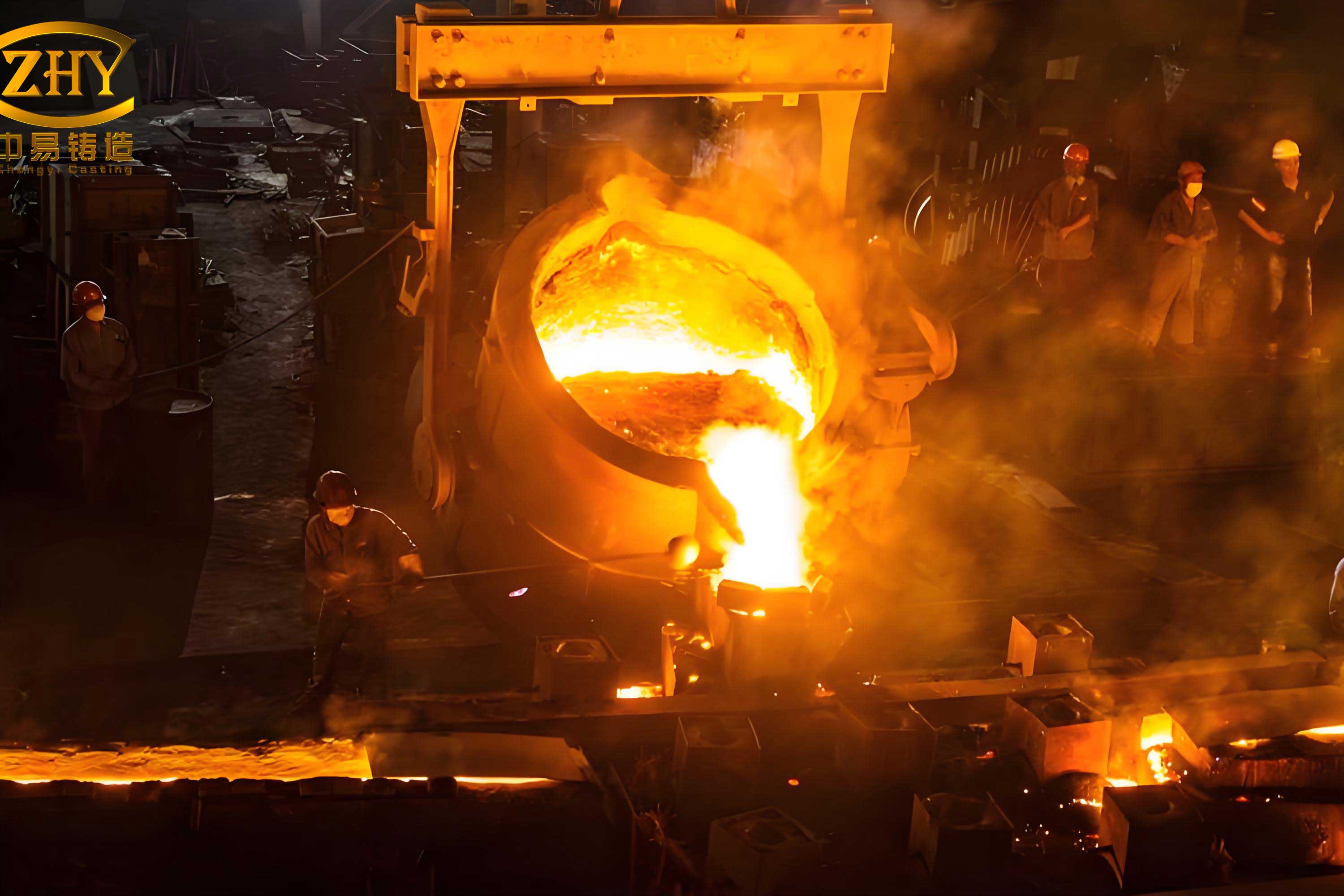
The foundation of any successful sand casting project is laid during the structural design phase. When I collaborate with design engineers, I emphasize that a designer’s familiarity with relevant standards and the current state of sand casting technology is non-negotiable. The choice of the casting method—be it sand casting, die casting, or investment casting—must be deliberate. For aluminum components, sand casting often offers the necessary flexibility for complex geometries and moderate to low production volumes. Selecting the appropriate aluminum alloy, such as the advanced and reliable ZL101A, ZL114A, or ZL205A, is equally critical. More importantly, the design must embody excellent castability. This means avoiding sharp corners, maintaining uniform wall thicknesses where possible, and incorporating adequate draft angles—all to facilitate the sand casting process. The most effective countermeasure against future defects is to conduct a formal design-for-manufacturability review involving process engineers before finalizing drawings. This ensures concurrent engineering, where design and sand casting process planning proceed in parallel.
| Design Feature | Recommendation for Sand Casting | Potential Issue if Neglected |
|---|---|---|
| Wall Thickness | Strive for uniformity; gradual transitions. | Shrinkage porosity, hot tears. |
| Corners and Junctions | Use generous radii (R). | Stress concentration, shrinkage defects. |
| Draft Angle | Include on all vertical faces. | Difficulty in pattern withdrawal, mold damage. |
| Internal Complexity | Design cores for easy placement and venting. | Core shift, gas defects. |
Once the design is frozen, the focus shifts to meticulous process design. The quality of a sand casting process plan is measured by its ability to produce sound castings that meet specifications using the simplest and most reliable methods available in our foundry. Each sand casting process plan I develop undergoes rigorous analysis, discussion, and approval. Continuous learning about new materials, equipment, and simulation technologies is essential. Today, Computer-Aided Design (CAD) and casting simulation software are indispensable tools. These systems perform numerical modeling of mold filling and solidification, allowing us to predict and eliminate defects like shrinkage porosity and mistuns before a single pattern is made. The governing equations for fluid flow and heat transfer in sand casting simulation are complex, but they fundamentally rely on principles like the Navier-Stokes equations and the heat conduction equation.
For fluid flow during mold filling in sand casting:
$$ \frac{\partial \rho}{\partial t} + \nabla \cdot (\rho \vec{v}) = 0 $$
$$ \rho \left( \frac{\partial \vec{v}}{\partial t} + \vec{v} \cdot \nabla \vec{v} \right) = -\nabla p + \mu \nabla^2 \vec{v} + \rho \vec{g} $$
And for solidification heat transfer:
$$ \rho C_p \frac{\partial T}{\partial t} = \nabla \cdot (k \nabla T) + \dot{Q}_{latent} $$
where $\rho$ is density, $\vec{v}$ is velocity, $p$ is pressure, $\mu$ is viscosity, $\vec{g}$ is gravity, $C_p$ is specific heat, $k$ is thermal conductivity, $T$ is temperature, and $\dot{Q}_{latent}$ is the latent heat source term. Using such tools moves sand casting process design from an art heavily reliant on experience to a more predictable science.
| Control Element | Description | Verification Method |
|---|---|---|
| Gating System Design | Ensures smooth, turbulent-free filling of the sand mold. | Simulation software analysis, historical data review. |
| Riser and Feeder Design | Provides adequate molten metal to compensate for shrinkage. | Modulus calculation, solidification simulation. |
| Chill Placement | Directs solidification sequence to eliminate shrinkage. | Thermal analysis, simulation. |
| Process Documentation | Complete, clear, and accurate instructions for all steps. | Peer and supervisor review, checklist sign-off. |
The pattern-making stage is where the process design becomes physical. The pattern’s accuracy directly dictates the dimensional accuracy of the final sand casting. Depending on the production volume for the sand casting job, patterns may be made from wood, plastic, or metal. My supervision ensures that patterns are constructed strictly according to the pattern drawing and relevant standards. Critical checks include verifying the draft angles, fillet radii, and overall dimensional tolerances. The pattern’s strength and stiffness are also assessed to withstand the rigors of the sand molding process in repeated sand casting cycles.
Raw material intake is a critical gatekeeping stage for sand casting quality. We maintain a strict supplier qualification and auditing program. Every batch of primary aluminum alloy ingots, secondary alloys, or master alloys received for our sand casting production is subjected to a stringent incoming inspection protocol. This is non-negotiable. The acceptance criteria are defined by standards or technical agreements.
| Inspection Item | Method/Instrument | Acceptance Criteria |
|---|---|---|
| Chemical Composition | Optical Emission Spectrometer | Must conform to alloy specification limits (e.g., ASTM, GB). |
| Metallographic Structure | Macro-examination of fracture or etched sample | Uniform grain structure, free from excessive inclusions. |
| Gas Porosity (Pinholing) | Reduced Pressure Test (RPT) or density measurement | Density index or pore count below specified threshold. |
| Surface Condition | Visual inspection | Free from excessive oxide, contamination, or moisture. |
The chemical composition check is vital. For a common sand casting alloy like A356 (similar to ZL101A), the target composition might be: Si 6.5-7.5%, Mg 0.25-0.45%, Fe < 0.20%, Ti < 0.20%. Any deviation can drastically affect mechanical properties and castability in the subsequent sand casting process.
The melting and holding stage is arguably the heart of the sand casting process, where the metallurgical quality of the aluminum is established. In my daily practice, I oversee a multitude of parameters. The choice of crucible (e.g., graphite, clay-bonded graphite), its preparation and coating, preheating temperature, charge calculation, melting sequence, and temperature control are all standardized. For the sand casting of high-integrity aluminum parts, advanced treatment methods are employed. Hexachloroethane degassing has been replaced by environmentally friendlier methods. We now use rotary impeller degassing with inert gases like argon or nitrogen. The efficiency of this degassing, critical for removing hydrogen to prevent gas porosity in sand castings, is quantified using a density index test. The density index $DI$ is calculated as:
$$ DI = \left( \frac{\rho_{atm} – \rho_{vac}}{\rho_{atm}} \right) \times 100\% $$
where $\rho_{atm}$ is the density of a sample solidified at atmospheric pressure and $\rho_{vac}$ is the density of a sample solidified under vacuum. A low $DI$ indicates effective degassing, essential for sound sand castings.
Modification of the eutectic silicon structure is another key treatment. While traditional sodium salt modification is effective, we often use strontium (Sr) via Al-Sr master alloys for longer fade resistance. The effectiveness of modification is monitored using thermal analysis. The characteristic temperature depression $\Delta T$ of the Al-Si eutectic plateau is measured:
$$ \Delta T = T_{unmodified} – T_{modified} $$
A significant $\Delta T$ (e.g., > 5-7°C) confirms successful modification, leading to improved mechanical properties in the sand casting.
| Process Parameter | Control Point | Monitoring Frequency & Method |
|---|---|---|
| Charge Make-up | Accurate weighing and calculation of primary, secondary, and alloying elements. | Per heat; verified by operator and supervisor. |
| Melt Temperature | Precise control from melting through holding to pouring. | Continuous/periodic; calibrated thermocouples. |
| Degassing Efficiency | Reduction of hydrogen content. | Before and after treatment; Density Index Tester. |
| Modification Effectiveness | Change in silicon morphology. | After treatment; Thermal Analysis System. |
| Final Chemistry | Conformance to specification. | Before pouring; On-site Optical Emission Spectrometer. |
The preparation of molding sand is a science in itself for sand casting. The properties of the sand mixture directly influence surface finish, dimensional accuracy, and the occurrence of defects like sand inclusion, veining, or gas holes in the sand casting. We systematically control the sand system.
For green sand molding, which is common in high-volume sand casting, we monitor:
- Base Sand: AFS grain fineness number, grain shape (round, sub-angular).
- Clay Content: Typically bentonite, which provides bonding.
- Moisture Content: Critical for developing strength.
- Green Strength: Compressive, tensile, and shear strength.
- Permeability: Ability to allow gases to escape.
These properties are interrelated. For instance, green compressive strength ($\sigma_{GC}$) is a function of clay content ($C$), moisture content ($M$), and compactability ($CP$). Empirical relationships are often used for control:
$$ \sigma_{GC} \propto f(C, M, CP) $$
Regular testing is done using a sand strength tester, permeability meter, and moisture teller. For chemically-bonded sand systems (e.g., furan resin sand) used for larger or more complex sand castings, we control the resin and catalyst ratios, mixing time, and strip time to ensure consistent core and mold strength.
| Property | Target Range | Test Method (Standard) |
|---|---|---|
| AFS Grain Fineness Number | 50 – 70 | Sieve Analysis (AFS 1105-00-S) |
| Moisture Content | 2.5 – 3.5 % | Loss on Drying (AFS 1101-00-S) |
| Green Compressive Strength | 120 – 180 kPa | Universal Sand Strength Machine (AFS 1102-00-S) |
| Permeability Number | 80 – 120 | Permeability Meter (AFS 1113-00-S) |
| Compactability | 35 – 45 % | Compactability Gauge |
In the molding and core-making stage, the focus is on executing the sand casting process plan with precision. This involves achieving the correct mold hardness or compaction density, accurately positioning chills, filters, and risers, and carefully assembling cores. I insist on in-process checks. For every mold, critical dimensions are verified using gauges. The wall thickness of the cavity, after core assembly, is a mandatory check to prevent deviation from the design in the final sand casting. The hardness of the sand mold, measured using a mold hardness tester, must fall within a specified range (e.g., 75-85 on a B-scale for some green sand molds) to ensure adequate strength without compromising permeability for the sand casting process.
The pouring stage is the culmination of all previous preparation in the sand casting sequence. For traditional gravity sand casting, we control pouring temperature and pouring rate (time to fill the mold). A common practice is to use a pouring cup to maintain a constant metallostatic head. The pouring temperature $T_{pour}$ is often selected based on the alloy’s liquidus temperature $T_{liq}$ and the casting’s modulus $M_c$ (volume/surface area ratio):
$$ T_{pour} = T_{liq} + \Delta T_{superheat} $$
where $\Delta T_{superheat}$ is typically 50-150°C for aluminum sand castings, with thinner sections requiring higher superheat. For sophisticated sand casting of critical components, we employ counter-gravity casting techniques like low-pressure sand casting. Here, process parameters such as pressurization rate, holding pressure, and pressure time are digitally controlled and must be input exactly as specified by the validated sand casting process.
| Casting Characteristic | Recommended Pouring Temperature Range | Pouring Rate Consideration |
|---|---|---|
| Thin sections (< 5 mm) | Higher end (e.g., 730-750°C for A356) | Faster pour to prevent premature freezing. |
| Thick sections (> 20 mm) | Lower end (e.g., 700-720°C for A356) | Slower, controlled pour to minimize turbulence. |
| Complex geometry with cores | Medium range | Steady rate to allow gas evacuation from sand cores. |
After shakeout and cleaning, the castings enter the final inspection phase. Our inspection regime for sand castings is tripartite, covering visual/dimensional, internal, and metallurgical quality. Visual inspection checks for surface defects like sand inclusions, cold shuts, and misruns directly related to the sand casting process. Dimensional inspection uses manual gauges, CMMs (Coordinate Measuring Machines), or laser scanners. Internal soundness is assessed using non-destructive testing (NDT) methods. For critical sand castings, we routinely use X-ray radiography to detect shrinkage porosity and inclusions. The detectability is governed by factors like material thickness and defect size. Ultrasonic testing is employed for detecting internal cracks or delaminations. Finally, the metallurgical quality is verified. Tensile testing specimens are machined from separately cast test bars or, for more representative data, from extensions cast onto the actual sand casting (if allowed). The yield strength $\sigma_y$, ultimate tensile strength $\sigma_{uts}$, and elongation $\epsilon$ are measured and must meet specification. Microstructural analysis confirms proper grain refinement, silicon modification, and the absence of detrimental intermetallic phases.
| Quality Aspect | Typical Defects Sought | Inspection Method(s) |
|---|---|---|
| Visual & Dimensional | Surface flaws, dimensional inaccuracies, warpage. | Visual, optical comparators, CMM, gauges. |
| Internal Soundness | Shrinkage porosity, gas pores, inclusions, cracks. | X-ray Radiography, Ultrasonic Testing. |
| Metallurgical Properties | Sub-standard mechanical properties, incorrect microstructure. | Tensile Test, Hardness Test, Metallography. |
The probability of detecting a defect of size $a$ using radiography can be related to the thickness $t$ and the contrast sensitivity $CS$ of the system. A simplified model considers the signal-to-noise ratio. For a pore, the thickness difference $\Delta t$ it causes is roughly its diameter. Detection is generally possible if $\Delta t / t > CS$, where $CS$ is often 1-2% for good practice in sand casting inspection.
In conclusion, my philosophy towards sand casting quality is built on two pillars: comprehensive upfront planning and relentless in-process monitoring. The evolution of sand casting technology, with advanced simulation, precise melting control, and automated sand systems, makes robust quality planning more important than ever. A well-conceived sand casting strategy, validated through simulation and pilot runs, is the blueprint for success. However, a plan is only as good as its execution. Therefore, casting production, especially sand casting, is fundamentally about process control. This control must encompass the entire value stream, starting from design and process planning, which are too often overlooked in quality discussions. As the saying goes, “the devil is in the details.” In sand casting, this is profoundly true. Only by exercising strict control at every single link of the chain—from the alloy chemistry and sand properties to the mold hardness and pouring parameters—can the consistent production of high-quality aluminum alloy sand castings be guaranteed. This integrated approach to quality strategy and monitoring is what transforms sand casting from a traditional craft into a reliable, high-performance manufacturing process.