
In the field of industrial manufacturing and machinery, the quest for durable and cost-effective components is perpetual. My research and development efforts have been focused on advancing the production of wear parts, specifically for concrete mixing equipment. Traditional materials like high-chromium white cast iron, while hard and wear-resistant, suffer from significant drawbacks, primarily high brittleness leading to frequent fractures during handling, installation, and service, coupled with elevated production costs. This has driven my exploration into alternative manufacturing techniques and material systems. The core of this investigation revolves around a specialized sand casting process using graphite-based molds to create a novel surface composite material, aiming to combine a hardened, wear-resistant surface with a tough, ductile core in a single casting step. This report details the methodology, findings, and successful application of this graphite sand casting process for producing liners and blades for concrete mixers.
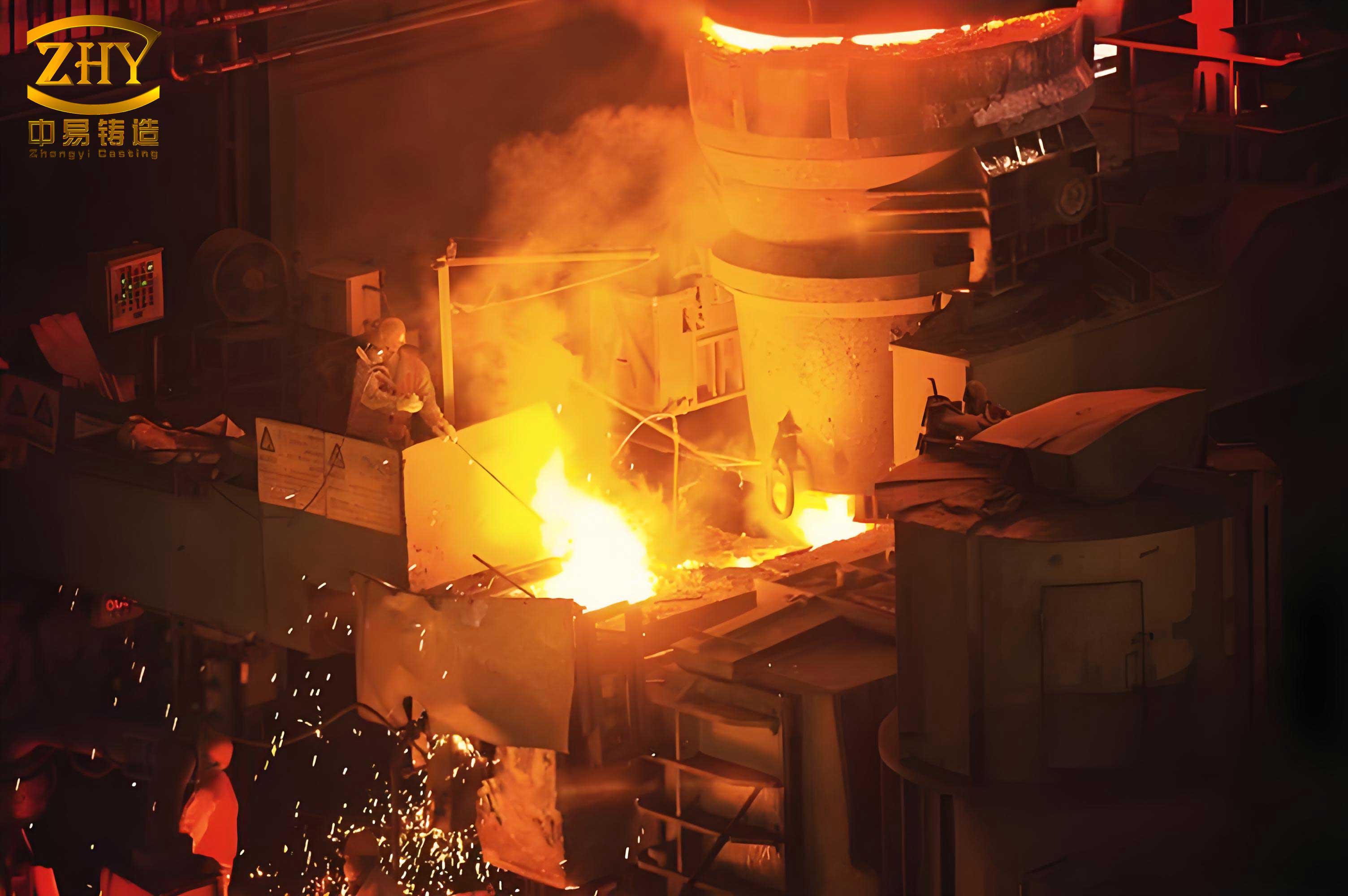
The fundamental innovation lies in utilizing the inherent properties of graphite sand for sand castings. Graphite sand is recognized as a superior molding material due to its high refractoriness, excellent chemical stability, and strong chilling power, previously employed for non-ferrous and titanium alloys. However, its pronounced carburizing effect has largely precluded its use in steel castings. My work deliberately exploits this very effect. By pouring a low-carbon steel melt into a graphite sand mold, carbon from the mold surface diffuses into the solidifying metal, creating a surface layer with a high-carbon, white iron microstructure. Simultaneously, the core of the casting remains a low-carbon, ductile steel. This in-situ formation of a functional gradient material during a standard sand casting operation presents a significant advantage in simplicity and cost over techniques like welding overlays or thermal spraying.
The selection of the base steel composition was critical. To achieve a pronounced surface carburization while ensuring excellent core toughness and strength, I formulated a lean-alloy steel akin to typical carburizing grades, with the addition of rare earth elements for microstructure refinement and purification. The nominal composition (in wt.%) is: C ≤ 0.20, Si 0.17-0.37, Mn 0.8-1.2, Cr ≤ 0.30, Ni ≤ 0.30, Cu ≤ 0.25, with RE (Rare Earth) added in trace amounts. This base material is well-suited for the subsequent carburizing action during the graphite sand castings process.
Experimental Methodology: Graphite Sand Mold Preparation and Casting
The success of producing these composite sand castings hinges entirely on the mold material and the casting parameters. The graphite sand mixture was meticulously prepared with the following ratio by weight:
- Graphite Sand: 100 parts
- Clay/Bentonite: 8-10 parts
- Water: 4-5 parts
The properties of the prepared molding sand were tested to ensure suitability for the sand castings process, as summarized in Table 1.
| Property | Value | Unit |
|---|---|---|
| Wet Compressive Strength | > 0.05 | MPa |
| Wet Tensile Strength | > 0.02 | MPa |
| Permeability | > 120 | – |
| Moisture Content | 4.5 – 5.5 | % |
The molds for the liner and blade prototypes were prepared as dry sand castings molds. They were dried at a temperature of approximately 250°C to remove moisture and enhance strength. A critical aspect of the process was achieving “hot mold” pouring. The molds were assembled (closed) immediately before pouring the molten metal. This practice minimizes heat loss from the metal stream upon entering the mold cavity, which is essential for promoting the kinetics of the surface carburization reaction between the molten steel and the graphite sand mold wall.
The pouring temperature is a pivotal parameter in these sand castings. A higher temperature increases the fluidity of the metal and the activity of carbon atoms, leading to a greater carburized layer depth. However, excessive temperature can cause mold erosion (burn-on), surface defects like shrinkage cavities, and coarse grain structure in the casting. Through iterative trials, an optimal pouring temperature range of 1550°C – 1580°C was established. This range provided a sufficient carburizing effect for a usable composite layer while maintaining good casting surface quality and soundness. After pouring and solidification, the sand castings were shaken out, and the feeder heads and gating systems were removed.
Microstructural and Performance Characterization
The defining characteristic of these sand castings is the gradation in microstructure and properties from surface to core. Cross-sectional samples were extracted from the cast liners and blades for comprehensive analysis.
1. Composite Layer Depth and Microstructure: Metallographic examination revealed a distinct three-zone structure. The outermost surface layer, approximately 3-5 mm thick, exhibited a ledeburite structure (mixture of cementite and austenite/pearlite), characteristic of white cast iron formed due to hyper-eutectic carbon content. Beneath this, a transition zone showed a progressive decrease in carbide content. The core retained the typical ferrite-pearlite microstructure of a low-carbon steel. The total depth of the visibly affected composite region (white layer + transition zone) was measured to be between 8-12 mm, which is more than adequate for wear applications like mixer liners. The depth of carburization (d) in such a process can be conceptually related to diffusion principles, though the boundary condition is complex due to the moving solidification front. A simplified representation considering the high-temperature contact time can be expressed as:
$$ d \approx k \sqrt{D_c \cdot t_c} $$
where $k$ is a process constant, $D_c$ is the effective diffusivity of carbon in austenite at the interfacial temperature, and $t_c$ is the effective contact/carburizing time at high temperature.
2. Hardness Profile: The microhardness (HV) was measured from the surface to the core. The results, plotted in Figure 1, show a steep gradient at the very surface, transitioning smoothly into the core hardness. The surface hardness exceeded 800 HV0.2 (approximately 64 HRC), comparable to high-chromium cast iron. The core hardness was around 200 HV0.2 (approximately 90 HRB), indicative of a tough, low-carbon steel. This gradual transition in mechanical properties is crucial for preventing spalling or delamination of the hard surface layer under impact or cyclic loading during service.
3. Bulk Hardness and Effect of Heat Treatment: Macro-hardness tests were conducted on both the surface and the core of the sand castings in both the as-cast and heat-treated conditions. A sub-critical heat treatment was performed to relieve casting stresses and slightly temper the brittle surface phase without significantly reducing hardness. The results are consolidated in Table 2. The data confirms the high surface hardness and the significant difference between surface and core properties. The heat treatment provided a marginal reduction in surface hardness but improved overall stability of the sand castings.
| Casting Component | Surface Hardness (HRC) | Core Hardness (HRB) | ||
|---|---|---|---|---|
| As-Cast | Heat-Treated | As-Cast | Heat-Treated | |
| Side Liner Sample | 63.5 | 61.0 | 91.5 | 90.0 |
| Arc Liner | 64.0 | 62.5 | 92.0 | 90.5 |
| Left Blade | 62.0 | 60.0 | 90.0 | 89.0 |
4. Wear Resistance: The ultimate performance metric for these sand castings is their wear resistance. Pin-on-disk abrasion wear tests were conducted under controlled conditions, with material loss compared against standard high-chromium white cast iron. The results, shown in Table 3, demonstrate that the wear resistance of the graphite sand-cast composite is equivalent to, and in some cases slightly superior to, that of high-chromium iron. The relative wear resistance, ε, is defined as the ratio of the weight loss of the standard sample to that of the test sample:
$$ \epsilon = \frac{\Delta W_{standard}}{\Delta W_{test}} $$
Values around 1.0 indicate parity. This confirms that the functional requirement for wear resistance is fully met by these novel sand castings.
| Sample Type | Condition | Weight Loss (mg) | Relative Wear Resistance (ε) |
|---|---|---|---|
| High-Cr White Iron (Standard) | – | 15.2 | 1.00 |
| Composite Liner Material | As-Cast | 14.8 | 1.03 |
| Heat-Treated | 15.5 | 0.98 |
Analysis of the Composite Formation Mechanism
The formation of the gradient composite structure in these sand castings is a synergistic result of several interrelated phenomena: interfacial reaction, diffusion, and solidification kinetics. When the low-carbon steel melt contacts the graphite sand mold, a high-temperature interfacial reaction occurs. Carbon from the graphite (C_graphite) dissolves into the liquid iron (Fe_l) at the interface:
$$ C_{(graphite)} \rightarrow [C]_{Fe(l)} $$
This leads to a localized zone of melt highly supersaturated with carbon at the mold wall. As solidification begins, the first crystals to form are rich in iron and lean in carbon (δ-ferrite). However, the extreme carbon concentration at the interface pushes the local composition into the hyper-eutectic region of the Fe-C phase diagram. Consequently, the primary solid phase that forms directly against the mold wall is cementite (Fe$_3$C), leading to the white iron layer. The rate of advance of the solidification front (R) and the diffusion of carbon in the liquid ($D_l$) ahead of the front determine the extent of this layer. A model for the white layer thickness ($\lambda_w$) can be approximated by considering the solute redistribution at a planar front under extreme supersaturation:
$$ \lambda_w \propto \frac{D_l}{R} \ln \left( \frac{C_i – C_0}{C_i – C_{eutectic}} \right) $$
where $C_i$ is the carbon concentration at the mold/metal interface, $C_0$ is the initial melt carbon content, and $C_{eutectic}$ is the eutectic carbon composition.
Behind the solidification front, in the solid state, carbon continues to diffuse from the high-carbon surface region towards the lower-carbon core, governed by Fick’s laws. The temperature gradient and the cooling rate of the sand castings critically influence this diffusional homogenization process, creating the observed transition zone. The final microstructure is thus a frozen snapshot of these dynamic and competing processes inherent to this specialized sand casting technique.
Field Application and Performance
The definitive validation of any engineering component is its performance in real-world service. Sets of liners and blades produced via the graphite sand casting process were installed on a concrete mixer truck operating in a commercial batching plant. The mixer has since completed over 50,000 mixing cycles. As of the latest inspection, the components show only moderate, uniform wear with no signs of catastrophic failure, cracking, or spalling. Their service life is on track to meet or exceed that of traditional high-chromium cast iron parts. This successful field trial underscores the practical viability and robustness of these composite sand castings. The combination of excellent wear resistance from the surface and good impact resistance from the core effectively addresses the brittleness issue associated with monolithic white iron castings, while the simplicity of the single-step casting process offers a compelling cost advantage.
Conclusions and Perspectives
My investigation establishes that the graphite sand casting of a low-carbon, low-alloy steel is a highly feasible and effective method for manufacturing wear parts like concrete mixer liners and blades. The process successfully creates a surface composite material in-situ during the casting of sand castings. The key findings are:
- The graphite sand mold acts as a powerful carburizing agent, producing a surface layer with a hard, wear-resistant white iron microstructure (hardness > 60 HRC) to a depth sufficient for industrial applications.
- The core of the sand castings retains the ductile and tough microstructure of the base low-carbon steel, effectively eliminating the risk of brittle fracture during handling and service.
- The wear resistance of the composite material is equivalent to that of high-chromium white cast iron, as confirmed by laboratory tests and field performance.
- The manufacturing process is relatively simple, integrates the composite formation into the primary shaping operation, and is cost-effective compared to alternatives involving separate hardfacing or the use of expensive high-alloy melts.
The success of these sand castings opens avenues for further research and development. Future work could involve optimizing the graphite sand composition (e.g., particle size, binder type) for controlled carbon transfer, modeling the coupled diffusion-solidification process to predict layer depth for different part geometries, and exploring the incorporation of other alloying elements into the base steel or the mold facing to create more complex in-situ surface alloys. The principle demonstrated here—using reactive mold materials to functionally grade sand castings—holds significant promise for broadening the performance envelope of cast components across various industries seeking durable and economical solutions.