
As a researcher and engineer specializing in foundry environmental control, I have dedicated significant effort to understanding and improving the treatment of exhaust gases generated during casting processes, particularly in sand castings. The casting industry is a cornerstone of modern manufacturing, but it faces growing environmental challenges due to emissions from key production stages. In this article, I will delve into the intricacies of exhaust gas treatment, focusing on the pouring and in-mold cooling sections of sand castings, and propose innovative solutions based on practical engineering experiences. The goal is to provide a detailed, first-hand perspective on optimizing collection and treatment systems while minimizing costs and enhancing efficiency.
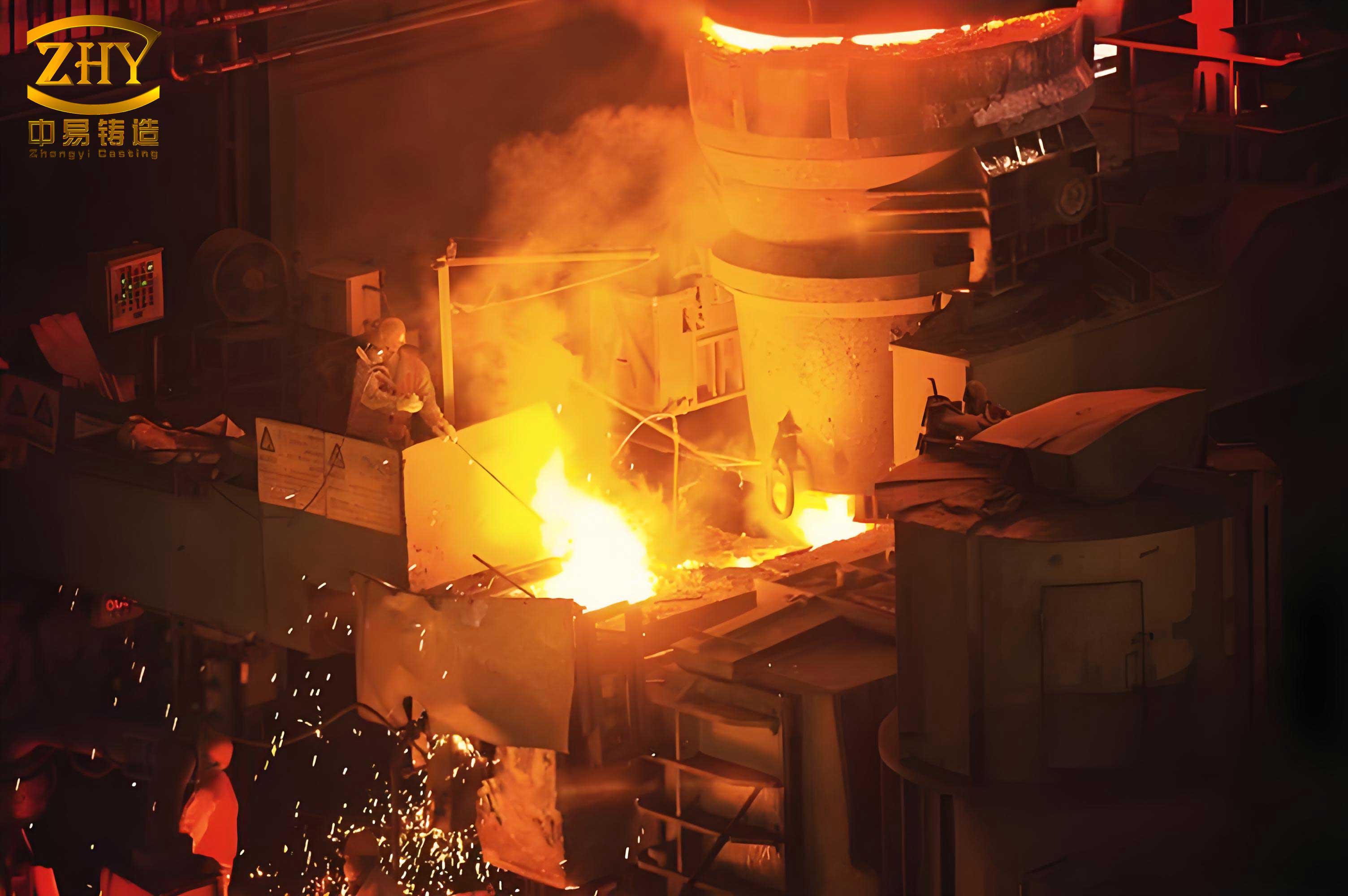
Casting processes are broadly categorized into two main types: sand casting and special casting methods. Sand castings involve the use of mold made from sand bonded with materials like clay, resin, or sodium silicate. This method is widely used due to its versatility and cost-effectiveness for producing complex geometries. Special casting techniques, such as investment casting, die casting, and centrifugal casting, offer precision and efficiency for specific applications but often involve different emission profiles. However, sand castings remain dominant in many industrial sectors, and their environmental impact, particularly from exhaust gases, requires focused attention. The production of sand castings involves multiple stages, including metal melting, mold preparation, pouring, cooling, and finishing, each contributing to atmospheric pollutants.
In sand castings, the pouring and in-mold cooling stages are critical emission sources. During pouring, molten metal at high temperatures interacts with the mold materials, releasing a complex mixture of particulate matter (PM) and volatile organic compounds (VOCs). The mold in sand castings typically contains organic binders, additives like coal dust, or resins that decompose under heat, generating hazardous substances. For instance, in clay-bonded sand castings, coal dust pyrolysis produces benzene, toluene, xylene, phenols, formaldehyde, and polycyclic aromatic hydrocarbons (PAHs). Similarly, resin-bonded sand castings emit VOCs such as formaldehyde and other organic derivatives. The in-mold cooling phase follows pouring, where the cast part solidifies and cools within the mold, continuing to release pollutants as residual binders and oxides decompose over time. This stage can produce carbonized soot and persistent VOCs, especially in resin sand systems.
The exhaust gases from these stages in sand castings are characterized by dispersed sources, complex chemical compositions, large volumetric flow rates, and low pollutant concentrations. This makes collection and treatment challenging. Traditional approaches often involve separate systems for pouring and cooling, leading to high capital and operational expenses. Based on my field experience, I have explored integrated solutions that enhance efficiency while reducing costs. Below, I will analyze existing treatment technologies and introduce a novel push-series process that addresses these challenges effectively.
Foundry Process Overview and Emission Sources in Sand Castings
The manufacturing of sand castings begins with mold preparation, where sand is mixed with binders to form molds capable of withstanding molten metal. Common sand casting processes include green sand (clay-bonded), resin-bonded sand, and sodium silicate-bonded sand. Each variant influences emission profiles due to the materials used. For example, green sand castings often incorporate coal dust as a carbon additive to improve surface finish, but this leads to significant VOC emissions during pouring. In contrast, resin-bonded sand castings rely on organic binders that decompose at lower temperatures, releasing VOCs throughout the process.
The general equation for thermal decomposition of organic binders in sand castings can be represented as:
$$ \text{Organic Binder} \xrightarrow{\Delta T} \text{VOCs} + \text{PM} + \text{CO} + \text{CO}_2 $$
Where $\Delta T$ denotes the high temperature during pouring, typically ranging from 1200°C to 1500°C for ferrous sand castings. The specific VOCs generated depend on the binder composition; for instance, phenolic resins may yield phenol and formaldehyde, while urethane resins can produce isocyanates.
Table 1 summarizes the primary pollutants from different sand casting processes during pouring and cooling:
| Sand Casting Process | Key Pollutants from Pouring | Key Pollutants from Cooling |
|---|---|---|
| Green Sand (Clay-Bonded) | PM, benzene, toluene, PAHs, aldehydes | PM, residual VOCs, carbonaceous dust |
| Resin-Bonded Sand | PM, formaldehyde, phenols, VOCs | PM, VOCs, soot from carbonization |
| Sodium Silicate-Bonded | PM (lower VOCs) | PM, minor inorganic fumes |
In addition to VOCs, particulate matter is a major concern in sand castings. The dust originates from sand particles, metal oxides, and decomposed binder residues. The particle size distribution often includes fine respirable fractions (e.g., PM2.5 and PM10), which pose health risks. The mass concentration of PM can be modeled using an emission factor approach:
$$ E_{PM} = k \cdot M \cdot f $$
Where $E_{PM}$ is the emission rate (kg/h), $k$ is a process-specific coefficient (e.g., 0.01 for sand castings), $M$ is the metal pouring rate (kg/h), and $f$ is a correction factor for mold type (e.g., 1.2 for resin-bonded sand castings). This highlights the variability in emissions across different sand casting operations.
Exhaust Gas Characteristics in Pouring and Cooling Sections for Sand Castings
The pouring section in sand castings involves transferring molten metal into molds, either manually or via automated systems. This stage generates intense, transient emissions due to the high thermal energy. The exhaust gas temperature at the source can exceed 300°C, containing a mix of coarse and fine dust, along with gaseous pollutants. For sand castings, the mold materials play a crucial role: organic components undergo pyrolysis, releasing complex VOC mixtures. In lost foam casting (a variant of sand castings using polystyrene patterns), styrene, ethylbenzene, and other aromatic compounds are prominent. Metal casting with sand molds, such as in aluminum or iron sand castings, also involves release agents or coatings that vaporize, adding to the pollutant load.
The in-mold cooling section follows pouring, where the cast part solidifies and cools gradually. Emissions here are more diffuse and prolonged, as the mold continues to off-gas from residual heat. In resin-bonded sand castings, this phase can last hours, with VOC concentrations decaying exponentially over time:
$$ C(t) = C_0 \cdot e^{-\lambda t} $$
Where $C(t)$ is the VOC concentration at time $t$, $C_0$ is the initial concentration post-pouring, and $\lambda$ is a decay constant dependent on mold material and cooling rate. For typical sand castings, $\lambda$ ranges from 0.1 to 0.5 h⁻¹, indicating persistent emissions that require continuous capture.
The combined exhaust from these sections in sand castings presents treatment difficulties due to the high air volumes needed for capture (often exceeding 50,000 m³/h) and low pollutant concentrations (e.g., VOCs at 20–50 mg/Nm³, PM at 30–100 mg/Nm³). Effective collection systems must balance capture efficiency with energy consumption, which I will discuss in the following sections.
Existing Exhaust Gas Treatment Technologies for Sand Castings
Current practices for managing exhaust gases in sand castings involve two main aspects: collection systems and treatment devices. Collection methods vary based on the casting layout. For pouring sections, fixed side-draft hoods or movable enclosures are common, designed to capture emissions near the source. For cooling sections, enclosed tunnels with top extraction are often used to handle larger air volumes at lower velocities. Table 2 compares these collection approaches:
| Collection Method | Application in Sand Castings | Airflow Characteristics | Advantages | Disadvantages |
|---|---|---|---|---|
| Fixed Side-Draft Hood | Pouring section of sand castings | High velocity (10–15 m/s), low volume | Targeted capture, efficient for point sources | Limited coverage, requires precise positioning |
| Movable Enclosure | Pouring section for large sand castings | Variable flow, adaptable | Flexibility, good for manual operations | Higher cost, maintenance needs |
| Enclosed Cooling Tunnel | In-mold cooling section of sand castings | Low velocity (1–2 m/s), high volume | Comprehensive capture, suits continuous lines | Large space requirement, energy-intensive |
Once collected, the exhaust gases undergo treatment to remove PM and VOCs. For particulate control, bag filters (fabric dust collectors) and wet scrubbers are prevalent. Bag filters in sand castings operations typically achieve high efficiency (>99%) for PM, but they face challenges with sticky dust from binder residues. The pressure drop across a bag filter can be estimated using the Darcy-Forchheimer equation adapted for filter media:
$$ \Delta P = \frac{\mu v}{k} L + \beta \rho v^2 L $$
Where $\Delta P$ is the pressure drop (Pa), $\mu$ is gas viscosity (Pa·s), $v$ is face velocity (m/s), $k$ is permeability (m²), $L$ is filter thickness (m), $\beta$ is inertial resistance coefficient, and $\rho$ is gas density (kg/m³). In sand castings, dust cohesiveness can increase $\beta$, leading to higher energy costs.
Wet scrubbers offer an alternative, using water or chemical solutions to capture PM and some gases. Their efficiency for PM in sand castings exhaust is around 90–95%, but they generate wastewater requiring treatment. For VOC abatement, methods like liquid absorption and activated carbon adsorption are employed. Liquid absorption uses solvents to dissolve VOCs, with removal efficiencies of 60–90%, but it may not suit all VOC types found in sand castings. Activated carbon adsorption, often coupled with catalytic oxidation, achieves higher efficiencies (90–99%) by trapping VOCs on porous surfaces and then destroying them thermally. The adsorption capacity for a given VOC in sand castings exhaust can be expressed by the Freundlich isotherm:
$$ q_e = K_F C_e^{1/n} $$
Where $q_e$ is the amount adsorbed (mg/g), $C_e$ is equilibrium concentration (mg/Nm³), and $K_F$ and $n$ are constants specific to the carbon and VOC mixture. For typical VOCs from sand castings, $K_F$ values range from 10 to 100 mg/g·(Nm³/mg)^{1/n}.
However, these conventional systems often operate separately for pouring and cooling sections in sand castings, leading to duplicated equipment and elevated costs. In my work, I have developed an integrated approach to address this inefficiency.
Push-Series Process: An Innovative Integrated Solution for Sand Castings
Based on engineering projects, I propose a push-series exhaust gas management system tailored for sand castings. This design combines the pouring and cooling sections into a unified flow path, optimizing collection and treatment. The core idea is to use a booster fan for the high-static-pressure, low-flow pouring capture, and then distribute this air into the cooling tunnel, where a main fan handles the high-volume, low-static-pressure extraction. This reduces the overall airflow and equipment footprint compared to separate systems.
The process flow for sand castings is as follows: exhaust from the pouring hood (e.g., via a narrow-slot hood) is drawn by a booster fan at a flow rate $Q_p$ (e.g., 15,000 m³/h) and static pressure $P_p$ (e.g., 500 Pa). This stream is then injected uniformly into the cooling tunnel through lateral diffusers along the floor. The cooling tunnel, enclosing the sand castings during solidification, has a top extraction system with a flow rate $Q_c$ (e.g., 50,000 m³/h) and static pressure $P_c$ (e.g., 200 Pa). The total system flow $Q_t$ is less than the sum of individual flows ($Q_t < Q_p + Q_c$), typically around 65,000 m³/h, due to the integration. This is achieved by setting $Q_c > Q_p + E$, where $E$ is the emission rate from cooling, ensuring a slight negative pressure in the tunnel to prevent fugitive emissions.
The push-series system for sand castings includes a pre-treatment stage to condition sticky dust, often using a coating agent (e.g., lime or specialized powders) to reduce filter adhesion. The dust concentration after pre-treatment can be modeled as:
$$ C_{out} = C_{in} \cdot (1 – \eta_{pre}) $$
Where $C_{in}$ is the inlet dust concentration (mg/Nm³) and $\eta_{pre}$ is the pre-treatment efficiency, typically 20–30% for sand castings exhaust. This step prolongs bag filter life and maintains low pressure drops.
For VOC treatment, the combined stream is directed to an adsorption-concentration system, such as activated carbon units followed by catalytic oxidizers. The overall VOC removal efficiency $\eta_{VOC}$ for sand castings in this setup is:
$$ \eta_{VOC} = 1 – \frac{C_{out,VOC}}{C_{in,VOC}} $$
With proper design, $C_{out,VOC}$ can be kept below 15 mg/Nm³, meeting stringent standards.
Key advantages of this push-series approach for sand castings include reduced capital costs (fewer fans, ducts, and treatment units), lower operational energy due to optimized airflow, and improved capture efficiency from coordinated pressure control. Table 3 contrasts this with traditional separate systems:
| Aspect | Separate Systems for Sand Castings | Push-Series System for Sand Castings |
|---|---|---|
| Number of Dust Collectors | 2 (one for pouring, one for cooling) | 1 (combined stream) |
| Total Airflow (m³/h) | 85,000 (e.g., 45,000 + 40,000) | 65,000 |
| Fan Power (kW) | 165 (e.g., 90 + 75) | 132 |
| VOC Treatment Units | 2 separate devices | 1 integrated device |
| Floor Space Requirement | High (duplicated equipment) | Reduced (compact layout) |
This integration is particularly beneficial for high-production sand castings facilities, where space and energy are constrained.
Performance Data and Economic Analysis for Sand Castings
In implemented projects for sand castings, the push-series system has demonstrated robust performance. Sampling data from exhaust stacks show that non-methane hydrocarbon (NMHC) concentrations range from 28 to 45 mg/Nm³, and particulate matter levels are around 33 mg/Nm³ after pre-treatment. After final treatment, emissions are consistently below 10 mg/Nm³ for PM and 15 mg/Nm³ for NMHC, complying with regulations like China’s GB 39726-2020 for casting industries.
The collection efficiency for pouring sections in sand castings exceeds 90%, with hood face velocities of 12–15 m/s and negative pressures of 500 Pa. In cooling tunnels, air ingress velocities at sand casting mold entries are maintained at 1.8–2.3 m/s, ensuring containment of emissions. The overall system efficiency $\eta_{system}$ can be expressed as a product of capture and treatment efficiencies:
$$ \eta_{system} = \eta_{capture} \cdot \eta_{treatment} $$
For sand castings using the push-series process, $\eta_{capture}$ is approximately 0.95 and $\eta_{treatment}$ is 0.98 for PM, yielding $\eta_{system} \approx 0.93$, or 93% overall reduction.
Economically, the push-series system offers significant savings. Initial investment is lower due to consolidated equipment; for example, ductwork steel usage drops from 13 tons in separate systems to 9 tons. Operational costs are also reduced: pre-coating agent consumption is about 100 kg/day versus 150 kg/day in separate systems, and fan power consumption decreases by 20% or more. The annual operating cost savings $S$ for a sand castings plant can be estimated as:
$$ S = (C_{sep} – C_{push}) \cdot H $$
Where $C_{sep}$ and $C_{push}$ are hourly costs for separate and push-series systems (in $/h), and $H$ is annual operating hours (e.g., 6,000 h). Assuming $C_{sep} = 50 $/h and $C_{push} = 40 $/h, annual savings reach $60,000. This makes the push-series approach economically attractive for sand castings operations aiming to enhance sustainability.
Furthermore, the system’s flexibility allows adaptation to seasonal changes in sand castings production. By using variable frequency drives (VFDs) on fans, airflow can be adjusted based on ambient temperature and cooling demands, optimizing energy use. For instance, in summer, higher cooling airflow may be needed for sand castings, which can be automated via sensors.
Mathematical Modeling and Optimization for Sand Castings Exhaust Systems
To deepen the analysis, I have developed mathematical models for exhaust gas dynamics in sand castings. The concentration of pollutants along the cooling tunnel can be described by a differential equation accounting for emission and dilution. For VOCs in sand castings cooling:
$$ \frac{dC(x)}{dx} = \frac{E(x)}{Q} – \frac{C(x)}{L} $$
Where $C(x)$ is VOC concentration at position $x$ in the tunnel (mg/Nm³), $E(x)$ is the emission rate per unit length (mg/m·h), $Q$ is the airflow rate (m³/h), and $L$ is a mixing length (m). Solving this for typical sand castings conditions shows that uniform air distribution, as in the push-series system, minimizes peak concentrations.
For particulate matter, the deposition in ducts can be modeled using Stokes’ law for settling velocity $v_s$:
$$ v_s = \frac{d_p^2 g (\rho_p – \rho_g)}{18 \mu} $$
Where $d_p$ is particle diameter (m), $g$ is gravity (9.81 m/s²), $\rho_p$ is particle density (kg/m³), $\rho_g$ is gas density (kg/m³), and $\mu$ is viscosity (Pa·s). In sand castings exhaust, $d_p$ often ranges from 1 to 100 µm, with $v_s$ values indicating that horizontal ducts require sufficient velocity to prevent settling, typically >10 m/s.
Optimization of the push-series system for sand castings involves balancing fan energies. The total power consumption $P_{total}$ is:
$$ P_{total} = \frac{Q_p \Delta P_p}{\eta_f} + \frac{Q_c \Delta P_c}{\eta_f} $$
Where $\Delta P_p$ and $\Delta P_c$ are pressure drops (Pa), and $\eta_f$ is fan efficiency (e.g., 0.7). By minimizing $P_{total}$ subject to capture constraints, optimal flow ratios can be derived. For sand castings, this often results in $Q_p / Q_c \approx 0.3$, meaning the pouring flow is about 30% of cooling flow, which aligns with practical designs.
Future Directions and Conclusions for Sand Castings Industry
The push-series exhaust gas treatment system represents a significant advancement for sand castings facilities. By integrating pouring and cooling emissions, it addresses the dual challenges of effective capture and cost efficiency. My experience shows that this approach not only meets regulatory standards but also enhances operational performance in sand castings production. Future developments could involve advanced sensors for real-time monitoring of VOC and PM levels, enabling adaptive control systems. Additionally, research into novel filter materials resistant to sticky dust from sand castings could further reduce maintenance.
In conclusion, sand castings remain vital to manufacturing, and their environmental impact must be managed proactively. The push-series process offers a practical solution, leveraging engineering principles to optimize airflow and treatment. As the industry evolves, continuous innovation in exhaust gas management will be essential for sustainable sand castings production. I encourage foundries to consider such integrated systems to achieve both economic and environmental benefits, ensuring that sand castings continue to thrive in a greener industrial landscape.