
In my extensive work within the sand casting industry, I have dedicated significant effort to integrating Human Performance Technology (HPT), often referred to as performance technology theory, into the design and optimization of patterns and tooling equipment for sand castings. This theory emphasizes achieving high value at low cost by focusing on human behavioral efficiency and systemic value, promoting the co-development of individuals and systems. Although HPT lacks a universally complete definition, its principles have found practical applications across various industries, including mechanical manufacturing. My focus has been on applying these principles to sand casting pattern and tooling design, where I have observed substantial improvements in process outcomes and techno-economic benefits. The optimized designs have been well-received by foundries and operators, leading to enhanced performance and cost-effectiveness in producing sand castings. This article summarizes my insights and optimizations for key components, aiming to contribute to the advancement of sand casting technology.
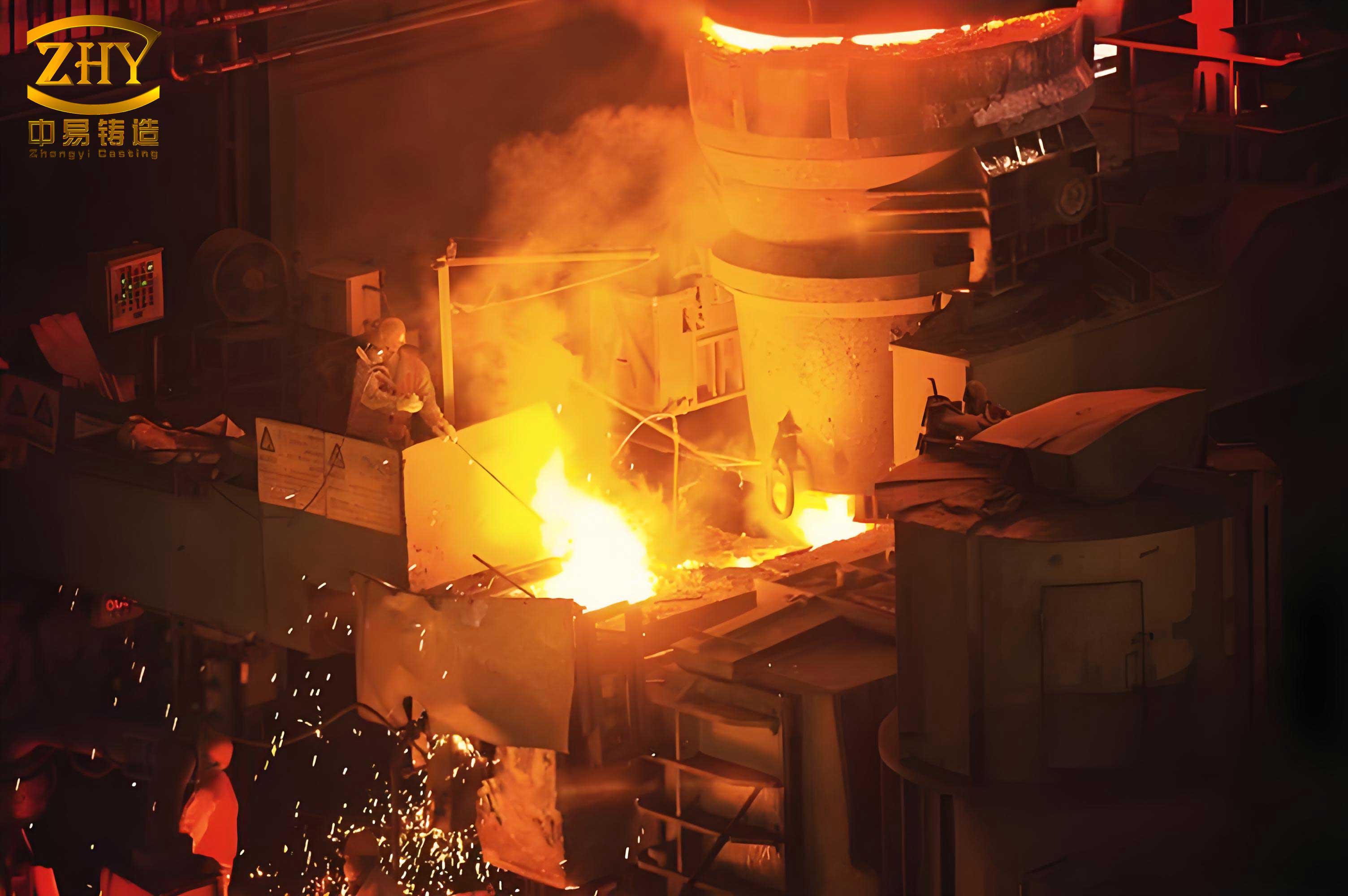
The core of HPT in sand casting pattern and tooling design lies in rational material selection, structural design, process simplification, and energy consumption optimization. For sand castings, which involve creating metal parts by pouring molten metal into sand molds, the pattern and tooling are critical for quality and efficiency. Large metal patterns, common in sand castings, can significantly impact costs if not designed properly. For instance, inappropriate material choices may lead to increased manufacturing expenses, reduced lifespan, or higher energy consumption during production. In my experience, I have seen foundries use materials like die steel (H13) or copper alloys for wet clay sand casting patterns for multi-cylinder engine blocks and heads in sand castings. However, based on performance technology theory, a more cost-effective material for production batches of 100,000 to 200,000 cycles is gray iron HT200 or HT250. This optimization reduces waste and aligns with HPT’s goal of maximizing value. The structural design of patterns for sand castings also benefits from HPT. Traditional designs often feature excessive wall thickness, leading to material overuse and increased energy consumption. By applying HPT principles, I have developed optimized structures that use less material, reduce kinetic energy consumption, and improve overall efficiency in sand castings production. For example, an optimized pattern for engine blocks in sand castings might incorporate thinner, reinforced walls instead of near-solid constructions, resulting in weight reduction and energy savings during molding processes.
To quantify the benefits of optimized pattern design in sand castings, consider the following formula for cost-effectiveness based on HPT principles. The overall performance metric \( P \) can be expressed as a function of material cost \( C_m \), energy consumption \( E \), and production lifespan \( L \):
$$ P = \frac{L}{C_m + \alpha E} $$
where \( \alpha \) is a conversion factor for energy costs. For sand castings, optimizing \( P \) involves minimizing \( C_m \) and \( E \) while maximizing \( L \). In pattern design, this translates to selecting materials like gray iron for appropriate batch sizes, as it balances durability and cost. For instance, if die steel has a high \( C_m \) but excessive \( L \) for moderate batches, \( P \) decreases due to underutilization. Similarly, copper alloys may have lower \( L \) leading to premature replacement, increasing effective costs. By applying this formula, designers can make data-driven decisions to enhance the performance of sand castings tooling.
Another critical aspect in sand castings is the design of hot box cores, where the wall thickness of the hot box body plays a pivotal role. Traditional guidelines from authoritative manuals provide qualitative and rough quantitative recommendations, but from an HPT perspective, they are often inadequate. These sources suggest wall thicknesses based on strength, stiffness, and thermal capacity, but they can lead to suboptimal performance in sand castings. For gas-heated hot boxes, existing tables may offer overly broad ranges, with thin walls for small boxes and thick walls for large ones, affecting thermal equilibrium and core quality in sand castings. For electrically heated hot boxes, the recommended thicknesses are generally too thin, resulting in insufficient heat capacity, poor thermal uniformity, reduced core quality, and lower efficiency in sand castings production. Based on my research and collaboration with foundries, I propose revised tables that incorporate HPT principles to ensure better performance and economic outcomes for sand castings.
For gas-heated hot boxes used in sand castings, the wall thickness should be selected as per Table 1, which balances thermal mass with energy efficiency to improve core-making performance.
| Average External Dimension (A+B)/2 (mm) | Hot Box Body Wall Thickness (mm) |
|---|---|
| ≤ 300 | 20–25 |
| 300–500 | 25–30 |
| 500–700 | 30–40 |
| 700–1,000 | 40–50 |
| > 1,000 | 50–60 |
For electrically heated hot boxes in sand castings, which require greater thermal capacity for consistent heating, Table 2 provides optimized thicknesses to enhance core quality and production efficiency.
| Average External Dimension (A+B)/2 (mm) | Hot Box Body Wall Thickness (mm) |
|---|---|
| ≤ 300 | 45–50 |
| 300–500 | 50–55 |
| 500–700 | 55–60 |
| 700–1,000 | 60–70 |
| > 1,000 | 70–90 |
The thermal performance of a hot box in sand castings can be modeled using the heat capacity equation \( Q = m \cdot c \cdot \Delta T \), where \( Q \) is the heat required, \( m \) is the mass of the box, \( c \) is the specific heat capacity, and \( \Delta T \) is the temperature change. By optimizing wall thickness, we adjust \( m \) to ensure sufficient \( Q \) for uniform core heating, thereby improving the quality of sand castings. The HPT approach aims to minimize energy input while maximizing output, expressed as efficiency \( \eta \):
$$ \eta = \frac{\text{Useful Heat for Core Making}}{\text{Total Energy Input}} $$
With thicker walls per Table 2 for electric heating, \( \eta \) increases due to better heat retention, reducing cycle times and energy waste in sand castings production.
Moving to box-type components in sand castings, sandboxes are among the most prevalent and impactful due to their high usage and frequency in machine molding and mass production. Traditional sandbox designs, as seen in some foundries, often suffer from excessive weight, low specific strength and rigidity, high energy consumption, and increased labor intensity, all of which detract from the performance of sand castings. For instance, a conventional sandbox for engine blocks in sand castings might weigh 500–550 kg, with a bulky structure that impedes handling and efficiency. By applying HPT principles, I have developed optimized sandbox designs that reduce weight by 20–30% while increasing internal dimensions by 25–30%. This results in a unit effective volume mass that is 50–60% lighter, leading to significant savings in material costs, energy consumption, and operator fatigue for sand castings. The optimized structure features reinforced but thinner walls, strategic ribbing, and ergonomic handles, aligning with HPT’s focus on human and system value. The performance gain can be quantified using a load-bearing efficiency metric \( \beta \) for sandboxes in sand castings:
$$ \beta = \frac{\text{Load Capacity}}{\text{Mass of Sandbox}} $$
Optimized designs achieve higher \( \beta \), meaning they support the same or greater loads with less material, enhancing the overall economics of sand castings production. Additionally, the reduced mass decreases kinetic energy requirements during molding operations, contributing to lower operational costs for sand castings.
Frame-type parts in sand castings tooling, such as hot or cold box base frames, core-setting fixture bodies, and floating frames, are another area where HPT-driven optimization yields substantial benefits. Traditional designs, often based on standard manuals or machine说明书, tend to be overly material-intensive, with small access windows that hinder assembly and maintenance, and a rough appearance that lacks aesthetic appeal. These shortcomings increase production costs, energy use, and downtime in sand castings. Through HPT application, I have redesigned these frames to be lighter, with larger access openings for easier servicing, and a more streamlined appearance. For example, an optimized base frame for a hot box in sand castings might use a lattice or truss structure instead of a solid block, reducing material usage by 15–20% while maintaining or improving stiffness. This not only cuts manufacturing expenses but also lowers the energy required for handling and operation in sand castings. The structural optimization can be analyzed using the stiffness-to-weight ratio \( \gamma \):
$$ \gamma = \frac{E \cdot I}{m} $$
where \( E \) is the modulus of elasticity, \( I \) is the moment of inertia, and \( m \) is the mass. By increasing \( \gamma \) through strategic design, frames become more efficient, supporting HPT goals of high value at low cost for sand castings. Moreover, the improved accessibility reduces maintenance time, boosting overall equipment effectiveness (OEE) in sand castings production lines.
Plate-type components are ubiquitous in sand castings tooling, including molding plates, pattern plates, large core box bases, and hot or cold box ejector plates. Conventional designs often prioritize mere utility, resulting in thick, heavy plates that consume excessive material and lack considerations for suitability, aesthetics, and performance in sand castings. For instance, a traditional molding plate for sand castings might be a solid slab, weighing hundreds of kilograms and requiring significant energy for movement. By infusing HPT principles, I have created optimized plate structures that incorporate weight-reducing features like pockets, ribs, or honeycomb patterns without compromising strength. These designs facilitate easier handling and吊装 in foundries, reducing labor strain and energy consumption for sand castings. The optimization can be expressed through a performance index \( \delta \) for plates in sand castings:
$$ \delta = \frac{\text{Functional Area}}{\text{Mass} \times \text{Energy per Cycle}} $$
Higher \( \delta \) values indicate plates that cover more area with less mass and energy, aligning with HPT’s efficiency aims. In practice, optimized plates have shown improved durability and reduced wear, contributing to longer service life and lower replacement costs for sand castings tooling. Additionally, the aesthetic improvements enhance workplace morale, indirectly boosting productivity in sand castings operations.
Beyond these key components, HPT can be extended to other elements like shafts, sleeves, pins, and rods in sand castings tooling. By applying performance technology theory, these parts can be designed for enhanced reliability, ease of manufacture, and cost-effectiveness. For example, standardizing pin diameters or using lightweight alloys for shafts can reduce inventory costs and energy usage in sand castings production. The cumulative effect of these optimizations across all tooling components leads to a holistic improvement in sand castings performance, where the entire system operates with greater efficiency and lower environmental impact. This systemic approach is central to HPT, as it considers the interdependencies between human operators, equipment, and processes in sand castings.
To further illustrate the impact of HPT in sand castings, consider a comprehensive cost-benefit analysis. The total cost of ownership \( TCO \) for sand castings tooling can be modeled as:
$$ TCO = C_i + \sum_{t=1}^{n} (C_o(t) + C_m(t) + C_e(t)) $$
where \( C_i \) is the initial investment, \( C_o(t) \) is operational cost at time \( t \), \( C_m(t) \) is maintenance cost, \( C_e(t) \) is energy cost, and \( n \) is the lifespan. HPT-driven designs reduce \( C_i \) through material savings, lower \( C_o(t) \) via improved efficiency, decrease \( C_m(t) \) with better accessibility, and minimize \( C_e(t) \) by optimizing energy consumption. For sand castings, this results in a lower \( TCO \) and higher return on investment, demonstrating the practical value of performance technology theory. Additionally, the environmental benefits, such as reduced material waste and energy use, contribute to sustainable sand castings production, aligning with modern industrial goals.
In conclusion, the application of Human Performance Technology theory in sand casting pattern and tooling design offers a powerful framework for achieving optimal performance and economic outcomes. By focusing on rational material selection, structural efficiency, process simplification, and energy conservation, HPT helps overcome traditional shortcomings in components like patterns, hot boxes, sandboxes, frames, and plates for sand castings. The optimized designs not only enhance the quality and durability of sand castings but also reduce costs, improve operator satisfaction, and promote systemic development. As the sand castings industry evolves, embracing HPT principles can drive continuous improvement, fostering innovation and competitiveness. My experience confirms that integrating performance technology theory into design practices yields tangible benefits, making it a valuable approach for advancing sand castings technology and ensuring long-term success in foundry operations.
The journey of optimizing sand castings tooling through HPT is ongoing, with potential for further research in areas like digital simulation and additive manufacturing. By leveraging tools such as finite element analysis (FEA), designers can predict performance metrics like stress distribution and thermal behavior, refining HPT applications for sand castings. For instance, FEA can validate wall thickness choices for hot boxes, ensuring they meet strength and thermal requirements without over-engineering. Similarly, additive manufacturing allows for complex, lightweight geometries that were previously impractical, pushing the boundaries of HPT in sand castings. As these technologies mature, they will enable even greater synergies between human performance and system value, ultimately revolutionizing how we design and produce sand castings. I encourage practitioners in the sand castings field to explore HPT and its integrations, as it holds the key to unlocking higher efficiency, lower costs, and superior quality in every casting project.