
In my extensive research into high-aluminum zinc-based alloys, the profound impact of casting geometry, specifically section thickness, on the final integrity and performance of sand castings has been a central focus. These alloys, exemplified by the ZA27 composition, offer a compelling combination of high specific strength, excellent wear resistance, and good machinability, making them strong contenders for various industrial applications produced via sand casting processes. However, their relatively wide solidification range presents a significant challenge: a pronounced susceptibility to shrinkage porosity, segregation, and internal defects, which are critically exacerbated in thicker sections. This phenomenon, often termed the “wall thickness effect” or “section size effect,” can severely undermine the mechanical properties and reliability of sand castings. Therefore, a systematic investigation into how section thickness influences the solidification behavior, microstructure development, and resultant properties of ZA27 sand castings is not merely academic but essential for the reliable production of sound, high-integrity components across a range of sizes.
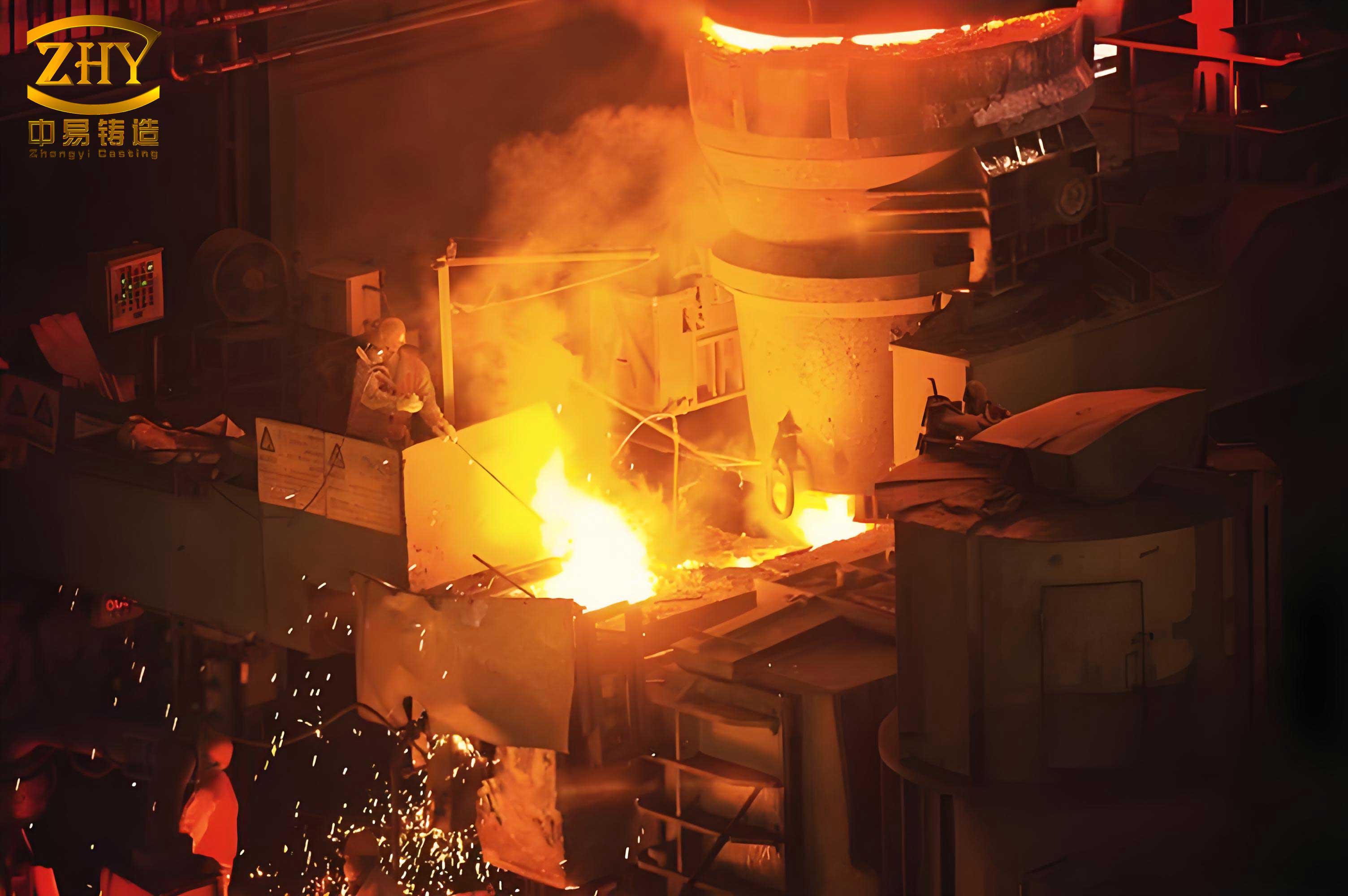
The fundamental issue stems from the thermal dynamics inherent to the sand casting process. Sand molds exhibit a relatively low cooling capacity compared to permanent metal molds. When the thickness of a sand casting increases, the volumetric heat content rises significantly, while the surface area available for heat extraction increases only linearly. This leads to a drastic reduction in the average cooling rate within the casting’s core. The relationship between the characteristic solidification time (\( t_f \)) and section thickness (\( d \)) for a sand casting can be approximated by Chvorinov’s rule:
$$ t_f = B \cdot \left( \frac{V}{A} \right)^n $$
where \( V \) is the casting volume, \( A \) is the surface area through which heat is extracted, \( B \) is a mold constant dependent on the properties of the metal and the sand mold, and \( n \) is an exponent typically close to 2 for many casting conditions. For a simple plate geometry, the modulus \( V/A \) is roughly proportional to the plate thickness. Consequently, solidification time increases with the square of the section thickness. This prolonged solidification under low thermal gradients fundamentally alters the microstructure formation and defect generation mechanisms in ZA27 sand castings.
To quantify these effects, a controlled study was designed involving the production of ZA27 sand castings with systematically varied section thicknesses under consistent and modified sand molding conditions. The alloy composition was maintained within the standard ZA27 range (approximately 25-28% Al, 2-2.5% Cu, 0.01-0.02% Mg, balance Zn). The sand used was a silica-based foundry sand with controlled moisture and binder content to ensure reproducibility in the sand casting process. Melting was conducted in a controlled atmosphere, and the melt was treated for degassing before pouring at a temperature between 580-620°C.
Solidification Thermal Analysis and Cooling Curves
Thermal analysis during solidification provides the most direct evidence of the wall thickness effect. Thermocouples were placed along the central axis of castings with different thicknesses. The recorded cooling curves under identical sand molding conditions reveal stark differences.
For thinner sand castings, the cooling curves exhibit a steeper slope, indicating a higher cooling rate (\( \frac{dT}{dt} \)). The characteristic arrests corresponding to the liquidus, the peritectic reaction involving the formation of the ε phase (CuZn4), and the eutectoid transformation are sharp and well-defined. As the section thickness of the sand castings increases, the entire cooling curve elongates, the slopes become shallower, and the thermal arrests broaden and shift. The eutectoid transformation temperature, in particular, tends to increase slightly with greater thickness due to the reduced undercooling achievable at slower cooling rates. This relationship can be modeled as:
$$ \left. \frac{dT}{dt} \right|_{core} \propto \frac{T_{melt} – T_{mold}}{d^2} \cdot \alpha_{eff} $$
where \( \alpha_{eff} \) is the effective thermal diffusivity of the sand-casting system. The data extracted from the cooling curves is summarized in Table 1.
| Casting Section Thickness (mm) | Local Solidification Time, LST (s) | Average Cooling Rate near Liquidus (°C/s) | Eutectoid Temperature (°C) |
|---|---|---|---|
| 15 | 90 ± 10 | ~1.8 | 263 ± 2 |
| 25 | 180 ± 15 | ~0.9 | 265 ± 2 |
| 35 | 320 ± 20 | ~0.5 | 267 ± 2 |
| 45 | 520 ± 30 | ~0.3 | 269 ± 2 |
Microstructural Evolution with Increasing Thickness
The microstructural changes in ZA27 sand castings driven by the reduced cooling rate are profound and directly impact mechanical behavior.
1. Grain Coarsening and Primary Phase Morphology: The most immediate observation is the coarsening of the microstructure. The dendritic arm spacing (DAS) of the primary β’ phase (the aluminum-rich solid solution in zinc) increases significantly with section thickness. The relationship often follows a power law: \( DAS = k \cdot (t_f)^m \), where \( k \) and \( m \) are material constants, and \( t_f \) is the local solidification time. In thicker sand castings, not only does the DAS increase, but the morphology of the primary phase can become more globular and less dendritic as there is more time for interfacial energy-driven ripening processes to occur.
2. Eutectoid Transformation Product: The final structure of ZA27 is dominated by the eutectoid decomposition of the high-temperature β phase into α (Zn-rich) and η (Al-rich) phases. At the slower cooling rates prevalent in thick sand castings, this transformation yields a much coarser lamellar or degenerate lamellar structure compared to the fine, intimate mixture found in rapidly cooled thin sections. The interlamellar spacing (\( \lambda \)) is inversely proportional to the cooling rate: \( \lambda \propto (\frac{dT}{dt})^{-n} \).
3. Intermetallic Phase Formation and Distribution: The ε (CuZn4) intermetallic phase, which forms during the peritectic reaction, becomes larger and more blocky in thicker sections. Furthermore, the slower cooling allows for greater diffusion-driven segregation of copper and other alloying elements, potentially leading to a more continuous network of these brittle phases along grain boundaries.
Section Thickness and Casting Soundness (Integrity)
The most detrimental aspect of the wall thickness effect in ZA27 sand castings is the severe degradation of internal soundness. ZA27 has a long freezing range, making it highly prone to interdendritic shrinkage porosity. In thin sand castings, while the cooling rate is high, the rapid formation of a coherent dendritic network can prematurely block feeding channels. This often results in numerous small, dispersed pores and microshrinkage throughout the section, sometimes combined with entrapped gas (forming gas-shrinkage porosity).
In thicker sand castings, the problem evolves. The thermal gradient from the surface to the center is much shallower, leading to a wider mushy zone. The extensive, poorly-fed interdendritic regions in the thermal center of the casting consolidate into larger, more concentrated shrinkage cavities or macroporosity. The transition from dispersed microporosity to concentrated macroporosity is a key feature of the wall thickness effect. The famous Niyama criterion, often used to predict shrinkage porosity in castings, can be adapted to illustrate this:
$$ G / \sqrt{\dot{T}} \leq \text{Critical Value} $$
where \( G \) is the thermal gradient and \( \dot{T} \) is the cooling rate. In the core of a thick sand casting, both \( G \) and \( \dot{T} \) are low, resulting in a low \( G / \sqrt{\dot{T}} \) ratio that falls below the critical threshold, reliably predicting the formation of shrinkage porosity. The feeding distance, critical for designing sound sand castings, is also a function of section thickness and alloy freezing characteristics, but for long-freezing-range alloys like ZA27 in sand molds, the effective feeding distance is very short, making thick sections intrinsically difficult to feed.
| Section Thickness (mm) | Predominant Porosity Type | Approx. Pore Area Fraction in Core (%) | Location of Major Defects |
|---|---|---|---|
| 15 | Fine, dispersed microshrinkage/gas pores | 1.5 – 2.5 | Uniformly distributed |
| 25 | Mixed: dispersed + localized clusters | 2.5 – 4.0 | Upper and central regions |
| 35 | Concentrated shrinkage cavities + microporosity | 4.0 – 7.0 | Thermal center (mid-thickness, upper part) |
| 45 | Large, connected macroshrinkage cavities | > 8.0 | Prominent in the thermal center and hot spots |
Mechanical Properties: The Performance Consequence
The combined effects of microstructural coarsening and reduced soundness culminate in a marked decline in mechanical properties, particularly those sensitive to stress concentrations and ductility.
Tensile Strength and Elongation: Tensile strength (\( \sigma_{UTS} \)) and elongation to fracture (\( \varepsilon_f \)) show a clear decreasing trend with increasing section thickness in sand castings. The degradation is non-linear, often following a relationship such as:
$$ P = P_0 – C \cdot \ln(t_f) \quad \text{or} \quad P = P_0 \cdot (t_f)^{-k} $$
where \( P \) represents a property like \( \sigma_{UTS} \) or \( \varepsilon_f \), \( P_0 \) is a baseline property at a very high cooling rate, \( t_f \) is the solidification time, and \( C, k \) are constants. The pores and shrinkage cavities act as internal notches, initiating cracks under much lower applied stresses. In thick castings with concentrated shrinkage, the effective load-bearing area is drastically reduced, and fracture paths easily connect these large defects, leading to low elongation and brittle failure.
Impact Toughness: Charpy impact energy is exceptionally sensitive to these internal defects and microstructural coarseness. The impact values exhibit the greatest scatter and the steepest decline with increasing wall thickness. The coarse eutectoid structure and continuous brittle intermetallic networks provide easy paths for crack propagation.
Hardness: Hardness (Brinell or Rockwell) is the least sensitive property to the wall thickness effect in these sand castings. It is primarily determined by the phase composition and solid solution strengthening, which do not change as dramatically with cooling rate as the scale and integrity of the microstructure. A slight decrease may be observed due to coarsening, but it is often minimal compared to the drops in tensile and impact properties.
| Property | Trend vs. Thickness | Approximate % Reduction (15mm to 45mm) | Primary Governing Factor |
|---|---|---|---|
| Tensile Strength (UTS) | Decreasing, non-linear | 25% – 40% | Soundness (porosity), Grain size |
| Elongation (%) | Sharply decreasing | 50% – 70% | Soundness, Pore morphology |
| Impact Energy | Steeply decreasing, high scatter | 60% – 80% | Soundness, Eutectoid coarseness, Intermetallics |
| Hardness | Nearly constant or slight decrease | 0% – 10% | Phase fractions, Solid solution |
Mitigating the Wall Thickness Effect in Sand Castings
The wall thickness effect is not an immutable law but a consequence of uncontrolled solidification. Through deliberate process engineering in sand casting, its impact can be significantly mitigated or even eliminated for a given practical range of thicknesses. The core strategy is to manipulate the thermal parameters—thermal gradient (\( G \)) and cooling rate (\( \dot{T} \))—within the thick section to emulate the conditions of a thinner, sounder sand casting.
1. Enhanced Cooling (Chilling): The most direct method is to incorporate metal chills into the sand mold adjacent to the thick sections of the casting. A chill drastically increases the local heat extraction rate, increasing both \( G \) and \( \dot{T} \) at the critical location. This promotes directional solidification towards the chill, extends the effective feeding distance, and refines the microstructure. The use of internal chills (made from a compatible material) can be even more effective for very thick sections in sand castings.
2. Process Parameter Optimization: Controlling pouring temperature is crucial. A lower superheat reduces the total heat content, shortening solidification time without necessarily increasing shrinkage. Optimal gating and risering design is paramount. For ZA27 sand castings, a pressurised feeding system with adequate riser size and placement is necessary to maintain a continuous feeding path until the thick section is completely solidified.
3. Alloy Modification and Grain Refinement: The addition of trace elements like Ti, B, or Sr can act as grain refiners or eutectoid modifiers. A finer equiaxed grain structure from refinement can improve feeding characteristics and reduce the size of shrinkage pores, blunting their severity even in slower cooling conditions of thicker sand castings.
The successful application of these techniques means that, contrary to the baseline behavior, high-quality ZA27 sand castings with sections up to 40-50mm can be reliably produced. The property decline with thickness can be flattened, maintaining a consistent performance level across a range of casting dimensions. The general relationship between a property (\( P \)) and thickness (\( d \)) with process control can be modified from the uncontrolled case \( P = f(d^{-n}) \) to a much more favorable \( P = P_{min} + K \cdot (d_{crit} – d) \), where \( P_{min} \) is a target minimum property, \( K \) is a small constant, and \( d_{crit} \) is the maximum thickness achievable with the optimized sand casting process.
Conclusion
The wall thickness effect presents a significant technical challenge in the production of sound and mechanically reliable ZA27 sand castings. This investigation systematically demonstrates that increasing section thickness under conventional sand casting conditions leads to prolonged solidification times, microstructural coarsening, and a critical transition from dispersed microporosity to concentrated macroshrinkage. These changes collectively cause a severe deterioration in tensile strength, ductility, and especially impact toughness, while hardness remains relatively unaffected. The underlying cause is the reduction in thermal gradient and cooling rate at the core of the sand casting, which governs both solidification morphology and feeding efficiency.
However, this effect is a consequence of the thermal regime, not an intrinsic property of the alloy. Through intelligent sand casting process design—employing strategic chilling, optimized pouring parameters, and effective feeding systems—the adverse thermal conditions in thick sections can be controlled. By actively managing the solidification process, the detrimental correlation between wall thickness and properties can be broken. Therefore, with rigorously controlled sand casting parameters and appropriate technical measures, it is entirely feasible to produce high-integrity ZA27 alloy sand castings with robust mechanical properties across a broad range of section thicknesses, effectively nullifying the negative wall thickness effect and unlocking the full potential of this versatile alloy for larger, structurally demanding components.