
In my extensive experience with green sand mold and cold-box core production for automotive engine blocks, achieving consistent, high-quality sand castings is a complex endeavor. The pursuit of lightweight, thin-walled designs for modern engines pushes the boundaries of conventional sand casting processes, often revealing subtle interactions between materials, process parameters, and geometry that manifest as costly defects. This article consolidates years of hands-on problem-solving, focusing on three predominant defect categories encountered in high-volume production. By dissecting the root causes and presenting validated countermeasures, I aim to provide a comprehensive technical framework for engineers dedicated to perfecting the art and science of cylinder block sand castings.
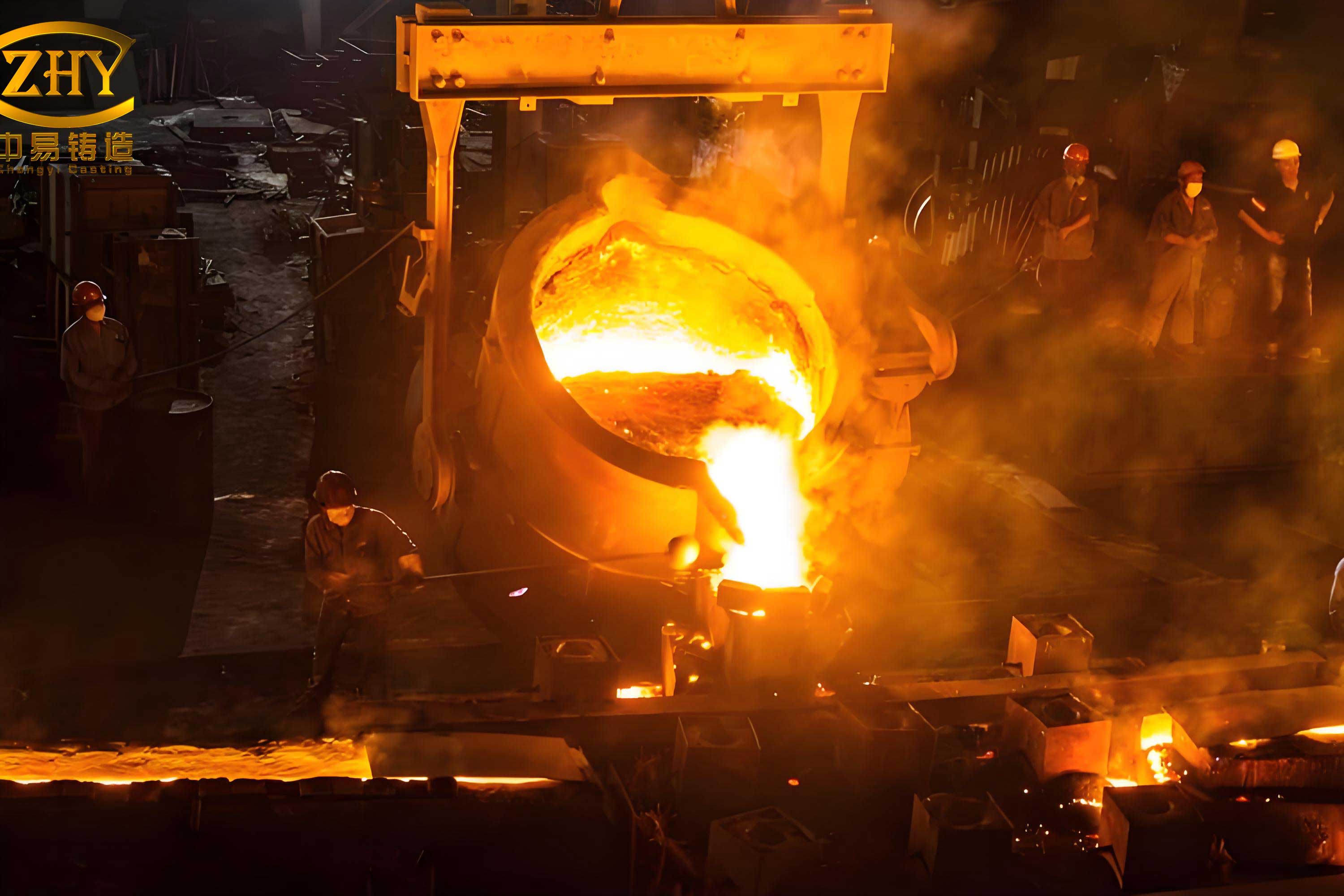
The journey toward flawless sand castings begins with acknowledging the system’s inherent sensitivities. The sand casting process for cylinder blocks discussed herein employs high-pressure green sand molding with amine-cured cold-box cores. Castings are typically in the 120 kg range, with critical wall sections, such as water jackets, around 3 mm. Pouring temperatures are necessarily high (1410-1450°C) to ensure complete filling of these thin sections, which in turn elevates the thermal load on both the sand mold and the complex core assemblies. This sets the stage for the defects we will explore.
1. Localized Core Fracture in Water Jacket Cavities
One of the most persistent and destructive issues in thin-wall sand castings is the fracture of slender core sections, particularly within the intricate water jacket core. This defect results in internal fins that obstruct coolant flow and necessitate scrap.
Root Cause Analysis: The fracture typically originates in the most fragile areas of the core, often corresponding to the extremities of the shooting process where packing density may be lower. The fundamental driver is the volumetric expansion of silica sand upon heating. At approximately 573°C, silica undergoes a phase transformation from β-quartz to α-quartz, accompanied by a rapid and significant volume increase. The resulting thermal stress, \( \sigma_{thermal} \), can be conceptually related to the expansion:
$$ \sigma_{thermal} \propto E \cdot \alpha \cdot \Delta T $$
where \( E \) is the effective modulus of the core sand system, \( \alpha \) is the coefficient of thermal expansion of the sand, and \( \Delta T \) is the temperature gradient. When \( \sigma_{thermal} \) exceeds the high-temperature cohesive strength of the cured resin binder at that location, cracking initiates. Subsequent impingement by molten metal completes the fracture, detaching a segment of the core.
Validated Countermeasures:
A multi-pronged strategy is essential to combat this failure mode in precision sand castings.
- Substrate Material Engineering: Replacing silica sand with low-expansion aggregates directly attacks the root cause. Materials like chromite sand, ceramic (aluminosilicate) sand, or calcined sands have vastly reduced expansion coefficients, thereby minimizing \( \sigma_{thermal} \).
- Coating System Enhancement: Modifying the standard dip-coat process by adding a localized brush application of an anti-veining or refractory coating to critical thin sections before the standard dip creates a composite barrier. This layer undergoes vitrification, absorbing stress and delaying heat transfer, effectively increasing the core’s local thermal shock resistance.
- Raw Material and Process Rigor: Consistent core strength is paramount. Key parameters must be stringently controlled:
- Sand Acid Demand Value (ADV): A high ADV indicates excessive alkaline impurities, which neutralize the acidic catalyst (amine) and hinder complete curing, leading to lower bench strength and, more critically, lower retained strength at elevated temperatures.
- Core Storage Discipline: Cold-box cores are hygroscopic. Strength degradation follows an exponential decay pattern over time in humid environments. Implementing a strict “first-in, first-out” policy with a maximum shelf life (e.g., 72 hours) is crucial. The strength decay can be modeled as:
$$ \sigma_t = \sigma_0 \cdot e^{-k \cdot t} $$
where \( \sigma_t \) is strength at time \( t \), \( \sigma_0 \) is initial strength, and \( k \) is a degradation constant dependent on environmental humidity.
- Process Integrity: Regular maintenance of core shooting machines to prevent air leaks, ensuring clean and open vent paths in tooling, and using non-worn shot nozzles are essential to achieve uniform, high-density cores without weak zones.
| Strategy | Primary Action | Key Benefit for Sand Castings |
|---|---|---|
| Material Change | Use low-expansion sand (Chromite, Ceramic) | Reduces fundamental thermal stress (\( \sigma_{thermal} \)) |
| Coating Enhancement | Apply refractory layer to critical areas | Increases local thermal shock resistance |
| Parameter Control | Control ADV, moisture, clay content | Ensures consistent high-temperature strength |
| Shelf Life Management | Enforce 72-hour maximum core age | Prevents strength degradation from moisture pick-up |
| Equipment Maintenance | Ensure tight seals, clean vents, good nozzles | Produces uniformly dense, strong cores |
2. Scabbing on the Outer Water Jacket Wall (Casting Top Face)
This defect presents as a rough, laminated surface on the top face of the sand castings, specifically over the water jacket core. It is a classic expansion defect of the green sand mold.
Root Cause Analysis: The large, flat sand area above the water jacket core is highly susceptible. During pouring, the intense radiative heat from the large core surface causes the adjacent mold sand to expand. The resulting compressive stress in the heated surface layer can cause it to buckle and detach from the cooler, restraining sand beneath if the sand’s hot strength is inadequate. If the molten metal rises slowly, this buckled layer has time to fully separate before being engulfed, resulting in a scab. Contributing factors include prolonged exposure due to metal leakage between cores and poor mold venting, which increases back-pressure and further slows the metal rise.
Validated Countermeasures:
- Bentonite System Optimization: Replacing a portion of artificially activated calcium bentonite with natural sodium bentonite significantly improves the mold sand’s thermal stability. Sodium bentonite provides higher and more consistent hot strength and thermal plasticity, allowing the sand to accommodate expansion stresses without fracturing. The improved collapsibility of calcium bentonite is still needed, leading to an optimized blend.
- Minimizing Heat Exposure Time: Ensuring precise core placement and sealing gaps between the water jacket and crankcase cores with ceramic fiber pads prevents metal “funning.” This rapid metal contact reduces the duration of radiative heating, shortening the time window for scab formation.
- Enhancing Mold Venting & Reducing Gas Load: A balanced gating system is vital. The total vent area should sufficiently exceed the choke area to allow rapid gas escape. Adding explicit vent pins in the mold above the water jacket core and crankcase core prints drastically improves venting efficiency. Concurrently, redesigning cores to include more recesses (“weight reduction” pockets) reduces their total mass and, therefore, their gas generation upon heating. The goal is to achieve a rapid metal front rise velocity, \( v_{rise} \), to cover the vulnerable area before the sand fails.
$$ v_{rise} = \frac{Q_{pour}}{A_{casting}} $$
where \( Q_{pour} \) is the volumetric pouring rate and \( A_{casting} \) is the cross-sectional area of the casting. Maximizing \( v_{rise} \) is key.
| Bentonite Blend | Key Properties | Observed Scab Rate in Sand Castings | Notes |
|---|---|---|---|
| 100% Activated Calcium | Lower hot strength, variable | High (~2.0-3.0%) | Prone to buckling and spalling |
| Natural Sodium / Calcium Blend | High, stable hot strength & plasticity | Low (~0.0-0.3%) | Better stress accommodation |
3. Metal Penetration (Burning-On) on the Casting Outer Surface
This is primarily a mechanical penetration defect where molten metal infiltrates the pores between sand grains, creating a rough, strongly adhered surface that is difficult to clean and detrimental to machining.
Root Cause Analysis: Penetration occurs when the metallostatic pressure (\( P_m \)) overcomes the combined resistance from the sand pore capillary pressure (\( P_c \)) and the gas back-pressure (\( P_b \)) within the mold.
$$ P_m > P_c + P_b $$
For sand castings with high pouring temperatures, \( P_m \) is significant, and metal fluidity is enhanced. The resistance \( P_c \) is inversely related to pore size (sand grain fineness). Coarse sand or a wide grain distribution increases pore size, lowering \( P_c \) and facilitating penetration. Low gas back-pressure \( P_b \), resulting from high sand permeability or low gas generation, further reduces the resisting force.
Systemic Challenges in Sand Systems: In high-throughput production, several factors degrade mold sand quality: continuous recycling without adequate cooling, incorporation of coarse core sand (50/100 mesh), and the loss of online conditioning controls. This leads to hot, dry, and coarse sand—a perfect recipe for penetration in demanding sand castings.
Validated Countermeasures:
- Refining Sand Granulation: Systematically adding finer base sand (e.g., 70/140 mesh) shifts the system towards a 50/140 four-screen distribution. This reduces average pore size, thereby increasing the capillary resistance \( P_c \).
- Increasing Gas Back-Pressure (\( P_b \)): \( P_b \) is a function of gas generation rate (\( G \)) and mold permeability (\( \Pi \)).
$$ P_b \propto \frac{G}{\Pi} $$
We strategically increase the sand’s volatile content (within limits to avoid blowing defects) to raise \( G \), and manage compaction to control \( \Pi \), thereby elevating \( P_b \) to counteract metal penetration. - Controlling Return Sand Temperature and Moisture: Installing water misting systems on return sand conveyors, coupled with forced air cooling, actively manages these parameters. Evaporative cooling follows the relation:
$$ \Delta T \approx \frac{\Delta M \cdot L_v}{c_{sand}} $$
where \( \Delta T \) is the temperature drop, \( \Delta M \) is the change in moisture content, \( L_v \) is the latent heat of vaporization, and \( c_{sand} \) is the specific heat of sand. Cooler, properly humidified sand maintains better bonding and durability. - Holistic Sand Parameter Optimization: Tailoring parameters seasonally is critical. In summer, target higher compactibility to compensate for moisture loss; in winter, lower compactibility suffices. Tight control of active clay, moisture, and strength creates a robust, penetration-resistant mold wall for high-integrity sand castings.
| Parameter | Target Range (Summer) | Target Range (Winter) | Rationale for Sand Castings Quality |
|---|---|---|---|
| Compactibility (%) | 38 – 42 | 34 – 38 | Compensates for evaporative loss in heat; ensures uniform hardness |
| Moisture (%) | 3.2 – 3.6 | 3.0 – 3.4 | Balances bonding strength with gas generation for optimal \( P_b \) |
| Active Bentonite (%) | 9.0 – 10.5 | 8.5 – 10.0 | Provides necessary bonding strength and hot properties |
| Grain Fineness (AFS) | 55 – 65 (via 50/140 distribution) | Reduces pore size, increasing capillary resistance \( P_c \) | |
| Green Compression Strength (kPa) | 180 – 220 | Indicates adequate mold integrity for handling and metal pressure | |
4. Internal Core Sintering and Burning-On
Beyond external surfaces, internal cavities of sand castings formed by cores are prone to sintering (a chemical reaction) and burning-on (mechanical penetration), especially at hot spots and sharp corners.
Integrated Solution Approach: Resolving these internal defects requires a synergistic focus on core design, material, and process:
- Core Assembly Stress Reduction: Redesigning core assembly fixtures and reducing fastener sizes minimizes mechanical stress on delicate core sections during handling and closing, preventing pre-existing micro-cracks.
- Core Sand and Process Upgrades: Utilizing specialty sand blends (e.g., silica-ceramic mixes) improves both flowability during shooting and high-temperature stability. Adjusting core drying temperatures downward prevents thermal degradation of the binder at the core surface.
- Geometry and Coating Optimization: Slightly reducing fillet radii in non-critical areas can increase local core strength. Most critically, developing a tailored coating formulation—often a blend of refractory fillers, binders, and sintering promoters—creates a dense, refractory barrier that withstands the specific thermal and chemical environment of high-temperature iron sand castings.
The cumulative effect of these systematic measures on the overall quality of cylinder block sand castings can be profound, often reducing field rejection rates by several percentage points, which translates to massive savings in high-volume production.
5. Conclusion: The Systems Engineering of Sand Castings
The production of defect-free cylinder blocks via green sand and cold-box core processes is a testament to systems engineering. Each defect—local core fracture, scabbing, metal penetration, internal sintering—is not an isolated failure but a symptom of an imbalance within the interconnected system of mold sand, core sand, process parameters, and product geometry. The successful strategies outlined here share common themes: a deep understanding of material science (sand expansion, binder chemistry, clay behavior), precise control over process variables (temperatures, times, strengths), and a relentless focus on empirical validation. Mastering sand castings, therefore, lies in cultivating the ability to diagnose these systemic interactions and implement balanced, holistic corrections that bring the entire process into alignment, ensuring the reliable production of these critical automotive components.