
The relentless pursuit of quality, efficiency, and complexity in component manufacturing has positioned sand casting as a perpetually evolving discipline. My perspective on this field is rooted in the understanding that while sand castings form the foundational backbone of countless industries—from heavy machinery to the most advanced aerospace vehicles—the traditional methods often grappled with a critical trade-off: the inherent flexibility and cost-effectiveness of sand molds versus the stringent demands for dimensional accuracy and internal soundness. The emergence of Precision Sand Casting represents a paradigm shift, effectively bridging this historical divide. It is not merely a single technique but a holistic manufacturing philosophy encompassing a suite of technologies aimed at achieving near-net-shape, defect-minimized sand castings directly from digital data, thereby redefining the limits of what is possible with sand-based molds and cores.
The genesis of this approach lies in the convergence of digital design, advanced materials science, and automated fabrication processes. For decades, the production of high-integrity sand castings, especially for critical applications in aerospace, necessitated extensive machining allowances to compensate for dimensional variability and the use of costly, rigid molds for intricate geometries. Precision Sand Casting dismantles these constraints by attacking the problem on two fronts: First, by revolutionizing mold and core fabrication through Additive Manufacturing (AM) or Rapid Prototyping techniques to achieve unprecedented geometric freedom and accuracy. Second, by innovating within the mold-making process itself, employing advanced coatings and binding technologies like Transfer Coatings to ensure superior surface finish and metallurgical quality. This dual-path strategy ensures that both the external fidelity and internal integrity of the final sand castings meet the escalating standards of modern engineering.
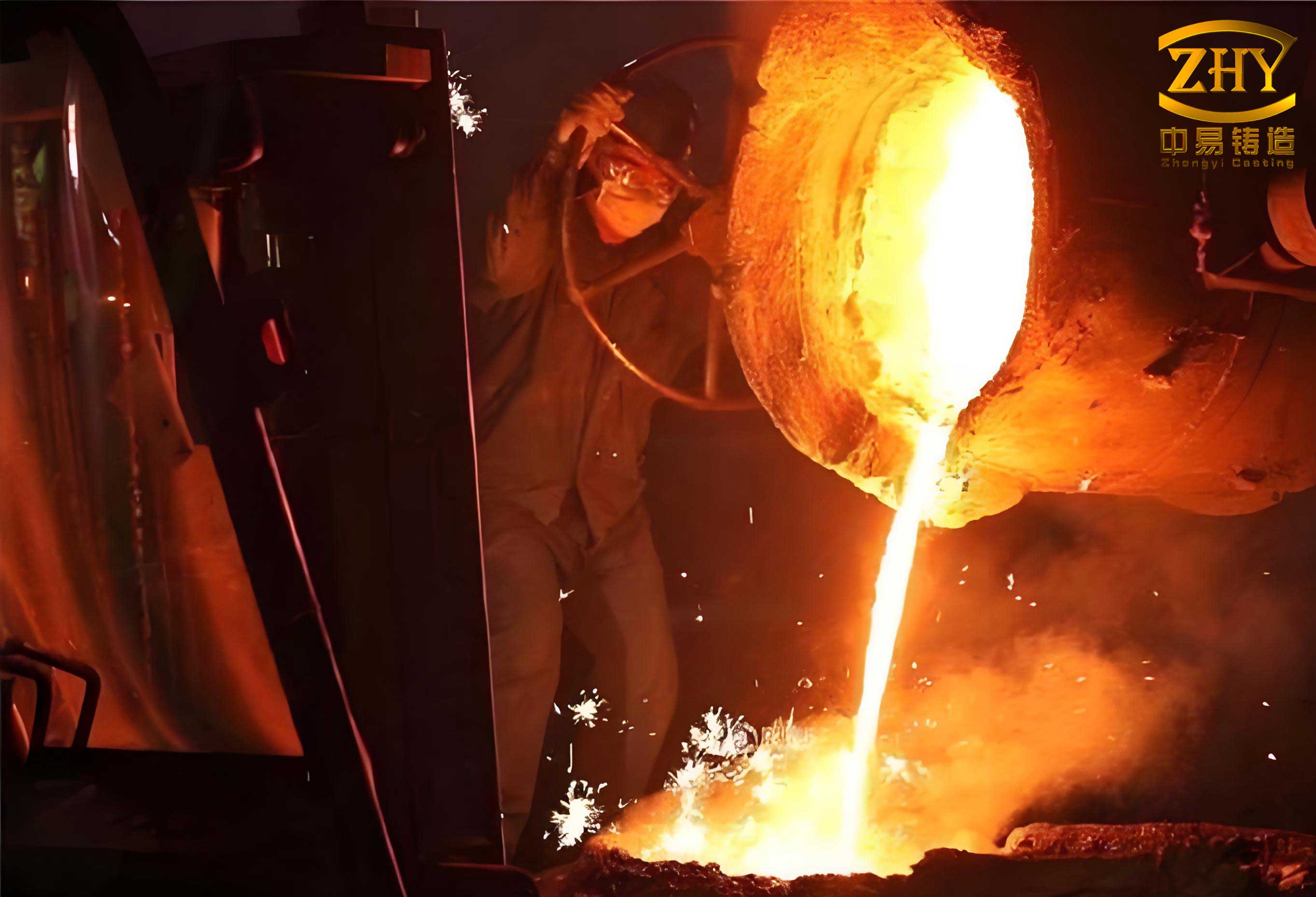
Before delving into the advanced techniques, it is crucial to revisit the fundamental principles that make sand the universal medium for casting. The process involves creating a negative impression of the desired part within a bonded sand aggregate. The key advantages are the refractoriness of silica sand, the versatility of binder systems, and the relatively low cost of the mold material. The basic steps can be summarized by a generic process flow. The overall dimensional accuracy and surface quality of conventional sand castings are influenced by a multitude of factors described by a relationship that considers pattern accuracy, sand expansion, and metal shrinkage:
$$ A_c = f(A_p, E_s, S_m, \epsilon) $$
where \( A_c \) is the casting accuracy, \( A_p \) is the pattern accuracy, \( E_s \) is the sand expansion coefficient, \( S_m \) is the metal shrinkage factor, and \( \epsilon \) represents other stochastic errors from handling and pouring.
Additive Manufacturing of Sand Molds and Cores: A Digital Foundry Revolution
The most transformative element of Precision Sand Casting is the adoption of Additive Manufacturing for direct tooling-less production of molds and cores. This technology bypasses the need for physical patterns, enabling the direct translation of a CAD model into a complex sand assembly. Two prominent AM technologies have become central to this digital foundry concept: Selective Laser Sintering (SLS) and Binder Jetting (3DP).
Selective Laser Sintering (SLS) for Sand
SLS operates on the principle of using a thermal energy source, typically a CO2 laser, to selectively fuse granular material layer by layer. For sand applications, the process utilizes foundry sand (often silica or zircon) pre-coated with a heat-activated binder, such as phenolic resin. The laser scans the cross-section of the part, raising the temperature in the scanned regions just enough to melt and cure the binder, thereby bonding the sand particles together. The surrounding loose powder remains unsintered, providing natural support for overhanging features. The process can be modeled by considering the energy input and consolidation. The critical energy density \( E_d \) required for sufficient bonding is given by:
$$ E_d = \frac{P}{v \cdot h_s} $$
where \( P \) is the laser power, \( v \) is the scan speed, and \( h_s \) is the hatch spacing. The resulting strength \( \sigma \) of the sintered layer is a function of this energy density and the binder activation kinetics:
$$ \sigma = k_1 \cdot (E_d – E_{th})^{n} $$
Here, \( E_{th} \) is the threshold energy for binder activation, and \( k_1 \), \( n \) are material constants.
The advantages of SLS for producing sand castings are profound. It allows for the creation of geometries that are impossible to core or draft with conventional methods, such as internal lattices for lightweighting, conformal cooling channels, or deeply recessed features. The digital nature eliminates pattern-making lead times and costs, making it ideal for prototyping and low-volume production of complex sand castings. However, challenges remain, including the management of residual stress due to thermal gradients, the need for post-processing to remove loose powder from deep cavities, and the relatively high machine and material costs compared to traditional sand.
Binder Jetting (3DP) for Sand
Binder Jetting, commonly referred to as 3D Printing (3DP) in the foundry context, offers a distinct approach. In this process, a recoater spreads a thin layer of dry, un-coated sand across the build platform. Then, a printhead, similar to an inkjet head, deposits a liquid binding agent selectively onto the sand layer according to the digital slice data. The binder instantly glues the sand particles at the point of contact. The platform lowers, a new layer of sand is spread, and the process repeats. The bond formation here is primarily chemical or adhesive, rather than thermal.
The strength development in 3DP sand castings molds can be related to the binder penetration and bridge formation between particles. The saturation ratio \( S \), a key parameter, is defined as:
$$ S = \frac{V_b}{V_p} $$
where \( V_b \) is the volume of binder deposited and \( V_p \) is the pore volume in the sand layer. Optimal strength is achieved at a critical saturation \( S_c \), where binder bridges are fully formed without excessive bleeding. The green strength \( \sigma_g \) often follows a relation like:
$$ \sigma_g = k_2 \cdot (S)^m \quad \text{for } S \leq S_c $$
where \( k_2 \) and \( m \) are constants dependent on the binder-sand system.
The comparative analysis of SLS and 3DP for fabricating molds for sand castings is best illustrated through their distinct characteristics:
| Feature | SLS (Selective Laser Sintering) | 3DP (Binder Jetting) |
|---|---|---|
| Binding Mechanism | Thermal (Laser-activated binder) | Chemical (Liquid adhesive) |
| Primary Energy Source | High-power CO2 Laser | Piezoelectric Print Head |
| Build Speed | Moderate (scanning process) | Typically Faster (line-wise deposition) |
| Material State | Sand pre-mixed with solid binder | Dry sand + liquid binder |
| Post-Processing | Depowdering, possible thermal cure | Depowdering, sometimes catalyst cure |
| Key Advantage | Excellent strength, good surface finish | Speed, color capability, lower machine cost |
| Main Limitation | Higher cost, thermal distortion risk | Lower as-printed strength, binder migration |
The Transfer Coating Technology: Ensuring Metallurgical Excellence
While AM addresses geometric complexity, achieving a superior surface finish and preventing metal-mold reactions in sand castings requires another pillar of Precision Sand Casting: advanced mold coating. Transfer Coating, or the “Croning” process in some variations, is a sophisticated method that applies a high-quality refractory coating onto the pattern before molding, which then transfers perfectly to the mold cavity upon pattern withdrawal.
The process sequence is as follows: A precise, high-quality pattern (often epoxy or metal) is first sprayed or dipped with a specially formulated ceramic or graphite-based slurry. This coating is then partially dried or gelled to a leather-like state. The coated pattern is then placed in a molding box, and standard molding sand is packed around it. Upon compaction and subsequent curing (which can be via chemical binders or thermal means), the pattern is withdrawn. The critical phenomenon is that the adhesive strength between the coating and the pattern surface is carefully engineered to be less than the cohesive strength within the cured sand and between the coating and the sand. This ensures the coating releases from the pattern and remains perfectly adhered to the sand mold wall.
The physics governing a successful transfer involves the balance of interfacial energies and mechanical locking. The coating must wet the pattern sufficiently to form a continuous layer but must not bond irreversibly. The transfer efficiency \( \eta_t \) can be conceptualized as:
$$ \eta_t = \frac{\sigma_{c-s} – \sigma_{c-p}}{\sigma_{c-s}} $$
where \( \sigma_{c-s} \) is the adhesion strength between the coating and the sand, and \( \sigma_{c-p} \) is the adhesion strength between the coating and the pattern. For perfect transfer, \( \sigma_{c-s} > \sigma_{c-p} \), and ideally \( \sigma_{c-p} \) is a controllable, finite value.
The benefits for sand castings are multifaceted. It produces an exceptionally smooth, dense, and uniform refractory layer on the mold surface. This results in castings with a superior surface finish (lower Ra values), reduced veining and burn-on defects, and minimized penetration of liquid metal into the sand interstices. Furthermore, because the coating is applied to the pattern, its thickness is consistent and replicable, eliminating the variability associated with manual dipping or spraying of finished sand molds. This process is particularly powerful when combined with AM patterns for complex prototypes or with conventional patterns for high-volume production of precision sand castings where surface quality is paramount.
Synergistic Integration and Process Optimization
The true power of Precision Sand Casting is realized when its constituent technologies are integrated into a coherent digital workflow. A modern workflow might proceed as follows: A component is designed with topology optimization and simulation-driven gating and risering. The mold and core assembly is designed digitally, often splitting complex geometries for optimal printing and assembly. Critical cores, especially those with intricate internal features, are fabricated via SLS or 3DP. For large, less complex mold sections, traditional methods with Transfer Coating might be used for cost efficiency, or the entire mold might be printed. The printed sand components may also receive a secondary sealer or coating to enhance surface density. Finally, the assembly is poured, and the resultant casting requires minimal machining.
Process optimization in this integrated environment relies heavily on simulation. The mold filling and solidification of these advanced sand castings must be modeled to account for the specific properties of printed sand (which can have different permeability and thermal conductivity compared to traditionally bonded sand) and the presence of the high-integrity transfer coating. The heat transfer across the coating interface is critical and can be modeled using a boundary condition that accounts for the thermal contact resistance \( R_c \):
$$ q = \frac{T_{metal} – T_{sand}}{R_c + \frac{t_c}{k_c} + \frac{t_s}{k_s}} $$
where \( q \) is the heat flux, \( t_c \) and \( k_c \) are the thickness and thermal conductivity of the coating, and \( t_s \) and \( k_s \) are the effective thickness and conductivity of the sand behind it. Optimizing this thermal barrier is key to controlling solidification rates and preventing defects in the final sand castings.
Future Trajectories and Concluding Perspective
The trajectory of Precision Sand Casting points toward even greater integration, intelligence, and sustainability. Future developments are likely to focus on multi-material additive manufacturing, where different zones of a mold have tailored properties—for instance, a highly insulating sand mix for a riser and a highly conductive, chilled mix around a critical section of the sand casting. The use of inorganic binders for AM processes is expanding to eliminate organic fumes during pouring and improve sand reclamation. Furthermore, the incorporation of real-time monitoring sensors into 3D printed molds is being explored to create “smart molds” that provide data on temperature and strain during the casting process, closing the loop with digital twin simulations.
From my standpoint, Precision Sand Casting is not a replacement for all traditional foundry methods but a powerful extension of the sand casting paradigm. It democratizes the production of complex, high-quality components, making it accessible for sectors ranging from aerospace to specialized machinery. By merging the geometric freedom of additive manufacturing with the surface engineering of transfer coatings and the predictive power of digital simulation, it elevates sand castings from commodity items to engineered, performance-critical components. This technological convergence ensures that sand casting, one of humanity’s oldest manufacturing arts, will remain indispensable in the high-tech manufacturing landscape of the future, capable of producing components that are both intricate and internally sound, with a level of precision once thought unattainable for such a versatile and economical process.