
From the perspective of a materials researcher deeply involved in the field of ferrous metallurgy, my investigation focuses on the controlled formation of D-type (interdendritic undercooled) graphite within sand castings. The prevailing domestic emphasis on the desirability of type A flake graphite in gray iron castings has often overshadowed the potential of alternative microstructures. However, international industrial practice, evidenced by applications from automotive cylinder blocks at companies like Volkswagen to heavy-section components at Sheffield-based foundries, clearly demonstrates the significant and valuable role D-type graphite iron can play. This divergence in perspective prompted my in-depth exploration into the fundamental mechanisms governing its formation specifically in sand casting processes, where cooling rates are inherently moderated compared to permanent mold or die casting.
The core hypothesis guiding my research is that under the specific thermal conditions of sand castings, the formation of D-type graphite is not merely a product of rapid cooling but can be reliably engineered through precise compositional control, principally via the addition of specific alloying elements. Analysis of imported castings with D-type graphite structures consistently pointed towards the influential role of titanium (Ti). Therefore, my work systematically examines the synergistic interplay between cooling rate—inherently dictated by the section thickness of a sand casting—and the concentration of titanium in the iron melt.
The experimental framework was designed to isolate and study these two critical variables. A vacuum induction furnace was utilized for precise melting to minimize atmospheric interaction and ensure accurate chemistry control. The base charge consisted of a standard pig iron, steel scrap, and necessary ferroalloys to achieve a target baseline composition, as detailed in Table 1.
| Element | Carbon (C) | Silicon (Si) | Manganese (Mn) | Phosphorus (P) | Sulfur (S) |
|---|---|---|---|---|---|
| Content (wt.%) | 3.65 | 2.30 | 0.50 | 0.40 | < 0.15 |
To study the effect of titanium, three distinct melt batches were prepared with varying additions of ferrotitanium, leading to nominal titanium contents of 0.20%, 0.35%, and 0.45%. The charge calculations for one of the batches are exemplarily shown in Table 2. A dedicated step-gate pattern, a classic tool in foundry research, was employed for molding in green sand. This pattern allows for the simultaneous casting of plates with different thicknesses (e.g., 5 mm, 10 mm, 20 mm) from the same pour, thereby creating a perfect gradient of cooling rates within a single sand casting. The slower cooling in the thicker sections and faster cooling in the thinner sections of the same sand-cast sample provided a controlled environment to study the cooling rate effect. All melts were poured at a consistent superheat temperature of approximately 1350°C to ensure reproducibility.
| Charge Material | Mass (kg) | Primary Function |
|---|---|---|
| Pig Iron (Z18) | 8.97 | Provides base C, Si |
| Steel Scrap | 0.52 | Alloy trim, provides dilution |
| Ferrosilicon (75% Si) | 0.13 | Boosts Si content |
| Ferromanganese (65% Mn) | 0.06 | Achieves target Mn level |
| Ferrophosphorus (17.5% P) | 0.22 | Adds P content |
| Ferrotitanium (30% Ti) | 0.10 | Alloys Ti to target (~0.35%) |
Metallographic samples were extracted from the central region of each thickness section for every titanium grade to avoid edge effects. The microstructural analysis revealed a clear and definitive trend. For a given titanium content, the graphite morphology transitioned from predominantly undercooled (D-type) in the thin, rapidly cooled sections towards coarser, more type-A-like flakes in the thicker, slower-cooled sections of the sand castings. Conversely, for a fixed section thickness, increasing the titanium content markedly enhanced the prevalence and uniformity of the fine, interdendritic D-type graphite. This relationship is qualitatively summarized in Table 3.
| Section Thickness (Cooling Rate) | Low Ti (0.20%) | Medium Ti (0.35%) | High Ti (0.45%) |
|---|---|---|---|
| 5 mm (High) | Mixed A & D | Predominantly D-type | Fully D-type |
| 10 mm (Medium) | A-type, some D | Mixed | Predominantly D-type |
| 20 mm (Low) | A-type (coarse) | A-type, finer | Mixed, some D |
The most significant finding was that in sand castings with a section thickness of 5 mm and a titanium content of 0.45%, the microstructure was comprised entirely of D-type graphite, devoid of any flake (A-type) graphite. This confirms that for thin-walled sand castings, titanium is an extremely potent agent for promoting undercooled graphite. The underlying mechanism is tied to titanium’s dual role as a strong carbide-forming element and a surface-active agent at the graphite/liquid interface. Titanium carbides and carbonitrides (TiC, Ti(CN)) can act as substrates for graphite nucleation. However, more critically, titanium adsorbed at the growth front of graphite crystals alters the interfacial energy and kinetics, effectively poisoning the lateral growth of graphite basal planes. This promotes a highly branched, fine growth pattern characteristic of D-type graphite, especially under the moderate undercooling conditions prevalent in sand castings. The cooling rate, $\frac{dT}{dt}$, provided by the sand mold acts as the driving force for undercooling, $\Delta T$, while titanium modifies the material’s response to this undercooling by changing the critical nucleation energy, $\Delta G^*$, and growth velocity, $v_g$. A simplified kinetic model can be expressed as:
$$ v_g \propto D \cdot \Delta T^n \cdot f(\text{Ti}_{surf}) $$
where $D$ is a diffusion coefficient, $n$ is an exponent, and $f(\text{Ti}_{surf})$ is a function describing the retardation effect of adsorbed titanium on growth.
To generalize the findings for process design, the combined effect of cooling rate (CR, inversely related to thickness) and titanium content [Ti] on achieving a target D-type graphite fraction ($F_D$) can be conceptualized. For sand castings, there exists a process window defined by a critical threshold. This can be approximated by a relationship of the form:
$$ F_D = 1 – \exp\left(-\beta \cdot [\text{Ti}]^m \cdot \text{CR}^k \right) $$
where $\beta$, $m$, and $k$ are positive constants specific to the base iron composition. When the product $[\text{Ti}]^m \cdot \text{CR}^k$ exceeds a certain value, $F_D$ approaches 1, indicating a fully D-type structure. This encapsulates my experimental observation: for high CR (thin wall) and high [Ti], the structure is fully D-type.
From a practical standpoint, the ability to reliably produce D-type graphite in sand castings opens up significant avenues for enhancing component performance. While often considered less desirable than A-type graphite in conventional applications, D-type graphite offers a unique set of properties that are highly advantageous for specific engineering contexts. Primarily, the fine, interconnected, and non-directional nature of the D-type graphite network, combined with the associated refined eutectic cell structure, leads to markedly improved mechanical properties over standard flake graphite iron of the same matrix. The tensile strength, yield strength, and especially the fatigue endurance limit are significantly enhanced. Furthermore, the fine graphite dispersion improves thermal conductivity uniformity and reduces the tendency for thermal cracking, making such iron excellent for applications like ingot molds, brake discs, and engine components subjected to thermal cycling. The machinability is also often superior due to the broken, discontinuous chip formation promoted by the fine graphite.
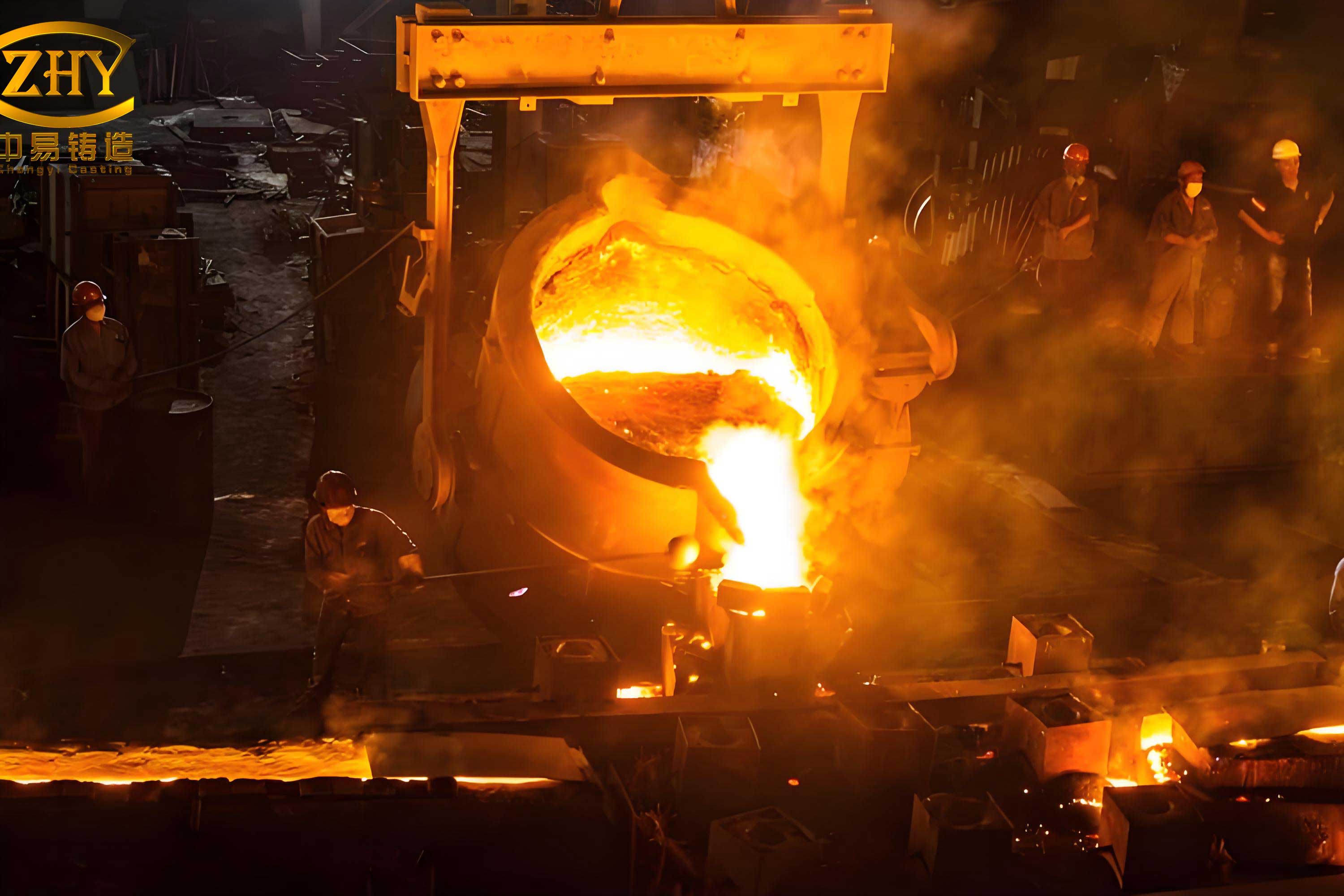
The industrial relevance of this research is profound, as it provides a clear methodology for foundries utilizing sand casting processes to tailor their iron’s microstructure. For instance, consider a foundry producing a complex, thin-walled hydraulic valve body as a sand casting. By adjusting the titanium inoculant or alloy addition in conjunction with careful gating and risering design to control local solidification time, the foundry engineer can target a D-type graphite structure in critical, high-stress thin sections to boost pressure tightness and fatigue resistance, while allowing a more conventional structure in thicker, non-critical areas if desired. This level of microstructural control was previously associated mainly with specialized, high-cooling-rate processes, but my work demonstrates its feasibility in conventional green sand molding.
To formalize the process optimization, the key parameters can be integrated into a solidification model for sand castings. The local solidification time, $t_f$, for a given section thickness, $d$, in a sand mold can be estimated using Chvorinov’s rule:
$$ t_f = B \cdot \left( \frac{V}{A} \right)^2 = B’ \cdot d^2 $$
where $B$ and $B’$ are mold constants dependent on the sand properties and casting geometry. The average cooling rate during solidification is roughly proportional to the inverse of the solidification time: $\text{CR} \propto 1/t_f \propto 1/d^2$. Substituting this into the earlier microstructure model yields a direct link between the sand-cast section size, titanium content, and expected graphite morphology. This provides a powerful tool for designing the chemistry for a specific sand-cast part geometry.
| Target Section Thickness | Recommended [Ti] Range | Expected Primary Effect |
|---|---|---|
| Thin Sections (< 8 mm) | 0.35% – 0.50% | Promotes fully D-type structure. |
| Medium Sections (8-15 mm) | 0.25% – 0.40% | Promotes mixed or dominant D-type; prevents coarse A-type. |
| Thick Sections (> 15 mm) | 0.15% – 0.30% | Refines A-type graphite; may produce D-type at mold walls. |
It is crucial to note that titanium’s effects are not isolated. Interactions with other elements in the melt, particularly nitrogen and sulfur, are significant. Titanium has a strong affinity for both, forming TiN and TiS compounds. This can alter the effective “free” titanium available for influencing graphite morphology and also affect the overall nucleation potential of the melt. The base sulfur level must be considered; too low a sulfur content can sometimes reduce inoculation effectiveness. Therefore, the optimal titanium addition for producing D-type graphite in sand castings is system-dependent. A balanced equation considering these interactions might look like:
$$ [\text{Ti}]_{\text{effective}} \approx [\text{Ti}]_{\text{total}} – k_N[\text{N}] – k_S[\text{S}] $$
where $k_N$ and $k_S$ are stoichiometric factors. This refined understanding is essential for robust industrial application across different melting practices and charge materials.
In conclusion, my systematic investigation establishes that the formation of D-type graphite in sand castings is a controllable phenomenon governed by a well-defined relationship between cooling rate (section thickness) and titanium content. The traditional view that D-type graphite is solely an anomaly from excessive undercooling is expanded; it is a stable, targetable microstructure with distinct performance advantages. For thin-walled sand castings, titanium additions on the order of 0.45% can reliably yield a completely D-type graphite structure. This finding provides foundry engineers with a new degree of freedom in designing high-performance gray iron components. By leveraging the intrinsic cooling characteristics of the sand mold and precise alloying, one can engineer the graphite morphology to enhance strength, thermal fatigue resistance, and machinability, moving beyond the limitations of conventional flake graphite irons. The future of high-performance sand castings lies in such tailored microstructures, and the D-type graphite iron, once an outlier, is poised to become a material of choice for demanding applications.