
In the realm of modern foundry technology, the deep integration of Computer-Aided Engineering (CAE) has revolutionized the industry, enabling efficient solutions to practical casting production and engineering challenges while paving the way for diversified and green development. With the impetus from initiatives like the Belt and Road, which foster economic and technological collaboration, domestic institutions, including universities, research institutes, and enterprises, have collaborated closely to advance homegrown casting CAE technologies such as FT-Star and Huazhu CAE. These efforts focus on产学研联合攻关, accelerating the application of CAE in辅助 domestic casting production and exploring innovative manufacturing internet models. In this study, I employ Anycasting software to simulate and analyze the filling and solidification processes of a spheroidal graphite cast iron automotive pump body, observing the variations in temperature, velocity, and pressure fields during pouring. This approach avoids the need for extensive physical casting experiments to validate design rationality, thereby saving time and resources.
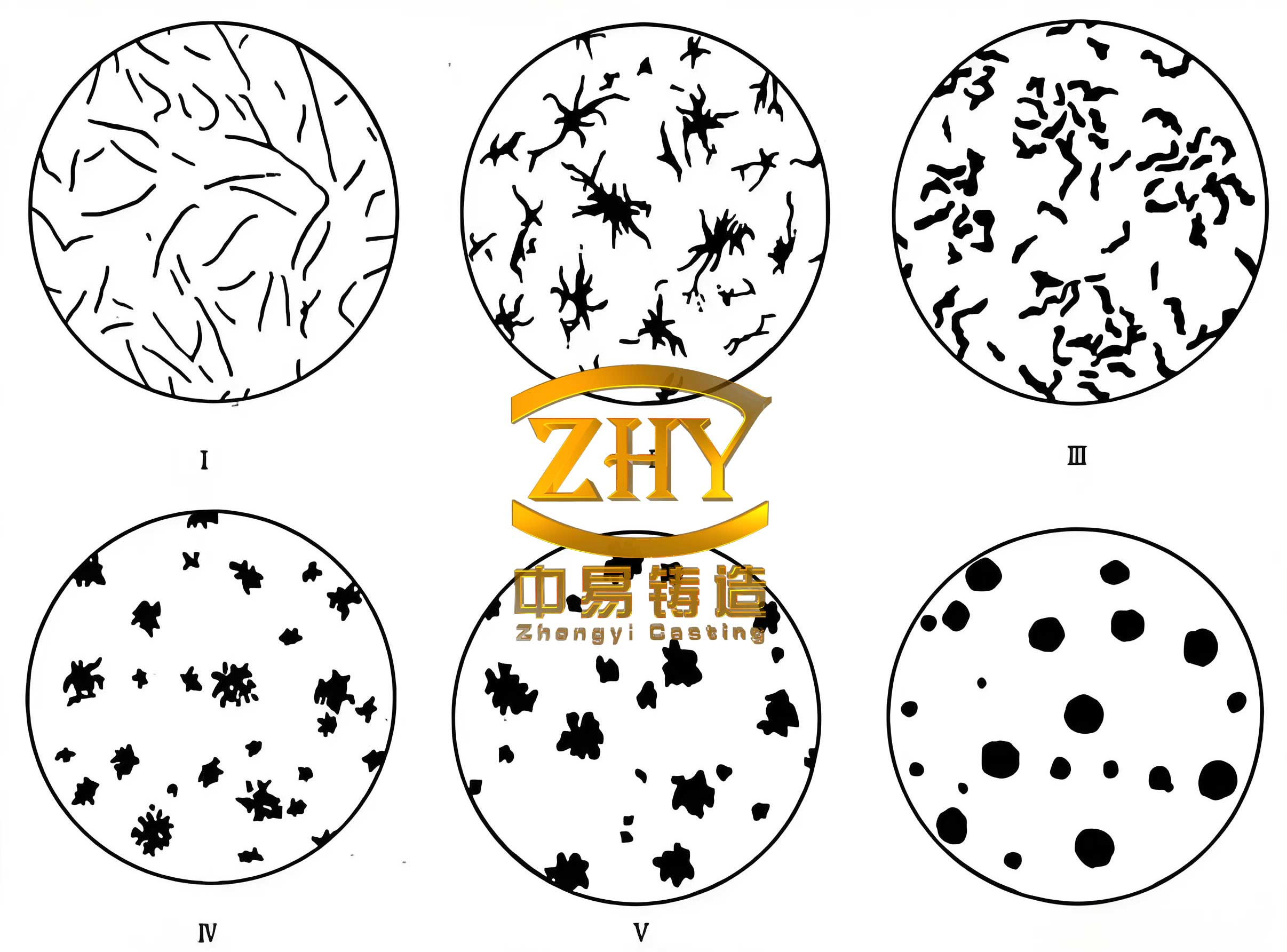
The spheroidal graphite cast iron, known for its excellent mechanical properties and castability, is widely used in automotive components due to its high strength and ductility. The graphite nodules in this material enhance toughness and fatigue resistance, making it ideal for critical parts like pump bodies. However, casting defects such as shrinkage porosity and hot tears can arise if the process is not optimized. Thus, numerical simulation becomes crucial for predicting and mitigating these issues.
To begin, I created a three-dimensional model of the pump body零件, including the gating and feeding systems, using Pro/E software. This step is foundational for numerical simulation, as it provides the geometric data necessary for analysis. The model encompasses the casting, mold, and all工艺装备, which were assembled with constraints and exported in “.stl” format for compatibility with simulation tools. The pump body is a relatively large, thick-walled component with complex features, such as flanges and凸缘, which necessitate careful design to ensure quality. The use of spheroidal graphite cast iron requires precise control over solidification to prevent defects related to graphite formation.
In the Anycasting simulation, the pre-processing phase was conducted using the AnyPRE module. I imported all “.stl” files, defined the attributes of each实体造型, set the mold properties, and determined the default求解域. Mesh generation is critical for accuracy; to avoid distortion, I set the wall thickness parameter to be less than the minimum wall thickness of the casting. Given the relatively simple structure, a uniform mesh division was applied, resulting in a manageable number of elements. The task specification involved selecting non-metallic mold casting for sand casting, with the analysis type set to “filling process followed by heat transfer and solidification.” Key parameters were configured through the AnyDBASE library, as summarized in Table 1.
| Parameter | Value | Description |
|---|---|---|
| Casting Material | Spheroidal Graphite Cast Iron | Selected from standard database |
| Mold Type | Sand Mold | Non-metallic, typical for铸铁 |
| Initial Temperature | 200°C | Preheat for mold and air to reduce moisture |
| Pouring Temperature | 1350°C | Optimized for spheroidal graphite cast iron fluidity |
| Pouring Velocity | 0.1 m/s | Constant to ensure平稳 filling |
| Gravity | Enabled | Default parameters for natural flow |
| Mesh Size | Adaptive to wall thickness | Ensures fidelity in thin sections |
The governing equations for the simulation include the Navier-Stokes equations for fluid flow and the heat conduction equation for temperature distribution. For incompressible flow during filling, the momentum equation is expressed as:
$$ \rho \left( \frac{\partial \mathbf{v}}{\partial t} + \mathbf{v} \cdot \nabla \mathbf{v} \right) = -\nabla p + \mu \nabla^2 \mathbf{v} + \rho \mathbf{g} $$
where \( \rho \) is the density of the spheroidal graphite cast iron melt, \( \mathbf{v} \) is the velocity vector, \( p \) is the pressure, \( \mu \) is the dynamic viscosity, and \( \mathbf{g} \) is gravitational acceleration. The heat transfer during solidification is described by:
$$ \rho c_p \frac{\partial T}{\partial t} = \nabla \cdot (k \nabla T) + L \frac{\partial f_s}{\partial t} $$
Here, \( c_p \) is the specific heat, \( T \) is the temperature, \( k \) is the thermal conductivity, \( L \) is the latent heat of fusion, and \( f_s \) is the solid fraction. These equations are solved numerically by AnySOLVER, generating “.rlt” files for post-processing.
In the AnyPOST module, I analyzed the results to visualize the filling and solidification processes. The pump body, being a回转体, required approximately 173 seconds for complete filling. With a bottom-gating system, the molten spheroidal graphite cast iron entered through a vertical sprue, passed through horizontal runners for slag trapping, and flowed into the cavity via ingates in a dispersed manner. This design promoted平稳 upward filling, with temperature gradually decreasing and velocity slowing down. By the end of filling, the temperature distribution was relatively uniform, though the side risers were slightly cooler, aligning with expected filling sequences.
Solidification took much longer, around 7430 seconds, progressing from the edges toward the center. However, due to limited feeding distance from the risers, the lower flange regions exhibited uneven solidification, particularly at “L”-shaped junctions where isolated hot spots formed. These areas, prone to shrinkage defects, were identified through defect prediction criteria. To quantify this, I placed sensors at key points to monitor field variations, as detailed in Table 2.
| Sensor Location | Max Temperature (°C) | Pressure Peak (Pa) | Velocity Fluctuation (m/s) | Defect Risk |
|---|---|---|---|---|
| Bottom Flange | 1300 | High (e.g., 1500) | Moderate | Low |
| Top Surface | 1030 | Low | High | High |
| L-junction | 1250 | Medium | Low | Very High |
| Riser Area | 1200 | Medium | Stable | Medium |
The temperature field curves revealed that upon pouring at 1350°C, the mold contact points surged to about 1300°C, followed by a slow cooling phase. The top measurement point, with thinner walls, cooled rapidly to 1030°C and solidified quickly, lacking a transition phase and increasing defect susceptibility. Over time, heat exchange balanced out, slowing the temperature gradient until cooling completion. This behavior is critical for spheroidal graphite cast iron, as rapid cooling can affect graphite nodule formation.
Pressure field analysis showed an exponential rise with filling percentage, peaking after complete filling. The bottom sensor recorded the highest pressure, indicating denser microstructure formation and better quality there. Mathematically, the pressure build-up can be related to the Bernoulli equation for incompressible flow:
$$ p + \frac{1}{2} \rho v^2 + \rho g h = \text{constant} $$
where \( h \) is height. Variations in velocity caused pressure changes, especially at the bottom due to initial冲击.
Velocity field curves indicated similar trends across points: initial fluctuations from turbulent entry into the mold, then stabilization as the metal level rose and pressure increased. However, near the top, wall thickness variations caused renewed fluctuations. This turbulence can lead to defects like slag inclusion in spheroidal graphite cast iron castings. The Reynolds number \( Re = \frac{\rho v D}{\mu} \) was calculated to assess flow regime; values above 2000 suggested turbulent flow in early stages, necessitating design adjustments.
Based on the simulation, I predicted that defects were more likely in the gating system during filling, and during solidification, both the gating system and top surface were susceptible. While the original design met basic production requirements, improvements were needed to reduce localized defects in the spheroidal graphite cast iron pump body.
To optimize the process, I proposed a revised方案: incorporating larger blind side risers at the bottom flange edges, placing chills near hot spots, adding vent holes at the upper凸缘, and lengthening the ingates. This新工艺 aimed to enhance feeding and reduce thermal gradients. I modeled the updated gating system in Pro/E, exported it, and repeated the Anycasting simulation with identical parameters for consistency.
The results demonstrated significant improvements. Filling became smoother, with reduced turbulence and splashing. Solidification time for the risers exceeded that of the casting, confirming effective feeding and elimination of hot spots. Defect probability maps, derived from statistical analysis, showed that filling defects remained mostly in the gating system, while solidification defects on the top surface were markedly reduced. Table 3 compares key metrics between the original and optimized processes.
| Metric | Original Process | Optimized Process | Improvement |
|---|---|---|---|
| Filling Time (s) | 173 | 170 | Slightly faster due to better flow |
| Solidification Time (s) | 7430 | 7200 | Reduced by 3.1% |
| Max Temperature Gradient (°C/mm) | 15 | 10 | More uniform cooling |
| Defect Probability on Top Surface | High | Low | Mitigated via risers and chills |
| Pressure Uniformity | Moderate | High | Better distribution |
The optimization leveraged principles of heat transfer and fluid dynamics. For instance, the use of chills accelerates cooling in critical zones, which can be modeled by enhancing the thermal boundary condition. The effectiveness of a chill can be estimated using the Fourier number \( Fo = \frac{\alpha t}{L^2} \), where \( \alpha \) is thermal diffusivity, \( t \) is time, and \( L \) is characteristic length. Higher \( Fo \) values indicate faster heat extraction, beneficial for spheroidal graphite cast iron to avoid shrinkage.
In conclusion, this study underscores the value of CAE simulation in optimizing casting processes for complex components like automotive pump bodies made from spheroidal graphite cast iron. The original design, while functional, exhibited potential defects in filling and solidification, particularly at junctions and top surfaces. Through iterative simulation with Anycasting, I developed an optimized gating and feeding system that minimizes turbulence, ensures progressive solidification, and reduces defect risks. The key findings are: (1) For large, thick-walled spheroidal graphite cast iron castings, an open bottom-gating system with well-designed risers and chills is essential for quality. (2) Numerical simulation provides a scientific basis for design validation, enabling efficient optimization without costly trials. This approach not only enhances product quality but also supports sustainable foundry practices by reducing material waste and energy consumption. Future work could explore advanced materials or multi-physics simulations to further refine the process for spheroidal graphite cast iron applications.
The integration of simulation tools like Anycasting into foundry workflows represents a paradigm shift toward data-driven manufacturing. As industries embrace digital transformation, such methodologies will become standard for producing high-integrity castings, especially for demanding materials like spheroidal graphite cast iron. By continuously refining these techniques, we can achieve higher efficiencies and better performance in automotive and other sectors.