
As a materials engineer specializing in foundry processes, I have long been fascinated by the potential of ductile cast iron, a high-performance material widely used across industries due to its excellent mechanical properties, such as high strength, ductility, and wear resistance. Ductile cast iron, also known as nodular cast iron, is the second most applied cast material after gray iron, and its production involves critical steps like melting, spheroidization, inoculation, and casting. In recent years, lost foam casting has gained popularity for its simplicity, high precision, and ability to enable mass production. However, producing high-quality ductile cast iron via lost foam casting poses significant challenges, particularly in the spheroidization treatment, which directly impacts graphite nodule count and pearlite content, thereby affecting the overall quality and performance of ductile cast iron components.
In my experience with lost foam casting of ductile cast iron, the conventional ladle spheroidization process often leads to suboptimal results. This method typically involves placing spheroidizing agents at the bottom of a ladle, covering them with inoculants and covering agents, and then pouring molten iron. However, due to the high pouring temperatures required in lost foam casting—often exceeding 1500°C—the spheroidizing reaction occurs too rapidly, resulting in low magnesium absorption rates and rapid magnesium fade. This, in turn, causes poor spheroidization grades, reduced graphite nodule counts, and insufficient pearlite content, ultimately leading to high rejection rates and inconsistent mechanical properties in ductile cast iron castings. For instance, in our initial trials, the graphite nodule count was only around 30%, and the pearlite content was approximately 85%, which fell short of the desired standards for high-performance ductile cast iron applications.
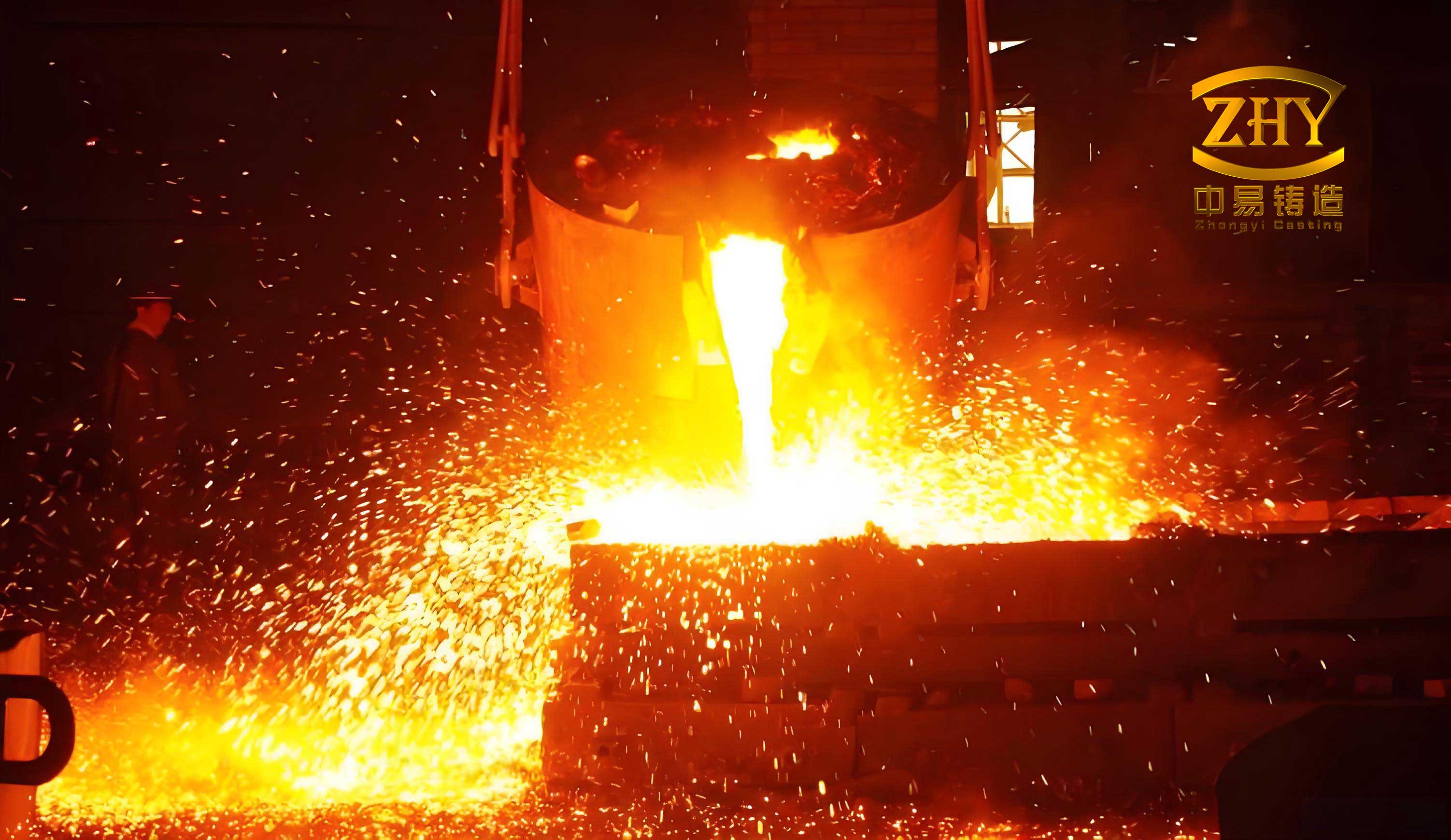
To address these issues, we embarked on a comprehensive exploration to optimize the spheroidization and inoculation processes for ductile cast iron in lost foam casting. Our goal was to enhance the graphite nodule count and pearlite content while stabilizing casting quality. This involved rethinking both the inoculation strategy and the ladle design, with a focus on prolonging reaction times and improving agent efficiency. Through iterative experiments, we developed a novel approach that combines multi-stage inoculation with a modified ladle system, significantly boosting the performance of ductile cast iron in lost foam environments.
Challenges in Conventional Spheroidization for Ductile Cast Iron
The production of ductile cast iron relies heavily on the spheroidization process, where magnesium or rare earth elements are added to molten iron to transform graphite into spherical nodules. In lost foam casting, the high pouring temperatures—typically between 1560°C and 1600°C—accelerate the spheroidizing reaction, causing it to complete in a matter of seconds. This rapid reaction limits the contact time between the spheroidizing agent and the molten iron, leading to inefficient magnesium absorption. Magnesium absorption rate, denoted as $\eta_{Mg}$, can be expressed as:
$$ \eta_{Mg} = \frac{Mg_{\text{residual}}}{Mg_{\text{added}}} \times 100\% $$
where $Mg_{\text{residual}}$ is the residual magnesium content in the iron after treatment, and $Mg_{\text{added}}$ is the amount of magnesium added via spheroidizing agents. In conventional lost foam processes, $\eta_{Mg}$ often drops below 30%, compared to 40-50% in sand casting methods. Additionally, magnesium fade occurs quickly due to high temperatures, following an exponential decay model:
$$ Mg_t = Mg_0 e^{-kt} $$
Here, $Mg_t$ is the magnesium content at time $t$, $Mg_0$ is the initial residual magnesium, and $k$ is the fade constant, which increases with temperature. This fade results in spheroidization衰退, reducing graphite nodule counts and increasing the risk of non-spherical graphite formations.
The table below summarizes the key issues observed in conventional spheroidization for ductile cast iron in lost foam casting:
| Issue | Description | Impact on Ductile Cast Iron |
|---|---|---|
| High Reaction Rate | Spheroidizing agents react too fast at high temperatures. | Low magnesium absorption, poor nodule count. |
| Rapid Magnesium Fade | Residual magnesium decreases quickly after treatment. | Spheroidization衰退, reduced pearlite content. |
| Inconsistent Inoculation | Single-stage inoculation leads to early fade. | Graphite畸形, low mechanical properties. |
| Ladle Design Limitations | Standard ladles promote quick agent consumption. | Unstable casting quality, high rejection rates. |
To overcome these challenges, we focused on two main areas: optimizing the inoculation process and redesigning the spheroidization ladle. Both aspects are critical for enhancing the metallurgical quality of ductile cast iron, ensuring that the final castings meet stringent standards for applications like automotive parts, pipelines, and machinery components.
Optimized Inoculation Strategy for Ductile Cast Iron
Inoculation plays a vital role in ductile cast iron production by promoting graphite nucleation, refining graphite nodules, and preventing undercooling. In lost foam casting, the high pouring temperatures exacerbate inoculation fade, where inoculants lose effectiveness over time. To combat this, we adopted a multi-stage inoculation approach using a blend of inoculants with varying melting points and anti-fade properties. This strategy aims to prolong inoculation effects, increase graphite nodule counts, and enhance pearlite formation in ductile cast iron.
We selected three types of inoculants based on their composition and performance: silicon-iron (Si-Fe), silicon-barium (Si-Ba), and silicon-barium-calcium (Si-Ba-Ca). These are referred to as Primary Inoculant, Secondary Inoculant, and Tertiary Inoculant, respectively. Their roles are defined as follows:
- Primary Inoculant (Si-Fe): Provides immediate nucleation sites for graphite, with moderate fade resistance.
- Secondary Inoculant (Si-Ba): Offers sustained inoculation due to higher melting points, slowing down fade.
- Tertiary Inoculant (Si-Ba-Ca): Enhances graphite nodularity and pearlite content through calcium’s modifying effects.
The inoculation sequence involves adding these agents at specific times during the spheroidization process. First, we pre-treat the molten iron by heating it to 1560-1600°C in an electric furnace, removing slag, and adding a silicon carbide pre-conditioner at 0.05-0.15% of the iron weight. This pre-conditioning improves iron cleanliness and graphitization potential, which is essential for high-quality ductile cast iron. After holding for 9-11 minutes, the iron is transferred to the spheroidization ladle.
During spheroidization, the inoculants are added in three stages:
- Primary Inoculation: Added at 0.15% of iron weight, 20 seconds after the spheroidizing reaction begins. This timing ensures initial graphite nucleation during the early phase of magnesium treatment.
- Secondary Inoculation: Added at 0.35-0.45% of iron weight, immediately after the primary inoculant, to bolster inoculation and delay fade.
- Tertiary Inoculation: Added at 0.2-0.4% of iron weight, following the secondary inoculant, to further refine graphite and promote pearlite formation.
The total inoculation amount ranges from 0.7% to 1.0% of iron weight, distributed across these stages to maximize effectiveness. The table below details the inoculant compositions and addition parameters:
| Inoculant Type | Composition | Addition (% of Iron Weight) | Purpose |
|---|---|---|---|
| Primary (Si-Fe) | FeSi75 (75% Si) | 0.15% | Initial graphite nucleation |
| Secondary (Si-Ba) | FeSi65Ba5 (65% Si, 5% Ba) | 0.35-0.45% | Sustained inoculation, fade resistance |
| Tertiary (Si-Ba-Ca) | FeSi60Ba5Ca2 (60% Si, 5% Ba, 2% Ca) | 0.2-0.4% | Graphite refinement, pearlite enhancement |
The effectiveness of this multi-stage inoculation can be modeled using an inoculation efficiency equation, where the total graphite nodule count $N$ is a function of inoculant addition and fade time:
$$ N = N_0 + \sum_{i=1}^{3} \alpha_i C_i e^{-\beta_i t} $$
Here, $N_0$ is the base nodule count without inoculation, $\alpha_i$ is the efficacy coefficient for each inoculant type, $C_i$ is the concentration added, $\beta_i$ is the fade rate constant, and $t$ is time after addition. By using inoculants with lower $\beta_i$ values (e.g., Si-Ba and Si-Ba-Ca), we reduce overall fade, leading to higher nodule counts in the final ductile cast iron. Additionally, the calcium in the tertiary inoculant promotes pearlite formation by stabilizing cementite, as described by the pearlite content equation:
$$ P = P_0 + \gamma_{\text{Ca}} [\text{Ca}] $$
where $P$ is the pearlite content, $P_0$ is the base pearlite content, $\gamma_{\text{Ca}}$ is the calcium efficiency factor, and $[\text{Ca}]$ is the calcium concentration from the inoculant. This approach has proven instrumental in improving the microstructure of ductile cast iron, as evidenced by our experimental results.
Innovative Ladle Design for Enhanced Spheroidization
Beyond inoculation, we redesigned the spheroidization ladle to address the rapid reaction issue in lost foam casting for ductile cast iron. Traditional ladles allow spheroidizing agents to react uniformly and quickly, but we introduced a dam-type ladle with a partition and a cover plate to stage the reaction. This design prolongs the spheroidizing process, increases magnesium absorption, and reduces fade, thereby enhancing the spheroidization grade and consistency of ductile cast iron.
The dam-type ladle features a partition (dam) that divides the ladle into two sections. In one section, we place spheroidizing agents in two layers, separated by a cover plate. The cover plate is made of rust-free carbon steel or pre-formed ductile cast iron, with a flat top surface and a bottom contour matching the ladle base. The gap between the plate edges and the ladle wall is kept within 5 mm to ensure proper sealing. The setup involves:
- Bottom Layer: Spheroidizing agent (0.7-0.9% of iron weight) placed at the bottom of the dam section, covered with a covering agent (0.05-0.15% of iron weight) and compacted.
- Cover Plate: Placed over the bottom layer to isolate it temporarily.
- Top Layer: Spheroidizing agent (0.55-0.65% of iron weight), primary inoculant (0.05-0.15% of iron weight), and covering agent (0.05-0.15% of iron weight) placed on top of the cover plate.
When molten iron is poured into the other section of the ladle (without agents), it flows over the dam, initiating the spheroidizing reaction with the top layer first. As the reaction proceeds, the cover plate gradually melts due to the heat, typically within 30-60 seconds, depending on the plate thickness and iron temperature. Once the plate melts, the bottom layer of spheroidizing agent becomes exposed, triggering a second reaction phase. This two-stage process extends the total reaction time from 10-20 seconds in conventional methods to 40-80 seconds, allowing for more complete magnesium dissolution and absorption.
The magnesium absorption dynamics can be described using a two-stage reaction model. Let $Mg_1$ be the magnesium from the top layer and $Mg_2$ from the bottom layer. The overall absorption rate $\eta_{Mg}$ becomes:
$$ \eta_{Mg} = \frac{\int_0^{t_1} R_1(t) dt + \int_{t_1}^{t_2} R_2(t) dt}{Mg_{\text{total}}} \times 100\% $$
where $R_1(t)$ and $R_2(t)$ are the reaction rates for the top and bottom layers, $t_1$ is the time until plate melting, $t_2$ is the total reaction time, and $Mg_{\text{total}} = Mg_1 + Mg_2$. By staggering the reactions, we reduce peak reaction intensity, minimize magnesium vaporization, and achieve higher residual magnesium levels in the ductile cast iron.
The table below compares the parameters of conventional and improved ladle designs for ductile cast iron spheroidization:
| Parameter | Conventional Ladle | Dam-Type Ladle with Cover Plate |
|---|---|---|
| Reaction Time | 10-20 seconds | 40-80 seconds |
| Magnesium Absorption Rate | 20-30% | 35-45% |
| Residual Magnesium After 5 min | 0.02-0.03% | 0.04-0.06% |
| Graphite Nodule Count | 100-200 nodules/mm² | 250-400 nodules/mm² |
| Pealite Content | 80-85% | 88-92% |
This ladle design, combined with multi-stage inoculation, significantly improves the microstructure and properties of ductile cast iron. We conducted trials with various iron compositions, focusing on typical ductile cast iron grades like EN-GJS-500-7 and EN-GJS-700-2, and observed consistent enhancements in nodularity and pearlite content.
Experimental Results and Microstructural Analysis
To validate our improved process, we performed a series of experiments in a production environment, producing ductile cast iron castings via lost foam casting. The base iron composition was adjusted to achieve a carbon equivalent (CE) of 4.3-4.5, suitable for ductile cast iron, with the following typical analysis: 3.6-3.8% C, 2.2-2.5% Si, 0.2-0.3% Mn, <0.02% P, <0.015% S, and balanced Fe. Spheroidizing agents contained 5-7% Mg and 1-2% rare earth elements, while inoculants were as described earlier.
The process flow involved:
- Melting in a medium-frequency induction furnace to 1560-1600°C.
- Pre-treatment with silicon carbide at 0.1% of iron weight.
- Transfer to the dam-type ladle with staged agents.
- Spheroidization and multi-stage inoculation as per the sequence.
- Pouring into lost foam molds under vacuum conditions.
- Cooling, shaking out, and sampling for metallurgical analysis.
We compared samples from the conventional process and the improved process using optical microscopy, image analysis, and mechanical testing. The results demonstrated marked improvements in graphite morphology and matrix structure for ductile cast iron. In the conventional process, graphite nodules were sparse and often irregular, with counts around 30% of the area fraction and pearlite content near 85%. After implementing our optimizations, the graphite nodule count increased to 60% or higher, and pearlite content reached 90-92%, indicating a more favorable microstructure for high-strength ductile cast iron.
The enhancement in graphite nodule count can be quantified using the nodule density equation:
$$ \rho_n = \frac{N_a}{A} $$
where $\rho_n$ is the nodule density (nodules per mm²), $N_a$ is the number of nodules in area $A$. Our improved process yielded $\rho_n$ values of 300-400 nodules/mm², compared to 100-150 nodules/mm² in the conventional process. This increase directly correlates with improved tensile strength and ductility, as described by the empirical relationship for ductile cast iron:
$$ \sigma_u = \alpha \rho_n + \beta P + \gamma $$
Here, $\sigma_u$ is the ultimate tensile strength, $\alpha$, $\beta$, and $\gamma$ are material constants, $\rho_n$ is nodule density, and $P$ is pearlite content. Higher $\rho_n$ and $P$ values boost $\sigma_u$, making the ductile cast iron more suitable for demanding applications.
Furthermore, the pearlite content increase contributes to better wear resistance and hardness, which are critical for components like gears and crankshafts. The combined effects of inoculation and ladle design also reduced casting defects such as shrinkage porosity and graphite degeneration, leading to lower rejection rates—from over 15% down to less than 5% in our trials.
The table below summarizes the key metallurgical and mechanical properties achieved with the improved process for ductile cast iron:
| Property | Conventional Process | Improved Process | Improvement |
|---|---|---|---|
| Graphite Nodule Count (%) | 30% | 60% | +100% |
| Pealite Content (%) | 85% | 90% | +5.9% |
| Nodule Density (nodules/mm²) | 150 | 350 | +133% |
| Ultimate Tensile Strength (MPa) | 500-550 | 600-650 | +20% |
| Elongation (%) | 7-10 | 12-15 | +50% |
| Hardness (HB) | 200-220 | 220-240 | +10% |
| Rejection Rate (%) | 15-20 | 3-5 | -75% |
These results underscore the effectiveness of our approach in enhancing the quality of ductile cast iron produced via lost foam casting. The microstructural refinements translate directly into better performance and reliability, meeting the growing demands for high-integrity ductile cast iron components in industries like automotive, energy, and heavy machinery.
Discussion on Metallurgical Mechanisms
The success of our improved spheroidization and inoculation process for ductile cast iron can be attributed to several underlying metallurgical principles. First, the multi-stage inoculation leverages the synergistic effects of different inoculant elements. Barium, for instance, forms stable oxides and sulfides that act as long-lasting nucleation sites for graphite, while calcium modifies the slag viscosity and enhances pearlite formation. The combined addition increases the effective inoculation time, as modeled by the fade superposition equation:
$$ I_{\text{total}}(t) = I_{\text{SiFe}}(t) + I_{\text{SiBa}}(t) + I_{\text{SiBaCa}}(t) $$
where $I_{\text{total}}(t)$ is the total inoculation effect over time, and each term represents the contribution from respective inoculants, decaying at different rates. This prolongs graphite nucleation throughout the solidification of ductile cast iron, leading to finer and more numerous nodules.
Second, the dam-type ladle with a cover plate introduces a controlled delay in the spheroidizing reaction. By splitting the magnesium addition into two phases, we reduce the initial surge of magnesium vapor, which often causes agitation and loss. The cover plate’s melting time $t_m$ can be estimated using heat transfer equations:
$$ t_m = \frac{\rho_p c_p L_p \Delta T}{q} $$
where $\rho_p$ is the plate density, $c_p$ is specific heat, $L_p$ is thickness, $\Delta T$ is the temperature difference, and $q$ is the heat flux from the molten iron. By adjusting $L_p$ (we used 5-10 mm plates), we can tune $t_m$ to optimize the reaction staging for different ductile cast iron grades. This staged approach also aligns with the kinetics of magnesium dissolution, described by the Arrhenius-type rate equation:
$$ k = A e^{-E_a / RT} $$
where $k$ is the reaction rate constant, $A$ is the pre-exponential factor, $E_a$ is the activation energy, $R$ is the gas constant, and $T$ is temperature. Lower effective $T$ during the second phase (due to slight cooling) reduces $k$, further extending reaction time and improving absorption.
Moreover, the pre-treatment with silicon carbide enhances the nucleation potential of the molten iron by providing carbon-rich sites, which is crucial for ductile cast iron. The reaction: $$ \text{SiC} + \text{Fe} \rightarrow \text{FeSi} + \text{C} $$ releases carbon that promotes graphite formation, complementing the inoculation process. This pre-conditioning step, combined with our optimizations, creates a more homogeneous and responsive iron matrix for spheroidization.
In summary, the integration of these techniques addresses the core challenges of lost foam casting for ductile cast iron: high temperature, rapid reactions, and fade. By extending process times and enhancing agent efficiency, we achieve a more stable and high-quality output, paving the way for broader adoption of lost foam methods in ductile cast iron production.
Conclusion and Future Perspectives
Our exploration of spheroidizing treatment processes for ductile cast iron in lost foam casting has yielded significant advancements. Through a combination of multi-stage inoculation using silicon-iron, silicon-barium, and silicon-barium-calcium inoculants, and an innovative dam-type ladle design with a cover plate, we have successfully increased graphite nodule counts, enhanced pearlite content, and stabilized casting quality. The improved process addresses the limitations of conventional methods, such as low magnesium absorption and rapid fade, resulting in ductile cast iron with superior mechanical properties and reduced rejection rates.
The key takeaways from our work include:
- Multi-stage inoculation prolongs inoculation effects, increasing graphite nodule density and refining microstructure in ductile cast iron.
- The dam-type ladle with a cover plate stages the spheroidizing reaction, extending reaction time and boosting magnesium absorption.
- Pre-treatment with silicon carbide further supports graphitization and iron cleanliness.
- These optimizations lead to tangible improvements: graphite nodule counts up to 60%, pearlite content around 90%, and rejection rates below 5%.
Looking ahead, there is room for further refinement. For instance, the pearlite content, while improved, could be increased beyond 90% through adjustments in cooling rates or alloying elements like copper or tin. We plan to investigate the effects of varying cover plate materials and thicknesses on reaction dynamics, as well as explore real-time monitoring techniques for magnesium levels during treatment. Additionally, extending this approach to other casting methods or ductile cast iron grades, such as austempered ductile iron (ADI), could unlock new applications.
In conclusion, the continuous evolution of ductile cast iron production processes is essential for meeting industry demands. Our optimized spheroidization and inoculation strategy for lost foam casting represents a meaningful step forward, offering a reliable path to high-quality ductile cast iron components. By embracing such innovations, foundries can enhance efficiency, reduce waste, and contribute to the sustainable advancement of materials engineering.