
The field of large-scale casting occupies a pivotal position in modern equipment manufacturing, serving as a critical indicator of a nation’s industrial prowess and technological capability. As demand surges for mega-tonnage components in sectors like defense, aerospace, and high-speed rail, the imperative to produce defect-free, high-integrity castings has never been greater. Traditional trial-and-error methods are prohibitively costly and inefficient for such components. Consequently, the integration of advanced casting processes with sophisticated computer-aided engineering (CAE) simulation has become the cornerstone of modern foundry practice. This paradigm shift enables the virtual prediction and control of defects such as shrinkage porosity, hot tears, and misruns long before metal is poured, paving the way for greener, more efficient, and higher-quality production. This article provides a comprehensive review of the application progress in key casting processes, with a particular focus on the latest advancements in numerical simulation technologies, elucidating their role in optimizing the production of complex and large-scale sand casting products and other critical components.
1. Evolution and Application of Foundry Processes for Large Castings
The selection and design of a casting process are fundamental to the success of large component manufacturing. While conventional methods provide a foundation, specialized techniques have evolved to meet the stringent requirements of size, complexity, and material.
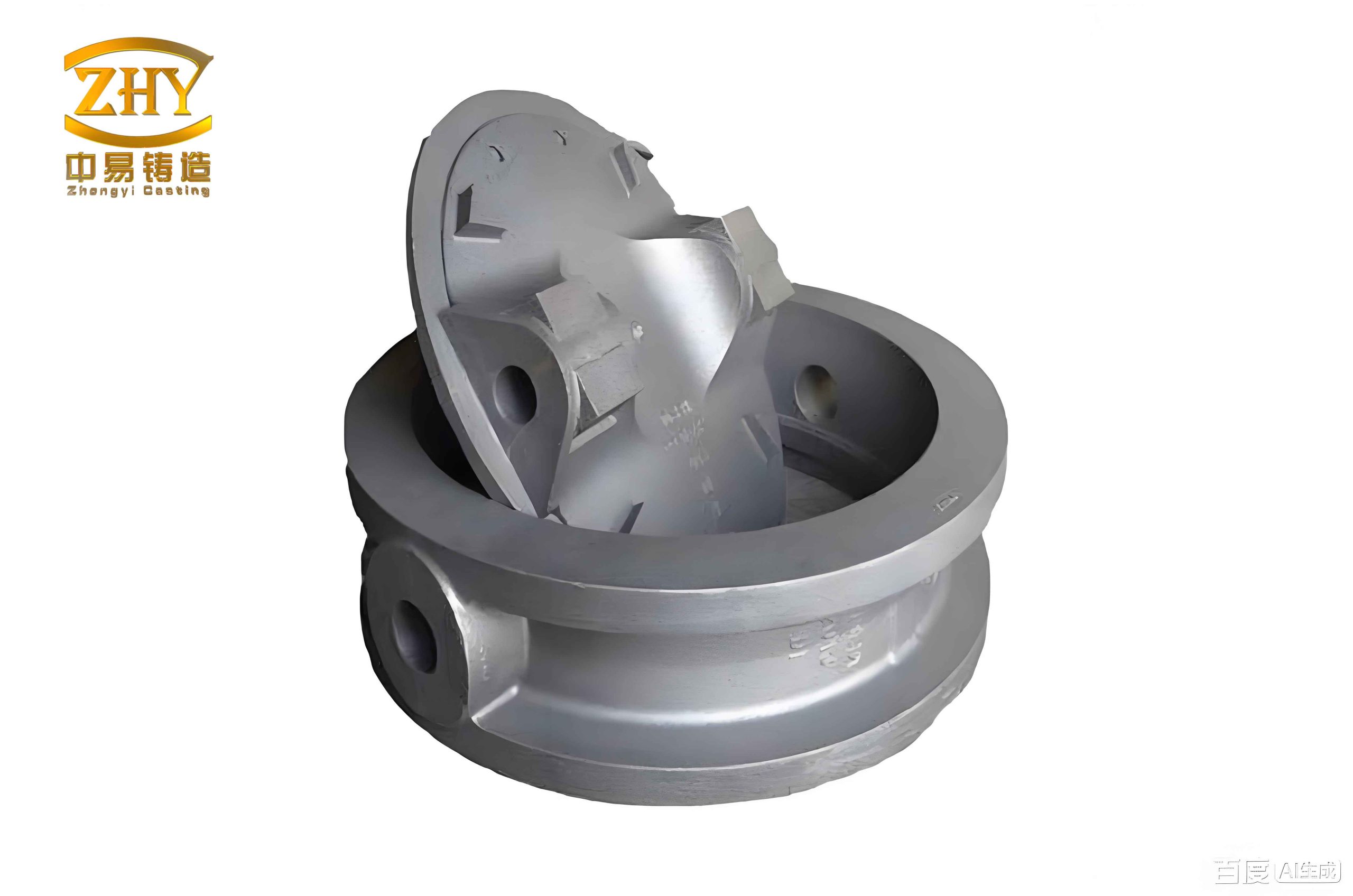
Sand Casting remains the most versatile and widely used process for large, heavy-section components. Its advantages of low cost, flexibility, and ability to produce complex geometries are unparalleled for one-off or small-batch production. The process involves creating a mold from compacted sand, into which molten metal is poured. The reliability and quality of modern sand casting products, ranging from massive pump bodies to intricate engine blocks, have been significantly enhanced through improved binder systems and process control. A critical application is in the production of large titanium alloy components, where specialized sand molds are essential due to the metal’s high reactivity. The successful casting of a large titanium pump body, meeting stringent ASTM standards for chemistry and mechanical properties, exemplifies the capability of advanced sand casting techniques. The dimensional accuracy and surface quality of such sand casting products are continually improving, making them indispensable in heavy industry.
Permanent Mold (Metal) Casting employs reusable metal dies, offering superior surface finish, dimensional accuracy, and finer grain structure due to rapid cooling. Although the initial die cost is high, it is amortized over high-volume production runs, making it ideal for components like automotive wheels or powertrain parts. Simulation-assisted design of metal molds and cooling channels is crucial for components like wind turbine main shafts, where predicting and managing shrinkage is key to achieving sound castings.
Investment Casting is the go-to process for components requiring exceptional dimensional precision and complex, near-net-shape geometries, often found in aerospace and medical industries. It involves creating a wax or polymer pattern, building a ceramic shell around it, melting out the pattern, and pouring metal into the resulting cavity. The challenge for large, complex titanium parts lies in controlling dimensional distortion during the multi-step process. Strategies such as optimized pattern design, thermal correction, and enhanced feeding through centrifugal force are employed to ensure quality.
Die Casting forces molten metal under high pressure into a steel mold. It is characterized by high production rates, excellent surface finish, and thin-wall capabilities, primarily for non-ferrous alloys like aluminum and magnesium. The high pressure ensures good reproduction of detail and density, but the turbulent filling can lead to air entrapment, requiring careful gating design and process simulation.
Low-Pressure and Counter-Pressure Die Casting are variants that use gas pressure to fill the mold in a more controlled, laminar manner from below. This reduces turbulence and oxide formation, leading to higher integrity castings, especially for large, thin-walled aluminum components like gearboxes for high-speed trains. Counter-pressure casting applies an additional pressure differential during solidification, further enhancing feeding and reducing porosity in thick sections.
Lost Foam Casting utilizes a foam pattern that vaporizes upon contact with molten metal. It allows for incredible design freedom, minimal draft angles, and no need for cores in many cases. Key research areas for aluminum and magnesium alloys focus on developing patterns that degrade cleanly and coatings with optimal permeability and strength to prevent defects like fold or carbon inclusion.
Centrifugal Casting involves pouring metal into a rotating mold, where centrifugal force distributes the metal against the mold wall, producing hollow cylindrical parts with superior density and directional solidification characteristics. It is ideal for pipes, rings, and bushings, offering high metal yield and effective separation of impurities to the inner surface.
The comparative characteristics of these major processes are summarized in Table 1, providing a guide for process selection based on component requirements.
| Process | Typical Materials | Advantages | Limitations / Challenges | Best For |
|---|---|---|---|---|
| Sand Casting | Cast Irons, Steels, Al, Ti, Cu alloys | Low cost, unlimited size, high complexity, flexibility. | Lower dimensional accuracy, rough surface, labor-intensive. | Large, heavy, one-off/ low-volume sand casting products (bases, frames, housings). |
| Permanent Mold | Al, Mg, Cu alloys, some cast irons | Good finish, dimensional accuracy, fine grain, reusable mold. | High tooling cost, limited complexity, non-ferrous focus. | High-volume production of medium-complexity parts (wheels, pistons). |
| Investment Casting | Superalloys, Ti, Al, Steel | Excellent precision & finish, extreme complexity, wide alloy range. | High cost, long lead time, size limitations for complex parts. | Complex, high-performance components (turbine blades, implants). |
| Die Casting | Al, Mg, Zn alloys | High speed, excellent finish, thin walls, high volume. | High tooling cost, porosity from air entrapment, limited to non-ferrous. | High-volume, thin-wall components (electronics housings, automotive). |
| Low-Pressure Die | Primarily Al, Mg alloys | Laminar fill, good mechanical properties, suitable for large thin walls. | Lower production rate than die casting, equipment cost. | Large, quality-critical aluminum castings (wheels, structural parts). |
| Lost Foam | Cast Irons, Steels, Al alloys | Great design freedom, no cores, minimal finishing. | Pattern cost, foam degradation control, environmental concerns. | Complex geometries with internal passages (engine blocks, manifolds). |
| Centrifugal | Steels, Irons, Cu alloys | High density, directional structure, high yield, good for cylinders. | Limited to axisymmetric shapes, equipment complexity. | Cylindrical shapes (pipes, liners, rings). |
2. Fundamentals and Progression of Numerical Simulation in Casting
The development of casting simulation, or Casting CAE, has transformed foundry operations from an art to a science. The core principle is solving the governing physical equations that describe fluid flow, heat transfer, stress, and phase transformation during the casting process.
The thermal history is governed by the heat conduction equation, which for a transient solidification process including latent heat release can be expressed as:
$$\rho c_p \frac{\partial T}{\partial t} = \nabla \cdot (k \nabla T) + \dot{Q}_L$$
where $\rho$ is density, $c_p$ is specific heat, $T$ is temperature, $t$ is time, $k$ is thermal conductivity, and $\dot{Q}_L$ is the latent heat source term due to phase change. The solution of this equation across a discretized geometry (using Finite Difference Method – FDM, Finite Element Method – FEM, or Finite Volume Method – FVM) forms the basis of temperature field simulation.
Fluid flow during mold filling is described by the Navier-Stokes equations for incompressible, transient flow, often coupled with a volume-of-fluid (VOF) method to track the free surface:
$$\nabla \cdot \mathbf{u} = 0$$
$$\rho \left( \frac{\partial \mathbf{u}}{\partial t} + (\mathbf{u} \cdot \nabla) \mathbf{u} \right) = -\nabla p + \mu \nabla^2 \mathbf{u} + \rho \mathbf{g} + \mathbf{S}$$
where $\mathbf{u}$ is the velocity vector, $p$ is pressure, $\mu$ is dynamic viscosity, $\mathbf{g}$ is gravity, and $\mathbf{S}$ represents source terms (e.g., buoyancy due to temperature gradients). Coupling this flow field simulation with the energy equation enables coupled fluid-thermal analysis, critical for predicting cold shuts, mistuns, and oxide entrainment.
A seminal advancement was the development of criteria functions to predict shrinkage porosity from thermal data. The most widely used is the Niyama criterion, which postulates that porosity forms in regions where the thermal gradient $G$ divided by the square root of the cooling rate $\dot{T}$ falls below a critical value $C_{Niyama}$ specific to the alloy:
$$\frac{G}{\sqrt{\dot{T}}} < C_{Niyama}$$
This allows for a quantitative, post-processing assessment of shrinkage risk from a standard thermal simulation.
The evolution of these numerical methods spawned commercial CAE software packages that are now industry standards. Table 2 provides a comparison of leading platforms.
| Software | Primary Numerical Method | Key Strengths | Simulation Capabilities (T: Thermal, F: Flow, S: Stress, M: Microstructure) |
|---|---|---|---|
| ProCAST | Finite Element Method (FEM) | Excellent for complex geometries & advanced processes (investment, single crystal). Robust material database. | T, F, S, M |
| MAGMASOFT | Finite Difference Method (FDM) | Very user-friendly for sand & die casting. Powerful automatic optimization tools (DOE). | T, F, S |
| FLOW-3D CAST | Finite Volume Method (FVM) | Superior free surface tracking (TruVOF). Highly accurate for high-pressure die casting filling analysis. | T, F |
| NOVACAST | FDM / FEM | Good balance of accuracy and speed. Effective for steel and iron castings. | T, F, S |
| 华铸CAE (Huazhu CAE) | Finite Difference Method (FDM) | Dominant in Chinese foundries. Cost-effective, good for process optimization of common sand casting products. | T, F, S |
| AnyCasting | FDM | Fast solver, good for die casting. Integrated with CAD environments. | T, F, S |
3. Detailed Applications of Numerical Simulation Technologies
The power of simulation lies in its specific applications to diagnose and solve real-world casting problems.
3.1 Solidification and Thermal Analysis
This is the most fundamental application. By simulating the temperature field over time, engineers can visualize solidification sequences, identify last-to-freeze regions (hot spots), and evaluate the effectiveness of feeders and chills. For a large aluminum flywheel housing, simulation clearly showed that solidification began at the thin outer edges and progressed inward, with the final hot spot near the central sprue. The predicted shrinkage location from this analysis matched the defect found in initial castings. The process was then optimized by modifying the gating and risering system to ensure directional solidification toward the riser. Similarly, for a massive steel brake disc, initial designs showed a central shrinkage cavity. Iterative thermal simulations of different feeder configurations—from no feeder to multiple feeders—allowed engineers to converge on a single, optimally sized feeder that eliminated the defect while maximizing yield. This virtual trial-and-error is indispensable for large sand casting products where physical trials are prohibitively expensive.
3.2 Filling and Coupled Flow-Thermal Analysis
Filling analysis prevents defects related to fluid dynamics. In a study on a machine tool bed casting, comparing side-gating versus bottom-gating was crucial. The simulation revealed that bottom-gating provided a much calmer, more uniform fill pattern, reducing the risk of erosion and slag entrainment compared to the turbulent side-gating approach. The velocity vectors and temperature contours during fill provided clear visual evidence for the design decision. In high-pressure die casting, this analysis is critical to avoid jetting and air entrapment. Furthermore, coupled simulations are essential where flow significantly affects temperature distribution, such as in low-pressure casting of thin-walled parts or in processes involving electromagnetic stirring. For example, simulating the magneto-hydro-thermo-dynamic fields in an electromagnetically stirred direct-chill (DC) casting process helps optimize grain refinement and reduce macrosegregation in large aluminum ingots.
3.3 Stress and Distortion Simulation
As the casting cools from solidus to room temperature, uneven cooling generates thermal stresses that can lead to hot tearing during solidification, residual stresses, and final distortion. Stress simulation requires accurate temperature-dependent mechanical properties (elastic modulus, yield strength, creep behavior) and accounts for the complex transition through the mushy zone. For a large jaw crusher frame casting, stress simulation identified high tensile stress concentrations at certain junction points. This insight allowed engineers to implement targeted stress-relief heat treatment or modify the cooling design in those areas to prevent cracking during cooling or in service. Predicting hot tearing tendency often involves using a semi-solid constitutive model and evaluating strain accumulation in vulnerable regions during the final stages of solidification.
3.4 Microstructure Modeling
Moving beyond macroscopic defects, microstructure simulation predicts the as-cast grain structure, which directly governs mechanical properties. The most common approaches are Cellular Automaton (CA) and Phase Field (PF) methods, often coupled with finite element thermal data (CAFE models).
- Cellular Automaton (CA): Used in software like ProCAST’s CAFE module, it simulates grain nucleation and growth based on local undercooling. For a centrifugally cast Co-Cr alloy tube, CA simulation successfully predicted a columnar grain structure at the outer diameter transitioning to equiaxed grains inward, which was later confirmed by metallography. The model helped optimize mold preheat temperature to control grain size.
- Phase Field (PF): This method solves a diffusion equation for a phase field variable $\phi$ (0 for liquid, 1 for solid) to simulate detailed dendritic morphology. The governing equation often takes the form of a modified Allen-Cahn equation coupled with solute diffusion:
$$\frac{\partial \phi}{\partial t} = M_\phi \left[ \nabla \cdot (W^2 \nabla \phi) – \frac{\partial f}{\partial \phi} \right]$$
where $M_\phi$ is mobility, $W$ is interface thickness, and $f$ is the free energy density functional. PF models have been used to study the effect of cooling rate and alloy composition on secondary dendrite arm spacing (SDAS) in aluminum alloys, providing a fundamental link between process parameters and microstructure.
These tools allow foundries to virtually “engineer” the microstructure by adjusting pouring temperature, cooling rate, or using grain refiners.
3.5 Simulation of Other Phenomena
Advanced simulations also tackle specific challenges:
- Macrosegregation: Models coupling solute transport with thermo-solutal convection and solidification shrinkage flow can predict the formation of channel segregate or centerline segregation in large ingots or castings.
- Heat Treatment: Software can simulate post-casting heat treatments (solutionizing, aging, stress relieving) to predict phase transformations, precipitate evolution, final hardness, and distortion.
- Melt Processing: Simulations of induction furnaces or ladle treatment stations optimize heating efficiency, melt homogeneity, and slag inclusion removal.
4. The Path Forward: Intelligent and Sustainable Foundries
The future of large-scale casting is inextricably linked to digitalization and sustainability, with simulation serving as the core enabler.
Intelligent Foundry 4.0: The integration of IoT sensors, big data analytics, and AI with simulation is creating “digital twins” of the casting process. Real-time data from the foundry floor (pouring temperature, mold temperatures, cooling rates) can be fed back to calibrate and update the simulation model continuously. AI and machine learning algorithms can analyze thousands of simulation results to autonomously optimize gating and risering designs, predict defect probabilities with higher accuracy, and enable predictive maintenance of foundry equipment. Additive manufacturing (3D printing) of sand molds and cores complements this by allowing previously impossible internal geometries to be cast, with simulation verifying their feasibility.
Green Manufacturing: Simulation is a key tool for sustainability. It minimizes material waste by optimizing yield, reduces energy consumption by identifying inefficient process steps, and cuts down on scrap and rework. The development of low-carbon processes, such as using green hydrogen for melting or optimizing heat recovery systems, will be guided by advanced multi-physics simulations. The entire lifecycle of a casting, from material production to recycling, can be modeled to minimize its environmental footprint.
In conclusion, the synergy between advanced casting processes and sophisticated numerical simulation has revolutionized the production of large-scale components. From optimizing the design of robust sand casting products to enabling the precise manufacture of investment-cast turbine blades, simulation provides the critical insight needed to ensure quality, reduce cost, and accelerate development. As we move towards fully intelligent and sustainable foundries, the role of multi-scale, multi-physics, and AI-enhanced simulation will only become more central, solidifying its status as the indispensable digital backbone of modern metal casting.