
In my years of experience as an engineer specializing in foundry environmental systems, I have observed that the casting industry faces significant challenges in managing air pollutants, particularly during the pouring and mold internal cooling stages of sand casting products. The production of sand casting products involves intricate processes that generate complex emissions, and addressing these requires innovative approaches to ensure compliance with stringent environmental standards. This article delves into the technical aspects of exhaust gas treatment, focusing on sand casting products, and presents a novel method that optimizes both collection and treatment efficiency while reducing costs. I will share insights from practical engineering projects, utilizing tables and formulas to summarize key points, and emphasize the importance of sustainable practices in manufacturing high-quality sand casting products.
The casting process is broadly categorized into two groups: sand casting and special casting. Sand casting, which is widely used for producing a variety of sand casting products such as automotive components and machinery parts, includes techniques like green sand molding, resin self-hardening sand, and sodium silicate self-hardening sand. Special casting encompasses methods like centrifugal casting, investment casting, die casting, and lost foam casting, with the latter often referred to as “special sand casting processes” due to sand handling and reuse steps. Common to all these processes are universal stages: metal melting, furnace treatment, pouring, cleaning, and post-treatment. The atmospheric pollutants generated during these stages are diverse, as illustrated in the general schematic of casting production emissions. In particular, the pouring and mold internal cooling segments are critical for sand casting products, as they involve high-temperature operations that release harmful substances.
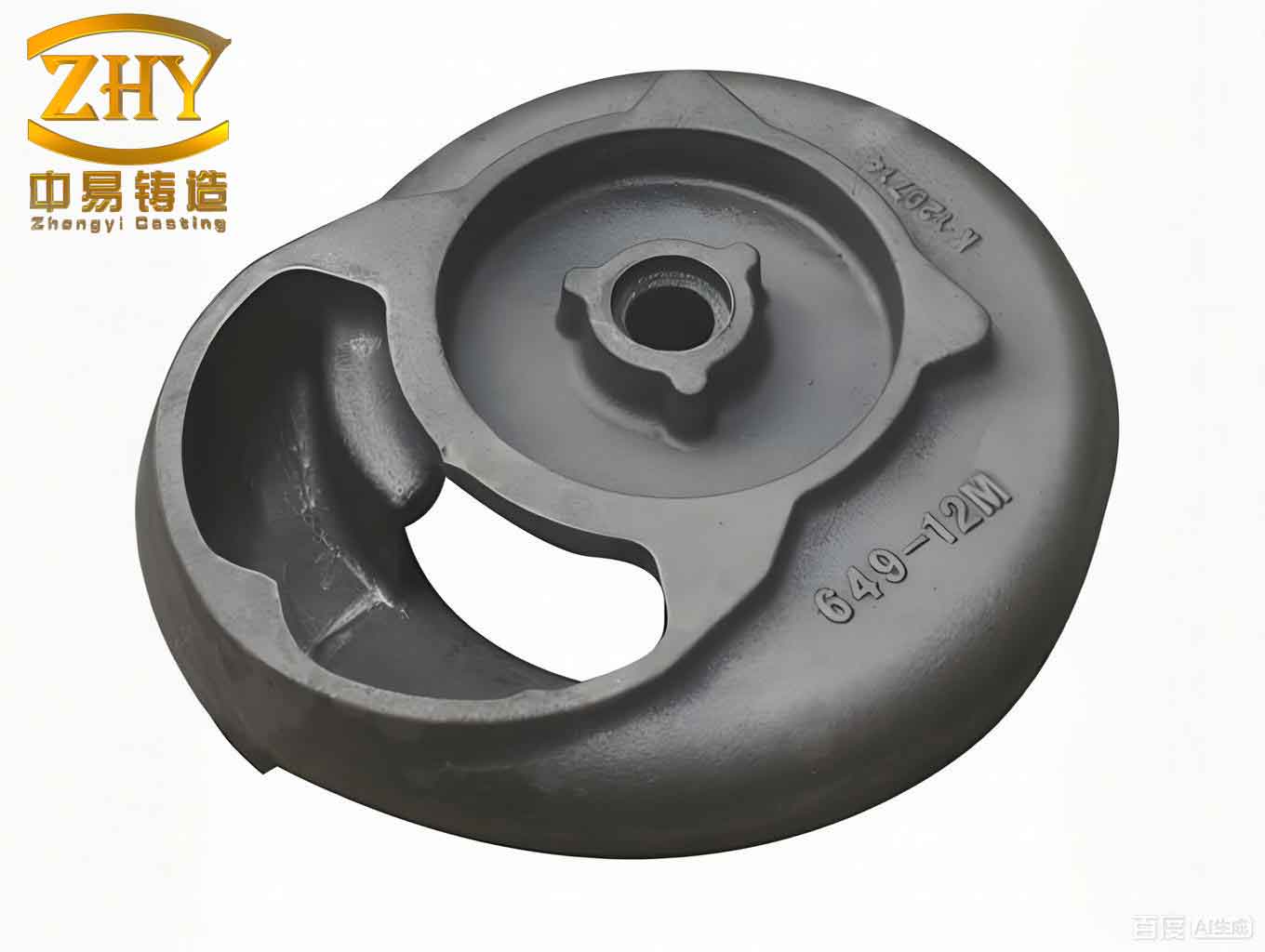
Analyzing the pollutants from the pouring and mold internal cooling stages reveals unique characteristics. During pouring, the high temperatures generate substantial dust and organic pollutants. For sand casting products, the use of coal dust or organic binders in mold preparation leads to thermal decomposition, producing volatile organic compounds (VOCs) such as benzene, toluene, xylene, phenol, formaldehyde, acetaldehyde, and polycyclic aromatic hydrocarbons. In lost foam casting, polystyrene foam decomposes to release VOCs like styrene, while metal mold processes involve release agents that form CO, CO2, VOCs, and ethylene. The mold internal cooling stage, where sand casting products cool within the mold, continues to emit similar pollutants over time, with resin sand potentially producing carbonized smoke. These emissions are characterized by dispersed sources, complex compositions, large exhaust volumes with low concentrations, and difficulty in treatment, making efficient collection and processing essential for environmental protection in sand casting product manufacturing.
Existing treatment technologies for these stages primarily involve collection methods and VOCs control. Collection systems are typically designed as fixed side suction hoods or mobile hoods, followed by enclosed cooling lines to capture emissions from sand casting products. For particulate matter, bag filters and wet scrubbers are commonly used. Bag filters rely on fabric filtration to trap dust, with efficiencies ranging from 98% to 99.9% and emission concentrations of 10–30 mg/Nm³. The performance depends on filter media, and advanced coated fabrics have improved durability. Wet scrubbers remove particles through inertial impaction and absorption, with efficiencies of 90–95% and emissions of 30–80 mg/Nm³, but they require wastewater treatment facilities. For VOCs, liquid absorption and activated carbon adsorption are employed. Liquid absorption uses solvents to transfer VOCs, with efficiencies of 60–90% and emissions of 30–100 mg/Nm³. Activated carbon adsorption, often combined with catalytic oxidation, achieves 90–99% efficiency and emissions of 10–60 mg/Nm³. However, these systems are often installed separately for pouring and cooling stages, leading to high costs and space requirements in sand casting product production lines.
To address these inefficiencies, we have developed a push-series process that integrates collection for both stages. This method leverages the distinct airflow requirements: pouring needs high negative pressure with low volume, while cooling requires low pressure with high volume. By using an intermediate booster fan, the pouring emissions are captured effectively and then uniformly distributed into the enclosed cooling line via ground-level inlets. A large-volume exhaust system at the top of the cooling line maintains a slight negative pressure, ensuring comprehensive collection for sand casting products. The airflow dynamics can be described by the continuity equation for fluid flow: $$ Q_{in} = Q_{out} $$ where \( Q_{in} \) is the inlet flow rate from the pouring stage and \( Q_{out} \) is the exhaust flow rate from the cooling line. To maintain negative pressure, we adjust the fan speed based on environmental temperature, using the relationship: $$ \Delta P = k \cdot (Q_{out} – Q_{in}) $$ where \( \Delta P \) is the pressure difference and \( k \) is a system constant. This approach reduces overall fan power and equipment footprint. Additionally, a pre-treatment stage coats sticky dust particles to prevent filter clogging, enhancing system stability for sand casting product applications.
Data from implementation shows promising results. Pollutant concentrations after treatment meet strict standards, as summarized in Table 1. The non-methane hydrocarbon (NMHC) levels range from 23–45 mg/Nm³, and dust is around 27–33 mg/Nm³, ensuring post-treatment emissions below 10 mg/Nm³ for particulates and 15 mg/Nm³ for NMHCs in sand casting product lines. Collection efficiency exceeds 90%, with hood face velocities of 12–15 m/s and negative pressures of 500 Pa at pouring, and inlet velocities of 1.8–2.3 m/s in the cooling line. The push-series method enhances cooling efficiency by increasing air exchange rates, which accelerates the solidification of sand casting products while minimizing energy use.
| Parameter | Pouring Stage | Cooling Stage | Combined Push-Series System |
|---|---|---|---|
| NMHC (mg/Nm³) | 23–42 | 28–45 | <30 |
| Dust (mg/Nm³) | ~27 | ~33 | <10 |
| Hood Velocity (m/s) | 12–15 | 1.8–2.3 | N/A |
| Negative Pressure (Pa) | 500 | Slight | Controlled |
Economically, the push-series process offers significant advantages over separate systems. As shown in Table 2, it reduces initial investment by consolidating equipment, such as using a single dust collector and catalytic oxidizer instead of multiple units. Operational costs are lowered through decreased power consumption and consumable usage, like filter bags and activated carbon. For sand casting product manufacturers, this translates to lower overheads and improved sustainability. The efficiency gain can be expressed in terms of cost savings: $$ C_{savings} = (C_{separate} – C_{push}) \times T $$ where \( C_{separate} \) and \( C_{push} \) are the annual costs of separate and push-series systems, respectively, and \( T \) is the operational time. This formula highlights the long-term benefits for high-volume production of sand casting products.
| Aspect | Separate Systems (Pouring + Cooling) | Push-Series System | Reduction (%) |
|---|---|---|---|
| Number of Dust Collectors | 2 | 1 | 50 |
| Total Airflow (m³/h) | 85,000 | 65,000 | 23.5 |
| Catalytic Oxidizers | 2 | 1 | 50 |
| Steel Piping (tons) | 13 | 9 | 30.8 |
| Pre-coating Consumption (kg/day) | 150 | 100 | 33.3 |
| Fan Power (kW) | 165 | 132 | 20 |
The push-series method not only optimizes technical performance but also aligns with environmental regulations, such as China’s GB 39726-2020 standard for foundry emissions. By ensuring effective collection and treatment, it helps sand casting product facilities achieve higher ratings in performance grading systems, which can lead to operational incentives. From my perspective, this integrated approach represents a step forward in green manufacturing for sand casting products, balancing ecological and economic demands. The use of adaptive controls, based on real-time monitoring of temperature and pressure, further enhances reliability. For instance, we can model the system’s response using differential equations: $$ \frac{dC}{dt} = -k \cdot C + S $$ where \( C \) is pollutant concentration, \( k \) is the removal rate constant, and \( S \) is the source emission rate from sand casting products. This allows for predictive maintenance and optimized operation.
In conclusion, the push-series process for exhaust gas treatment in sand casting product production offers a robust solution to the challenges of pouring and mold internal cooling stages. By combining collection systems and leveraging airflow dynamics, it reduces equipment needs, lowers costs, and improves compliance. As the demand for high-quality sand casting products grows, adopting such innovative technologies will be crucial for sustainable industry development. My experience confirms that this method enhances both environmental performance and production efficiency, making it a viable choice for modern foundries. Future work may explore advanced materials for filtration or AI-driven control systems to further optimize the treatment of emissions from sand casting products.