
The production of high-integrity, complex geometry components via sand casting remains a cornerstone of modern manufacturing, particularly for industries demanding excellent mechanical properties, such as aerospace. The design and optimization of the casting process are critical to eliminating defects and ensuring the final product meets stringent performance criteria. This article details a comprehensive study on the process design, numerical simulation, and optimization for a specific beam-type aluminum separator, a quintessential example of demanding sand casting products. The journey from initial concept to a validated, defect-free casting involves systematic analysis using simulation tools, followed by rigorous experimental verification, highlighting a proven methodology applicable to a wide range of sand casting products.
Sand casting offers unparalleled flexibility in producing parts of varying sizes and complexities. For high-strength aluminum alloys, however, the process presents unique challenges, including hot tearing, shrinkage porosity, and oxide inclusion formation. The choice of molding sand is pivotal; for aluminum alloys prone to gas pickup and oxidation, sands bonded with high-nitrogen, furan resin are often preferred for their good collapsibility and dimensional stability, making them suitable for small-batch production of high-performance sand casting products.
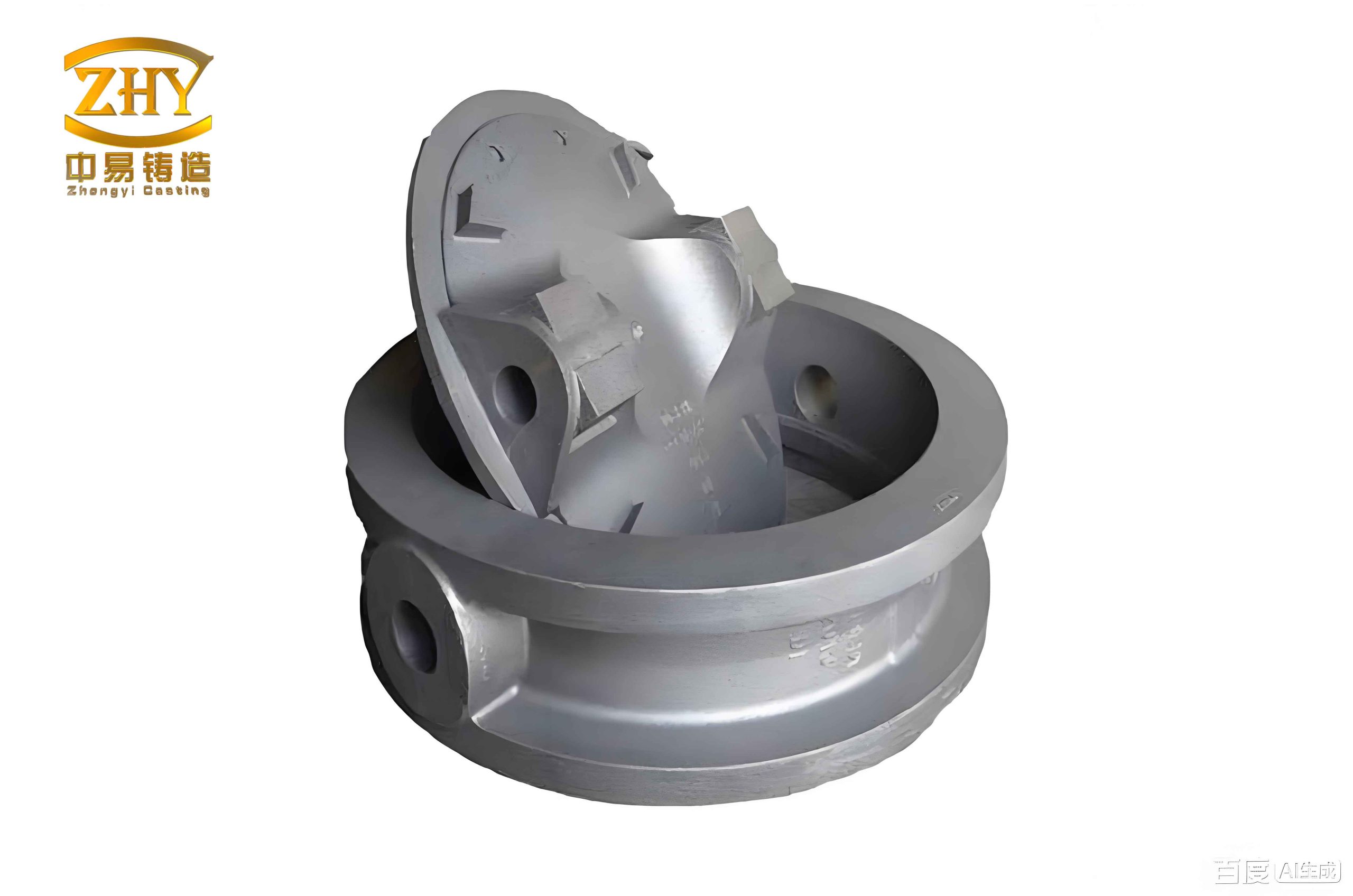
The subject of this study is a beam-type partition made from ZL201, an Al-Cu-Mn series alloy renowned for its high strength at both room and elevated temperatures, making it ideal for critical structural applications. The target mechanical properties for the final casting were a tensile strength >390 MPa, elongation >8%, and a Brinell hardness >100 HBW. The component, with a length of 571.2 mm and varying wall thicknesses between 14 mm and 20 mm, featured several reinforcing ribs and bosses. Its geometry, while seemingly straightforward, contained potential hot spots at junctions between thinner and thicker sections, typical challenges in the design of robust sand casting products.
| Element | Copper (Cu) | Manganese (Mn) | Silicon (Si) | Aluminum (Al) |
|---|---|---|---|---|
| Content | 4.5 – 5.3 | 0.6 – 1.0 | 0.15 – 0.35 | Balance |
Initial Casting Process Design
The foundational step in creating reliable sand casting products is a sound gating and feeding system design. Given the alloy’s susceptibility to oxide formation and shrinkage, the primary goals were to achieve a tranquil fill to minimize turbulence and to establish a directional solidification pattern toward the risers. A horizontally parted mold with a bottom-gating system was initially conceptualized. This approach aims to reduce splash and oxide entrainment during filling. The gating system was designed with a choke at the sprue base, following established area ratios for aluminum alloys to promote a non-turbulent flow. Four flat ingates were employed to distribute metal evenly and aid in temperature control.
The initial feeding system comprised four top risers placed over the thicker sections and junction points. The riser dimensions were calculated based on geometric moduli to provide sufficient feed metal. The complete assembly of the casting model with the initial gating and riser system was prepared for numerical analysis. The key casting parameters are summarized below:
| Parameter | Value |
|---|---|
| Alloy | ZL201 |
| Pouring Temperature | 720 °C |
| Mold Material | Furan Resin-Bonded Sand |
| Mold Initial Temperature | 20 °C |
| Number of Ingates | 4 |
| Number of Riser | 4 (Conventional Top Riser) |
Numerical Simulation of the Initial Process
To virtually prototype the process and predict potential defects, numerical simulation using a dedicated casting simulation software was employed. This step is invaluable for optimizing sand casting products before costly trial runs. The 3D model was meshed, and the process parameters were applied to simulate both mold filling and solidification.
Mold Filling Analysis
The filling sequence simulation showed a generally stable flow. Metal entered the mold cavity smoothly from the bottom, gradually filling the cavity from the lower sections upward, and finally filling the risers. The absence of severe vortex formation or air entrapment during fill indicated that the basic gating design was functionally adequate for achieving a sound fill, a positive first step for quality sand casting products.
Solidification and Defect Prediction
The solidification simulation revealed the critical flaws in the initial design. While thinner sections like ribs solidified first, isolated liquid pools formed in two key areas:
- The thickest sections of the main body.
- The junctions between the front rod and the connecting reinforcing ribs.
These regions solidified later than the risers intended to feed them. According to the fundamental requirement for effective feeding, a riser must remain liquid longer than the region it is supposed to feed. The thermal analysis showed that the risers solidified prematurely, cutting off the feed path. Consequently, macro-shrinkage and micro-porosity were predicted in these thermal centers. The solidification time (t) and thermal gradient (∇T) are key governing factors for shrinkage formation. The Niyama criterion, often used to predict shrinkage porosity, relates to these parameters:
$$
Niyama = \frac{G}{\sqrt{\dot{T}}}
$$
where \( G \) is the temperature gradient and \( \dot{T} \) is the cooling rate. Low values of this criterion indicate a high risk of microporosity. The simulation effectively visualized areas where this criterion was not met due to poor thermal control.
Process Optimization Strategy
The simulation clearly diagnosed the problem: the risers were inadequate in both thermal capacity and placement to ensure directional solidification. The optimization strategy focused on enhancing the feeding efficiency for the identified hot spots, a common task in refining processes for sand casting products.
1. Riser Enhancement: The risers over the main thick sections were redesigned as insulating sleeve risers. By adding an exothermic or insulating sleeve (25mm thick in this case), the cooling rate of the riser is significantly reduced, extending its feeding life. The height was also increased to improve the metallostatic pressure for feeding. The modified riser design ensures it satisfies the condition: \( t_{riser} > t_{casting\_section} \).
2. Targeted Feeding for Junctions: For the isolated hot spot at the rod-rib junction, the original riser was too distant to be effective. A new, smaller but strategically placed top riser was introduced directly onto this junction. Its size was calculated based on the modulus of the hot spot to provide just enough feed metal without creating another thermal center.
| Feature | Initial Design | Optimized Design |
|---|---|---|
| Riser Type (Main Body) | Conventional Top Riser | Insulating Sleeve Riser |
| Riser Sleeve Thickness | 0 mm | 25 mm |
| Additional Riser | None | One small riser at critical junction |
| Feeding Principle | Geometric modulus-based | Thermal-directional solidification control |
Simulation and Experimental Validation of the Optimized Process
Numerical Validation
The optimized design was subjected to the same simulation protocol. The results were markedly different. The solidification sequence now showed a clear directional pattern, with the casting sections solidifying toward and being fed by the enhanced risers. The previously isolated liquid pools at the junctions were now integrated into the feeding zones of the new risers. A final shrinkage prediction analysis confirmed the virtual elimination of macro-shrinkage and a significant reduction in predicted microporosity levels in the critical areas of the sand casting products.
Physical Casting and Heat Treatment
Encouraged by the simulation results, the optimized process was used for actual production. The castings were poured using the same ZL201 alloy and parameters. After shakeout and cleaning, visual and non-destructive inspection showed no evident major defects. The castings were then subjected to a T5 heat treatment regimen to achieve peak mechanical properties:
- Solution Treatment: 540 ± 5 °C for 5 hours, followed by quenching in water at 70°C.
- Artificial Aging: 175 ± 5 °C for 3 hours, followed by air cooling.
This treatment dissolves soluble phases and subsequently precipitates them in a finely dispersed form to strengthen the alloy matrix.
Microstructural and Mechanical Property Evaluation
Microstructural Analysis
Metallographic samples were extracted from the heat-treated casting, prepared, and examined. The microstructure was characteristic of a heat-treated ZL201 alloy. The matrix consisted of an α-aluminum solid solution. Within the grains, a dense dispersion of fine, black precipitates was observed. These are secondary T-phase (Al12CuMn2) particles that precipitate during the aging process, contributing significantly to strength via precipitation hardening. Along the grain boundaries, a divorced eutectic of Al2Cu and α-phase was present. The absence of continuous, brittle intermetallic networks at the boundaries indicated a well-controlled solidification and heat treatment process, crucial for the toughness of sand casting products.
Mechanical Property Testing
Tensile and hardness tests were conducted on specimens taken from the cast component. The results surpassed the minimum technical requirements, demonstrating the success of the optimized process in producing a high-integrity part.
| Property | Test Result | Technical Requirement | Status |
|---|---|---|---|
| Tensile Strength | 413 MPa | >390 MPa | Exceeded |
| Elongation | 11% | >8% | Exceeded |
| Brinell Hardness (HBW) | 117.3 | >100 | Exceeded |
The tensile strength can be related to microstructural features through strengthening mechanisms. The overall yield strength (\( \sigma_y \)) can be approximated by a summation of contributions:
$$
\sigma_y = \sigma_0 + \sigma_{ss} + \sigma_{ppt} + k_y \cdot d^{-1/2}
$$
where \( \sigma_0 \) is the lattice friction stress, \( \sigma_{ss} \) is solid solution strengthening, \( \sigma_{ppt} \) is precipitation strengthening from the T-phase, and the last term represents grain boundary strengthening (Hall-Petch relationship) with \( d \) as the grain size and \( k_y \) a material constant. The achieved high strength is a composite result of the alloy chemistry, the sound casting free of weakening defects, and the controlled precipitation from the T5 treatment.
Conclusion
This study underscores the powerful synergy between numerical simulation and foundry engineering for producing advanced sand casting products. The initial process design, while seemingly sound, harbored latent defects revealed through solidification modeling. The targeted optimization—employing insulating riser technology and strategic riser placement—transformed the thermal profile of the casting process, establishing a robust directional solidification sequence. Experimental validation confirmed that castings produced via the optimized process were free from significant shrinkage defects and exhibited a microstructure conducive to high performance. The final mechanical properties not only met but exceeded the rigorous specifications for this aerospace-grade component. The methodology presented, from virtual prototyping through to microstructural validation, provides a replicable framework for the design and optimization of high-quality, complex sand casting products across various alloys and industries, ensuring reliability, performance, and cost-effectiveness.