
High-manganese steel, characterized by its exceptional work-hardening capacity, impact toughness, and wear resistance under heavy loading conditions, remains a cornerstone material for manufacturing critical wear parts such as liner plates for grinding mills, crushers, and mining equipment. The performance and service life of these components are intrinsically linked to their internal soundness, microstructure, and mechanical properties, which are predominantly determined during the casting and solidification stages. This article synthesizes current research and technological advancements in the casting of high-manganese steel liners, with a particular focus on mainstream processes and the transformative role of numerical simulation in their design and optimization. As foundational industrial components, these liners are quintessential examples of high-value sand casting products, though their production has evolved to incorporate more advanced techniques.
1. Foundational Casting Processes for High-Manganese Steel Liners
The selection of an appropriate casting process is paramount for achieving the desired quality, dimensional accuracy, and cost-effectiveness for liner plates. Each method presents a unique set of thermal conditions that govern solidification, directly influencing defect formation and final microstructure.
1.1 Sand Casting: The Conventional Workhorse
Sand casting, the most traditional and versatile method, is extensively used for producing large and heavy sand casting products like mill liners. Its adaptability allows for complex geometries at relatively low tooling costs. The primary challenge lies in managing solidification shrinkage to prevent internal defects such as porosity and shrinkage cavities.
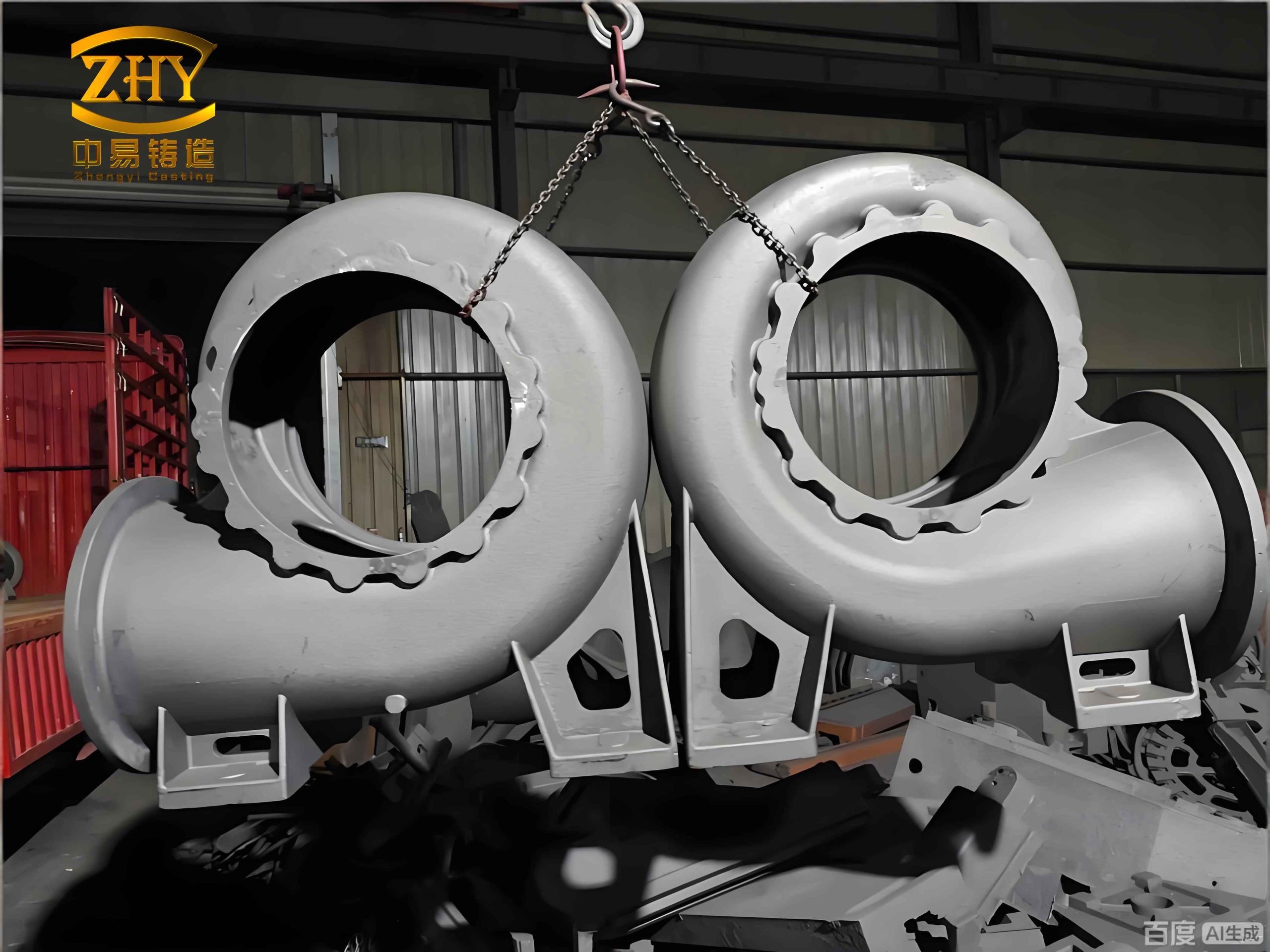
Process Optimization Strategies: The core of sand casting optimization revolves around the feeding system design. A common evolution in practice is the shift from multiple small risers to a more efficient, integrated gating and risering system. The principle is to ensure directional solidification toward the riser, which must remain molten longer than the casting section it feeds. A simplified thermal criterion for an effective riser can be expressed as its modulus (Volume/Surface Area) being greater than that of the casting section it feeds:
$$ M_{riser} > k \cdot M_{casting} $$
where $k$ is a safety factor typically >1. For high-manganese steel liners, research indicates that the riser diameter should be at least 1.5 times the thermal node diameter of the casting hot spot for adequate feeding.
Chill placement is another critical factor. External chills, made of materials with high thermal conductivity like cast iron or copper, are strategically placed to accelerate cooling in thick sections, promoting directional solidification and refining the as-cast grain structure. The use of exothermic or insulating riser sleeves can further enhance feeding efficiency. However, the use of internal chills is generally discouraged for high-integrity sand casting products due to risks of fusion defects.
Key Process Parameters and Coating Effects: Pouring temperature exerts a significant influence on the final microstructure and properties of high-manganese steel. While adequate superheat is necessary for complete mould filling, excessively high temperatures promote coarse austenite grains and facilitate the precipitation of brittle carbide networks at grain boundaries. Studies have shown an optimal window between approximately 1390°C and 1410°C for balancing fluidity and grain refinement. Table 1 summarizes the comparative effects of key sand casting parameters.
| Parameter | Typical Range/Choice | Primary Effect on Liner Quality |
|---|---|---|
| Pouring Temperature | 1390 – 1450 °C | Lower temps refine grain, reduce carbides; Higher temps improve fluidity but coarsen structure. |
| Mould Material | Silica Sand, Zircon Sand, Olivine Sand | Affects cooling rate, surface finish, and chemical interaction (e.g., olivine reduces metal penetration). |
| Riser Design | Modulus > Casting Modulus | Critical for feeding shrinkage; Integrated designs improve yield but require careful cutting. |
| Chill Application | External, Copper/CI | Promotes directional solidification, refines grain in thick sections. |
While effective for many applications, traditional sand casting of these high-performance sand casting products faces limitations in achieving superior surface finish, dimensional consistency, and higher yields. This has driven the adoption of alternative processes.
1.2 Metal Mold (Permanent Mold) Casting
Metal mold casting employs a reusable metal die, offering faster cooling rates, improved dimensional accuracy, and superior surface finish compared to conventional sand molds. For high-manganese steel, the rapid extraction of heat can suppress the formation of pro-eutectoid carbides, potentially simplifying or even eliminating the subsequent water-quenching (solution heat treatment) step.
Process Variants and Optimization: A significant advancement is the sand-lined metal mold process. Here, a thin layer of resin-bonded sand is applied to the interior surface of the metal die. This composite mold combines the benefits of rapid heat dissipation from the metal with the cushioning and improved thermal gradient control provided by the sand layer. It results in a very fine, homogeneous as-cast microstructure with minimal carbides, often yielding a directly usable product without heat treatment.
Critical Parameters and Interfacial Phenomena: The heat transfer at the metal-mold interface is the dominant factor. The interfacial heat transfer coefficient (IHTC) is not constant but evolves with time due to air gap formation as the casting contracts. It is highly sensitive to pouring temperature and mold coating. The IHTC evolution can be modeled as:
$$ h(t) = h_{max} \cdot e^{-\beta t} + h_{min} $$
where $h_{max}$ is the peak value upon metal impact, $\beta$ is a decay constant, and $h_{min}$ is the steady-state value after gap formation. Higher pouring temperatures initially yield a higher $h_{max}$ due to better contact, leading to more intense initial cooling. Mold coatings are essential to prevent soldering, control heat flow, and prolong mold life. Research into advanced coating materials, such as those incorporating hexagonal boron nitride (h-BN), aims to improve performance over traditional graphite-based coatings.
1.3 Lost Foam Casting (LFC)
Lost foam casting utilizes a expandable polystyrene (EPS) or copolymer foam pattern that vaporizes upon contact with molten metal, leaving a precise cavity. This process is excellent for complex geometries with internal passages and eliminates the need for cores and parting lines, making it suitable for intricate liner designs.
Process Optimization for Liners: Gating design in LFC is crucial to ensure smooth, progressive filling that minimizes turbulence, which can cause pattern degradation defects (e.g., folds, carbon inclusions). A bottom-filling or stepped gating system is often preferred. A significant innovation for high-manganese steel liners is the “riserless” casting approach under controlled vacuum. By employing low pouring temperatures to minimize liquid contraction and applying a precise vacuum to the sand mass, simultaneous solidification can be achieved without traditional risers, dramatically improving yield (often by >20%) and eliminating risks associated with riser removal.
Key Parameters and Coating Requirements: Due to the endothermic decomposition of the foam pattern, LFC typically requires a higher pouring temperature than sand casting—often in the range of 1480°C to 1520°C—to ensure complete filling and avoid cold shuts. However, this must be balanced against the risk of coarse grains. The refractory coating applied to the foam pattern plays a dual role: it provides a barrier to prevent sand penetration and acts as a permeable membrane to allow pattern pyrolysis gases to escape. Coating properties like viscosity, permeability, and thickness are critical control variables.
1.4 V-Process (Vacuum Sealed Molding)
The V-Process involves using a dry, unbonded sand mass held in shape by a plastic film sealed under vacuum. It produces castings with excellent surface finish, dimensional accuracy, and minimal sand-related defects due to the absence of binders.
Process Characteristics for Liners: This method is energy-efficient and environmentally friendly. The vacuum not only consolidates the mold but also helps extract gases during pouring, reducing gas porosity—a common advantage over some other methods for producing sound sand casting products. For high-manganese steel liners, it offers a clean surface with low roughness.
Parameter Control: Maintaining a stable and sufficient vacuum level (typically -0.04 to -0.07 MPa) throughout pouring and solidification is critical to prevent mold collapse. The EVA plastic film must have appropriate thermo-mechanical properties to withstand the initial metal heat without premature rupture. Pouring temperature control is vital; too high a temperature can cause excessive film burn-back and sand sintering, while too low a temperature leads to misruns. The refractory coating used on the film must dry rapidly and possess high hot strength to maintain cavity integrity after the film vaporizes.
A comparative analysis of these four primary casting processes is presented in Table 2, highlighting their suitability for manufacturing high-manganese steel liner plates.
| Process | Key Advantages | Key Challenges for Liners | Typical Microstructure Control | Yield & Complexity |
|---|---|---|---|---|
| Sand Casting | Low tooling cost, large part capability, high flexibility. | Shrinkage defects, lower surface finish, high cleaning cost. | Moderate cooling; carbides often present requiring heat treatment. | Moderate yield; suitable for medium complexity. |
| Metal Mold | Fast cooling, good surface finish, dimensional repeatability. | High mold cost, thermal fatigue of mold, risk of hot tearing. | Rapid cooling suppresses carbides; can yield near-net-shape structure. | High yield; limited by mold complexity. |
| Lost Foam | Excellent for complex shapes, no cores needed, minimal draft. | Pattern cost, potential for gas/carbon defects, process sensitivity. | Cooling rate between sand and metal mold; structure depends on parameters. | High yield with riserless design; high complexity possible. |
| V-Process | Superb surface finish, low environmental impact, reduced gas holes. | Film handling, vacuum system reliability, coating requirements. | Similar to sand casting but often cleaner; cooling can be modulated. | Good yield; suitable for medium to high complexity. |
2. Application of Numerical Simulation in Liner Plate Development
Numerical simulation has revolutionized the development cycle of cast components, moving from empirical trial-and-error to a science-driven, predictive approach. For high-manganese steel liners, simulation aids in both optimizing the casting process itself and analyzing the in-service wear performance.
2.1 Finite Element Method (FEM) for Process Simulation
FEM-based casting simulation software (e.g., ProCAST, MAGMASOFT) solves coupled equations of fluid flow, heat transfer, and stress development to predict the outcome of a defined casting process virtually.
Filling and Solidification Analysis: Simulations visualize the filling pattern, identifying areas prone to turbulence, air entrapment, or premature freezing. More importantly, they compute the solidification sequence using criteria like the Niyama criterion ($G/\sqrt{\dot{R}}$) to predict the location and severity of shrinkage porosity, where $G$ is the thermal gradient and $\dot{R}$ is the cooling rate. This allows for virtual optimization of riser and chill placement, gating design, and pouring parameters before any physical trial. For instance, the optimal filling rate for a specific liner geometry can be identified by comparing velocity fields and temperature gradients across multiple simulations.
Microstructure and Stress Prediction: Advanced models can predict grain size evolution and phase formation during solidification. Furthermore, thermo-mechanical simulations can analyze residual stresses and distortion after casting and during subsequent heat treatment (water quenching), helping to prevent cracking issues. This is particularly valuable for complex sand casting products where stress concentrations are not intuitively obvious.
2.2 Discrete Element Method (DEM) for Wear Performance Simulation
While FEM optimizes the manufacturing process, DEM simulates the granular flow of ore and grinding media inside a mill to analyze the wear mechanisms acting on the liner plate during service.
Analyzing Wear Mechanisms: DEM tracks the motion and collision energy of millions of individual particles and balls. By calculating the impact energy and shear forces imparted to different sections of the liner, it identifies high-wear zones (typically the leading face of lifters). The wear on a liner plate can be conceptually related to the cumulative impact energy:
$$ W \propto \sum (E_{impact} \cdot f(\theta, v)) $$
where $W$ is wear, $E_{impact}$ is the kinetic energy of collisions, and $f(\theta, v)$ is a function of impact angle and relative velocity.
Liner Profile Optimization: DEM enables the virtual testing of various lifter profiles (wave, step, T-shaped, etc.), heights, and face angles. Engineers can quantify how a design change affects the “lifting” efficiency of grinding media, the energy spectrum of collisions (which influences grinding efficiency), and the distribution of wear across the liner. For example, simulations can determine the optimal lifter face angle (often found to be near 60° for SAG mills) that balances effective lifting with minimized wear rate. This data-driven approach leads to liner designs that extend service life and improve mill performance, complementing the quality achieved through optimized casting processes for these critical sand casting products.
3. Integration, Challenges, and Future Perspectives
The future of producing high-performance high-manganese steel liner plates lies in the synergistic integration of advanced casting processes with high-fidelity numerical simulation across the component’s lifecycle.
Integration for Holistic Optimization: An ideal development loop involves using DEM to design a liner profile for optimal wear performance and grinding efficiency. This CAD model is then fed into FEM casting simulation to design a manufacturing process (e.g., in sand, LFC, or V-process) that guarantees sound internal quality, minimal residual stress, and the desired as-cast microstructure. This virtual prototyping drastically reduces development time, material waste, and cost.
Persisting Challenges and Research Directions:
- Multi-scale & Multi-physics Modeling: Accurately linking the macro-scale solidification predictions to the micro-scale final mechanical properties and wear resistance remains complex. Integrated models coupling macro-solidification, micro-structure evolution (phase-field methods), and property prediction are needed.
- Material Property Data: The accuracy of both FEM and DEM simulations hinges on reliable input data, such as high-temperature thermophysical properties of high-manganese steel, precise interfacial heat transfer coefficients, and accurate wear models for DEM.
- Process Hybridization and Control: Further development of hybrid processes (e.g., advanced sand-lined metal molds, optimized V-process for heavy sections) and their real-time control based on simulation-predicted parameters is a key area.
- Sustainability Focus: Future research will increasingly align with sustainable manufacturing. This includes optimizing processes to reduce energy consumption (e.g., enabling “heat-treatment-free” casting routes), improving yield to minimize metal waste, and developing environmentally benign molding and coating materials for all types of casting, including traditional sand casting products.
In conclusion, the manufacturing of high-manganese steel liner plates has evolved from a predominantly experience-based craft to a technology-intensive discipline. The continuous improvement of established processes like sand casting, alongside the adoption of advanced methods like lost foam and V-process, provides a versatile toolkit. The power of this toolkit is fully unleashed when combined with predictive numerical simulation, enabling the systematic design of both the product for its function and the process for its manufacture. This integrated approach is the definitive path toward achieving the next generation of longer-lasting, more reliable, and economically produced wear components for the global mining and mineral processing industry.