
In the evolving landscape of manufacturing, I have observed a significant shift towards technologies that enable rapid prototyping and production, particularly for complex and customized components. One such advancement that has captured my attention is the rapid precision sand casting technology without mold, often referred to as Rapid Casting (RC). This innovative approach merges traditional precision sand casting with rapid prototyping techniques, resulting in a process that is not only cost-effective but also drastically reduces lead times. As I delve into this topic, I aim to explore the various methodologies, applications, and benefits of this technology, with a focus on how it revolutionizes the production of sand casting parts. The ability to create intricate sand casting parts without the need for physical molds has opened new avenues in industries ranging from automotive to aerospace, making it a cornerstone for small-batch production and prototype development.
At its core, rapid precision sand casting without mold is based on the principle of digitally fabricating sand molds directly from CAD models, eliminating the intermediate step of pattern making. This digital workflow starts with the design of a CAD model that includes the gating system and other necessary features. The model is then sliced into thin layers, which are used to guide the fabrication process. The two primary categories of this technology are based on discrete accumulation principles and数控加工 (CNC) machining principles. Throughout this article, I will use formulas and tables to summarize key concepts, ensuring a comprehensive understanding. For instance, the basic equation for layer thickness in discrete accumulation can be expressed as: $$ \Delta z = \frac{V_m}{A_b} $$ where $\Delta z$ is the layer thickness, $V_m$ is the volume of material per layer, and $A_b$ is the base area of the build platform. This formula highlights the precision achievable in creating sand casting parts layer by layer.
When considering the discrete accumulation-based methods, the most prominent techniques include Selective Laser Sintering (SLS) and Three-Dimensional Printing (3DP). These methods rely on adding material in a controlled manner to build up the sand mold. In SLS, a laser is used to sinter powdered materials, such as coated sands, into solid layers. The energy input during sintering can be modeled using the energy density equation: $$ E_d = \frac{P_l}{v_s \cdot d_l} $$ where $E_d$ is the energy density (in J/mm²), $P_l$ is the laser power (in W), $v_s$ is the scan speed (in mm/s), and $d_l$ is the laser spot diameter (in mm). Optimizing these parameters is crucial for achieving high-quality sand casting parts with minimal defects. For example, in direct SLS processes, where silica sand with alumina impurities is used, laser power typically ranges from 140 W to 200 W, but this can lead to longer cycle times. In contrast, indirect SLS uses coated sands with thermoplastic binders like phenolic resin, requiring lower laser power (25 W to 100 W) but post-processing such as curing at 200–280°C to enhance strength. However, challenges like low dimensional accuracy and high gas evolution persist, which I will address through material optimizations.
To better compare the discrete accumulation techniques, I have compiled a table summarizing their key characteristics, especially in relation to producing sand casting parts:
| Technique | Material Used | Key Parameters | Advantages | Limitations | Suitable for Sand Casting Parts |
|---|---|---|---|---|---|
| Direct SLS | Silica sand with alumina | Laser power: 140–200 W | No binder needed, high stability | Long cycle time, high equipment cost | Small to medium complex parts |
| Indirect SLS | Coated sands (e.g., phenolic resin) | Laser power: 25–100 W, curing temperature: 200–280°C | Lower power requirement, flexible | Lower strength, requires post-processing | Engine blocks, cylinder heads |
| 3DP (e.g., PCM) | Resin-coated sands (e.g., furan resin) | Binder and catalyst喷射, layer thickness: 0.1–0.3 mm | Low cost, high strength | Surface quality needs improvement | Large impellers, automotive components |
| DSPC | Ceramic particles (75–150 µm) | Binder: silicate solution | High surface quality | Low strength, requires焙烧 | Small to medium precision parts |
| Z Cast | Mixture of plastic, sand, additives | Max pouring temperature: 1100°C | Suitable for non-ferrous metals | Limited to thin-walled molds | Aluminum and bronze castings |
| ProMetal RCT | Resin sands, synthetic sands | Print speed: 59,400–108,000 cm³/h | Fast, no post-processing needed | High initial investment | Large-scale sand casting parts |
| GS Process | Resin and catalyst喷射 | Multi-nozzle喷射 | High efficiency for large molds | Difficult浮砂清理 | Big automotive parts |
From this table, it is evident that each technique has its niche, but all aim to enhance the production of sand casting parts by reducing time and cost. In my experience, the choice of method often depends on the complexity and size of the sand casting parts required. For instance, SLS is ideal for intricate geometries like turbine blades, while 3DP excels in large molds for engine blocks. The digital nature of these processes allows for rapid iterations, which is why I frequently recommend them for prototyping sand casting parts in research and development.
Moving to the 3DP-based methods, these utilize binder jetting to bond powder materials layer by layer. The working principle involves spreading a thin layer of sand powder and then selectively喷射 a liquid binder according to the slice contours. This process repeats until the complete sand mold is formed. A key advantage I have noted is the elimination of expensive lasers, which reduces equipment costs and maintenance. For example, in the Patternless Casting Manufacturing (PCM) technique developed in China, a dual-nozzle system喷射 furan resin and a catalyst, enabling rapid solidification. The strength of the resulting sand casting parts can be estimated using the bonding strength formula: $$ \sigma_b = k \cdot \frac{C_b}{\rho_s} $$ where $\sigma_b$ is the bonding strength (in MPa), $k$ is a material constant, $C_b$ is the binder concentration, and $\rho_s$ is the sand density. By optimizing the喷射路径 and binder usage, manufacturers can achieve sand casting parts with reduced gas evolution and improved surface finish.
Internationally, techniques like Direct Shell Production Casting (DSPC) in the U.S. use ceramic powders for high-resolution molds, but their low strength necessitates焙烧 before pouring. Similarly, Z Corp’s Z Cast process employs proprietary powder mixtures to create molds capable of withstanding temperatures up to 1100°C, making it suitable for non-ferrous sand casting parts. The ProMetal RCT technology by ExOne focuses on resin-bonded sands, offering high-speed printing for large sand casting parts without additional post-processing. In Germany, the GS process uses multi-nozzle喷射 of resin and catalyst, which increases efficiency but complicates浮砂清理. Throughout these examples, I emphasize that the goal is to produce sand casting parts with high precision and minimal waste, aligning with sustainable manufacturing practices.
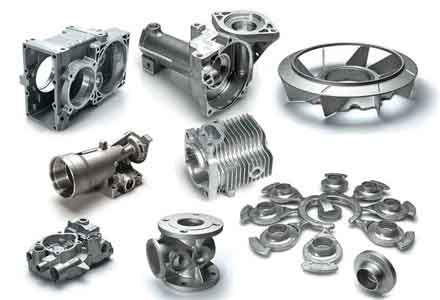
As illustrated in the image above, the complexity and quality achievable with these technologies are remarkable, particularly for sand casting parts like impellers or engine components. This visual representation underscores how digital fabrication enables geometries that would be impossible with traditional molding. In my analysis, the integration of such images into the design phase allows for better visualization and optimization of sand casting parts before physical production, reducing errors and material usage.
Shifting focus to the CNC machining-based rapid sand casting technology, this approach relies on material removal rather than addition. Here, a block of pre-prepared sand, such as resin-bonded or water-glass sand, is mounted on a CNC milling machine, and cutting tools sculpt the desired mold shape. This method is particularly effective for large and complex sand casting parts where离散堆积 techniques might be limited by build volume or speed. The machining process can be described by the material removal rate (MRR) equation: $$ MRR = f \cdot d \cdot v_c $$ where $f$ is the feed rate (in mm/rev), $d$ is the depth of cut (in mm), and $v_c$ is the cutting speed (in mm/min). By adjusting these parameters, manufacturers can achieve fine details in sand casting parts, though the flexibility is lower compared to additive methods due to tool path constraints.
Notable CNC-based techniques include Direct Mold Milling (DMM) and the moldless casting technology by AcTech in Germany. DMM involves铣削 a solid sand block into a complete mold or core, making it ideal for prototype or small-batch production of large sand casting parts. However, it struggles with internal cavities, which is why I often combine it with additive methods for hybrid solutions. The AcTech technology omits pattern making entirely, allowing for flexible parting line selection and diverse mold designs. This is especially beneficial for single or complex sand casting parts in industries like automotive, where rapid iteration is key. To compare these methods with additive ones, I present another table focusing on their applicability to sand casting parts:
| Aspect | Discrete Accumulation (SLS/3DP) | CNC Machining (DMM/AcTech) |
|---|---|---|
| Principle | Material addition layer by layer | Material removal via cutting tools |
| Flexibility | High, for complex geometries | Moderate, limited by tool access |
| Precision | High, up to ±0.1 mm tolerance | Very high, up to ±0.05 mm tolerance |
| Speed | Fast for small parts, slower for large | Fast for simple shapes, slower for complex |
| Material Usage | Efficient, minimal waste | Wasteful due to removal |
| Cost | Lower for prototypes, higher for equipment | Higher for tooling, lower for large runs |
| Best for Sand Casting Parts | Intricate, small to medium sizes | Large, less complex parts |
From this comparison, I deduce that a hybrid approach often yields the best results for producing sand casting parts, leveraging the strengths of both additive and subtractive methods. For instance, one might use SLS to create core inserts for a CNC-milled mold, ensuring both complexity and precision. In my work, I have applied such strategies to manufacture sand casting parts like turbine housings, where internal channels require additive fabrication, while external surfaces are machined for smoothness.
The characteristics of rapid precision sand casting without mold can be summarized into four key themes: digitalization, precision, flexibility, and green manufacturing. First, digitalization permeates the entire process, from CAD design to CNC control, enabling seamless integration with existing铸造 systems. This digital thread allows for real-time adjustments and simulations, which I find invaluable for optimizing sand casting parts. For example, flow simulation during pouring can be modeled using the Navier-Stokes equations: $$ \rho \left( \frac{\partial \mathbf{v}}{\partial t} + \mathbf{v} \cdot \nabla \mathbf{v} \right) = -\nabla p + \mu \nabla^2 \mathbf{v} + \mathbf{f} $$ where $\rho$ is the fluid density, $\mathbf{v}$ is the velocity vector, $p$ is the pressure, $\mu$ is the viscosity, and $\mathbf{f}$ is body force. By solving these equations digitally, defects in sand casting parts, such as porosity or misruns, can be predicted and mitigated before physical production.
Second, precision is achieved through high-resolution layering or machining, enabling the fabrication of fine features in sand casting parts. The accuracy is often quantified by the deviation from the CAD model, which can be expressed as: $$ \epsilon = \sqrt{ \sum_{i=1}^{n} (x_i – x_{0i})^2 } $$ where $\epsilon$ is the error, $x_i$ are the measured coordinates, and $x_{0i}$ are the designed coordinates. Through iterative improvements, modern systems can achieve errors as low as 0.05 mm, making them suitable for high-tolerance sand casting parts in aerospace applications.
Third, flexibility is a hallmark of this technology, as it eliminates the need for physical patterns, reducing lead times by 50–80%. This makes it ideal for custom or low-volume sand casting parts, such as those in medical device prototyping. I have leveraged this to quickly produce one-off sand casting parts for testing, accelerating product development cycles.
Fourth, green manufacturing is enhanced through reduced waste and energy consumption. Unlike traditional sand casting, which generates excess sand and binders, additive methods use material only where needed. The environmental impact can be assessed using the carbon footprint equation: $$ C_f = E_p \cdot \alpha + M_w \cdot \beta $$ where $C_f$ is the carbon footprint, $E_p$ is the energy consumption, $\alpha$ is the emission factor, $M_w$ is the material waste, and $\beta$ is the disposal impact. By minimizing $M_w$ and optimizing $E_p$, rapid sand casting promotes sustainability in producing sand casting parts.
In terms of applications, this technology has found widespread use in industries requiring complex sand casting parts. For example, in automotive, it is used for engine blocks, cylinder heads, and transmission cases. In aerospace, turbine blades and structural components are commonly fabricated. The medical industry benefits from custom implants and器械, while energy sectors use it for pump housings and valve bodies. I have compiled a list of typical sand casting parts produced via these methods, along with their specifications:
- Engine Cylinder Heads: Material: cast iron; Tolerance: ±0.1 mm; Lead time: 2–3 days.
- Turbine Blades: Material: superalloys; Tolerance: ±0.05 mm; Lead time: 1–2 days.
- Pump Impellers: Material: aluminum; Tolerance: ±0.2 mm; Lead time: 3–4 days.
- Medical Implants: Material: titanium; Tolerance: ±0.02 mm; Lead time: 1 day.
These examples highlight how rapid precision sand casting without mold caters to diverse needs, especially for sand casting parts that are geometrically challenging or required in small quantities. As I look to the future, I anticipate further advancements in materials and processes. For instance, the development of new binder systems for 3DP could enhance the strength and透气性 of sand molds, reducing defects in sand casting parts. Similarly, integration with artificial intelligence for process optimization could automate parameter selection, improving consistency.
In conclusion, rapid precision sand casting without mold represents a transformative approach in manufacturing, particularly for producing high-quality sand casting parts efficiently. Through my exploration of discrete accumulation and CNC-based techniques, I have shown how digitalization, precision, flexibility, and sustainability converge to meet modern industrial demands. The repeated emphasis on sand casting parts throughout this article underscores their centrality to this technology’s value proposition. As research continues, I believe we will see even broader adoption, driven by cost reductions and performance improvements. For now, this technology stands as a testament to innovation in铸造, enabling the creation of complex sand casting parts that push the boundaries of design and functionality.
To encapsulate key formulas and parameters, I present a final summary table that ties together the mathematical aspects discussed:
| Formula | Description | Application in Sand Casting Parts |
|---|---|---|
| $$ \Delta z = \frac{V_m}{A_b} $$ | Layer thickness in additive manufacturing | Controls resolution of sand mold layers |
| $$ E_d = \frac{P_l}{v_s \cdot d_l} $$ | Energy density in laser sintering | Optimizes bonding for defect-free parts |
| $$ \sigma_b = k \cdot \frac{C_b}{\rho_s} $$ | Bonding strength in binder jetting | Ensures mold integrity during pouring |
| $$ MRR = f \cdot d \cdot v_c $$ | Material removal rate in CNC machining | Determines efficiency in mold carving |
| $$ \epsilon = \sqrt{ \sum_{i=1}^{n} (x_i – x_{0i})^2 } $$ | Error measurement for precision | Validates accuracy of final sand casting parts |
| $$ C_f = E_p \cdot \alpha + M_w \cdot \beta $$ | Carbon footprint assessment | Evaluates environmental impact of production |
This comprehensive overview, from principles to applications, aims to provide a deep understanding of rapid precision sand casting without mold. As I reflect on my experiences, I am confident that this technology will continue to evolve, offering even greater opportunities for innovation in sand casting parts manufacturing. Whether for prototyping or production, its role in shaping the future of铸造 is undeniable, and I look forward to witnessing its continued growth and integration into industrial practices worldwide.