
As a foundry engineer specializing in non-ferrous alloys, I have long been fascinated and challenged by the casting of magnesium. The intrinsic properties of magnesium alloys—their exceptional strength-to-weight ratio, good machinability, and excellent damping capacity—make them supremely attractive for a wide range of lightweight applications. However, the casting process itself is fraught with a significant hurdle: magnesium’s extreme susceptibility to oxidation and violent combustion when molten, especially in the presence of oxygen. This characteristic poses a major safety risk and can severely compromise the quality and integrity of the final sand casting parts. Traditional methods for producing sand casting parts from magnesium involve incorporating hazardous fluoride or sulfur-based inhibitors into the molding sand to create a protective atmosphere. While effective, these materials generate toxic fumes during pouring, creating environmental pollution, damaging foundry equipment, and posing health risks to personnel. My research has therefore focused on developing a cleaner, safer alternative: the use of graphite-based sand molds for magnesium alloy sand casting.
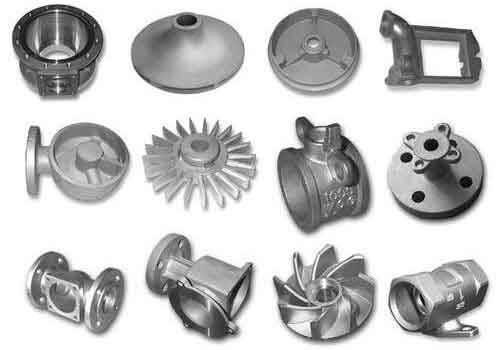
The premise is deceptively simple yet powerful: by employing a mold composed primarily of graphite sand, we can cast magnesium alloys without any added toxic inhibitors and still obtain sound, high-quality sand casting parts. The key to this success lies in the unique surface film that forms on the magnesium melt upon contact with the graphite mold. Unlike the porous and non-protective oxide film that forms in air, the film developed in a graphite environment possesses remarkable stability and acts as an effective barrier against further oxidation. This article delves deep into an investigation of this critical surface film. Through sophisticated surface analysis techniques, we will unravel its chemical composition, dissect its layered architecture, and explain the fundamental mechanisms by which it confers such excellent protective properties, enabling the reliable production of magnesium alloy sand casting parts.
The Inherent Challenge: Magnesium’s Reactivity During Sand Casting
To appreciate the innovation of the graphite mold process, one must first understand the nature of the problem in conventional sand casting of magnesium. When molten magnesium is exposed to air, it reacts rapidly with oxygen to form magnesium oxide (MgO):
$$2\text{Mg}(l) + \text{O}_2(g) \rightarrow 2\text{MgO}(s)$$
This reaction is highly exothermic. The MgO layer that forms is not a continuous, adherent barrier. Its crystal structure (NaCl-type) has a Pilling-Bedworth Ratio (PBR) of less than 1 (approximately 0.81). The PBR is a key metric predicting the protective nature of an oxide scale, defined as:
$$PBR = \frac{M_{\text{oxide}} \cdot \rho_{\text{metal}}}{n \cdot A_{\text{metal}} \cdot \rho_{\text{oxide}}}$$
where \(M_{\text{oxide}}\) is the molecular weight of the oxide, \(\rho_{\text{metal}}\) and \(\rho_{\text{oxide}}\) are the densities of the metal and oxide, \(A_{\text{metal}}\) is the atomic weight of the metal, and \(n\) is the number of metal atoms in the oxide molecule. A PBR less than 1 indicates that the oxide occupies a smaller volume than the metal from which it formed, leading to a porous, cracked, and non-protective film that cannot stifle further oxidation. This allows fresh melt to be continuously exposed, leading to runaway oxidation and the potential for combustion. In standard sand casting processes, this necessitates the use of protective melts fluxes or the aforementioned gaseous inhibitors within the mold, both with significant drawbacks.
The Graphite Sand Mold Alternative
The graphite sand mold system presents a paradigm shift. The mold material itself, typically a mixture of graphite grains and a small amount of silica sand with a binder, becomes an active participant in the surface chemistry. Upon pouring, the high-temperature magnesium melt does not encounter a neutral sand surface but one rich in carbon. The primary reaction at the metal-mold interface is believed to be between magnesium and carbon dioxide (likely present from binder decomposition or ambient atmosphere within the sand pores), or potentially directly with carbon, leading to a critical secondary process:
$$\text{CO}_2(g) + 2\text{Mg}(l) \rightarrow 2\text{MgO}(s) + C(s)$$
or, considering direct reduction:
$$C(s) + 2\text{MgO}(s) \rightarrow 2\text{Mg}(g) + \text{CO}_2(g)$$
The latter reaction is thermodynamically unfavorable at the pouring temperature and likely plays a minor role. The crucial outcome is the in-situ generation of fine, amorphous carbon within the developing surface film. Furthermore, carbon atoms from the graphite mold can diffuse into the film. This introduction of carbon is the pivotal factor that transforms the film’s properties.
Analytical Methodology: Probing the Surface Film
To characterize the surface film on sand casting parts produced via this method, we employed X-ray Photoelectron Spectroscopy (XPS). This technique is ideal for determining the chemical composition and bonding states of the top few nanometers to microns of a material. Samples were extracted from the as-cast surface of a ZM5 (Mg-8.3%Al) magnesium alloy sand casting part made in a dry graphite-silica sand mold without any protective additives.
The XPS analysis involved sequential surface etching using an Ar⁺ ion beam to depth-profile the film. By monitoring the binding energies and intensities of the photoelectron peaks for magnesium (Mg 2p), oxygen (O 1s), and carbon (C 1s) as a function of etching time (which correlates with depth), we could reconstruct the film’s chemical structure layer by layer. The Mg 2p spectrum is particularly informative, as it shows distinct shifts between metallic magnesium (Mg⁰) and oxidized magnesium (Mg²⁺ in MgO or Mg(OH)₂). Spectral deconvolution allows for the quantitative separation of these states.
Composition and Layered Structure of the Protective Film
The analysis reveals that the film is not a homogeneous single layer but possesses a distinct, graded layered structure. The composition and suggested primary components of each layer are summarized in the table below.
| Layer Name | Approximate Depth Range | Primary Chemical Constituents | Key Bonding States | Molar Ratio x(O)/x(Mg_ox) |
|---|---|---|---|---|
| Surface Layer | ~0 – 0.5 μm | Mg(OH)₂, MgO, Adsorbed H₂O, Amorphous C | M-OH, M-O, C-C/C-H | ~1.8 – 2.0 |
| Intermediate (Barrier) Layer | ~0.5 – 2.0 μm | MgO, Amorphous C | M-O, C-C | ~1.0 – 1.2 |
| Transition Layer | ~2.0 μm → Substrate | Metallic Mg (α-Mg), Dispersed MgO, Traces of C | Mg⁰, M-O | < 0.5 |
1. The Surface Layer: The outermost region is hydroxide-rich. The O 1s spectrum here can be deconvoluted into two primary components: one corresponding to oxygen in a metal-oxygen bond (M-O, from MgO) and another with a higher binding energy, characteristic of oxygen in a hydroxide or adsorbed water (M-OH/H₂O). The molar ratio of oxygen to oxidized magnesium approaches 2, strongly indicating that magnesium hydroxide (Mg(OH)₂) is the dominant phase. This layer likely forms due to the reaction of the hot, oxidized surface with ambient moisture post-casting or from residual hydrogen in the mold atmosphere. Its presence is common on magnesium surfaces exposed to air.
2. The Intermediate (Barrier) Layer: This is the heart of the protective system. As we sputter below the surface hydroxide, the O 1s signal sharpens and shifts, corresponding predominantly to the M-O bond in MgO. The x(O)/x(Mg_ox) ratio stabilizes near 1, confirming that this layer is essentially magnesium oxide. However, the critical difference from a MgO film formed in air is the simultaneous presence of a significant amount of carbon. The C 1s signal throughout this layer is strong and indicates carbon in a primarily amorphous or graphitic state, not just as adventitious contamination. We propose that this carbon permeates the growing MgO matrix, filling the vacancies and interstices that would normally exist in the porous, non-protective MgO film. The effect can be conceptualized by considering the film’s density and defect structure. The incorporation of carbon atoms (\(C_i\)) into interstitial sites or the substitution of oxygen vacancies (\(V_O^{\bullet\bullet}\)) can be represented as defect reactions that reduce ionic mobility:
$$C(s) \rightarrow C_i^{x} + xe’$$
or
$$C(s) + V_O^{\bullet\bullet} \rightarrow C_O^{x} + 2h^{\bullet}$$
This “stuffing” of the oxide lattice dramatically increases the film’s density and continuity, transforming it from a porous scale into a coherent, diffusion-resistant barrier. This intermediate layer, typically 1.5-2 microns thick, is thus more accurately described as a MgO-C composite ceramic film.
3. The Transition Layer: Between the dense barrier layer and the pure magnesium substrate lies a gradual transition zone. Here, the signal from metallic magnesium (Mg⁰) rises sharply while the oxidized magnesium signal diminishes. This layer consists of the magnesium alloy matrix with finely dispersed particles of MgO and possibly some carbides. The oxygen content forms a “tail” that decays exponentially into the substrate, indicating limited inward diffusion of oxygen during film formation. The shortness of this tail is a direct indicator of the effectiveness of the overlying barrier layer; a shorter tail means less oxygen penetrated, signifying a more protective film.
Comparative Analysis: Graphite Mold vs. Traditional Sand Mold
The superior performance of the graphite mold process becomes starkly clear when we contrast the film characteristics with those from a traditional silica sand mold (without inhibitors). The following table highlights the key differences that explain why sand casting parts from graphite molds are oxidation-resistant.
| Feature | Traditional Silica Sand Mold (No Inhibitor) | Graphite Sand Mold |
|---|---|---|
| Primary Oxide | MgO (Porous, PBR < 1) | MgO-C Composite |
| Film Morphology | Discontinuous, cracked, non-adherent | Continuous, dense, adherent |
| Key Additive | Toxic gas-producing inhibitors required | None required; protection from mold material |
| Carbon Content in Film | Negligible (adventitious only) | High (permeated from mold/reaction) |
| Protective “Barrier Layer” | Absent or very weak | Present, 1.5-2.0 μm thick, highly effective |
| Oxygen Diffusion “Tail” | Long, significant subsurface oxidation | Short, minimal subsurface oxidation |
| Combustion Risk | Very High | Very Low |
| Environmental Impact | High (toxic fumes) | Low (no added toxicants) |
Mechanism of Protection and Performance Implications
The protective mechanism is therefore a synergy of chemistry and microstructure. The graphite mold environment facilitates the formation of an MgO base film. Simultaneously, it provides a source of carbon that permeates this film during its growth. This carbon acts as a micro-filler, dramatically increasing the film’s density and reducing the diffusion pathways for both magnesium cations (Mg²⁺) moving outward and oxygen anions (O²⁻) or gaseous oxygen moving inward. The dense, composite barrier layer effectively passivates the surface.
This has profound implications for the quality of the sand casting parts produced:
1. Elimination of Burning/Oxidation Defects: The stable film prevents the violent exothermic oxidation reaction, leading to clean, smooth casting surfaces free from oxidized inclusions and “burn-in” defects common in poorly protected magnesium sand casting parts.
2. Improved Metallurgical Integrity: By preventing excessive oxygen pickup, the alloy’s mechanical properties are preserved. There is no formation of thick, brittle oxide layers that can act as stress concentrators or initiation sites for cracking.
3. Environmental and Operational Safety: The process eliminates the need for hazardous gas-producing inhibitors, creating a safer workplace, reducing equipment corrosion, and minimizing environmental emissions.
4. Process Robustness: The protection is intrinsic to the mold material, making the process less sensitive to fluctuations in pouring technique or minor variations in mold atmosphere compared to systems relying on gaseous protection.
Conclusion
In summary, the use of graphite-based sand molds for magnesium alloy casting represents a significant technological advancement. The core innovation lies not in simply preventing contact with oxygen, but in actively engineering the chemistry and microstructure of the inevitable surface oxide film. Through detailed XPS analysis, we have demonstrated that this film is a layered, composite structure. While a surface hydroxide layer exists, the critical intermediate barrier layer is a dense amalgam of magnesium oxide and permeated carbon. This MgO-C composite film, with its high density and continuity, acts as an exceptionally effective diffusion barrier, stifling further oxidation and combustion. This mechanism allows for the production of high-integrity magnesium alloy sand casting parts in a much cleaner and safer foundry environment. The understanding of this protective film opens the door to further optimization of mold compositions and casting parameters, promising even wider and more reliable application of lightweight magnesium sand casting parts across the automotive, aerospace, and electronics industries.