
In the realm of advanced manufacturing, 3D printing for sand casting parts has emerged as a transformative technology, significantly reducing production cycles, improving precision, and lowering costs. As an engineer deeply involved in the development of 3D printing equipment, I have focused on optimizing the sand spreading mechanism—a critical component that directly influences the quality and efficiency of sand casting parts production. The sand spreader is responsible for depositing and compacting sand layers, and its performance dictates the density, strength, and uniformity of the final sand molds used for casting. In this article, I will share my insights and design improvements for a novel sand spreader that addresses key limitations in existing systems, enabling high-quality and consistent production of sand casting parts. By incorporating adjustable sand flow mechanisms and automated compaction features, this optimized design ensures that diverse sand types can be processed to achieve uniform properties, ultimately enhancing the reliability of sand casting parts in industrial applications.
The importance of sand spreaders in 3D printing for sand casting parts cannot be overstated. These devices control the sand deposition process, which affects the mold’s integrity and the casting’s final quality. In traditional setups, sand spreaders often have fixed apertures, leading to inconsistent sand flow rates when handling different sand materials such as ceramic sand, chromite sand, or thermally reclaimed sand. This inconsistency results in variations in sand bed density and strength, compromising the dimensional accuracy and mechanical properties of sand casting parts. Moreover, the lack of automated compaction mechanisms forces operators to rely on empirical adjustments, reducing efficiency and introducing human error. Through my research, I identified that optimizing the sand spreader could resolve these issues, paving the way for more robust and adaptable 3D printing processes for sand casting parts. This article delves into the structural innovations that allow for adjustable sand flow and real-time compaction control, supported by experimental data and theoretical analyses to validate the improvements.
Existing sand spreaders in the market suffer from several shortcomings that hinder their performance in producing high-quality sand casting parts. First, the sand outlet size is typically fixed, often around 3 mm, which does not account for the varying flow characteristics of different sand types. For instance, finer sands like ceramic sand require smaller apertures to control flow, while coarser or mixed sands may need larger openings. This fixed design leads to inadequate sand volume control, causing either over-deposition or under-deposition, both of which negatively impact the density and strength of sand casting parts. Second, most spreaders lack automatic compaction systems, relying instead on manual parameter tuning based on operator experience. This approach is inefficient and often results in non-uniform sand beds, affecting the consistency of sand casting parts. Third, the overall平整度, compactness, and homogeneity of the sand bed are suboptimal, leading to defects such as surface irregularities and weak spots in the molds. These problems underscore the need for a redesigned sand spreader that can dynamically adjust to different sand materials and ensure uniform properties across all sand casting parts.
To address these challenges, I developed a new sand spreader with a focus on structural optimization. The core principle involves two key enhancements: an adjustable sand flow mechanism and an automated compaction system. The spreader consists of a sand hopper, a V-shaped chute, a transition槽, and a sand outlet formed by two刮砂 plates. A unique feature is the inclusion of a T-shaped plate above the V-shaped chute, connected via a threaded calibration rod. By rotating this rod, the gap between the T-plate and the chute bottom can be precisely adjusted, allowing control over the sand flow rate. This adjustment is calibrated to specific sand types—for example, a 3 mm gap for thermally reclaimed sand, 2 mm for finer ceramic sand, and 4 mm for mixed sands. This flexibility ensures that the sand volume deposited is tailored to the material, optimizing the foundation for sand casting parts. Additionally, the spreader incorporates a compaction shaft driven by servo motors and equipped with force sensors. As the spreader moves, the shaft rotates and presses against the sand surface, with the sensors monitoring the compaction force and automatically adjusting the shaft height to maintain consistent density and strength. This automation eliminates guesswork and enhances the uniformity of sand casting parts.
The structural components of the optimized sand spreader are illustrated in the design schematic. The sand hopper stores the sand, which is conveyed evenly by a螺旋杆 driven by a motor. An eccentric mechanism generates vibrations to facilitate sand flow through the outlet. The compaction shaft is mounted on support plates and connected to lift cylinders with force sensors. During operation, the cylinders adjust the shaft’s position based on real-time feedback, ensuring optimal compaction. This design not only improves sand bed quality but also reduces equipment variability, as a single spreader can handle multiple sand types without modification. The mathematical relationship governing sand flow can be expressed as: $$ Q = C \cdot A \cdot \sqrt{2g \cdot h} $$ where \( Q \) is the sand flow rate, \( C \) is a discharge coefficient dependent on sand properties, \( A \) is the adjustable outlet area, \( g \) is gravitational acceleration, and \( h \) is the sand height in the hopper. By tuning \( A \) via the calibration rod, we achieve precise control over \( Q \), essential for consistent sand casting parts production. For compaction, the force applied by the shaft relates to sand density \( \rho \) and strength \( S \): $$ F = k \cdot \rho \cdot S \cdot v $$ where \( k \) is a material constant, and \( v \) is the compaction speed. The sensors enable closed-loop control to maintain \( F \) within a target range, ensuring uniform properties across all sand casting parts.
The optimization of the sand spreader has yielded significant improvements in sand bed characteristics, directly benefiting the quality of sand casting parts. To quantify these enhancements, I conducted experiments comparing the old and new designs. Key metrics included sand density, strength,铺砂 uniformity, and sand flow consistency. The density of sand samples was measured using weight and volume calculations, with results summarized in Table 1. The data shows that the optimized spreader produces sand beds with higher and more consistent density, crucial for durable sand casting parts.
| Sample | Before Optimization | After Optimization |
|---|---|---|
| 1 | 1.37 | 1.37 |
| 2 | 1.29 | 1.37 |
| 3 | 1.32 | 1.36 |
| 4 | 1.30 | 1.37 |
| 5 | 1.33 | 1.36 |
| 6 | 1.35 | 1.38 |
| 7 | 1.37 | 1.37 |
| 8 | 1.30 | 1.39 |
| 9 | 1.39 | 1.36 |
| 10 | 1.38 | 1.38 |
The standard density for sand casting parts is typically 1.35 g/cm³. As seen in the table, the optimized spreader reduces variability, with densities clustering around 1.36–1.39 g/cm³, compared to the wider range of 1.29–1.39 g/cm³ before optimization. This consistency minimizes defects and improves the mechanical integrity of sand casting parts. Furthermore, the uniformity of sand deposition was assessed by measuring the weight of sand in different zones, with results indicating lower dispersion after optimization. The偏态 coefficient for sand weight distribution decreased from 13.125 to 6.875, demonstrating enhanced均匀性. These improvements translate to better surface finish and dimensional accuracy in sand casting parts, reducing post-processing needs and scrap rates.
The automated compaction system plays a vital role in achieving these results. By dynamically adjusting the compaction force based on sand type, the spreader ensures that each layer attains the desired density and strength. The relationship between compaction force and sand properties can be modeled using the following formula: $$ \rho = \rho_0 + \alpha \cdot F $$ where \( \rho_0 \) is the initial sand density, and \( \alpha \) is a compaction factor. Through iterative testing, I calibrated the system to maintain \( \rho \) within ±0.02 g/cm³ of the target, which is critical for high-performance sand casting parts. Additionally, the adjustable sand flow mechanism allows for rapid switching between sand materials without hardware changes, increasing operational flexibility. For instance, when producing sand casting parts with ceramic sand, the outlet gap is set to 2 mm, while for chromite sand, it is adjusted to 3 mm. This adaptability reduces downtime and equipment costs, making the 3D printing process more economical for fabricating diverse sand casting parts.
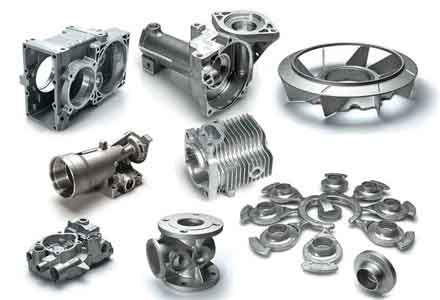
The image above illustrates a high-quality sand casting part produced using the optimized sand spreader. The uniform sand bed and precise compaction contribute to the part’s excellent surface detail and structural integrity, highlighting the practical benefits of this design. Such advancements are essential for industries that rely on sand casting parts for complex geometries and tight tolerances, such as automotive and aerospace sectors. By ensuring consistent sand properties, the optimized spreader supports the production of reliable sand casting parts that meet stringent quality standards.
Beyond density and strength, the optimized sand spreader enhances overall process efficiency. The integration of force sensors and servo motors enables real-time monitoring and control, reducing the need for manual intervention. This automation not only improves repeatability but also allows for data logging and analysis, facilitating continuous improvement in sand casting parts manufacturing. For example, the system can track compaction forces over time and alert operators to deviations, preventing potential defects in sand casting parts. Moreover, the adjustable sand flow mechanism is designed for ease of use, with calibration marks on the threaded rod corresponding to specific gap sizes. This user-friendly feature minimizes training requirements and ensures that operators can quickly adapt to different sand materials, accelerating the production of sand casting parts.
To further validate the design, I conducted stress analysis on key components using finite element methods. The compaction shaft and support structures were modeled under maximum load conditions, with results confirming that stresses remain within safe limits. For instance, the maximum von Mises stress on the shaft was calculated as: $$ \sigma_{vm} = \sqrt{\frac{(\sigma_1 – \sigma_2)^2 + (\sigma_2 – \sigma_3)^2 + (\sigma_3 – \sigma_1)^2}{2}} $$ where \( \sigma_1, \sigma_2, \sigma_3 \) are principal stresses. The analysis showed that \( \sigma_{vm} < \text{yield strength} \), ensuring durability during prolonged operation. Similarly, the vibration from the eccentric mechanism was optimized to prevent resonance and ensure smooth sand flow, contributing to the consistent quality of sand casting parts. These engineering considerations underscore the robustness of the optimized spreader, making it suitable for high-volume production environments where reliability is paramount for sand casting parts.
The economic impact of this optimization is significant. By reducing material waste and improving first-pass yield, the spreader lowers the cost per unit for sand casting parts. Traditional spreaders often require trial-and-error adjustments, leading to scrap and rework. In contrast, the automated system minimizes these losses, enhancing overall profitability. Additionally, the ability to use a single spreader for multiple sand types reduces capital expenditure, as manufacturers no longer need dedicated equipment for each material. This versatility is particularly beneficial for foundries that produce a wide variety of sand casting parts, from small precision components to large industrial molds. The optimized design thus supports sustainable manufacturing by conserving resources and energy, aligning with global trends towards greener production of sand casting parts.
Looking ahead, there are opportunities to further enhance the sand spreader through integration with digital twin technologies and machine learning algorithms. By simulating the sand deposition process in real-time, operators could predict and correct issues before they affect sand casting parts. For example, AI models could analyze sensor data to optimize compaction parameters dynamically, adapting to variations in sand moisture or grain size. Such advancements would push the boundaries of 3D printing for sand casting parts, enabling even greater precision and efficiency. My ongoing research focuses on these areas, with the goal of developing next-generation spreaders that fully automate the quality assurance process for sand casting parts.
In conclusion, the optimization of the sand spreader for 3D printing equipment represents a major step forward in the manufacturing of sand casting parts. By addressing the limitations of fixed sand flow and manual compaction, the new design ensures consistent density, strength, and uniformity across diverse sand materials. The adjustable sand flow mechanism and automated compaction system work in tandem to produce high-quality sand beds, directly improving the reliability and performance of sand casting parts. Experimental results confirm significant improvements in sand density and distribution, with data showing reduced variability and enhanced mechanical properties. This innovation not only boosts production efficiency but also reduces costs and waste, making it a valuable asset for industries reliant on sand casting parts. As 3D printing technology continues to evolve, such optimizations will play a crucial role in advancing the capabilities of sand casting parts production, driving innovation and competitiveness in the global market.
The journey from identifying problems to implementing solutions has been rewarding, and I am confident that this optimized sand spreader will contribute to the widespread adoption of 3D printing for sand casting parts. By sharing these insights, I hope to inspire further research and development in this field, ultimately leading to more sustainable and efficient manufacturing processes for sand casting parts worldwide.