
In the realm of industrial manufacturing, the pursuit of efficiency and cost-effectiveness is paramount. Human Performance Technology (HPT), or performance technology, focuses on optimizing human behavior and system value to achieve high outcomes at low cost, fostering the development of both individuals and systems. Although its theoretical framework continues to evolve without a singular, comprehensive definition, the principles of performance technology have found practical application across diverse sectors. Within the specific domain of sand casting, the design of patterns and tooling equipment presents a significant opportunity for the application of these principles. My extensive research and practical exploration in the design of sand casting pattern tooling have consistently demonstrated that integrating HPT理念 leads to superior process outcomes and enhanced techno-economic benefits. The optimized sand casting parts and tooling developed through this approach have garnered positive feedback from foundries and operators alike. This article aims to consolidate knowledge on optimizing typical components within sand casting pattern tooling, contributing to the advancement of design and manufacturing techniques for the benefit of the industry.
The core application of performance technology theory in the design of sand casting pattern tooling manifests in rational material selection, intelligent structural design, simplified manufacturing processes, and judicious energy consumption. For sand casting parts, especially those produced in large quantities, even minor inefficiencies in tooling design can aggregate into substantial increases in overall production cost. A primary area of focus is the pattern body itself. In sand casting, particularly for high-volume production runs, metal patterns are extensively used. The improper selection of materials or inefficient structural design for these patterns can lead to escalated manufacturing costs, reduced service life, or increased energy consumption during the casting process, all detrimental to the绩效 goals of low cost and high value.
Through my observations in various foundries, I have noted instances where material selection for sand casting parts like cylinder blocks and heads was not aligned with production volume. For example, patterns made from premium die steel (e.g., H13) are economically unjustified for total production quantities below 300,000 cycles, representing a capital investment waste. Conversely, patterns made from copper alloys may wear out prematurely if production exceeds 100,000 cycles, also constituting a wasteful investment. For typical production batches of sand casting parts ranging from 100,000 to 200,000 units, materials like gray cast iron (HT200 or HT250) often present the most绩效-optimal choice. This decision can be guided by a simple cost-per-cycle assessment, a fundamental绩效 metric:
$$C_{cycle} = \frac{C_{material} + C_{manufacturing}}{N_{cycles}}$$
Where \(C_{cycle}\) is the cost allocated per casting cycle, \(C_{material}\) is the material cost of the pattern, \(C_{manufacturing}\) is its manufacturing cost, and \(N_{cycles}\) is the total expected production lifecycle. The绩效 objective is to minimize \(C_{cycle}\) while ensuring pattern integrity throughout \(N_{cycles}\). For sand casting parts requiring complex patterns, structural design is equally critical. Traditional designs often feature excessively thick walls or near-solid sections, as shown in some legacy tooling. This not only consumes more material but also increases the pattern’s mass, leading to higher energy consumption during handling and molding operations in sand casting. An optimized design, informed by performance technology principles, employs strategic ribbing and hollow sections to maintain necessary stiffness and strength while minimizing weight and material use. The reduction in mass directly translates to lower kinetic energy requirements during mechanized molding, aligning with the绩效 goal of reduced energy consumption. The relative stiffness of a ribbed plate structure compared to a solid plate can be approximated for preliminary assessment:
$$ \frac{D_{ribbed}}{D_{solid}} \approx \frac{E \cdot I_{ribbed}}{E \cdot I_{solid}} = \frac{I_{ribbed}}{I_{solid}} $$
where \(D\) is flexural rigidity, \(E\) is Young’s modulus, and \(I\) is the area moment of inertia. For a well-designed ribbed structure for sand casting patterns, \(I_{ribbed}\) can approach \(I_{solid}\) while using a fraction of the material, thus achieving the绩效 aim of “more with less”.
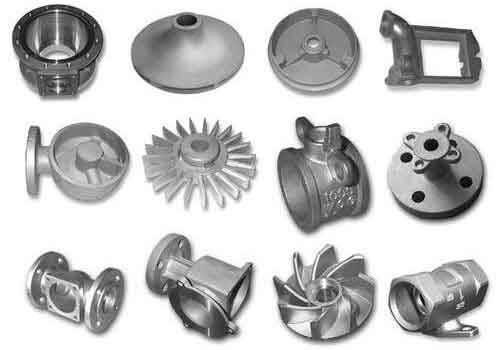
The design of hot box cores, crucial for producing intricate internal geometries in sand casting parts, is another domain where performance technology yields significant improvements. The wall thickness of the hot box body is a critical parameter traditionally chosen from generalized tables, focusing on strength, rigidity, and thermal capacity. However, these guidelines often lack precision, especially when considering the heat source (combustible gas vs. electric). From a绩效 perspective, inappropriate wall thickness leads to poor thermal equilibrium, resulting in unevenly cured cores, reduced sand core quality, lower production efficiency (cycles per hour), and ultimately, poor economic performance. My research, incorporating绩效 theory, suggests that wall thickness should be optimized based on heating method and box size to ensure sufficient thermal mass for temperature stability while minimizing warm-up time and energy use. The following tables summarize optimized wall thickness parameters derived from绩效-focused analysis, considering efficient energy transfer and thermal inertia for consistent production of high-quality sand casting parts.
| Average Envelope Dimension (A+B)/2 (mm) | Recommended Wall Thickness (mm) |
|---|---|
| ≤ 300 | 20 – 25 |
| 300 – 500 | 25 – 30 |
| 500 – 700 | 30 – 40 |
| 700 – 1000 | 40 – 50 |
| > 1000 | 50 – 70 |
| Average Envelope Dimension (A+B)/2 (mm) | Recommended Wall Thickness (mm) |
|---|---|
| ≤ 300 | 45 – 50 |
| 300 – 500 | 50 – 55 |
| 500 – 700 | 55 – 60 |
| 700 – 1000 | 60 – 70 |
| > 1000 | 70 – 90 |
The thermal performance can be related to the heat capacity of the box body. The required thermal mass \( Q \) to maintain a stable temperature during the core-making cycle for sand casting parts can be modeled as:
$$ Q = m \cdot c_p \cdot \Delta T $$
$$ m = \rho \cdot V_{wall} $$
where \( m \) is the mass of the box body, \( c_p \) is its specific heat capacity, \( \Delta T \) is the operating temperature range, \( \rho \) is material density, and \( V_{wall} \) is the volume of the wall structure. The绩效-driven design seeks the minimum \( V_{wall} \) (and thus \( m \)) that provides adequate \( Q \) to ensure process stability for the sand casting parts being produced, avoiding the waste associated with an oversized thermal mass.
Flask boxes represent a quintessential example of箱体类零件 in sand casting tooling with massive用量. Their design profoundly impacts material consumption, energy use, production efficiency, and operator ergonomics. Traditional flask designs often suffer from excessive weight, low specific strength, and poor stiffness-to-weight ratios. For instance, a conventional flask for engine block sand casting parts might weigh 500-550 kg. Applying performance technology principles leads to an optimized design employing box-section frames with strategic reinforcement. This can reduce weight by 20-30% while increasing rigidity, directly reducing the energy required for transportation and handling during the molding of sand casting parts. The specific stiffness, a key绩效 metric, can be expressed as:
$$ \text{Specific Stiffness} = \frac{E}{\rho} $$
For a given material, the structural efficiency is maximized by shaping the material to increase the moment of inertia \(I\) with minimal cross-sectional area \(A\). The ratio \(I/A\) is a useful figure of merit. An optimized flask design achieves a higher \(I/A\) through intelligent cross-sectional geometry, leading to lighter yet stiffer tooling for producing sand casting parts. The reduction in mass per unit of effective molding volume is a direct绩效 indicator. The performance gain \( \eta_{flask} \) in terms of mass efficiency can be defined as:
$$ \eta_{flask} = \left(1 – \frac{m_{opt}}{m_{trad}}\right) \times 100\% $$
where \( m_{opt} \) and \( m_{trad} \) are the masses of the optimized and traditional flasks, respectively. For sand casting parts production, values of \( \eta_{flask} \) between 20% and 30% are achievable, translating to significant long-term savings in energy and reduced fatigue for operators.
Frame-type components, such as base frames for hot/cold boxes, core setting fixture bodies, and floating frames, are another area ripe for绩效 optimization. Traditional designs for these sand casting tooling elements are often characterized by excessive use of material, small access windows complicating assembly and maintenance, and a generally unrefined aesthetic. A绩效-oriented redesign focuses on material efficiency, operational accessibility, and modern manufacturing aesthetics. This involves using fabricated weldments or castings with open, accessible structures, optimized cross-sections, and integrated features that simplify assembly. The material savings can be substantial. The optimization can be assessed by comparing the volume of material used \(V_{material}\) against a functional envelope volume \(V_{envelope}\):
$$ \text{Material Utilization Ratio} = \frac{V_{material}}{V_{envelope}} $$
The绩效 goal is to minimize this ratio while ensuring all functional requirements (load-bearing capacity, fixture points, etc.) for handling sand casting parts are met. Furthermore, the time required for assembly or maintenance \(T_{service}\) is a critical human绩效 factor. An optimized frame with larger openings and logical component layout can significantly reduce \(T_{service}\), which over the tooling’s lifecycle contributes greatly to overall system efficiency in sand casting operations.
Plate-type components, including molding plates, pattern plates, large core box bases, and ejector plates for core boxes, are ubiquitous in sand casting tooling. The conventional approach often yields solid or heavily ribbed plates that are functional but suboptimal from绩效 and ergonomic standpoints. They are typically heavy, difficult to handle, and consume more material than necessary. By applying绩效 technology principles, these plates can be transformed into lightweight, stiff structures using techniques like honeycomb cores, strategic pocketing, and optimized rib networks. This not only saves material and reduces manufacturing costs for the tooling itself but also drastically lowers the energy required for manual or automated handling during the production of sand casting parts. The fundamental mechanics involve maximizing bending stiffness while minimizing mass. For a plate in bending, the central deflection \(\delta\) under a uniform load \(q\) is inversely proportional to its flexural rigidity \(D\):
$$ \delta \propto \frac{q \cdot a^4}{D} $$
$$ D = \frac{E \cdot t^3}{12(1-\nu^2)} \quad \text{(for a solid plate of thickness \(t\))} $$
For a sandwich plate with lightweight core, the effective \(D\) can remain high while the mass is significantly reduced compared to a solid plate. The mass reduction ratio \(R_m\) is a direct绩效 indicator:
$$ R_m = \frac{m_{solid} – m_{optimized}}{m_{solid}} $$
For large plates used in sand casting, \(R_m\) values exceeding 0.4 (40% mass reduction) are attainable without compromising functional stiffness, leading to easier handling and lower inertia forces during rapid cycling equipment used for sand casting parts.
The benefits of performance technology extend beyond these major categories to encompass all elements of sand casting tooling, including shafts, sleeves, pins, and levers. For example, the design of lifting lugs or trunnions can be optimized using finite element analysis (FEA) to ensure adequate safety factors with minimal material, directly impacting the handling safety and efficiency of sand casting parts tooling. The diameter of a pin subjected to shear stress \(\tau\) can be optimized based on the actual load \(F\) and a绩效-based safety factor \(n_{HPT}\) that balances reliability and minimalism:
$$ d_{pin} = \sqrt{\frac{4F}{\pi \cdot \tau_{allowable} \cdot n_{HPT}}} $$
Where \(n_{HPT}\) is determined not just by a generic safety code but by a holistic analysis of failure consequences, maintenance schedules, and lifecycle costs specific to the sand casting process. Furthermore, the surface finish and coating of tooling components can be selected based on绩效 criteria—choosing treatments that maximize wear resistance and minimize friction at the lowest lifecycle cost, thereby extending the tooling life for producing sand casting parts and reducing downtime.
In conclusion, the systematic application of Human Performance Technology principles to the design of sand casting pattern and tooling equipment yields profound and multifaceted benefits. It drives the creation of sand casting parts tooling that is not only functionally reliable but also materially efficient, energy-conscious, ergonomic, and economically superior over its entire lifecycle. The optimization of pattern bodies, hot box walls, flasks, frames, and plates, as detailed, demonstrates tangible improvements in key绩效 metrics: reduced material consumption, lower mass leading to decreased energy demand for handling, enhanced production efficiency through improved thermal management and serviceability, and ultimately, a lower total cost of ownership. This绩效-focused approach fosters a synergistic development where the tooling system supports human operators effectively while delivering exceptional value. As the sand casting industry continues to evolve towards greater automation and sustainability, embedding performance technology theory into the foundational stage of tooling design will be indispensable for maintaining competitiveness and achieving operational excellence in the production of high-quality sand casting parts.