
In the realm of metal casting, sand casting remains one of the most prevalent and versatile methods for producing complex components. From my years of involvement in foundry operations and technical analysis, I have observed that the precision of sand casting parts is a critical determinant of overall product quality, machining efficiency, and cost-effectiveness. The journey toward achieving high-accuracy sand casting parts is intricately linked to the design, manufacture, and management of casting patterns and tooling. This article delves into the multifaceted influence of sand casting patterns on the dimensional and geometric accuracy of sand casting parts, presenting insights and methodologies to enhance precision.
The accuracy of sand casting parts is not merely a superficial attribute; it fundamentally impacts the functional performance, assembly compatibility, and lifecycle of engineered systems. In contemporary manufacturing landscapes, where tolerances are tightening and quality standards are escalating, the role of sand casting patterns becomes paramount. Patterns, including models, core boxes, pattern plates, and flask equipment, serve as the direct physical templates from which sand molds are formed. Consequently, any imperfection or inconsistency in these patterns is propagated into the mold cavities and, ultimately, into the sand casting parts themselves. My analysis suggests that a significant portion of dimensional deviations in sand casting parts can be traced back to pattern-related factors, which encompass design choices, manufacturing tolerances, material selection, and operational handling.
To systematically address this, I will first explore the core factors that compromise the accuracy of sand casting parts due to pattern shortcomings. Following that, I will propose comprehensive strategies and technical parameters aimed at mitigating these issues and elevating the precision of sand casting parts.
The pursuit of accurate sand casting parts is hindered by several interrelated factors rooted in pattern technology. Primarily, the selection of fit tolerances between pattern components, such as alignment pins and bushings, is often haphazard. In many workshops, this selection is based on legacy practices rather than a scientific assessment of the casting process requirements. For instance, excessive clearance between pins and bushings can lead to mold misalignment, resulting in casting defects like mismatches and increased dimensional scatter. Conversely, overly tight fits may impede assembly, causing wear and damage. This variability directly degrades the consistency of sand casting parts.
Secondly, the manufacturing tolerances assigned to patterns and core boxes are frequently inadequate or misapplied. Pattern shops, sometimes detached from the foundry’s specific needs, may employ general machining tolerances that do not align with the precision grade required for the sand casting parts. This disconnect leads to patterns that lack interchangeability and introduce cumulative errors into the molding process. The manufacturing precision of patterns must be commensurate with the target accuracy level of the sand casting parts.
Thirdly, operational practices and pattern management significantly influence outcomes. Patterns are subject to wear, mechanical impact, and environmental degradation during repeated use. Without rigorous inspection and maintenance protocols, worn patterns continue in production, systematically introducing errors into sand casting parts. Moreover, improper handling by operators, such as removing alignment pins before securing molds, can cause immediate and severe inaccuracies.
To quantify some of these relationships, we can consider the fundamental equation for predicting the dimension of a sand casting part based on the pattern dimension, accounting for material shrinkage:
$$ D_c = D_p \times (1 + S) $$
where \( D_c \) is the final dimension of the sand casting part, \( D_p \) is the corresponding dimension on the pattern, and \( S \) is the linear shrinkage allowance (a decimal value). However, the actual deviation \( \Delta D \) from the nominal dimension is a function of multiple error sources:
$$ \Delta D = \sqrt{ (\Delta D_p)^2 + (\Delta D_m)^2 + (\Delta D_p)^2 } $$
where \( \Delta D_p \) is the pattern manufacturing error, \( \Delta D_m \) is the mold-making error (influenced by pattern wear and fit), and \( \Delta D_p \) is the process variation (e.g., due to sand expansion or metal flow). This underscores that pattern precision is a primary contributor to the overall error in sand casting parts.
Enhancing the accuracy of sand casting parts necessitates a holistic approach focused on pattern engineering. The cornerstone lies in the rational selection of fit tolerances for pattern assemblies. Based on my evaluation of various production scales, fit tolerances should be categorized according to the casting method and the required precision grade of the sand casting parts. For high-pressure, high-volume production of precision sand casting parts, tighter fits are essential to maintain mold integrity. For batch or machine molding, moderate fits suffice, while for jobbing or manual work, slightly looser fits are acceptable to facilitate operation without critically compromising the sand casting parts.
The following table summarizes recommended fit tolerance classes for alignment pins and bushings in pattern equipment, tailored to different production scenarios for sand casting parts:
| Production Method & Accuracy Demand | Fit Tolerance Class for Pins/Bushings | Typical Application for Sand Casting Parts |
|---|---|---|
| High-pressure molding, mass production, high precision | H7/g6 or similar tight clearance fit | Automotive components, hydraulic parts |
| Machine molding, batch production, medium precision | H8/f7 or similar medium clearance fit | Pump housings, gear blanks |
| Hand molding, jobbing production, standard precision | H9/e8 or similar liberal clearance fit | Machine tool beds, large frames |
Adhering to such graded tolerance selection ensures that the cumulative play in the molding equipment does not exceed the allowable dimensional band for the sand casting parts.
Equally critical is the specification of manufacturing tolerances for the patterns and core boxes themselves. The permissible deviation in machining the pattern must be a fraction of the total tolerance allocated to the sand casting part. I propose a tiered system where pattern manufacturing tolerances are defined based on the casting’s precision grade and the pattern material. For metal patterns intended for high-accuracy sand casting parts, tighter machining tolerances are mandatory.
Consider the table below, which outlines suggested manufacturing tolerances for metal patterns and core boxes relative to the critical dimensions of sand casting parts:
| Feature Size Range (mm) | Tolerance Grade I: High-Precision Sand Casting Parts (e.g., Iron molds, shell cores) (±mm) | Tolerance Grade II: Medium-Precision Sand Casting Parts (Machine molding) (±mm) | Tolerance Grade III: Standard-Precision Sand Casting Parts (Jobbing work) (±mm) |
|---|---|---|---|
| ≤ 50 | 0.10 | 0.16 | 0.25 |
| > 50 – 120 | 0.12 | 0.19 | 0.30 |
| > 120 – 260 | 0.16 | 0.25 | 0.40 |
| > 260 – 500 | 0.21 | 0.32 | 0.52 |
| > 500 – 800 | 0.28 | 0.44 | 0.69 |
| > 800 – 1250 | 0.35 | 0.54 | 0.89 |
| > 1250 – 2000 | 0.50 | 0.79 | 1.25 |
| > 2000 – 3150 | 0.70 | 1.10 | 1.75 |
These values ensure that the pattern itself does not become a dominant source of variation for the sand casting parts. For core prints (the parts of the pattern that form seats for cores), special attention is needed because they directly affect core positioning and hence the internal geometry of sand casting parts. The tolerances on core prints should be asymmetric, often allowing a positive deviation on the pattern core print and a negative deviation on the core box to ensure a secure fit without binding. A detailed matrix for core print tolerances can be established, contingent on the cross-sectional size of the print and the precision grade of the sand casting parts. For brevity, a generalized formula for the clearance \( C \) between a pattern core print and a core can be expressed as:
$$ C = k \cdot \sqrt[3]{V} $$
where \( V \) is the nominal volume of the core print (in mm³) and \( k \) is an empirical coefficient ranging from 0.05 for high-precision sand casting parts to 0.15 for standard-precision ones. This ensures proper seating without excessive play that could lead to core shift in the sand casting parts.
Beyond design and manufacturing, the sustained accuracy of sand casting parts hinges on disciplined pattern management. A robust system must include periodic inspection schedules using calibrated gauges and CMMs (Coordinate Measuring Machines) to monitor pattern wear. Patterns should be stored in controlled environments to prevent warping or corrosion. Furthermore, operator training is crucial to instill best practices in handling, assembly, and disassembly of pattern equipment. For instance, a rule must be enforced to always secure the mold with clamps before withdrawing alignment pins. Implementing a pattern lifecycle management log helps track usage cycles and schedule refurbishment or replacement before critical tolerances for the sand casting parts are breached.
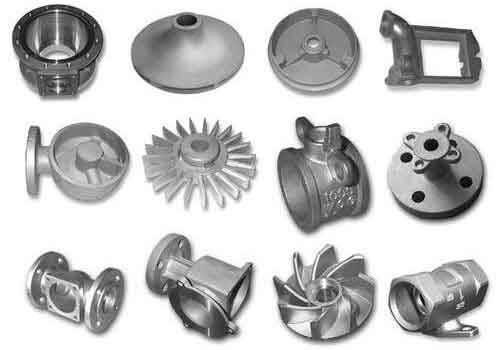
The visual aspect of pattern surfaces also plays a role. A smooth, well-finished pattern surface reduces friction during mold compaction and yields better mold wall definition, which directly translates to improved surface finish and dimensional fidelity of the sand casting parts. The importance of this is evident when considering the replication of fine details in sand casting parts.
In addition to the mechanical aspects, the thermal behavior of patterns, especially in processes like warm-box or shell molding, can affect dimensions. The coefficient of thermal expansion of the pattern material should be considered. For a metal pattern operating at an elevated temperature \( \Delta T \) above ambient, the dimensional change \( \Delta L \) is given by:
$$ \Delta L = L_0 \cdot \alpha \cdot \Delta T $$
where \( L_0 \) is the initial length and \( \alpha \) is the linear thermal expansion coefficient. If unaccounted for, this expansion can alter the mold cavity size, affecting the final dimensions of the sand casting parts. Therefore, for high-precision applications, patterns may need to be sized to compensate for their operating temperature.
Material selection for patterns is another vital consideration. While wood is economical for prototypes or low-volume sand casting parts, it is prone to moisture absorption and wear, leading to rapid degradation of accuracy. For production runs, metal patterns (e.g., aluminum, cast iron, or steel) offer superior durability and dimensional stability. Polymer composites are also gaining traction for their light weight and corrosion resistance. The choice influences not only the lifespan but also the repeatability of producing accurate sand casting parts.
Statistical process control (SPC) can be integrated into pattern-based accuracy management. By measuring critical dimensions on sample sand casting parts over time and analyzing the data, one can detect trends indicating pattern wear or process drift. Control charts can be established with upper and lower control limits derived from the tolerance specifications for the sand casting parts. This proactive approach allows for intervention before non-conforming sand casting parts are produced in quantity.
In conclusion, the path to achieving and maintaining high accuracy in sand casting parts is inextricably linked to the sophistication and rigor applied to sand casting patterns. From the initial design phase—where fit and manufacturing tolerances are scientifically selected—through precise fabrication, and onto diligent lifecycle management, every step contributes to the dimensional outcome. By adopting a systematic framework that includes graded tolerance standards, precision machining protocols, and robust operational disciplines, foundries can significantly enhance the consistency and quality of their sand casting parts. As global competition intensifies and specifications become more stringent, such an investment in pattern technology is not merely beneficial but essential for producing sand casting parts that meet the demands of modern engineering applications. The continuous improvement of pattern accuracy is, therefore, a cornerstone for advancing the overall capability and reputation of the sand casting industry in delivering reliable, high-performance sand casting parts.