
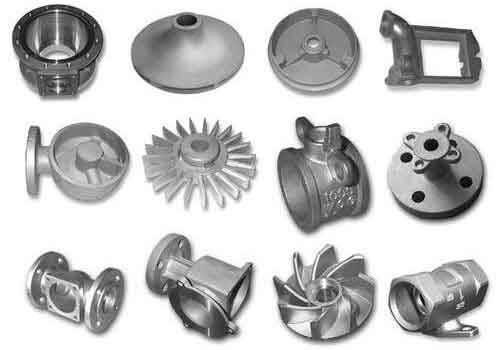
In the manufacturing world, the production of sand casting parts forms the backbone of numerous industries, including automotive, machinery, and heavy equipment. The versatility and cost-effectiveness of sand casting have secured its position, accounting for a dominant share of global casting output. However, the environmental footprint of this process, particularly concerning air quality, is a significant and growing concern. The core of the issue lies in the thermal decomposition of organic additives within the molding sand when contacted by molten metal. This process, occurring under high-temperature, often oxygen-deficient conditions, generates a complex mixture of volatile organic compounds (VOCs) and hazardous air pollutants (HAPs). Traditional methods for evaluating these emissions involve conducting small-scale casting trials in pilot foundries—a process that is time-consuming, expensive, and susceptible to numerous operational variables. This work explores and validates the application of analytical pyrolysis as a rapid, accurate, and reliable laboratory-scale technique to simulate these decomposition reactions, characterize the resulting emissions, and compare the pollution potential of various foundry materials used in making sand casting parts.
The fundamental challenge in controlling air emissions from foundries producing sand casting parts is understanding the source. The green sand molds and chemically bonded cores contain organic materials such as coal dust (seacoal), phenolic resins, and other binders. Upon pouring, the intense heat from the molten metal triggers rapid pyrolysis of these organics. The emitted gas stream is not simple combustion exhaust; it is a pyrolytic cocktail containing light gases, a wide spectrum of VOCs, and numerous HAPs like benzene, toluene, phenol, and polycyclic aromatic hydrocarbons (PAHs). Accurately profiling this emission inventory for different material formulations is crucial for developing cleaner production technologies. Our research demonstrates that analytical pyrolysis coupled with gas chromatography-mass spectrometry (GC-MS) serves as an effective proxy for the actual metal-pouring event, providing critical data to guide material selection and innovation.
The methodology centers on a Curie-point pyrolyzer. Small, representative samples of foundry raw materials—such as bituminous coal dust or sand mixtures containing core binders—are placed within a ferromagnetic foil and inserted into the pyrolyzer. The system then induces an extremely rapid temperature rise (within 0.1-0.2 seconds) to a set final temperature, typically 920°C, mirroring the sudden thermal shock experienced by sand adjacent to the molten metal during the casting of sand casting parts. The pyrolysis event is sustained for a short duration (e.g., 3 seconds). The volatile products generated are instantly swept by a helium carrier gas into a gas chromatograph for separation, followed by detection and identification using a mass spectrometer (MS) and a flame ionization detector (FID). This setup, summarized in the schematic below, allows for the direct, undiluted analysis of both condensable and non-condensable species.
The governing principle for the release of pollutants during the creation of sand casting parts can be described by pyrolytic reaction kinetics. The rate of decomposition of an organic additive and the subsequent emission of a specific pollutant \(i\) can be modeled using an Arrhenius-type equation:
$$ \frac{dC_i}{dt} = A \cdot f(C) \cdot e^{-E_a/(R T(t))} $$
where \( \frac{dC_i}{dt} \) is the rate of formation of pollutant \(i\), \(A\) is the pre-exponential factor, \(f(C)\) is a function of the reactant concentration, \(E_a\) is the apparent activation energy for the formation pathway, \(R\) is the universal gas constant, and \(T(t)\) is the time-dependent temperature profile. Analytical pyrolysis applies a well-defined, reproducible \(T(t)\) profile, allowing for the comparative assessment of different materials’ inherent emission potentials (\(A\), \(E_a\)) without the confounding factors of fluid dynamics, mold geometry, or metal composition present in a real foundry.
The GC-FID chromatograms from the pyrolysis of common materials reveal distinct profiles. Major peaks can be categorized as light hydrocarbons (C1-C5), a broad volatile organic compound (VOC) range (C6-C16), and heavier polycyclic organic matter (POM). A significant portion of the VOC/POM fractions consists of HAPs. The table below summarizes the major HAPs identified and semi-quantified from the pyrolysis of four key material types: conventional bituminous coal dust, a standard phenolic urethane binder, a novel naphthalene-depleted phenolic binder, and a protein-based bio-binder.
| HAP Compound | Coal Dust (Relative Area) | Phenolic Urethane Binder (Relative Area) | Naphthalene-Depleted Binder (Relative Area) | Protein-Based Binder (Relative Area) |
|---|---|---|---|---|
| Benzene | High | Very High | Very High | Medium |
| Toluene | Medium | High | High | Low-Medium |
| Ethylbenzene/Xylenes | Low | Low | Low | Trace |
| Phenol | Low | Very High | Very High | Very Low |
| Cresols (o-, m-, p-) | Trace | High | High | Not Detected |
| Naphthalene | Medium | High | Very Low | Trace |
| Methylnaphthalenes | Low | High | Low | Not Detected |
| Other PAHs (e.g., Anthracene) | Present | Present | Trace | Not Detected |
To validate the analytical pyrolysis technique, its results were rigorously compared against emissions data from controlled pilot-scale foundry tests documented in the literature, where identical binder systems were used to produce sand casting parts. The compositional similarity is striking. Both methods identify the same suite of dominant HAPs: benzene, alkylbenzenes (toluene, xylenes), phenol, cresols, and naphthalenic compounds. The distribution of these major compounds also shows strong correlation. For instance, pyrolysis of the standard phenolic urethane binder yields a profile dominated by phenol, benzene, and cresols, which mirrors the emission fingerprint measured during actual casting trials. This congruence confirms that analytical pyrolysis effectively captures the primary thermal decomposition pathways relevant to the sand casting process.
A key advantage of the pyrolysis technique is its sensitivity and freedom from sampling losses. In actual foundry tests, heavy compounds like PAHs can condense onto particulate matter and be lost from the gaseous sample stream collected for analysis. Analytical pyrolysis transfers all products directly to the GC, providing a more complete picture of the total pollutants generated from the sand casting parts’ mold materials. This is evident when examining the POM fraction. While the absolute amount of POM from a phenolic binder might appear lower in a foundry test due to condensation, pyrolysis shows its significant generation potential. This comprehensive detection is crucial for assessing the full environmental impact.
Beyond qualitative composition, the true utility of analytical pyrolysis lies in its ability to predict relative emission trends. Foundries seeking to improve the environmental profile of their sand casting parts need to know how a new binder will perform compared to the incumbent. Conducting a full foundry trial for every candidate material is impractical. Our work demonstrates that pyrolysis can accurately forecast these trends. Consider the comparison between the standard phenolic urethane binder (Binder A) and its naphthalene-depleted variant (Binder B). The data can be expressed as a relative change factor, \( R_i \), for each pollutant \(i\):
$$ R_i = \frac{E_{i,\text{Binder B}}}{E_{i,\text{Binder A}}} $$
where \(E_i\) represents the emission factor for pollutant \(i\). Analytical pyrolysis correctly predicted that \(R_i\) for naphthalene and methylnaphthalenes would be significantly less than 1 (often below 0.5), indicating a reduction of over 50% in major PAH emissions, while \(R_i\) for benzene and toluene might be around or slightly above 1. This trend was precisely observed in actual casting tests. The pyrolytic screening successfully identified the key environmental trade-off: reduced heavy PAHs at the potential cost of slightly increased light aromatics.
An even more dramatic example is the evaluation of a protein-based bio-binder against the standard phenolic system. The pyrolysis results starkly showed a drastic reduction in nearly all aromatic HAPs. The relative change factors \(R_i\) for compounds like phenol, cresols, and naphthalenes were often below 0.1, suggesting a reduction exceeding 90%. The emission profile shifted towards simpler, more oxygenated breakdown products. Again, this predicted trend of dramatically lower HAP emissions was fully corroborated by pilot foundry tests for sand casting parts. The consistency validates pyrolysis as a powerful screening tool. The quantitative comparison of key pollutant groups between analytical pyrolysis and foundry test trends can be summarized as follows:
| Pollutant Group / Binder Comparison | Trend Predicted by Analytical Pyrolysis | Trend Observed in Actual Casting Tests | Conclusion |
|---|---|---|---|
| PAHs (Naphthalenes) from Naphthalene-Depleted vs. Standard Phenolic | Sharp Decrease (>50%) | Sharp Decrease (>50%) | Excellent Agreement |
| BTEX from Naphthalene-Depleted vs. Standard Phenolic | Slight Increase or Neutral | Slight Increase or Neutral | Excellent Agreement |
| Total Aromatic HAPs from Protein vs. Standard Phenolic | Extreme Decrease (>90%) | Extreme Decrease (>90%) | Excellent Agreement |
| Low MW Carbonyls (e.g., Acetaldehyde) from Protein Binder | Detected | Detected (Primary remaining HAP) | Pyrolysis gave more complete speciation |
The mathematical relationship between the pyrolysis yield \(Y_{pyro,i}\) of a pollutant and its actual casting emission factor \(E_{cast,i}\) can be considered linear for the purpose of comparative ranking, though influenced by a scaling factor \(k\) that accounts for real-world dilution, mold geometry, and metal mass for a specific sand casting parts production run:
$$ E_{cast,i} \approx k \cdot Y_{pyro,i} $$
While the absolute value of \(k\) is complex to determine universally, it remains relatively constant when comparing different binders under identical casting conditions. Therefore, the ratio of pyrolysis yields for two binders is directly proportional to the ratio of their real-world emissions:
$$ \frac{E_{cast,i,\text{Binder 1}}}{E_{cast,i,\text{Binder 2}}} \propto \frac{Y_{pyro,i,\text{Binder 1}}}{Y_{pyro,i,\text{Binder 2}}} $$
This proportionality is the cornerstone of the technique’s predictive power for sand casting applications. It allows researchers and material developers to rapidly rank formulations. For example, if a new bio-resin shows a pyrolysis yield for benzene that is only 20% of a traditional resin’s yield, it can be confidently predicted to reduce benzene emissions in the foundry by approximately 80%, before any metal is ever poured for a sand casting parts trial.
Furthermore, the technique can be used to investigate the emission contribution of individual components in a complex sand mixture. By pyrolyzing coal dust alone, binder-sand samples alone, and then full mixtures, one can apportion pollutants to their source. This is invaluable for targeted pollution prevention. If analysis shows that a particular PAH originates predominantly from the coal dust additive rather than the binder, then efforts to find a coal dust substitute or modifier become the priority for improving the air quality around sand casting parts manufacturing. The kinetics data (\(E_a\)) derived from pyrolysis at multiple temperatures can also inform the thermal stability of additives, suggesting optimal pouring temperatures to minimize decomposition for certain binder systems.
In conclusion, analytical pyrolysis stands as a robust, efficient, and highly informative technique for advancing air pollution control in the sand casting industry. It faithfully simulates the critical thermal decomposition events that occur during the pouring of sand casting parts, generating emission profiles that are compositionally representative of actual foundry conditions. Its greatest strength lies in its comparative accuracy—the ability to reliably predict the relative changes in VOC and HAP emissions when substituting one foundry material for another. This enables a shift from costly, post-hoc foundry testing to proactive, laboratory-driven material development and screening. For manufacturers of sand casting parts, this means a faster, more economical pathway to selecting cleaner binders and additives, directly contributing to reduced environmental compliance burdens and improved workplace air quality. For material scientists, it provides a precise feedback tool to iteratively design and optimize the next generation of sustainable foundry resins, ultimately supporting the production of high-quality sand casting parts with a significantly minimized atmospheric footprint.