
In my research, I explored the microstructure and mechanical properties of ZA53 magnesium alloy produced via sand casting, a common method for manufacturing complex sand casting parts. The motivation stems from the limitations of existing Mg-Al and Mg-Zn-Zr alloy systems, which often exhibit low yield strength or processing challenges. By focusing on the Mg-Zn-Al ternary system, I aimed to develop an alloy suitable for sand casting parts with enhanced performance. This study delves into the phase composition, solid solution treatment effects, and room-temperature mechanical behavior, emphasizing the potential of ZA53 for applications in sand casting parts like automotive components and aerospace structures.
Sand casting is a versatile process for producing sand casting parts, allowing for intricate geometries and cost-effective production. In this work, I utilized sand casting to fabricate ZA53 alloy specimens, with a composition targeting Zn: 4.6–5.5%, Al: 2.6–3.5%, Mn: 0.15–0.25%, Fe: <0.016%, and Mg as the balance. This range was selected to leverage the solid solution strengthening effects of Al and Zn, while maintaining good castability for sand casting parts. The alloy was melted in a resistance crucible furnace under RJ-6 flux protection, using high-purity metals, and poured at 745°C into sand molds to produce tensile and metallographic samples. This approach ensures reproducibility for industrial sand casting parts.
The microstructure of as-cast ZA53 alloy was characterized using optical microscopy, scanning electron microscopy (SEM), energy-dispersive spectroscopy (EDS), and X-ray diffraction (XRD). I found that the sand casting parts primarily consisted of two phases: the δ-Mg matrix phase and the τ [Mg32(Al,Zn)49] compound phase. The τ phase exhibited a semi-continuous network distribution along the grain boundaries of the δ-Mg phase, with minor particulate τ within grains. This morphology is critical for the mechanical properties of sand casting parts, as it influences strength and ductility. Differential scanning calorimetry (DSC) revealed a melting range of 356.80–539.34°C, with the τ phase melting at approximately 356.8°C, guiding subsequent heat treatments.
To quantify the phase composition, EDS analysis provided semi-quantitative data, as summarized in Table 1. This table highlights the elemental distribution in δ-Mg and τ phases, underscoring the role of Al and Zn in phase formation for sand casting parts. The τ phase, rich in Zn and Al, contributes to dispersion strengthening but may embrittle the alloy if not properly controlled through processing.
| Phase | Mg | Zn | Al |
|---|---|---|---|
| δ-Mg Matrix | 97.32 | 1.28 | 1.40 |
| τ Phase (Point a) | 33.56 | 42.64 | 23.80 |
| τ Phase (Point b) | 39.63 | 37.37 | 22.53 |
The room-temperature mechanical properties of as-cast ZA53 alloy were evaluated using tensile testing, with results compared to commercial alloys like AZ81A and ZK51A, commonly used in sand casting parts. As shown in Table 2, ZA53 exhibits comparable tensile strength to AZ81A but superior elongation, indicating a balance suitable for sand casting parts requiring moderate strength and ductility. This makes ZA53 a promising candidate for sand casting parts in structural applications where toughness is prioritized.
| Alloy | Condition | σb (MPa) | σ0.2 (MPa) | δ (%) |
|---|---|---|---|---|
| ZA53 | As-cast (F.S.) | 165 | 93 | 5.8 |
| AZ81A (ZM-5) | As-cast (F.S.) | 160 | 95 | 3.0 |
| ZK51A (ZM-1) | As-cast (F.S.) | 230 | 120 | 11.0 |
Given the strong solid solution strengthening potential in Mg-Zn-Al systems, I conducted solid solution heat treatments to enhance the properties of sand casting parts. The treatments were performed at temperatures of 323°C, 335°C, 343°C, and 350°C, each for 17 hours, followed by quenching in hot water (70–80°C). A step-heating method was employed to prevent overheating, starting at 290°C for 2.5 hours before ramping to the target temperature. The dissolution of the τ phase can be described by a kinetic model, where the fraction dissolved, \( f \), relates to time \( t \) and temperature \( T \) via an Arrhenius equation: $$ f = 1 – \exp\left(-k t^n\right) $$ with $$ k = k_0 \exp\left(-\frac{Q}{RT}\right) $$ Here, \( k_0 \) is a pre-exponential factor, \( Q \) is the activation energy for dissolution, \( R \) is the gas constant, and \( n \) is a time exponent. For sand casting parts, optimizing these parameters is crucial to achieve full solubility without incipient melting.
Microstructural evolution after solid solution treatment is depicted in Figure 5 (referenced from the original study, but not explicitly labeled here). At 323°C, most granular τ phases dissolved, leading to slight improvements in mechanical properties. At 335°C, over 80% of τ phase dissolved, significantly boosting tensile strength and elongation. Complete transformation to a single-phase solid solution occurred at 343°C, resulting in optimal mechanical performance. However, at 350°C, overburning was observed, with coarsened grain boundaries and deteriorated properties, highlighting the narrow processing window for sand casting parts. The mechanical properties post-treatment are summarized in Table 3, demonstrating the efficacy of solid solution hardening for enhancing sand casting parts.
| Solution Temperature (°C) | σb (MPa) | σ0.2 (MPa) | δ (%) |
|---|---|---|---|
| 323 | 169 | 93 | 5.3 |
| 335 | 237 | 91 | 10.4 |
| 343 | 245 | 90 | 12.1 |
| 350 | 66 | – | – |
The strengthening mechanism in sand casting parts can be modeled using the Hall-Petch relationship for grain boundary strengthening and solid solution strengthening contributions. The yield strength \( \sigma_y \) can be expressed as: $$ \sigma_y = \sigma_0 + k_y d^{-1/2} + \Delta\sigma_{ss} $$ where \( \sigma_0 \) is the friction stress, \( k_y \) is the Hall-Petch coefficient, \( d \) is the grain size, and \( \Delta\sigma_{ss} \) is the solid solution strengthening term. For ZA53 alloy, after full solid solution at 343°C, \( \Delta\sigma_{ss} \) dominates due to the dissolution of τ phase, leading to improved tensile strength. Comparing with other alloys, as shown in Table 4, ZA53 in T4 condition offers competitive properties for sand casting parts, with a good balance of strength and ductility.
| Alloy | Condition | σb (MPa) | σ0.2 (MPa) | δ (%) |
|---|---|---|---|---|
| ZA53 | T4 (343°C, 17 h) | 245 | 90 | 12.1 |
| AZ81A (ZM-5) | T4 | 260 | 83 | 15.0 |
| ZK51A (ZM-1) | T1 | 250 | 140 | 8.0 |
Fracture morphology analysis further elucidates the mechanical behavior of sand casting parts. In the as-cast state, ZA53 exhibited a mixed fracture mode, with uneven cleavage and quasi-cleavage facets, indicative of brittle intergranular failure due to τ phase networks. After T4 treatment at 343°C, the fracture transformed to a ductile dimple pattern, correlating with the enhanced elongation and toughness. This shift underscores the importance of microstructure control in sand casting parts to avoid premature failure. The ductile fracture energy \( U_f \) can be approximated as: $$ U_f = \int_0^{\varepsilon_f} \sigma \, d\varepsilon $$ where \( \varepsilon_f \) is the fracture strain and \( \sigma \) is the stress. For sand casting parts, higher \( U_f \) values after solid solution treatment imply better impact resistance and reliability in service.
To expand on the sand casting process, it involves creating molds from silica sand, binders, and additives to shape molten metal into sand casting parts. The cooling rate in sand casting typically ranges from 0.1 to 10°C/s, influencing the solidification microstructure. For ZA53 alloy, the solidification path can be analyzed using the Mg-Zn-Al ternary phase diagram. The liquidus temperature \( T_L \) and solidus temperature \( T_S \) define the freezing range, affecting porosity and shrinkage in sand casting parts. The fraction of solid \( f_s \) during solidification can be estimated using the Scheil equation: $$ f_s = 1 – \left(\frac{T_L – T}{T_L – T_S}\right)^{1/(1-k)} $$ where \( k \) is the partition coefficient. For ZA53, with Zn and Al as solute elements, this model helps predict microsegregation and phase distribution in sand casting parts.
Further experiments could explore aging treatments to precipitate secondary phases for additional strengthening in sand casting parts. The age-hardening response might follow the Avrami equation for phase transformation: $$ f_p = 1 – \exp(-k t^m) $$ where \( f_p \) is the fraction precipitated, and \( m \) is the Avrami exponent. Integrating this with solid solution treatment could optimize the performance of sand casting parts for high-temperature applications. Additionally, corrosion resistance studies are vital for sand casting parts exposed to harsh environments, as Mg alloys are prone to galvanic corrosion. Surface treatments or alloy modifications might enhance durability.
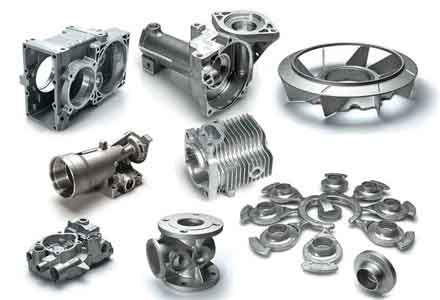
In practical applications, sand casting parts made from ZA53 alloy could be used in automotive engine brackets, aerospace fittings, or industrial machinery components. The design flexibility of sand casting allows for complex geometries, reducing the need for machining. However, quality control is essential to minimize defects like inclusions or gas porosity in sand casting parts. Non-destructive testing methods, such as X-ray radiography, can ensure the integrity of sand casting parts before deployment. Economic factors also play a role; sand casting is cost-effective for low to medium volume production of sand casting parts, making ZA53 a viable option for niche markets.
In conclusion, my investigation demonstrates that ZA53 magnesium alloy produced via sand casting exhibits a microstructure comprising δ-Mg matrix and τ compound phases, with τ forming a semi-continuous network. Solid solution treatment at 335°C for 17 hours significantly improves room-temperature tensile strength and plasticity, while treatment at 343°C for 17 hours results in a single-phase solid solution with optimal mechanical properties: σb = 245 MPa and δ = 12.1%. The fracture morphology transitions from mixed to ductile mode after treatment. These findings highlight the potential of ZA53 for manufacturing high-performance sand casting parts, leveraging solid solution strengthening and microstructural control. Future work should focus on optimizing heat treatment parameters and exploring combined aging processes to further enhance the properties of sand casting parts for diverse engineering applications.