
The advancement of Three-Dimensional Printing (3DP) or Binder Jetting technology represents a pivotal shift in foundry practices, propelling traditional sand casting towards intelligent and green manufacturing paradigms. This novel approach to mold and core making renders the production of high-quality, efficient, low-cost, and environmentally friendly sand casting parts a tangible reality. At the heart of a sand mold 3D printer lies the sand mixer, a critical subsystem whose performance dictates the quality of the bonded sand and, consequently, the integrity of the final molds used to produce sand casting parts. The mixer’s function is to thoroughly blend foundry sand with binder and auxiliary agents through repeated stirring, mixing, kneading, and rolling actions. This process aims to uniformly coat each sand grain with a thin film of binder, creating a homogeneous sand mixture ready for the layering process. In practical applications, occasional inconsistencies in the mixing homogeneity have been observed. This analysis, from my perspective as a process engineer, delves into the factors affecting mixing uniformity, presents experimental validations, and proposes effective countermeasures to ensure the consistent production of superior molds for sand casting parts.
The quality of the initial sand mixture is the foundational step in determining the final properties of sand casting parts. Any deviation here propagates through the entire additive and casting process.
Analysis of Factors Influencing Mixing Non-Uniformity and Its Impact on Mold Quality
Based on system analysis and experimental observations, the non-uniformity of the sand-binder mixture within the mixer correlates with several key factors: the inherent flow characteristics of the sand, the binder-to-sand ratio, the stability of the dynamic dosing of both components, the mixing duration, and the rotational speed of the mixer blades.
Influence of Sand Grain Morphology
The flow rate of sand is a critical parameter. An excessively high flow rate can outpace the response time of the dosing system’s actuators. Commonly used foundry sands include silica sand and ceramic (spherical) sand. Silica sand grains are typically more irregular and angular, while ceramic sand grains are closer to a spherical or elliptical shape. This difference in morphology significantly affects inter-granular friction during discharge.
| Sand Type | Typical Morphology | Relative Flowability | Impact on Dosing Control |
|---|---|---|---|
| Silica Sand | Angular, Irregular | Lower | Easier to control precisely due to slower, more consistent flow. |
| Ceramic Sand | Spherical/Ellipsoidal | Higher | More challenging; fast flow requires faster system response to avoid over-dosing. |
For a fixed target mass, ceramic sand discharges in a shorter time. This reduced time window amplifies the difficulty of achieving precise mass control. Therefore, achieving a uniform mixture is inherently more challenging with high-flowability sands like ceramic sand, potentially leading to inconsistent binder distribution in molds for critical sand casting parts.
The “Material-in-Air” Effect and System Latency
A primary source of dosing inaccuracy is the “material-in-air” effect, compounded by slow sensor response and poor dynamic stability. This effect occurs when the control system commands the discharge valve to close upon reaching the target weight. The delay between issuing the command and the valve fully sealing, combined with the latency in the weight signal itself, allows extra material to fall. This extra material constitutes the “material-in-air,” leading to a final delivered mass that exceeds the setpoint.
The total error ($E_{total}$) from this effect can be conceptualized as:
$$
E_{total} = \dot{m} \cdot (t_{sensor} + t_{actuator})
$$
where $\dot{m}$ is the mass flow rate (kg/s), $t_{sensor}$ is the weight signal response time (s), and $t_{actuator}$ is the valve closing action time (s). Reducing any of these three factors minimizes the error.
Consequences of Non-Uniform Mixing on Mold and Final Part Quality
3DP sand mold building is an additive process where layers of mixed sand are sequentially spread and selectively bonded. If the binder-to-sand ratio fluctuates during this layering, visible color banding can appear in the resulting mold, indicating density and strength variations. More severely, if the ratio deviates beyond a critical window—especially with insufficient binder—the sand layer will not properly harden. This results in a mold with poor surface finish, low tensile strength, and dimensional inaccuracy. Such defective molds directly compromise the quality of the sand casting parts, leading to potential defects like metal penetration, rough surface finish on the cast part, or even mold failure during pouring. The pursuit of high-integrity sand casting parts necessitates absolute control over this initial mixing stage.
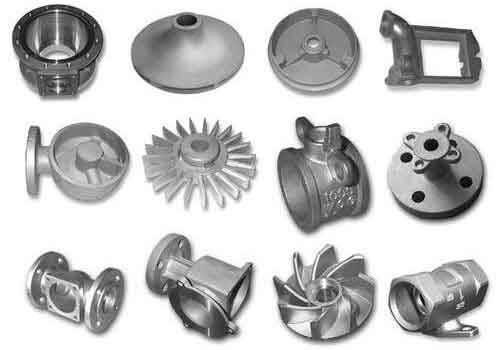
The image above illustrates typical sand casting parts, whose surface finish and dimensional accuracy are profoundly influenced by the quality of the 3D printed sand molds from which they are produced. Uniform sand mixing is paramount to achieving such quality.
Optimization Measures and Result Analysis
To address the root causes of mixing non-uniformity, a two-pronged approach focusing on measurement fidelity and process stability was implemented.
Upgrading to a High-Sensitivity, Fast-Response Weight Transmitter
The sand hopper’s weight is measured by load cells. A weight transmitter conditions this signal and converts it into a current analog signal readable by the Programmable Logic Controller (PLC). The speed at which the transmitter updates its output current in response to a weight change is crucial. A slow transmitter introduces lag ($t_{sensor}$), causing the PLC to command the valve closure late, thereby increasing the “material-in-air” error.
By replacing the standard transmitter with a high-speed, high-sensitivity model, the system’s closed-loop response time was drastically reduced. This minimizes the latency in the control loop, allowing the valve to be commanded closed much closer to the true instant the target weight is reached. The improvement can be modeled as reducing the $t_{sensor}$ term in our earlier error equation.
Reducing the Sand Discharge Flow Rate
To mitigate the challenge posed by high-flowability sands and reduce the $\dot{m}$ term in the error equation, the physical discharge orifice was modified. Reducing the aperture diameter decreases the mass flow rate. This extends the total discharge time for a given batch, providing the control system with a longer time window to react and reducing the absolute mass error incurred during the system’s inherent latency period. For a cylindrical orifice, the mass flow rate is approximately related to the area:
$$
\dot{m} \propto A \cdot v = \pi \left(\frac{d}{2}\right)^2 \cdot v
$$
where $d$ is the orifice diameter. Halving the diameter reduces the area (and thus $\dot{m}$) by a factor of four, significantly dampening the impact of a fixed latency time on the total mass error.
Analysis of Improvement Results
The optimization measures were tested on a production-scale 3DP mixer equipped with two independent sand discharge valves (Valve A and Valve B). Multiple dosing trials were conducted for each valve, targeting a fixed setpoint mass $M$. The absolute error (Actual Mass – $M$) was recorded before and after the implementation of the new transmitter and reduced orifice.
Performance Before Optimization:
| Trial | Valve A Error (kg) | Valve B Error (kg) |
|---|---|---|
| 1 | +1.889 | +1.995 |
| 2 | +1.959 | +2.077 |
| 3 | +2.091 | +1.919 |
| 4 | +1.802 | +2.111 |
| 5 | +2.657 | +1.220 |
| 6 | +2.080 | +1.730 |
| 7 | +2.020 | +1.535 |
The data shows significant positive errors (over-dosing) with high variability. The average error for Valve A was approximately +2.07 kg, and for Valve B +1.80 kg. Expressed as a percentage of a typical batch mass, these errors ranged from approximately 12.2% to 29.9%, which is unacceptable for producing consistent molds for high-tolerance sand casting parts.
Performance After Optimization:
| Trial | Valve A Error (kg) | Valve B Error (kg) |
|---|---|---|
| 1 | -0.233 | +0.072 |
| 2 | -0.368 | +0.030 |
| 3 | -0.111 | +0.033 |
| 4 | -0.275 | +0.013 |
| 5 | +0.098 | -0.004 |
| 6 | +0.111 | +0.023 |
| 7 | -0.346 | +0.042 |
Post-optimization results demonstrate a dramatic improvement. Errors are now centered near zero with minimal scatter. The absolute errors have been reduced to a range between -0.368 kg and +0.111 kg for Valve A, and -0.004 kg to +0.072 kg for Valve B. As a percentage, the dosing error has been contained within a band of 0.98% to 3.68%. This level of precision ensures a highly consistent binder-to-sand ratio for every layer, directly contributing to the production of dimensionally stable and strong sand molds. The reliability of these molds is a direct prerequisite for casting defect-free sand casting parts with excellent surface quality.
Conclusion and Future Perspectives
This investigation into the quantitative sand mixing process within binder jetting additive manufacturing successfully identified and mitigated key factors leading to mixture non-uniformity. The synergistic implementation of a high-speed weight transmitter and a reduced flow discharge orifice addressed the core issues of system latency and flow rate volatility. The result is a robust and precise dosing system capable of maintaining the binder-to-sand ratio within a tight tolerance band of under 4% error. This optimization has fundamentally resolved the sporadic mixing inconsistency, enhancing the stability and repeatability of the sand preparation process. The consistent quality of the input sand mixture is the first and most critical link in the chain leading to superior 3D printed sand molds. By securing this link, the pathway to manufacturing high-performance, complex, and reliable sand casting parts via additive tooling is significantly solidified. Future work may focus on implementing adaptive closed-loop control algorithms that can dynamically compensate for the minimal remaining offset, pushing dosing accuracy even closer to perfect stoichiometry for the binder-sand reaction, further unlocking the potential for premium-grade sand casting parts.