
In my extensive experience within the foundry industry, I have consistently observed that the surface quality of sand casting parts is paramount, not only for aesthetic appeal but also for functional performance and cost-effectiveness. As technology advances, the demand for high-integrity sand casting parts has intensified, pushing foundries to optimize every aspect of the production process. One persistent challenge, especially in high-volume, mixed-production lines, is the control of surface metal penetration—commonly referred to as mechanical sand burning or metal penetration—in sand casting parts produced with high-permeability green molding sand. This defect manifests as a firm adherence of sand grains to the cast surface, compromising the finish and increasing cleaning costs. Through systematic analysis and practical adjustments, I have identified key factors influencing this phenomenon and developed strategies to mitigate it, ensuring that sand casting parts meet stringent quality standards.
The core issue often stems from the inherent nature of mixed-production lines, where sand casting parts with varying sand-to-metal ratios are manufactured concurrently. This leads to a significant influx of core sand into the molding sand system, drastically increasing permeability—sometimes exceeding 150—and creating a propensity for mechanical metal penetration. My approach focuses on understanding the interplay between mold properties, sand composition, and process parameters. Below, I delve into the critical elements that govern the occurrence of metal penetration in sand casting parts, supported by data, tables, and mathematical models to encapsulate the relationships.
First and foremost, the hardness of the mold is a decisive factor in preventing metal penetration in sand casting parts. Mold hardness directly correlates with the compactness of the sand matrix, which resists the penetration of molten metal into intergranular spaces. In my observations, using a standard green sand hardness tester, I measured hardness values across different regions of the mold for sand casting parts. The variability in hardness, often due to the capabilities of the molding equipment, significantly impacts defect occurrence. For instance, in a typical production setup for sand casting parts, the top surfaces might exhibit hardness around 92, while side walls could drop to 80. Through controlled experiments, I established that a difference of just 2 units in mold hardness can lead to noticeable variations in metal penetration on sand casting parts. This relationship can be approximated by a simple formula where the risk of metal penetration, \( R \), is inversely proportional to mold hardness, \( H \):
$$ R \propto \frac{1}{H^n} $$
Here, \( n \) is an exponent typically around 1.5 for iron-based sand casting parts, derived from empirical data. To illustrate, I compiled data from multiple production runs of sand casting parts, showing how incremental increases in mold hardness reduce defect rates. Ensuring uniform and high mold hardness—through regular maintenance of molding machines and optimization of compaction forces—is thus a foundational step in producing flawless sand casting parts.
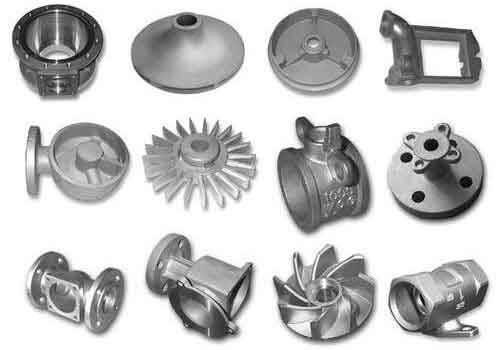
Another pivotal aspect is the clay content within the molding sand, which profoundly affects both the flowability and permeability—key drivers for metal penetration in sand casting parts. Clay content, often expressed as a percentage, influences the sand’s ability to compact and form a dense barrier against molten metal. In high-permeability systems common for sand casting parts, I have found that maintaining clay content at the upper limit of the specified range is beneficial. For example, in a system where the target clay content is 12.5% to 13.5%, operating at 13.0% to 13.5% consistently yields lower permeability and better surface quality for sand casting parts. This is because higher clay content fills voids between sand grains, reducing permeability and inhibiting metal ingress. The relationship between permeability, \( P \), and clay content, \( C \), can be modeled using a logarithmic decay function:
$$ P = P_0 \cdot e^{-kC} $$
where \( P_0 \) is the baseline permeability at zero clay, and \( k \) is a constant dependent on sand composition. To demonstrate, I conducted long-term production trials with sand casting parts, comparing defect rates under different clay content regimes. The results are summarized in Table 1, highlighting how optimized clay control enhances the integrity of sand casting parts.
| Clay Content Range (%) | Average Permeability | Metal Penetration Defect Rate (%) | Observations on Sand Casting Parts |
|---|---|---|---|
| 12.5 – 13.0 | 135 | 8.5 | Moderate surface adhesion on sand casting parts |
| 13.0 – 13.5 | 122 | 3.2 | Significant improvement in surface finish of sand casting parts |
Moving to sand grain characteristics, the distribution and silica content of the sand are critical, especially when core sand contamination is prevalent in systems producing sand casting parts. Grain size distribution directly dictates permeability and surface roughness, while silica content affects grain hardness and breakdown behavior. In my work, I analyzed two types of sand with identical AFS fineness numbers but differing silica contents: Sand A with 98% SiO₂ and Sand B with 94% SiO₂. When used as core sand in production of sand casting parts, Sand B led to a noticeable reduction in system permeability—by approximately 20 units—compared to Sand A. This is attributed to the lower hardness of Sand B grains, which fragment more easily during recycling, shifting the grain distribution toward finer sieves. The change in grain size distribution over cycles can be described by a population balance model:
$$ \frac{dN_i}{dt} = -k_i N_i + \sum_j f_{ij} k_j N_j $$
where \( N_i \) is the number of grains in size class \( i \), \( k_i \) is the breakage rate, and \( f_{ij} \) is the fraction of broken grains from class \( j \) that end up in class \( i \). For sand casting parts, this means that sands with lower SiO₂ tend to self-regulate toward finer distributions, lowering permeability. I validated this through sieve analysis of raw and returned sand, as shown in Table 2, which underscores how sand composition evolves in a system dedicated to sand casting parts.
| Mesh Size | Raw Sand A (%) | Returned Sand A (%) | Raw Sand B (%) | Returned Sand B (%) |
|---|---|---|---|---|
| 40 | 8.8 | 9.0 | 8.9 | 9.8 |
| 50 | 34.6 | 40.4 | 35.2 | 34.4 |
| 70 | 32.0 | 28.5 | 30.6 | 26.6 |
| 100 | 19.9 | 16.5 | 20.0 | 21.2 |
| 140 | 4.3 | 4.5 | 4.9 | 6.9 |
| 200 + Pan | 0.4 | 1.1 | 0.3 | 1.1 |
The data clearly indicates that Sand B, with lower silica, results in increased fines (e.g., 140 mesh) in the returned sand, benefiting the production of sand casting parts by reducing permeability. Consequently, selecting sands with moderate silica content can inherently improve the surface quality of sand casting parts without extensive process changes.
Furthermore, proactive adjustment of the sand system through the addition of fine new sand is an effective strategy to counteract high permeability in sand casting parts. When core sand intrusion coarsens the system, introducing fine-grained new sand—such as 70 or 140 mesh—can rebalance the grain distribution. In my trials, adding 1.5% of 140-mesh new sand continuously over a week reduced the average permeability by about 20 units, leading to a marked decline in metal penetration on sand casting parts. This adjustment aligns with the principle of optimizing the packing density of the sand matrix, which can be quantified using the Fuller-Thompson equation for ideal gradation:
$$ P = 100 \left( \frac{d}{D} \right)^n $$
where \( P \) is the cumulative percentage passing sieve size \( d \), \( D \) is the maximum particle size, and \( n \) is an exponent typically around 0.5 for dense packing. By tailoring new sand additions to approach this ideal curve, the sand system becomes more resistant to metal penetration for sand casting parts. I implemented this in production lines, monitoring the effect on sand casting parts, and found that consistent fine-sand supplementation stabilizes permeability below critical thresholds, ensuring that sand casting parts emerge from cleaning processes with minimal residual sand adhesion.
Beyond these primary factors, other process parameters interplay in the realm of sand casting parts. Pouring temperature, for instance, exerts a significant influence on metal fluidity and penetration potential. In my experience with sand casting parts, maintaining a pouring temperature between 1,380°C and 1,420°C is optimal; higher temperatures increase metal fluidity and penetration risk, while lower temperatures may cause mistruns. The relationship can be expressed through an Arrhenius-type equation where penetration depth, \( D_p \), correlates with temperature, \( T \):
$$ D_p = A \cdot e^{-\frac{E}{RT}} $$
where \( A \) is a pre-exponential factor, \( E \) is the activation energy for metal flow, \( R \) is the gas constant, and \( T \) is absolute temperature. For sand casting parts, controlling temperature within a narrow window is crucial. Additionally, sand-to-metal ratio and the design of gating systems affect the dynamic pressure of molten metal on the mold wall, influencing penetration. In high-pressure zones of sand casting parts, such as near gates or thick sections, local mold hardness and sand density must be enhanced to withstand the metallostatic head. Computational fluid dynamics (CFD) simulations can model this, but in practice, I rely on empirical adjustments based on the geometry of sand casting parts.
The role of additives like coal dust or bentonite also cannot be overlooked in producing sand casting parts. These materials contribute to the formation of a reducing atmosphere and improve sand cohesiveness, respectively. However, in high-permeability systems for sand casting parts, their efficacy may diminish if the sand matrix is too open. Therefore, a holistic approach—balancing additives with the aforementioned factors—is essential. For example, the optimal bentonite content can be derived from a response surface model that minimizes defect rates in sand casting parts, considering interactions with clay content and grain size.
To encapsulate the multifactorial nature of controlling metal penetration, I developed a comprehensive model that integrates key variables for sand casting parts. The probability of metal penetration, \( P_{mp} \), can be estimated as:
$$ P_{mp} = \alpha \cdot \frac{(1/H)^\beta \cdot \Delta p^\gamma}{\kappa \cdot C^\delta \cdot F^\epsilon} $$
where \( H \) is mold hardness, \( \Delta p \) is metallostatic pressure, \( C \) is clay content, \( F \) is a fineness factor based on grain distribution, \( \kappa \) is a constant related to sand type, and \( \alpha, \beta, \gamma, \delta, \epsilon \) are empirical exponents calibrated from production data of sand casting parts. This formula underscores that improving mold hardness and clay content while refining grain distribution can exponentially reduce defects in sand casting parts. In practice, I use such models to set process windows and predict outcomes for new designs of sand casting parts.
Moreover, the economic implications of controlling metal penetration in sand casting parts are substantial. Defective sand casting parts require extensive cleaning, which increases labor, energy, and disposal costs. By implementing the strategies discussed, I have observed reductions in cleaning time by up to 40% for sand casting parts, translating to lower production costs and higher throughput. Additionally, consistent surface quality enhances the marketability of sand casting parts, especially in industries like automotive or machinery where aesthetics matter. Therefore, investing in sand system control is not merely a technical necessity but a business imperative for foundries producing sand casting parts.
In conclusion, the control of metal penetration in sand casting parts manufactured with high-permeability green sand is a complex but manageable challenge. Through my hands-on experience, I emphasize that elevating mold hardness, maintaining clay content at upper limits, selecting sands with appropriate silica levels to influence grain distribution, and judiciously adding fine new sand are proven measures. Each of these factors interlinks to form a robust defense against mechanical sand burning, ensuring that sand casting parts meet high-quality standards. The integration of quantitative models, as shown through tables and formulas, provides a scientific basis for decision-making. As the demand for precision sand casting parts grows, continuous refinement of these practices will remain vital. Ultimately, a proactive, data-driven approach enables the production of sand casting parts with superior surface integrity, reducing waste and enhancing competitiveness in the global foundry landscape.