
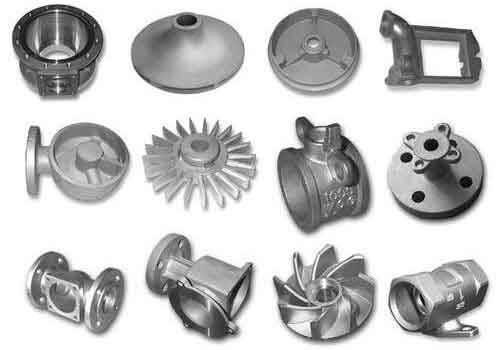
The pursuit of lightweight, high-performance structural materials continues to drive significant research within the automotive, aerospace, and electronics industries. Among the contenders, magnesium alloys stand out due to their exceptional strength-to-weight ratio, offering immense potential for energy savings and reduced emissions. While die-casting dominates the production of many magnesium components, the manufacture of large, complex, and safety-critical sand casting parts remains irreplaceable. This is primarily because the slower cooling rates inherent to sand casting allow for subsequent heat treatment, enabling significant enhancement of mechanical properties through solid solution and precipitation strengthening—a capability often limited in high-pressure die-cast components.
Currently, the application portfolio for magnesium sand casting parts is constrained by the limited number of suitable alloys. The workhorse alloy, AZ91 (Mg-9Al-1Zn), offers an excellent combination of castability, strength, and corrosion resistance at room temperature. However, its mechanical properties degrade rapidly at elevated temperatures above approximately 120°C, primarily due to the instability of the dominant intermetallic phase, Mg17Al12. This phase coarsens and softens with temperature, leading to poor creep resistance and limiting the alloy’s use in under-hood automotive applications or aerospace components experiencing thermal cycles. Therefore, developing new, cost-effective magnesium alloys with improved elevated temperature stability for sand casting parts is a critical research focus.
One promising yet underexplored system is based on Mg-Zn-Al. Shifting the composition to higher zinc and lower aluminum contents than traditional AZ alloys can lead to different, potentially more thermally stable, intermetallic compounds. The key strategy for enhancing high-temperature performance in magnesium alloys involves suppressing low-melting-point phases like Mg17Al12 and introducing elements that form more stable compounds at grain boundaries. Elements such as Calcium (Ca), Strontium (Sr), and Rare Earths (RE) have a higher affinity for aluminum than magnesium does. When added to Mg-Al-based alloys, they can preferentially form stable phases like Al2Ca, effectively “pinning” the grain boundaries and inhibiting grain boundary sliding—a primary deformation mechanism at high temperatures.
This study focuses on investigating the baseline microstructure and properties of a sand-cast Mg-5Zn-3Al-0.2Mn alloy, and subsequently, systematically examines the influence of Ca additions. The objective is to understand how Ca modifies the phase constitution, refines the microstructure, and ultimately impacts both room-temperature and elevated-temperature mechanical properties, aiming to develop guidelines for alloy design for high-performance sand casting parts.
Experimental Methodology for Alloy Preparation and Characterization
The experimental alloys were formulated based on a nominal composition of Mg-5wt%Zn-3wt%Al-0.2wt%Mn, with varying additions of Ca (x = 0, 0.43, 0.95, 1.80 wt%). The melting process was conducted in a 12 kg resistance furnace under the protection of a commercial RJ-3 flux to prevent oxidation and burning of the molten magnesium. High-purity Zn (99.99%), Al (99.99%), and Mg were used as starting materials. Manganese was added in the form of a Mg-Mn master alloy. For the Ca-containing alloys, pure Ca (99.9%) wrapped in aluminum foil was introduced into the melt using a graphite bell. After thorough stirring and refining, the melt was held at 745°C for 8 minutes to allow for homogenization and slag removal before casting.
The molten alloy was poured into green sand molds preheated to approximately 200°C to produce two types of specimens: (i) metallographic samples (ø10 mm × 50 mm) for microstructural analysis, and (ii) standard tensile test bars (ø12 mm × 55 mm gauge section) for mechanical property evaluation. The chemical composition of each melt was verified using Inductively Coupled Plasma Optical Emission Spectroscopy (ICP-OES), with the results confirming the target ranges as shown in Table 1.
| Alloy Designation | Ca | Zn | Al | Mn | Fe | Mg |
|---|---|---|---|---|---|---|
| ZA (Baseline) | – | 5.32 | 3.27 | 0.18 | 0.013 | Bal. |
| ZAC0.4 | 0.43 | 5.20 | 3.23 | 0.24 | 0.015 | Bal. |
| ZAC1.0 | 0.95 | 5.03 | 3.18 | 0.21 | 0.012 | Bal. |
| ZAC1.8 | 1.80 | 5.21 | 3.20 | 0.23 | 0.015 | Bal. |
Microstructural characterization was performed using optical microscopy (OM) and scanning electron microscopy (SEM) equipped with an energy-dispersive X-ray spectroscopy (EDS) system. Phase identification was carried out using X-ray diffraction (XRD) with Cu Kα radiation. Differential scanning calorimetry (DSC) was employed to determine the solidus temperatures and phase transformation points of the different alloys at a heating rate of 10°C/min.
A key advantage of producing sand casting parts is the ability to apply T4 (solution treatment) heat treatment. Based on DSC results, the baseline ZA alloy was solution treated at 343°C for 17 hours, while the Ca-containing alloys (with higher solidus temperatures) were treated at 350°C for 17 hours. A stepped heating protocol (300°C hold for 2.5h, then ramp to target temperature) was used to prevent incipient melting. Samples were quenched directly into hot water (70-80°C) after the solution treatment.
Room-temperature tensile tests were conducted on an electronic universal testing machine, with three specimens tested per condition to obtain average values. High-temperature tensile tests at 250°C were performed on a dedicated testing machine, where specimens were held at the test temperature for 20 minutes prior to loading to ensure thermal equilibrium.
Microstructural Evolution with Calcium Addition
The as-cast microstructure of the baseline Mg-5Zn-3Al-0.2Mn (ZA) alloy consists of primary α-Mg dendrites and a network of intermetallic compounds distributed along the grain boundaries. XRD analysis (Figure 1) confirms the presence of two primary phases: the α-Mg solid solution matrix and the τ phase, identified as Mg32(Al, Zn)49. This τ phase forms a semi-continuous, irregular network surrounding the α-Mg grains. The formation of this phase is expected from the Mg-Zn-Al ternary phase diagram in the high-Zn, low-Al region.
The addition of Ca fundamentally alters the phase constitution. For the ZAC0.4 alloy (0.43% Ca), the τ phase is completely suppressed. EDS analysis of the grain boundary constituents reveals a complex compound containing significant amounts of Mg, Zn, Al, and approximately 4-5 at.% Ca. This phase is denoted as the Mg-Zn-Al-Ca compound phase. DSC indicates its melting point is around 400.3°C, which is notably higher than the melting point of the τ phase observed in the baseline alloy.
With further increases in Ca content to 0.95% and 1.80%, a third phase emerges. Microstructural analysis of the ZAC1.8 alloy reveals three distinct second-phase morphologies: granular, rod-like, and skeletal. EDS and XRD analyses collectively identify these as two different phases. The granular and skeletal phases are the Ca-enriched Mg-Zn-Al-Ca compound (now containing ~8 at.% Ca), while the rod-like phase is identified as Al2Ca. The melting points of these phases, as per DSC, increase progressively with Ca content to 407.8°C for ZAC1.0 and 423.6°C for ZAC1.8. The Al2Ca phase is exceptionally stable, with a melting point above 500°C. The phase evolution can be summarized as follows:
- ZA: α-Mg + τ (Mg32(Al,Zn)49)
- ZAC0.4: α-Mg + Mg-Zn-Al-Ca compound
- ZAC1.0 & ZAC1.8: α-Mg + Mg-Zn-Al-Ca compound + Al2Ca
A significant secondary effect of Ca addition is pronounced grain refinement. The average grain size decreases steadily from 161 µm for the baseline ZA alloy to 106 µm for the ZAC1.8 alloy, as measured by the linear intercept method. This refinement can be explained by the growth restriction theory. The growth restriction factor (GRF), which quantifies a solute’s ability to create constitutional supercooling and hinder grain growth, is given by:
$$ GRF = \sum_i m_i c_{0,i} (k_i – 1) $$
where \( m_i \) is the slope of the liquidus line, \( c_{0,i} \) is the initial solute concentration, and \( k_i \) is the partition coefficient. Calcium has a relatively high \( m(k-1) \) value in magnesium (approximately 11.94), making it a potent grain refiner in Mg-based alloys. The presence of Ca solute at the solid-liquid interface during solidification restricts grain growth and promotes nucleation, leading to the finer microstructure observed—a beneficial trait for the mechanical properties of sand casting parts.
Response to Solution Heat Treatment
Solution treatment is a critical post-casting process for sand casting parts to homogenize the microstructure and dissolve soluble secondary phases into the α-Mg matrix, thereby enhancing strength and ductility. The choice of solution temperature is paramount and must be below the solidus temperature to avoid overheating or burning.
For the baseline ZA alloy, DSC shows a solidus at ~356.8°C. Solution treatment at 343°C for 17 hours successfully dissolves the vast majority of the τ phase into the matrix, resulting in a microstructure comprised almost entirely of supersaturated α-Mg solid solution. However, attempting to treat this alloy at 350°C, merely 7°C below its solidus, leads to localized melting at grain boundary triple points—a clear sign of overheating, which severely degrades properties.
The Ca-modified alloys, with their higher solidus temperatures, were all solution treated at 350°C. The ZAC0.4 alloy showed significant dissolution of the Mg-Zn-Al-Ca compound, leaving only sparse, undissolved particles. For the ZAC1.0 and ZAC1.8 alloys, the fine and granular portions of the Mg-Zn-Al-Ca compound dissolved, while the coarser skeletal morphology became thinner. Crucially, the Al2Ca phase remained entirely undissolved, demonstrating its exceptional thermal stability. This differential solubility is key: the dissolved Ca and (Al,Zn) provide solid solution strengthening, while the remaining thermally stable Al2Ca and modified Mg-Zn-Al-Ca phases act as effective grain boundary pinners at high temperatures.
Mechanical Properties: Room Temperature vs. Elevated Temperature
The mechanical properties of the alloys in both the as-cast (F) and solution-treated (T4) conditions are summarized in Table 2. At room temperature, the addition of Ca in the as-cast state leads to a reduction in both ultimate tensile strength (σb) and elongation to failure (δ), despite the concurrent grain refinement. This apparent paradox can be explained by the changing nature and distribution of the second phases. While grain refinement (Hall-Petch strengthening) generally improves strength, the increasing volume fraction of hard, brittle intermetallics—especially the continuous or nearly continuous networks of the Mg-Zn-Al-Ca and Al2Ca phases—acts as stress concentrators and facilitates crack initiation and propagation. The beneficial effect of finer grains is thus outweighed by the detrimental effect of the brittle phase network, leading to lower strength and significantly reduced ductility. The Hall-Petch relationship is given by:
$$ \sigma_y = \sigma_0 + \frac{k_y}{\sqrt{d}} $$
where \( \sigma_y \) is the yield strength, \( \sigma_0 \) is the lattice friction stress, \( k_y \) is the strengthening coefficient, and \( d \) is the average grain diameter. In these alloys, the constant \( \sigma_0 \) is heavily influenced by the second phase morphology, which becomes less favorable with higher Ca.
Solution treatment markedly improves the room-temperature properties of all alloys by dissolving the soluble phases and breaking up the continuous networks. The baseline ZA (T4) alloy achieves an excellent combination of σb = 245 MPa and δ = 12.1%. The Ca-modified alloys also show improvement in the T4 condition, though their properties remain below those of the baseline due to the persistence of undissolved, brittle phases.
| Alloy | Condition | Room Temperature | 250°C (T4 Condition) | ||
|---|---|---|---|---|---|
| σb (MPa) | δ (%) | σb (MPa) | δ (%) | ||
| ZA | As-Cast (F) | 166 | 5.8 | 68 | 33 |
| ZA | T4 (343°C) | 245 | 12.1 | ||
| ZAC0.4 | As-Cast (F) | 145 | 3.7 | 81 | 14 |
| ZAC0.4 | T4 (350°C) | 169 | 4.2 | ||
| ZAC1.0 | As-Cast (F) | 112 | 2.7 | 85 | 7.5 |
| ZAC1.0 | T4 (350°C) | 128 | 3.1 | ||
| ZAC1.8 | As-Cast (F) | 103 | 2.1 | 90 | 5.0 |
| ZAC1.8 | T4 (350°C) | 120 | 2.0 | ||
The most significant finding pertains to the high-temperature (250°C) tensile properties of the solution-treated alloys. Here, a clear and positive trend emerges with Ca addition. The elevated-temperature strength increases steadily from 68 MPa for the baseline ZA alloy to 90 MPa for the ZAC1.8 alloy. This 32% improvement is critically important for applications requiring sand casting parts to retain load-bearing capacity in warm environments. The enhancement in high-temperature performance is attributed to multiple synergistic mechanisms enabled by Ca addition:
- Grain Boundary Stabilization: The replacement of the lower-melting τ phase with the thermally stable Mg-Zn-Al-Ca compound and Al2Ca phases provides effective pinning points at grain boundaries. This inhibits grain boundary sliding, a primary deformation mechanism during creep and high-temperature tensile deformation.
- Enhanced Matrix Stability: The solidus temperature of the alloy increases with Ca content, meaning the α-Mg matrix itself is stable to a higher temperature, resisting thermally activated processes like dislocation climb.
- Solid Solution Strengthening: The Ca, Zn, and Al atoms dissolved in the α-Mg matrix during solution treatment act as obstacles to dislocation movement, a strengthening effect that persists at elevated temperatures.
The trade-off for this improved high-temperature strength is a reduction in high-temperature ductility, as seen in the decreasing δ values at 250°C. This is typical as stronger, more pinned grain boundaries offer greater resistance to both plastic flow and stress relaxation.
Conclusion and Implications for Sand Casting Applications
This investigation demonstrates a viable pathway for developing magnesium alloys with enhanced high-temperature capabilities suitable for sand casting parts. The baseline Mg-5Zn-3Al-0.2Mn alloy offers an excellent combination of room-temperature strength and ductility after appropriate T4 heat treatment, making it a candidate for structural components operating near room temperature.
The strategic addition of Calcium transforms the alloy system. Ca effectively suppresses the formation of the τ phase, leading to the formation of more thermally stable intermetallics: first a Mg-Zn-Al-Ca compound and, beyond a threshold (~0.9% Ca), the highly stable Al2Ca phase. While these phases can reduce room-temperature ductility in the as-cast state due to their brittle network, proper solution treatment can ameliorate this to some extent. The most profound benefit is the significant and steady improvement in short-term tensile strength at 250°C with increasing Ca content.
For designers and engineers, this implies that the Mg-Zn-Al-Ca system offers a tunable property portfolio. A lower Ca content (e.g., ~0.4%) balanced with optimization of Zn/Al ratios and heat treatment parameters could yield an alloy with good castability, respectable room-temperature properties, and moderate high-temperature improvement. Higher Ca contents (e.g., ~1.0-1.8%) would be targeted specifically for applications where retention of strength at temperatures of 150-250°C is the primary design driver, such as certain transmission cases, engine brackets, or aerospace components, albeit with an understanding of the reduced ductility. The inherent ability of sand casting parts to undergo full T4 heat treatment is essential to unlocking this performance, allowing for the dissolution of soluble phases to strengthen the matrix while leaving the critical thermally stable compounds in place to pin grain boundaries. Future work should focus on optimizing the balance of Zn, Al, and Ca to maximize the volume fraction of beneficial stable phases while minimizing their continuous morphology, and to investigate long-term creep resistance—the true benchmark for elevated-temperature applications.