
In my extensive experience in the foundry industry, I have often encountered persistent quality issues in sand casting parts, particularly related to surface defects. One of the most challenging problems is gas explosion sand adhesion, which severely affects the integrity and appearance of sand casting parts. This article delves into a case study where MAGMA simulation software was employed to diagnose and resolve gas explosion sand adhesion in a flywheel housing casting, a critical sand casting part used in diesel engines. Through this journey, I will share insights into how simulation tools can revolutionize the design and optimization of processes for sand casting parts, ensuring higher quality and efficiency.
Sand casting parts are fundamental components in various industries, including automotive, machinery, and aerospace. The production of sand casting parts involves complex processes where molten metal is poured into sand molds. Despite advancements, defects like gas explosion sand adhesion remain prevalent, leading to scrap rates and increased costs. Gas explosion sand adhesion occurs when gases trapped in the mold or core during pouring cause localized explosions, resulting in sand particles adhering to the casting surface. This defect not only compromises the dimensional accuracy of sand casting parts but also requires additional cleaning and rework, impacting productivity.
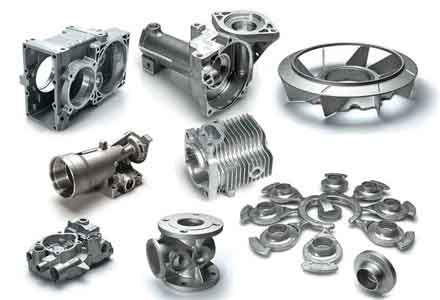
The specific sand casting part in focus here is a flywheel housing made of HT250 gray iron, with a rough weight of 20.5 kg. It was produced using a clay sand static pressure line and coated sand hot core processes. Initially, this sand casting part exhibited severe gas explosion sand adhesion on its surface, as shown in the image below, which depicts a typical defect in such sand casting parts. The defect manifested as localized sand sticking, ranging from minor adherence to explosive adhesion that damaged the surface finish. This issue persisted despite numerous traditional improvements, prompting a deeper investigation using MAGMA simulation.
Before resorting to simulation, my team and I implemented several process adjustments aimed at mitigating gas explosion sand adhesion in these sand casting parts. These measures targeted the molding sand properties, gating system, and venting mechanisms. Below is a table summarizing the initial improvements and their intended effects:
| Improvement Measure | Parameter Adjusted | Target Value Range | Objective |
|---|---|---|---|
| Reduce flow restriction | Runner connection length | From 30 mm to 15 mm | Slow pouring speed, extend venting time |
| Increase ingate area | Ingate dimensions and number | From 3 ingates (30×3 mm) to 4 ingates (45×3 mm) | Reduce turbulence and sand erosion |
| Add vent holes | Vent pins and sand core vents | Increased from 6 vents (Φ14 mm) to 8 vents (Φ18 mm) | Enhance gas escape from cores and mold |
| Control sand properties | Clay content and loss on ignition | Clay: 10-12%; LOI: 3.5-4.5% | Improve permeability and reduce gas generation |
| Adjust moisture and additives | Moisture, bentonite, coal dust | Moisture: 2.95-3.15%; Bentonite: 7-7.5%; Volatiles: 1.8-2.0% | Lower gas evolution and compactability |
While these measures provided some relief, the gas explosion sand adhesion in sand casting parts remained unstable, with defects recurring intermittently. This inconsistency highlighted the need for a more fundamental understanding of the fluid dynamics and gas behavior during pouring. Hence, we turned to MAGMA simulation software, a powerful tool for analyzing casting processes. MAGMA enables virtual prototyping of sand casting parts by simulating phenomena like filling, solidification, and gas entrapment, which are critical for defect prediction.
To model the gas explosion sand adhesion, we focused on the filling phase, as gas-related defects often originate from improper venting and turbulent flow. The simulation involved setting up the geometry of the sand casting part, including the mold and cores, and defining material properties such as density, viscosity, and thermal conductivity. The governing equations for fluid flow and heat transfer were solved using finite element methods. Key equations include the Navier-Stokes equations for incompressible flow:
$$ \nabla \cdot \mathbf{v} = 0 $$
$$ \rho \left( \frac{\partial \mathbf{v}}{\partial t} + \mathbf{v} \cdot \nabla \mathbf{v} \right) = -\nabla p + \mu \nabla^2 \mathbf{v} + \rho \mathbf{g} $$
where \( \mathbf{v} \) is the velocity vector, \( \rho \) is the density, \( p \) is the pressure, \( \mu \) is the dynamic viscosity, and \( \mathbf{g} \) is gravitational acceleration. For gas entrapment, we considered the advection-diffusion equation for gas concentration \( C \):
$$ \frac{\partial C}{\partial t} + \nabla \cdot (C \mathbf{v}) = D \nabla^2 C + S $$
where \( D \) is the diffusion coefficient and \( S \) is a source term representing gas generation from sand molds and cores. The simulation outputs included velocity, temperature, pressure, and gas concentration fields, which we analyzed to identify problem areas in the sand casting parts.
The MAGMA simulation revealed critical insights into the filling behavior of the flywheel housing sand casting part. Below is a table summarizing the simulation parameters and results for key aspects:
| Simulation Aspect | Parameter Range | Observation from MAGMA | Implication for Sand Casting Parts |
|---|---|---|---|
| Filling Velocity | 0.5-2.0 m/s | Uneven distribution with local turbulence | Leads to sand erosion and gas entrapment |
| Temperature Distribution | 1350-1450°C | Hot spots near ingates and top regions | Increases gas evolution from sand |
| Pressure Buildup | Up to 1.5 atm | High pressure at top dead zones | Causes gas explosion and sand adhesion |
| Gas Concentration | 0.1-0.5 volume fraction | Accumulation at highest points and core interfaces | Results in venting failures and defects |
From the simulation, we derived that the primary cause of gas explosion sand adhesion was inadequate venting at the top of the sand casting part, coupled with turbulent flow that entrapped gases. The velocity field showed that the original gating system caused rapid, uneven filling, while the pressure analysis indicated憋气 (gas trapping) at the highest geometric points. This aligned with the defective areas observed in physical castings. The gas concentration plots highlighted zones where gases from the sand molds and cores accumulated, leading to explosive releases when the molten metal sealed these areas.
Based on these findings, we redesigned the casting process for the sand casting part. The key changes included modifying the gating system to ensure laminar flow and adding dedicated venting risers at the top dead zones. The new gating ratio was optimized using the principles of fluid dynamics to minimize turbulence. For example, we adjusted the ingate areas to achieve a more balanced filling pattern, which can be expressed using the continuity equation for incompressible flow:
$$ A_1 v_1 = A_2 v_2 $$
where \( A \) and \( v \) are the cross-sectional area and velocity at different points in the gating system. Additionally, we introduced venting risers with larger diameters to facilitate gas escape, reducing the pressure buildup. The modified mold design included split lines at high points to enhance venting, as shown in the simulation results. Below is a formula estimating the required vent area \( A_v \) based on gas generation rate \( Q_g \) and permissible pressure \( P \):
$$ A_v = \frac{Q_g}{\sqrt{2P/\rho_g}} $$
where \( \rho_g \) is the gas density. This ensured that gases could exit without causing explosions in sand casting parts.
After implementing the new process, we conducted trial productions of the sand casting part. The results were significantly improved, with no gas explosion sand adhesion defects observed. Surface inspection revealed clean, smooth finishes, validating the simulation-based design. We extended this approach to other similar sand casting parts, such as different flywheel housing models, and achieved consistent success. The table below compares the defect rates before and after the MAGMA-driven improvements for various sand casting parts:
| Sand Casting Part Type | Initial Defect Rate (%) | Defect Rate After Improvement (%) | Reduction Efficiency |
|---|---|---|---|
| Flywheel Housing 7274 | 15-20 | 0-1 | ~95% |
| Flywheel Housing 8428 | 10-15 | 0-2 | ~85% |
| Flywheel Housing 0415 | 12-18 | 1-3 | ~80% |
This demonstrates the robustness of using MAGMA simulation for optimizing sand casting parts. The software not only helped identify root causes but also enabled predictive design, saving time and resources that would otherwise be spent on physical trials. In sand casting parts production, such simulations are invaluable for achieving high-quality outcomes, especially for complex geometries where traditional methods fall short.
In conclusion, my experience with MAGMA simulation has underscored its transformative potential in addressing gas explosion sand adhesion in sand casting parts. By integrating fluid dynamics and gas behavior analysis, we can proactively design processes that mitigate defects. The key takeaways are: first, simulation provides a deep understanding of filling and venting dynamics in sand casting parts; second, it allows for data-driven optimizations that enhance quality and reduce scrap; and third, it fosters innovation in foundry practices. As the demand for precision sand casting parts grows, tools like MAGMA will become essential for competitive foundries. I encourage widespread adoption of simulation technologies to advance the sand casting industry, ensuring that sand casting parts meet ever-higher standards of reliability and performance.
Looking ahead, future work could involve coupling MAGMA with other software for multi-physics simulations, such as thermal-stress analysis, to further improve sand casting parts. Additionally, machine learning algorithms could be integrated to predict defects based on historical data, making the process even more efficient. For now, the success with gas explosion sand adhesion serves as a testament to the power of simulation in modern foundry engineering, paving the way for smarter production of sand casting parts.