
As an engineer deeply involved in modern manufacturing methodologies, I have witnessed first-hand the profound shifts occurring within foundational industries. The sand casting sector, long regarded as the backbone of industrial component production, stands at a critical juncture. For decades, the conventional process for creating sand casting parts has followed a well-established but rigid path: pattern and mold creation, core-making, assembly, pouring, and finishing. While effective for mass production, this methodology reveals significant inefficiencies when confronted with today’s market demands for complexity, customization, and speed. The emergence of Additive Manufacturing (AM), specifically binder jetting 3D printing for sand molds and cores, presents not merely an incremental improvement but a fundamental paradigm shift for producing high-value sand casting parts.
The traditional lifecycle for a sand casting part is intrinsically linked to physical tooling. The creation of wood, metal, or plastic patterns is a capital- and time-intensive initial step. For parts with intricate geometries—such as internal channels, undercuts, or fine surface details like cooling fins—the complexity and cost of the required cores and tooling escalate dramatically. This creates a substantial barrier to entry for prototyping and low-volume production, as the upfront tooling cost must be amortized over a small number of castings, rendering individual part prices prohibitively high. Furthermore, this model is inherently inflexible; design modifications necessitate costly and time-consuming tooling rework or replacement. When combined with growing environmental regulations, skilled labor shortages, and the pressing need for faster time-to-market, these challenges compel the industry to seek disruptive solutions.
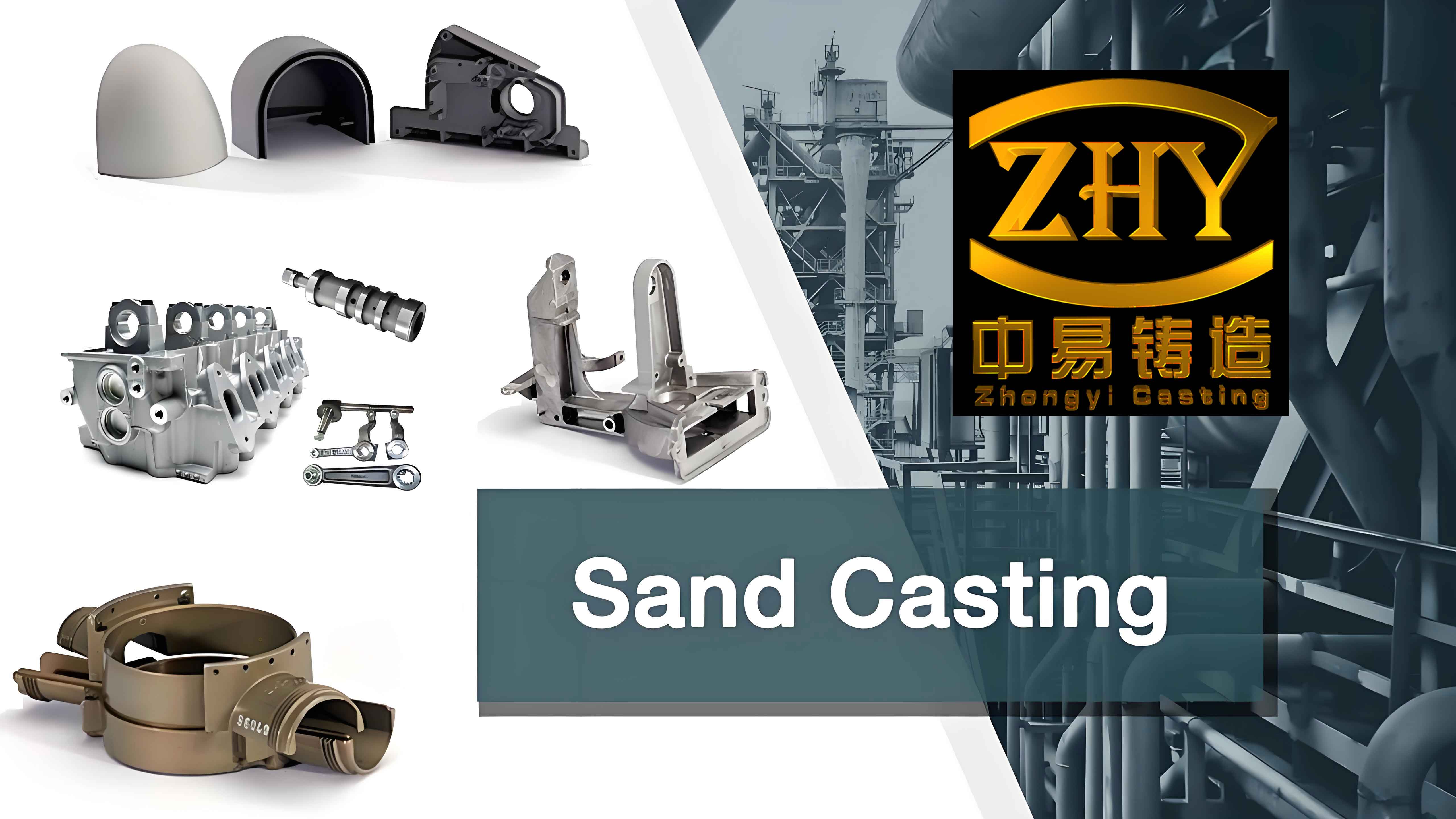
3D printing, or additive manufacturing, sidesteps these foundational constraints by adopting a digital-to-physical approach. In the context of sand casting, the process involves depositing a thin layer of foundry sand and selectively applying a liquid binding agent based on a sliced 3D CAD model of the mold or core. This layer-by-layer fabrication continues until the complete sand form is created, ready for pouring without any need for physical patterns. This core advantage decouples the cost of production from part complexity and enables unprecedented agility in the manufacturing of sand casting parts.
Comparative Analysis: Traditional vs. 3D Printed Sand Molding
The following table encapsulates the fundamental differences between the two methodologies, highlighting the disruptive potential of 3D printing.
| Aspect | Traditional Sand Casting | 3D Printed Sand Molding |
|---|---|---|
| Pattern/Tooling Requirement | Mandatory (Wood, Metal, Plastic). High cost and long lead time. | Eliminated. Direct digital fabrication. |
| Lead Time for First Article | Weeks to months (for tooling). | Days to a week. |
| Economical Batch Size | High-volume production. | Ideal for prototypes, single pieces, and low-volume batches. |
| Design Complexity & Flexibility | Limited by draft angles, core assembly, and parting lines. | Nearly unlimited. Enables organic shapes, consolidated cores, and zero-draft geometries. |
| Design Change Implementation | Very costly and slow (tooling modification). | Fast and inexpensive (CAD file edit). |
| Dimensional Accuracy & Consistency | Subject to pattern wear, core shift, and human skill. | Highly accurate and repeatable, controlled digitally. |
| Material Waste | Moderate (sand is reclaimed, but patterns are single-use). | Minimal (unbound sand is recycled, no pattern waste). |
| Skill Dependency | High (skilled pattern-makers, molders). | Shifts to digital (CAD designers, machine operators). |
| Environmental Footprint | Higher due to pattern manufacturing, binder emissions in core shooting. | Potentially lower (no pattern making, contained binder application). |
Technical Advantages and Quantitative Merits of 3D Sand Printing
The transition to 3D printing for sand casting parts is driven by a suite of technical and economic benefits that can be modeled and quantified.
1. Geometric Freedom and Design Innovation
The most significant advantage is the liberation from draft angles and parting plane constraints. This allows for the design of optimized, topology-optimized structures that were previously impossible or prohibitively expensive to cast. For instance, internal cooling channels in engine blocks or turbine housings can follow ideal conformal paths rather than straight lines. The consolidation of multi-piece core assemblies into a single, printed sand core eliminates core shift and parting line flash, directly improving the dimensional integrity of the final sand casting parts. This geometric freedom can be expressed in terms of achievable complexity index \( C_i \), which traditional methods struggle with beyond a certain threshold:
$$ C_i = \frac{S}{V} \cdot \frac{N_f}{t_{min}} $$
where \( S \) is surface area, \( V \) is volume, \( N_f \) is the number of internal features, and \( t_{min} \) is the minimum achievable wall thickness. 3D printing allows for a higher \( C_i \) value without a corresponding increase in cost.
2. Lead Time Compression and Agile Development
The elimination of tooling compresses the development cycle from months to days. The lead time \( T_{lead} \) for a first-article casting is now primarily a function of print time and post-processing, not external tooling fabrication:
$$ T_{lead} = T_{cad} + T_{slice} + T_{print} + T_{post} $$
Where \( T_{cad} \) is CAD preparation time, \( T_{slice} \) is file processing time, \( T_{print} \) is the machine build time, and \( T_{post} \) is depowdering and curing time. For a typical medium-sized, complex sand casting part, \( T_{lead} \) can be reduced from 8-12 weeks to 5-10 days. This agility is paramount for rapid prototyping and design validation, enabling multiple iterative loops within the time traditionally required for a single tooling try-out.
3. Economic Rationale for Low-Volume Production
The economic model shifts from high fixed costs (tooling) to predominantly variable costs (sand, binder, energy, machine time). The total cost \( C_{total} \) for producing \( n \) castings can be simplified as:
$$ C_{total}(n) = C_{machine} + C_{material} \cdot n + C_{labor} \cdot n $$
For traditional casting: \( C_{machine} \) is very high (tooling cost).
For 3D printed molding: \( C_{machine} \) is the allocated printer depreciation/operation cost, which is independent of \( n \).
This makes 3D printing supremely cost-effective for low values of \( n \), such as prototypes, bespoke components, and high-value, low-volume sand casting parts for aerospace, defense, or specialized machinery.
4. Enhanced Dimensional Accuracy and Reduced Machining Allowance
Digital control ensures exceptional repeatability. The dimensional tolerance achievable with 3D printed sand molds is often in the range of ±0.1% to ±0.3% of the nominal dimension, rivaling or exceeding traditional methods for complex cores. This precision allows designers to specify minimal machining allowances. The traditional allowance \( A_{trad} \) might be 3-5 mm, whereas with 3D printing, it can be reduced to \( A_{AM} \) of 1-2 mm or less on critical surfaces. The material and machining time savings \( S_{save} \) per part can be significant:
$$ S_{save} = \rho \cdot V_{reduced\_allowance} + R_{machine} \cdot t_{reduced\_machining} $$
where \( \rho \) is metal density and \( R_{machine} \) is the machining cost rate.
Application Case Studies: Transforming Specific Sand Casting Parts
Case A: Automotive Steering Gear Housing
This component is a classic example of a complex, safety-critical sand casting part. Traditionally produced via investment casting for its fine detail and integrity, it involved lengthy lead times for wax molds and ceramic shells. Using 3D sand printing, the entire mold assembly—including intricate oil galleries and mounting bosses—is printed as integrated cores. This bypasses weeks of tooling lead time, enabling functional prototypes to be cast and tested within days of the final CAD model. Design modifications to port geometry or wall thickness for stress optimization can be implemented in the next print cycle at negligible incremental cost, dramatically accelerating the R&D phase for these essential automotive sand casting parts.
Case B: High-Performance Engine Cylinder Head
Engine cylinder heads represent the apex of complexity in sand casting parts, featuring combustion chambers, coolant jackets, and camshaft passages. The traditional process relies on expensive, machined metal core boxes. During development, each design iteration requires costly and time-consuming modifications to these metal tools. 3D printing revolutionizes this stage. Each new design iteration can be printed directly. This allows engineers to aggressively explore performance-enhancing geometries—like optimized coolant flow paths or reinforced structural members—without the financial risk associated with hard tooling changes. The ability to quickly produce a one-off, fully representative prototype head for bench testing is invaluable for achieving performance targets faster.
Case C: Electric Motor Housing with Integral Cooling Fins
This application perfectly illustrates the geometric freedom advantage. A typical motor housing requires dozens of thin, deep, closely spaced cooling fins. Traditional molding would demand a complex and fragile pattern with countless loose pieces for each fin, leading to high risk of damage during mold assembly and disassembly. The process is labor-intensive and prone to defects. 3D printing consolidates this entire challenging geometry into a single, monolithic sand mold or core. The fins are printed as perfect negatives in the sand, with uniform thickness and spacing, regardless of their number, depth, or orientation. This not only guarantees the dimensional accuracy of the critical cooling features on the final sand casting part but also eliminates the assembly-related defects, significantly improving yield and part quality.
Technological Considerations and Process Parameters
To effectively implement 3D sand printing for sand casting parts, key process parameters must be understood and optimized. The following table summarizes major parameters and their influence on mold quality and casting outcome.
| Process Parameter | Typical Range/Value | Influence on Mold & Casting |
|---|---|---|
| Layer Thickness (Δz) | 0.2 mm – 0.4 mm | Affects surface finish, build time, and vertical resolution. Finer layers yield smoother surfaces but increase print time \( T_{print} \propto 1/Δz \). |
| Print Head Speed & Binder Saturation | Optimized for sand/binder system | Determines green strength and dimensional accuracy. Under-saturation leads to weak molds; over-saturation causes distortion and poor resolution. |
| Sand Material | Silica, Zircon, Chromite, Ceramic-coated | Dictates refractoriness, thermal conductivity, and surface finish of the sand casting part. Choice depends on alloy poured (e.g., steel, iron, aluminum). |
| Binder System | Furan, Phenolic, Inorganic (silicate) | Affects bench life, gas evolution during pouring, and collapsibility for shakeout. Inorganic binders reduce fume emissions. |
| Post-Processing (Curing) | Thermal or Gas Catalysis | Finalizes mold strength. Temperature profiles \( T(t) \) must be controlled to avoid cracking or under-curing. |
The achievable surface roughness \( R_a \) of the mold cavity, which directly transfers to the cast part, is a critical metric. It is a function of sand grain size \( d_{sand} \) and layer thickness \( Δz \):
$$ R_a \approx k \cdot \sqrt{d_{sand}^2 + (Δz)^2} $$
where \( k \) is a process constant. This highlights the trade-off between resolution (small \( d_{sand} \) and \( Δz \)) and productivity.
Limitations and Future Trajectory
Despite its transformative potential, the technology is not a panacea. Current limitations include:
- Print Speed for High Volumes: While ideal for low-volume sand casting parts, binder jetting build rates are generally not yet competitive with high-pressure molding for mass production of simple parts.
- Mechanical Properties of Printed Sand: The tensile and shear strength of printed sand, though sufficient for most pouring situations, may require careful support design for very large or delicate core features.
- Initial Capital Investment: Industrial-scale 3D sand printers represent a significant capital outlay, though the Total Cost of Ownership (TCO) analysis often favors it when considering the elimination of pattern storage, maintenance, and agile benefits.
The future development path is focused on overcoming these hurdles and expanding capabilities:
- Multi-Material and Graded Sand Printing: Research is ongoing to print molds with spatially varied properties—such as a high-refractoriness facing sand against a highly permeable backing sand—within a single build, optimizing thermal performance for specific zones of a sand casting part.
- Integration of Conformal Cooling Lines: Direct printing of intricate cooling channels within the sand mold itself to control solidification more precisely and reduce cycle times.
- AI-Driven Process Optimization: Using machine learning algorithms to optimize print parameters, predict and compensate for distortion, and automatically generate optimal support structures, further improving the reliability and quality of molds for critical sand casting parts.
Conclusion
The integration of 3D printing technology into the sand casting workflow is far more than a novel prototyping tool; it is a comprehensive strategic enabler for the modern foundry. By decoupling cost from complexity and lead time from tooling, it directly addresses the core challenges of customization, sustainability, and speed that the industry faces. It empowers the production of highly optimized, performance-critical sand casting parts that were previously economically or technically unviable. While not replacing high-volume conventional casting, it establishes a dominant position in the realms of rapid prototyping, tooling-less production for low-volume and high-complexity components, and agile product development. As the technology matures, with increasing print speeds, advanced materials, and smarter software integration, its role in shaping the future of metal component manufacturing—making it more responsive, efficient, and innovative—will only become more pronounced. The fusion of this ancient craft with digital additive manufacturing marks the dawn of a new, highly capable era for producing sand casting parts.