
As the global community grapples with intensifying greenhouse effects and environmental degradation, the imperative for sustainable industrial practices has never been more critical. In response, China has committed to ambitious “dual carbon” goals, aiming for peak carbon emissions by 2030 and carbon neutrality by 2060. This national directive places significant pressure on energy-intensive sectors to innovate and reduce their environmental footprint. Among these, the foundry industry stands out as a cornerstone of economic development, yet it is also a major contributor to energy consumption and carbon emissions. My research focuses on sand casting, a prevalent manufacturing process for producing metal components, and investigates how the choice of energy sources and equipment in the melting stage influences both carbon emissions and production costs. By developing comprehensive models and analyzing various melting furnaces, I aim to provide actionable insights that can drive the foundry industry toward greater sustainability without compromising economic viability.
Sand casting is a versatile method used to create intricate metal parts by pouring molten metal into sand molds. The process typically involves three key stages: molding, melting, and post-processing. Among these, the melting phase is particularly energy-intensive and accounts for a substantial portion of the overall carbon footprint in manufacturing sand casting parts. Traditional methods often rely on equipment like coke-fired cupolas or induction furnaces, which, while effective, have significant environmental drawbacks. For instance, coke-fired cupolas emit large quantities of pollutants, requiring additional treatment systems, whereas induction furnaces, when powered by coal-dominated grids, contribute indirectly to high carbon emissions. In recent years, alternative energy sources such as natural gas have gained traction due to their cleaner combustion profile and cost-effectiveness. This study delves into a comparative analysis of four melting furnaces—induction furnaces, coke-fired cupolas, natural gas-fired cupolas, and natural gas rotary furnaces—to evaluate their performance in terms of carbon emissions and production costs under varying operational conditions.
To systematically assess the environmental and economic impacts, I established two foundational models: a carbon emission model and a cost model. These models are tailored to the specific characteristics of sand casting production processes, encompassing material inputs, energy consumption, and undesired outputs. The carbon emission model is expressed as:
$$ C = \sum_{m=1}^{M} C_m G_m + \sum_{e=1}^{E} C_e G_e + \sum_{u=1}^{U} C_u H_u $$
where \( C \) represents the total carbon emissions, \( C_m \) denotes the quantity of the \( m \)-th material used, \( G_m \) is the carbon emission factor for that material, \( M \) is the number of material types, \( C_e \) signifies the consumption of the \( e \)-th energy source, \( G_e \) is the corresponding carbon emission factor, \( E \) is the number of energy sources, \( C_u \) indicates the amount of the \( u \)-th undesired output, \( H_u \) is its emission factor, and \( U \) is the number of undesired output types. This model allows for a holistic calculation of emissions from all stages of producing sand casting parts.
Complementing this, the cost model accounts for various expenses incurred during manufacturing, including equipment usage, energy, space rental, and labor. The cost model is formulated as:
$$ CL = \left[ \sum_{a=1}^{A} F_a + S_a P \right] + T R (1+w) N + \sum_{c=1}^{C} E_c $$
Here, \( CL \) is the total production cost, \( F_a \) is the usage cost of the \( a \)-th equipment, \( S_a \) is the footprint area of that equipment, \( P \) is the rental fee per unit area, \( A \) is the number of equipment types, \( T \) is the labor working time, \( R \) is the wage rate, \( w \) is the welfare rate (set at 14% as per regulations), \( N \) is the number of workers, \( E_c \) is the total cost of the \( c \)-th energy source, and \( C \) is the number of energy sources. By integrating these models, I can quantitatively compare different melting technologies for sand casting parts.
The core of my analysis revolves around four melting furnaces commonly used in foundries: induction furnaces, coke-fired cupolas, natural gas-fired cupolas, and natural gas rotary furnaces. Each furnace employs distinct energy sources, leading to varied carbon footprints and operational costs. To illustrate, I compiled data on energy consumption per ton of cast iron melted, as shown in Table 1. This table summarizes the amounts of coke, electricity, and natural gas required for each furnace type when producing sand casting parts.
| Melting Furnace | Coke (kg) | Electricity (kWh) | Natural Gas (m³) |
|---|---|---|---|
| Induction Furnace | 0 | 650 | 0 |
| Coke-Fired Cupola | 145 | 0 | 0 |
| Natural Gas-Fired Cupola | 0 | 0 | 65 |
| Natural Gas Rotary Furnace | 0 | 0 | 80 |
Using established carbon emission factors—2.79 kg CO₂ per kg of coke, 2.00 kg CO₂ per m³ of natural gas, and 0.749 kg CO₂ per kWh for grid electricity (assuming coal-based power)—I calculated the carbon emissions per ton of cast iron, as presented in Table 2. These figures highlight the environmental performance of each furnace in the context of manufacturing sand casting parts.
| Melting Furnace | Emissions from Coke (kg CO₂) | Emissions from Electricity (kg CO₂) | Emissions from Natural Gas (kg CO₂) | Total Emissions (kg CO₂) |
|---|---|---|---|---|
| Induction Furnace | 0.00 | 486.85 | 0.00 | 486.85 |
| Coke-Fired Cupola | 404.55 | 0.00 | 0.00 | 404.55 |
| Natural Gas-Fired Cupola | 0.00 | 0.00 | 130.00 | 130.00 |
| Natural Gas Rotary Furnace | 0.00 | 0.00 | 160.00 | 160.00 |
From Table 2, it is evident that natural gas-based furnaces offer substantially lower carbon emissions compared to traditional options. Specifically, the natural gas-fired cupola reduces emissions by approximately 73.29% relative to the induction furnace and by about 67.87% compared to the coke-fired cupola. This underscores the potential of switching to cleaner energy sources for melting metals in sand casting parts production.
Beyond environmental metrics, economic considerations are paramount for foundries seeking to remain competitive. I extended the analysis to evaluate production costs under different melting volumes and product scenarios. For cost calculations, I incorporated current market prices: electricity at 1.08 yuan per kWh, coke at 1.1 yuan per kg, natural gas at 3.25 yuan per m³, and industrial land rental at 100 yuan per square meter. Additionally, equipment footprints and labor requirements were factored in, as summarized in Table 3.
| Melting Furnace | Footprint Area (m²) | Number of Workers |
|---|---|---|
| Induction Furnace | 30 | 2 |
| Coke-Fired Cupola | 70 | 5 |
| Natural Gas-Fired Cupola | 50 | 5 |
| Natural Gas Rotary Furnace | 60 | 4 |
Applying the cost model, I computed the total expenses for melting 80 tons and 120 tons of cast iron using furnaces with hourly capacities of 10 tons (induction, natural gas cupola, natural gas rotary) and 20 tons (coke cupola). The results, depicted in Table 4, reveal that economies of scale reduce per-ton costs as melting volume increases. However, the coke-fired cupola remains the cheapest option, albeit with high environmental externalities. In contrast, the natural gas-fired cupola offers a balanced compromise, cutting costs by an average of 59.26% compared to induction furnaces while slashing emissions significantly.
| Melting Furnace | Cost for 80 Tons (yuan/ton) | Cost for 120 Tons (yuan/ton) |
|---|---|---|
| Induction Furnace | 747.00 | 615.00 |
| Coke-Fired Cupola | 253.25 | 224.08 |
| Natural Gas-Fired Cupola | 286.25 | 265.41 |
| Natural Gas Rotary Furnace | 345.00 | 320.00 |
To further contextualize the analysis, I examined a practical scenario where a foundry produces three types of cylinder heads—A, B, and C—common sand casting parts in automotive applications. Each part requires different amounts of cast iron: 50 kg for type A, 100 kg for type B, and 200 kg for type C. With a fixed melting batch of 10,000 kg, this translates to 200 pieces of type A, 100 pieces of type B, or 50 pieces of type C. The pouring time for each part is influenced by its weight and wall thickness, calculated using the formula:
$$ t = B \delta P G^n $$
where \( t \) is the pouring time in seconds, \( \delta \) is the average wall thickness (10 mm for all parts), \( G \) is the weight of the casting in kg, and \( B \), \( P \), and \( n \) are coefficients set at 2.00, 0.33, and 0.33, respectively. This yields pouring times of 16 seconds for type A, 20 seconds for type B, and 25 seconds for type C. Incorporating these variables into the carbon emission and cost models allows for a detailed comparison across furnace types, as shown in Table 5 and Table 6.
| Melting Furnace | Emissions for Type A (kg CO₂) | Emissions for Type B (kg CO₂) | Emissions for Type C (kg CO₂) |
|---|---|---|---|
| Induction Furnace | 97,370 | 48,685 | 24,342.5 |
| Coke-Fired Cupola | 80,910 | 40,455 | 20,227.5 |
| Natural Gas-Fired Cupola | 26,000 | 13,000 | 6,500 |
| Natural Gas Rotary Furnace | 32,000 | 16,000 | 8,000 |
The emissions data consistently show that natural gas-based furnaces outperform others, with reductions exceeding 70% compared to induction furnaces. This trend holds regardless of the sand casting parts being produced, reinforcing their environmental superiority.
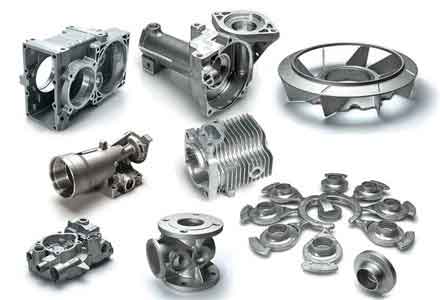
Cost-wise, the production expenses per piece vary based on part complexity and furnace type. Table 6 breaks down these costs, highlighting that while coke-fired cupolas are economically attractive, natural gas alternatives provide a viable low-carbon solution without excessive cost premiums. For instance, producing a type A cylinder head with a natural gas-fired cupola costs 15.29 yuan, compared to 36.99 yuan for an induction furnace—a saving of over 58%. Similar savings are observed for larger sand casting parts, making a compelling case for adoption.
| Melting Furnace | Cost per Type A Part (yuan) | Cost per Type B Part (yuan) | Cost per Type C Part (yuan) |
|---|---|---|---|
| Induction Furnace | 36.99 | 71.76 | 141.76 |
| Coke-Fired Cupola | 12.66 | 22.41 | 40.46 |
| Natural Gas-Fired Cupola | 15.29 | 25.03 | 45.62 |
| Natural Gas Rotary Furnace | 17.25 | 32.00 | 64.00 |
Synthesizing these findings, it becomes clear that the choice of melting furnace profoundly impacts both the sustainability and profitability of sand casting operations. Induction furnaces, though widely used, incur high carbon emissions when reliant on fossil fuel-based electricity, and their operational costs are substantial. Coke-fired cupolas, while cost-effective, generate significant pollutants and are increasingly phased out due to environmental regulations. In contrast, natural gas-fired cupolas and natural gas rotary furnaces emerge as promising alternatives, offering dramatic reductions in carbon emissions—up to 73.29% lower than induction furnaces—along with cost savings of approximately 59.26% on average. These advantages are consistent across varying melting volumes and product types, from small cylinder heads to larger sand casting parts.
The implications extend beyond immediate operational benefits. By adopting cleaner technologies like natural gas-based melting, foundries can align with global sustainability goals, reduce regulatory risks, and enhance their market appeal to environmentally conscious clients. Moreover, the integration of carbon emission and cost models provides a robust framework for decision-making, enabling managers to quantify trade-offs and optimize processes for specific sand casting parts. Future research could explore additional factors, such as the use of renewable energy sources (e.g., biomass or solar-powered furnaces) or advanced materials to further minimize the environmental footprint of sand casting parts production.
In conclusion, this study underscores the critical role of energy source selection in the foundry industry’s transition toward sustainability. Through detailed modeling and analysis, I demonstrate that natural gas-fired cupolas represent a balanced solution, significantly lowering carbon emissions while maintaining economic competitiveness. As the demand for sand casting parts continues to grow in sectors like automotive, aerospace, and machinery, embracing such low-carbon technologies will be essential for achieving long-term ecological and economic resilience. By leveraging these insights, foundries can not only contribute to national carbon reduction targets but also secure a proactive stance in the evolving industrial landscape, ensuring that the production of sand casting parts remains viable and responsible for generations to come.