
As a researcher focused on environmental control in manufacturing, I have conducted an in-depth study on water pollution within China’s sand casting industry. Sand casting is a fundamental method for producing metal parts, accounting for approximately 90% of all castings globally, and it is crucial for manufacturing various sand casting parts used in automotive, machinery, and construction sectors. However, the production processes generate significant wastewater, which poses environmental challenges. This article presents a comprehensive analysis based on field investigations, aiming to elucidate the current state of water pollution and propose mitigation strategies. The findings are derived from systematic sampling and laboratory analyses, with an emphasis on data visualization through tables and mathematical models to enhance understanding.
The sand casting process involves multiple stages, including molding, melting, pouring, cleaning, and heat treatment, each potentially contributing to wastewater generation. Specifically, wastewater arises from cooling systems, cleaning operations, heat treatment units, lost wax precision casting, and wet reclamation of sodium silicate-bonded sand. In this study, I classified wastewater into five categories: melting department wastewater, cleaning department wastewater, heat treatment department wastewater, lost wax precision casting wastewater, and sodium silicate sand wet reclamation wastewater. To capture representative data, I visited seven foundries (labeled A to G) employing different casting methods, such as sodium silicate sand casting (with CO2 hardening or ester hardening), resin sand casting, green sand casting, and lost wax precision casting. Sampling points were strategically selected at each process unit to ensure comprehensive coverage.
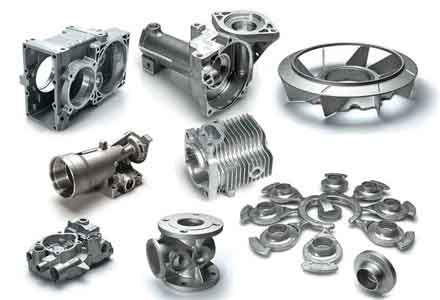
Water quality parameters were measured following standard methods, including pH, suspended solids (SS), turbidity, chemical oxygen demand (COD), total phosphorus (TP), ammonia nitrogen (NH₄⁺-N), total nitrogen (TN), and total chromium (Cr). The results were compared against national standards, such as the “Integrated Wastewater Discharge Standard” (GB 8978-1996) and the “Discharge Standard of Pollutants for Municipal Wastewater Treatment Plants” (GB 18918-2002), to assess compliance. The data revealed significant variations in pollutant concentrations across different processes, highlighting areas of concern for the industry. For instance, wastewater from lost wax casting exhibited extremely high ammonia levels, while cooling waters showed occasional pH and COD exceedances. The production of sand casting parts often involves wet sand reclamation, which generates alkaline wastewater with high SS and TP, particularly in ester-hardened systems where COD can be elevated.
To quantify the pollution levels, I compiled the wastewater quality data from various departments into a detailed table. This table summarizes key parameters, their ranges, averages, and regulatory limits, providing a clear overview of the environmental impact. The data underscores the need for targeted treatment approaches, especially for high-strength wastewater streams.
| Process Department | Sample Point | pH | SS (mg/L) | Turbidity (NTU) | COD (mg/L) | TP (mg/L) | NH₄⁺-N (mg/L) | TN (mg/L) | Total Cr (mg/L) |
|---|---|---|---|---|---|---|---|---|---|
| Melting Department | Cupola Cooling Water (F) | 8.45 | 0 | 1 | 15 | 0.02 | 0.39 | 1.30 | <0.01 |
| Electric Furnace Cooling Water (B Old) | 9.02 | 0 | 1 | 97 | <0.01 | 0.03 | 1.81 | <0.01 | |
| Electric Furnace Cooling Water (G) | 8.06 | 2 | 6 | 50 | 0.04 | 1.39 | 2.21 | <0.01 | |
| Wet Dust Removal Water (F) | 7.04 | 0 | 2 | 20 | <0.01 | 0.15 | 1.26 | <0.01 | |
| Heat Treatment Department | Cooling Water (G) | 8.92 | 0 | 2 | 12 | 0.04 | 1.76 | 8.55 | <0.01 |
| Cooling Water (B Old) | 9.82 | 0 | 3 | <10 | 0.01 | 0.10 | 1.12 | <0.01 | |
| Cooling Water (D) | 8.87 | 0 | 27 | 36 | 0.05 | 0.58 | 2.44 | <0.01 | |
| Lost Wax Precision Casting | Ammonium Chloride Hardening (G) | 7.80 | 32 | 71 | N/A | 0.25 | 37,008 | N/A | <0.01 |
| Dewaxing Process (G) | 9.23 | 1,400 | 3,800 | N/A | 0.85 | 2,773 | 8,052 | 0.018 | |
| Wax Regeneration (G) | 9.20 | 2 | 5 | <10 | 0.35 | 5.79 | 11,069 | <0.01 | |
| Sodium Silicate Sand Wet Reclamation | CO2 Hardening (A) | 11.34 | 1,200 | 3,300 | 60 | 3.81 | 3.35 | 5.55 | <0.01 |
| Ester Hardening (C) | 10.39 | 550 | 1,450 | 10,703 | 0.63 | 4.62 | 6.26 | 0.083 | |
| Ester Hardening (D) | 10.52 | 1,350 | 2,940 | 503 | 5.24 | 4.59 | 4.72 | 0.03 |
The data from Table 1 indicates that cooling waters from melting and heat treatment departments generally meet standards, except for occasional pH and COD exceedances. For example, electric furnace cooling water in some foundries had a pH up to 9.82 and COD up to 97 mg/L, which may require neutralization before discharge. The mathematical relationship for pH adjustment can be expressed using the acid-base titration formula: $$ \text{Amount of Acid} = V \times (10^{-\text{pH}_{\text{initial}}} – 10^{-\text{pH}_{\text{target}}}) \times M $$ where \( V \) is the wastewater volume, \( \text{pH}_{\text{initial}} \) is the initial pH, \( \text{pH}_{\text{target}} \) is the desired pH (e.g., 7), and \( M \) is the molarity of the acid. This is crucial for treating cooling water used in producing sand casting parts, as improper pH can affect metal integrity and environmental compliance.
In contrast, lost wax precision casting wastewater exhibited severe pollution, with ammonia nitrogen concentrations as high as 37,008 mg/L. This exceeds the standard limit of 5 mg/L by over 7,000 times, equivalent to the daily ammonia discharge from a city of 300,000 people. The high ammonia levels arise from the use of ammonium chloride and calcium chloride in hardening and dewaxing processes. Treating such wastewater requires multi-stage approaches. One effective method is steam stripping, where ammonia is removed via mass transfer. The removal efficiency can be modeled as: $$ \text{NH}_3 \text{ Removal} = 1 – \exp\left(-\frac{K_L a \cdot V}{Q}\right) $$ Here, \( K_L a \) is the overall mass transfer coefficient, \( V \) is the reactor volume, and \( Q \) is the flow rate. Additionally, chemical precipitation using magnesium ammonium phosphate (MAP) can be applied, with the reaction: $$ \text{Mg}^{2+} + \text{NH}_4^+ + \text{PO}_4^{3-} \rightarrow \text{MgNH}_4\text{PO}_4 \downarrow $$ This method reduces ammonia to acceptable levels, but its feasibility for sand casting parts production needs further study due to high chemical costs and sludge generation.
Another significant source of pollution is wastewater from wet reclamation of sodium silicate sand, commonly used in manufacturing sand casting parts. This wastewater is highly alkaline, with average pH of 11.01, SS of 984 mg/L, and TP of 3.26 mg/L. Notably, ester-hardened systems produce wastewater with COD up to 10,703 mg/L, while CO2-hardened systems have lower COD around 60 mg/L. The difference stems from organic esters contributing to biodegradability. To treat this, a combination of acid neutralization and coagulation-sedimentation is recommended. The coagulation process can be described by the Smoluchowski equation for particle aggregation: $$ \frac{dN}{dt} = -K \cdot N^2 $$ where \( N \) is particle concentration and \( K \) is the aggregation kernel. In practice, adding acids like sulfuric acid reduces pH, followed by coagulants (e.g., polyaluminum chloride, PAC) and flocculants (e.g., polyacrylamide, PAM) to remove SS and TP. For high COD wastewater, biochemical treatment may be necessary, involving aerobic and anaerobic processes. The COD removal in a bioreactor can be expressed as: $$ \text{COD}_{\text{removed}} = \frac{\mu_{\text{max}} \cdot X \cdot S}{K_s + S} $$ where \( \mu_{\text{max}} \) is maximum specific growth rate, \( X \) is biomass concentration, \( S \) is substrate concentration, and \( K_s \) is half-saturation constant. This is essential for sustainable production of sand casting parts, as untreated wastewater can impair water reuse and product quality.
During the investigation, I observed that some foundries had installed wastewater treatment facilities for sodium silicate sand reclamation. However, their effectiveness varied. For instance, one foundry used PAC and PAM in a coagulation-sedimentation unit, achieving significant reductions in SS and TP, but COD removal was limited. Another foundry employed a similar system with poor performance due to inadequate mixing and retention time. To evaluate treatment efficiency, I calculated removal rates using the formula: $$ \text{Removal Rate} = \frac{C_0 – C_e}{C_0} \times 100\% $$ where \( C_0 \) is initial concentration and \( C_e \) is effluent concentration. The results are summarized in Table 2, which compares wastewater quality before and after treatment in three foundries (B, C, D). This highlights the importance of optimizing design parameters, such as hydraulic retention time and coagulant dosage, to improve outcomes for sand casting parts manufacturing.
| Foundry | Sample Type | pH | SS (mg/L) | Turbidity (NTU) | COD (mg/L) | TP (mg/L) | NH₄⁺-N (mg/L) | TN (mg/L) | Total Cr (mg/L) |
|---|---|---|---|---|---|---|---|---|---|
| B (CO2 Hardening) | Raw Wastewater | 11.34 | 1,200 | 3,300 | 60 | 3.81 | 3.35 | 5.55 | <0.01 |
| Treated Wastewater | 11.36 | 900 | 2,400 | 79 | 4.13 | 3.04 | 4.30 | <0.01 | |
| C (Ester Hardening) | Raw Wastewater | 10.39 | 550 | 1,450 | 10,703 | 0.63 | 4.62 | 6.26 | 0.083 |
| Treated Wastewater | 10.22 | 290 | 800 | 9,626 | 0.66 | 3.63 | 7.26 | 0.048 | |
| D (Ester Hardening) | Raw Wastewater | 10.52 | 1,350 | 2,940 | 503 | 5.24 | 4.59 | 4.72 | 0.03 |
| Treated Wastewater | 8.25 | 31 | 82 | 388 | 0.96 | 2.94 | 3.59 | <0.01 |
From Table 2, it is evident that Foundry D’s treatment system achieved high removal efficiencies for SS (97.7%), turbidity (97.2%), and TP (81.7%), but COD removal was only 22.9%. This underscores the challenge of degrading organic pollutants from ester-hardened sand used in sand casting parts production. To address this, I propose integrating biological treatment, such as a sequencing batch reactor (SBR), which alternates aerobic and anaerobic phases to degrade complex organics. The kinetic model for SBR can be represented as: $$ \frac{dS}{dt} = -q_{\text{max}} \cdot X \cdot \frac{S}{K_s + S} $$ where \( q_{\text{max}} \) is maximum substrate utilization rate. Additionally, advanced oxidation processes (AOPs) like Fenton’s reagent could be explored, with the reaction: $$ \text{Fe}^{2+} + \text{H}_2\text{O}_2 \rightarrow \text{Fe}^{3+} + \text{OH}^- + \cdot\text{OH} $$ The hydroxyl radicals oxidize organic compounds, reducing COD. However, cost-benefit analysis is needed for industrial application.
Furthermore, the study revealed that total chromium concentrations in all wastewater samples were below 0.1 mg/L, complying with standards. This is encouraging, as chromium is a toxic heavy metal often associated with metal casting. Nonetheless, continuous monitoring is advised, especially when producing sand casting parts with alloy additives. The overall pollution load from the sand casting industry can be estimated using the formula: $$ L = \sum_{i=1}^{n} C_i \cdot Q_i $$ where \( L \) is total load (kg/day), \( C_i \) is pollutant concentration in stream \( i \), and \( Q_i \) is flow rate. For instance, if a foundry discharges 100 m³/day of wastewater with average COD of 500 mg/L, the daily COD load is 50 kg. This highlights the need for water recycling to minimize discharge. Many foundries rely on simple sedimentation ponds, but these are inefficient for removing dissolved pollutants. Implementing closed-loop systems for cooling water and sand reclamation can reduce freshwater consumption and wastewater generation, benefiting both the environment and operational costs for sand casting parts manufacturers.
In conclusion, this investigation provides a detailed assessment of water pollution in China’s sand casting industry. Key findings include: (1) Lost wax precision casting wastewater has extremely high ammonia and nitrogen levels, requiring advanced treatment; (2) Cooling waters occasionally exceed pH and COD limits, necessitating periodic adjustment; (3) Sodium silicate sand wet reclamation wastewater is highly alkaline with elevated SS, TP, and COD, especially in ester-hardened processes; (4) Existing treatment facilities show variable effectiveness, with room for improvement through optimized design and biochemical integration. To promote sustainable development, I recommend banning highly polluting processes like ammonium chloride-based lost wax casting and enforcing stricter regulations. Additionally, research should focus on developing cost-effective treatment technologies tailored to sand casting parts production, such as membrane bioreactors or electrocoagulation. By addressing these challenges, the industry can reduce its environmental footprint while maintaining the quality and efficiency needed for global competitiveness. Future studies could explore lifecycle assessments of sand casting parts to quantify water pollution impacts across the supply chain, fostering a circular economy approach.