
In the production of medium to large-sized resin-bonded sand cast steel parts, one of the most persistent and critical defects is veining, more commonly referred to as metal penetration or burn-on. This defect manifests as a layer of fused sand and metal oxides adhering tenaciously to the casting surface, which necessitates costly and labor-intensive cleaning operations, often impacting dimensional accuracy and surface finish of the final sand casting parts. Based on extensive practical experience and analysis, the primary influencing factors for this defect are identified as the strength of the resin sand, the performance of the mold coating, and the pouring temperature. This article delves into the mechanisms behind veining and outlines comprehensive strategies for its mitigation.
The phenomenon of veining in sand casting parts is not a simple occurrence but rather the combined result of thermal, mechanical, and chemical interactions at the interface between the molten metal and the mold. Fundamentally, it is a process of mass transfer and penetration. Veining can be broadly classified into two types: mechanical penetration and chemical sintering, though in practice, they often occur simultaneously, exacerbating the defect.
1. Mechanisms of Veining Defects
1.1 Mechanical Penetration (Mechanical Veining)
Mechanical penetration occurs when molten metal, under pressure, infiltrates the interstitial pores between sand grains in the mold surface. Upon solidification, the metal mechanically anchors the sand grains to the surface of the sand casting parts. The severity of this defect increases with greater depth and volume of metal penetration. The propensity for mechanical veining is governed by a balance of forces: a driving force promoting metal ingress and a resisting force opposing it.
If the molten metal does not wet the mold material, the pressure $P$ required for infiltration is given by:
$$P = \frac{2\sigma \cos\theta}{r}$$
Where:
$\sigma$ is the surface tension of the molten metal,
$\theta$ is the contact angle (wetting angle) between the liquid metal and the mold material,
$r$ is the effective radius of the pore channels between sand grains.
This equation highlights that smaller pore radii ($r$) and poor wetting (large $\theta$, $\cos\theta < 1$) increase the resistance to penetration. Conversely, factors that increase the driving pressure $P$ or improve wetting (small $\theta$, $\cos\theta \to 1$) promote veining.
1.2 Driving Forces for Metal Penetration
The primary driving forces are the dynamic and static pressure heads of the molten metal. Consequently, the lower sections of tall castings are more prone to mechanical veining. However, the penetration depth is not solely proportional to metallostatic pressure, as the infiltrating metal loses heat and eventually solidifies, halting its flow. Key factors amplifying the driving effect include:
- High Pouring Temperature: Extends the fluidity duration of the metal.
- Thick Casting Sections & Poor Mold Conductivity: Resin sand molds have excellent thermal insulation properties, which slows cooling, maintaining metal fluidity longer and allowing deeper penetration.
- Localized Hot Spots: Areas such as thermal junctions, deep pockets, or completely surrounded cores are heated to higher temperatures for longer periods, significantly aggravating mechanical veining in these regions of the sand casting parts.
1.3 Resisting Forces and Chemical Veining
The main resisting forces are the frictional resistance within the mold pores and the back-pressure from gases evolving from the mold. Pore size, dictated by sand grain distribution, mold compaction, and interfacial reactions during pouring, is critical. Finer, well-packed sands offer greater resistance.
Chemical veining involves a series of high-temperature reactions. The steel surface oxidizes, forming iron oxide (FeO, melting point ~1370°C), which readily wets silica (SiO₂) sand. These components react to form low-melting-point fayalite (iron silicate, Fe₂SiO₄, melting point ~1205°C). The presence of alkali oxides (e.g., from certain additives or contaminants) can form even lower-melting-point ternary silicates, with some systems showing melting points below 500°C.
$$2FeO_{(l)} + SiO_{2(s)} \rightarrow Fe_2SiO_{4(l)}$$
This liquid slag, having good fluidity and wettability, can penetrate deeper into the mold, further reacting and enlarging pore channels. It ultimately forms a sintered layer that bonds the sand to the casting. If this layer adheres strongly, chemical veining results; if it forms a friable, easily removable layer, it can act as a barrier against more severe adhesion.
2. Primary Measures to Prevent Veining
Controlling veining in resin sand sand casting parts requires a multi-faceted approach targeting the mold system’s inherent resistance.
2.1 Optimizing Base Sand and Mold Composition
The selection and conditioning of the base sand are fundamental. Key strategies include:
- Grain Size Distribution: Utilizing multi-screened (e.g., four-screen) sand blends to achieve a dense packing structure minimizes interstitial pore size, directly increasing resistance to metal penetration according to the pressure equation where $r$ is reduced.
- High-Refractoriness Facing Sands: For critical surfaces, using premium sands like chromite (40-70 mesh) provides a high-melting-point thermal barrier.
- Use of Recycled Sand: Repeatedly reclaimed sand exhibits better thermal stability and more rounded grain shape, which can improve packing and reduce veining tendency.
- Optimal Resin and Catalyst Ratio: The strength of the cured sand matrix is crucial. The catalyst (hardener) addition is critical, not simply a fixed percentage of the resin. There exists an optimal catalyst percentage based on sand weight. The table below summarizes the effect of catalyst dosage on tensile strength for a typical furan resin system, demonstrating that excess catalyst can be as detrimental as insufficient catalyst.
| Resin Addition (%) | Very Low Catalyst (<0.3%) | Optimal Catalyst (~0.35-0.45%) | Excessive Catalyst (>0.6%) | Observations |
|---|---|---|---|---|
| 1.0 – 1.2 | Very slow cure, low final strength | Peak strength achieved | Rapid cure, brittle matrix, low final strength | Peak strength occurs at a catalyst level independent of resin amount. |
This underscores the practice of specifying catalyst as a percentage of sand weight rather than resin weight. Proper ramming to achieve high and uniform mold/core compactness is equally vital to minimize surface porosity.
2.2 Application of High-Performance Mold Coatings
The use of an effective mold coating is arguably the most direct and powerful method to prevent veining in sand casting parts. Coatings serve to seal surface pores, present a refractory barrier, and prevent direct chemical interaction between metal and sand.
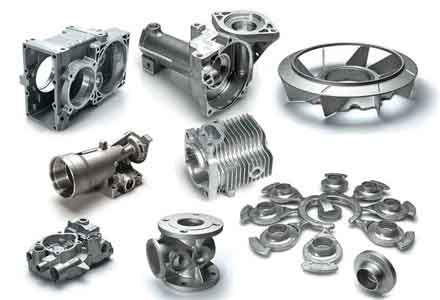
Coatings are typically classified as water-based or alcohol-based (spirit-based). An optimal coating for steel sand casting parts should possess:
- High refractoriness of the filler material (e.g., zircon, chromite, alumina).
- Good adhesion and dry strength.
- Thermal expansion compatible with the sand substrate to avoid cracking.
- Excellent suspension stability and thixotropy for easy application.
- Low volatile content at pouring temperatures.
- High resistance to metal erosion and penetration.
A highly effective application technique involves a combined base-coat and top-coat strategy:
- Base Coat: Apply a relatively dilute alcohol-based zircon coating with good penetrability. This seeps into the mold surface (approximately 1.5 mm), filling subsurface pores and creating a strong mechanical bond.
- Top Coat(s): Apply two to three layers of a standard-consistency high-refractory coating (e.g., zircon or alumina). This builds a total coating thickness of 2-3 mm. Application should involve cross-brushing (brushing in perpendicular directions) and extra layers (3-4) in corners and complex geometries where veining risk is highest.
This multi-layer approach drastically reduces the probability of both mechanical and chemical veining.
3. Control of Pouring Temperature
Pouring temperature is a critical process parameter with a direct and significant impact on veining. While adequate temperature is necessary to avoid defects like cold shuts and mistruns, excessive superheat dramatically increases the veining tendency in resin sand sand casting parts.
The high heat from the metal decomposes and pyrolyzes the organic resin binder, rapidly degrading the sand’s strength at the interface. Simultaneously, the fluidity and fluid lifetime of the metal are extended, allowing it to penetrate more deeply into the weakened sand matrix. For furan resin-bonded sands, a typical guideline is to use the lowest possible pouring temperature consistent with sound casting filling.
For instance, while green sand molds for similar steel castings might be poured at 1560-1580°C, the insulating nature of resin sand often allows for a significant reduction. Controlled trials have demonstrated that lowering the pouring temperature to the range of 1550-1570°C can markedly reduce the incidence and severity of veining without introducing filling-related defects. The optimal temperature must be determined based on the specific casting geometry, weight, section thickness, and steel grade.
4. Summary and Integrated Control Strategy
The mechanism of veining in resin sand sand casting parts is complex, typically involving a synergistic combination of mechanical and chemical factors. Its effective control is not achieved through a single measure but via an integrated system approach. The following table summarizes the key control factors and their primary mode of action:
| Control Factor | Specific Action | Primary Mechanism of Action | Key Parameter/Goal |
|---|---|---|---|
| Base Sand & Mold | Use multi-screened sand; Apply chromite facing sand; Optimize resin/catalyst; Maximize compaction. | Minimizes pore size ($\downarrow r$); Increases refractoriness; Ensures high hot strength; Reduces surface porosity. | Tight AFS distribution; Catalyst at ~0.4% of sand wt.; High, uniform hardness. |
| Mold Coating | Apply penetrative base coat + refractory top coats; Ensure adequate thickness. | Seals surface pores physically; Provides inert thermal barrier; Prevents metal/sand contact. | Total coating thickness 2-3 mm; Use high-refractoriness fillers (ZrSiO₄, Al₂O₃). |
| Process Control | Minimize pouring temperature; Optimize gating for low turbulence. | Reduces metal fluidity duration; Lessens thermal degradation of binder. | Pour at lowest temp for sound filling (e.g., 1550-1570°C for many steels). |
In conclusion, by rigorously implementing these interconnected practices—selecting and preparing sand to minimize pores, applying a robust multi-layer coating system, and carefully controlling the pouring temperature—foundries can successfully mitigate the pervasive challenge of veining. This leads to the production of cleaner sand casting parts with significantly reduced cleaning costs, improved surface quality, and enhanced dimensional consistency. Continuous monitoring and adaptation of these parameters for specific casting configurations remain essential for ongoing process optimization.