
In my extensive experience within the foundry industry, I have come to recognize the sand-to-metal ratio (S/M ratio) as one of the most critical parameters influencing both the economic viability and technical quality of sand casting operations. The S/M ratio, defined as the total mass of molding sand used per mold divided by the mass of the final casting, serves as a key performance indicator. With the escalating costs of raw materials, especially resin binders and catalysts, and the concurrent pressure to reduce the price of finished sand casting parts, systematically lowering this ratio has become paramount for maintaining competitiveness. This article delves deep into the multifaceted impact of the S/M ratio, outlines robust management strategies, and provides a comprehensive methodological framework for its reduction, supported by practical formulas, design standards, and operational protocols. The insights shared here are drawn from years of hands-on application and continuous improvement in producing large, complex sand casting parts.
The fundamental formula for the sand-to-metal ratio is straightforward:
$$ SMR = \frac{M_s}{M_c} $$
where \( SMR \) is the sand-to-metal ratio, \( M_s \) is the total mass of molding sand used for a single mold (including cores), and \( M_c \) is the mass of the cast metal part produced from that mold. This simple ratio belies a complex interplay of factors affecting the entire production chain for sand casting parts.
The implications of a high S/M ratio are profound and span cost, quality, and operational efficiency. Firstly, from a financial perspective, molding sand, particularly the chemically bonded resin sand systems prevalent today, represents a significant recurring expense. The cost of the sand mixture (\(C_s\)) per mold can be broken down as:
$$ C_s = M_s \times (P_r + P_c + P_b) $$
where \( P_r \) is the unit price of reclaimed or new base sand, \( P_c \) is the unit price of the resin binder, and \( P_b \) is the unit price of the catalyst. Given that \( P_c \) and \( P_b \) are typically the most expensive components, any reduction in \( M_s \) directly and proportionally reduces the consumption of these costly additives. For instance, consider an annual production volume (\(Q\)) of 10,000 tonnes of sand casting parts. If the average S/M ratio is reduced from 6 to 5, the sand savings (\(\Delta M_s\)) per tonne of casting is 1 tonne. With a typical resin sand cost (\(C_{rs}\)) of, say, $50 per tonne (covering sand, resin, and catalyst), the annual cost saving (\(\Delta C\)) can be calculated as:
$$ \Delta C = Q \times \Delta (SMR) \times C_{rs} = 10,000 \, \text{t} \times (6-5) \times 50 \, \text{\$/t} = \$500,000 $$
This substantial figure highlights the direct cost incentive for minimizing the S/M ratio in the manufacture of sand casting parts.
Secondly, the S/M ratio critically influences the properties of reclaimed sand, which is reused in subsequent cycles. A key metric is the Loss on Ignition (LOI) of the reclaimed sand, which measures the amount of residual combustible materials (decomposed resin films). A higher S/M ratio often correlates with a higher LOI because the relative amount of new sand added per cycle to maintain system balance is lower, leading to a buildup of residual coatings. This relationship can be approximated as:
$$ LOI_{new} \propto \frac{LOI_{cycle} \times (M_s – M_{makeup})}{M_s} $$
where \( LOI_{cycle} \) is the LOI contributed per cycle and \( M_{makeup} \) is the mass of new sand added. High LOI leads to increased gas generation during pouring, raising the propensity for gas-related defects like blowholes and pinholes in the final sand casting parts. Therefore, lowering the S/M ratio helps control LOI, enhancing the internal quality of the castings.
Thirdly, the thermal dynamics of the sand system are affected. The S/M ratio directly impacts the average temperature of returned sand. A lower ratio means less sand mass is available to absorb and dissipate the heat from the solidified casting. Consequently, the average temperature of the returned sand (\(T_{rs}\)) increases. This can be modeled conceptually, though the exact relationship depends on casting weight, cooling time, and sand system design. In cooler climates, a warmer sand pile can be beneficial, reducing energy needed for heating sand to the optimal mixing temperature range of 20–30°C. However, in warmer conditions or high-production settings, it necessitates investment in sand cooling systems to prevent premature curing of resin during mixing, which would detrimentally affect mold strength and the quality of sand casting parts.
| Impact Area | Effect of High S/M Ratio | Effect of Low S/M Ratio | Key Metric/Formula |
|---|---|---|---|
| Production Cost | High consumption of resin/catalyst, high sand cost per casting. | Reduced material cost, significant annual savings. | $$ \Delta C = Q \times \Delta (SMR) \times C_{rs} $$ |
| Sand Reclamation (LOI) | Increased LOI, higher gas evolution, more casting defects. | Lower LOI, improved casting internal quality. | |
| Sand System Temperature | Lower average return sand temperature. | Higher average return sand temperature; may require cooling. | |
| Environmental Footprint | Higher sand waste volume, greater energy for sand handling. | Reduced waste, lower energy consumption per casting. |
Effective daily management of the S/M ratio is as crucial as its initial design. In my practice, I advocate for a data-driven, product-category-specific approach. The first step is to establish realistic S/M ratio targets for different families of sand casting parts based on their geometric complexity, weight, and production history. These targets should be more ambitious than current averages to drive improvement. For example, one might set targets such as SMR ≤ 4.0 for large cylinder parts, SMR ≤ 8.5 for ring-shaped parts, and SMR ≤ 5.5 for valve bodies. These targets form the basis for process control and employee incentives.
The second step is meticulous tracking. For every mold produced, the actual mass of resin sand used (\(M_{s,actual}\)) and the final casting weight (\(M_c\)) must be recorded. The actual SMR is calculated and compared against the design or target value (\(SMR_{target}\)). The deviation (\(\delta\)) is:
$$ \delta = SMR_{actual} – SMR_{target} $$
Regular statistical analysis of \(\delta\) across all sand casting parts identifies outliers—jobs where the ratio was significantly higher than planned. These cases trigger root-cause investigations. Was the excess due to overly conservative design, operational deviation from the design (e.g., using more sand than specified), or unexpected geometric factors? Quantifying performance and linking it to operational KPIs or continuous improvement programs is essential to sustain focus on S/M ratio reduction across the organization.
The most substantial gains in reducing the S/M ratio come from innovative yet practical tooling design and disciplined foundry floor practices. The core principle is to replace volume that would otherwise be filled with expensive resin-bonded sand with inert, low-cost materials or void spaces, while strictly maintaining the minimum required sand thickness (often called “sand backing” or “sand cover”) for mold strength and safety.
The minimum sand thickness (\(t_{min}\)) is a critical design constraint. It depends on the metallostatic pressure from the molten metal, which is a function of casting height (\(h\)) and metal density (\(\rho_m\)). A simplified rule-of-thumb for large steel sand casting parts is:
$$ t_{min} \geq 150 \, \text{mm for mold walls} $$
$$ t_{min} \geq 200 \, \text{mm for gating system areas} $$
These values ensure the mold can withstand the pressure without buckling or erosion, preventing run-outs and ensuring the integrity of the sand casting parts.
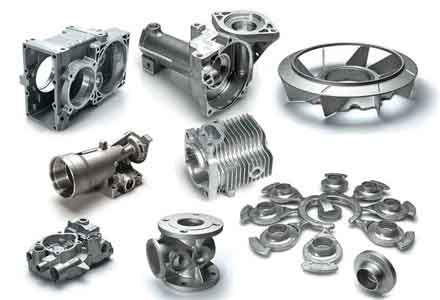
Tooling design must prioritize operability, safety, reusability, and modularity. Permanent or semi-permanent tooling made from steel plates and sections can be assembled inside the molding flask to occupy space, thereby reducing the volume to be filled with resin sand. These tools should be designed as a kit of parts—like an erector set—that can be configured for different sand casting parts. Key design principles include: integration with the flask for easy pre-assembly, use of standard connectable modules (L-shaped, N-shaped, angle segments), and features for secure attachment to flask walls or core frames to prevent movement during sand ramming. The following table summarizes tooling strategies for common categories of sand casting parts.
| Product Category (Sand Casting Parts) | Typical Characteristics | Primary Tooling Strategy | Tooling Description & Assembly |
|---|---|---|---|
| Large Cylinders & Valve Bodies | Semi-cylindrical, heavy sections, large mass. | Peripheral Single-Side Tooling | Assemble L-shaped and N-shaped steel modules along the flask’s inner walls, connected via bolts, creating a cavity that is later filled with dry sand or left as a void. |
| Rings & Rotary Bodies | Large envelope, thin walls, low weight relative to size. | Internal Core Substitution & External Corner Plates | Place large, reusable polygonal or cylindrical steel shells in the central cavity. Use standard “corner saver” plates on the outer periphery of the flask to reduce sand volume in corners. |
| Complex Structural Parts | Irregular shape, multiple pockets, varying thickness. | Modular Block System | Use an inventory of standardized, reusable steel-framed boxes or blocks of various sizes. These are positioned and bolted together in areas of deep sand backing. |
The volume of resin sand saved (\(V_{save}\)) by employing such tooling can be estimated if the tooling’s enclosed volume (\(V_{tool}\)) is known. Assuming the density of compacted resin sand is \(\rho_s\), the mass saving is:
$$ M_{save} = V_{tool} \times \rho_s $$
This directly reduces the S/M ratio for that particular sand casting part. For a ring-shaped part with a large central hole, placing a cylindrical tool of radius \(r_t\) and height \(h_t\) saves:
$$ V_{tool} = \pi r_t^2 h_t $$
This represents a significant saving, given that ring-type sand casting parts historically have the highest S/M ratios.
Beyond engineered tooling, savvy operational methods on the foundry floor yield further reductions. These methods leverage waste material and simple techniques to displace resin sand.
1. Filling with Dry Sand Lumps: This is the most common and immediate technique. During shakeout, some large, coherent lumps of sand that have not fully disintegrated are recovered. These dry, unbonded lumps are strategically placed in regions of the mold or core where sand backing thickness exceeds the minimum requirement. They are packed in randomly, acting as a bulk filler. Care must be taken to ensure they are surrounded by a continuous shell of proper resin-bonded sand at least \(t_{min}\) thick to maintain structural integrity for the sand casting part.
2. Using Standardized Filler Blocks: A more controlled approach involves manufacturing standardized, reusable filler blocks from inexpensive materials like old sand agglomerates bound with a weak clay or even simple wooden crates lined with a barrier. These blocks have known dimensions (e.g., 300mm x 300mm x 300mm) for easy handling. Their use follows a rule: the minimum distance between any two blocks, and between a block and the mold wall or core, must be greater than 50mm to allow for a robust resin sand bridge. They must be mechanically linked to the flask or core骨架 using ties or brackets.
3. Pouring Dry Base Sand: In areas with very deep sand backing, especially within large assembled tooling structures, loose, dry, unbonded base sand can simply be poured in to fill the void. This is often the final step after placing larger filler blocks. The key is to vibrate the flask adequately to ensure the dry sand settles densely, preventing shifting during mold handling or pouring, which could compromise the surface finish of the sand casting part.
The cumulative effect of these operational practices can be significant. If a mold has a total volume \(V_{mold}\) and a volume \(V_{fill}\) is occupied by dry fillers/lumps/sand, then the effective volume of resin sand used \(V_{resin}\) is:
$$ V_{resin} = V_{mold} – V_{fill} $$
Thus, the effective S/M ratio becomes:
$$ SMR_{eff} = \frac{\rho_s \cdot V_{resin}}{M_c} = \frac{\rho_s \cdot (V_{mold} – V_{fill})}{M_c} $$
This formula underscores how operational diligence directly improves the metric for each batch of sand casting parts.
While the benefits of a low S/M ratio are compelling, they introduce the challenge of managing higher return sand temperatures, as previously mentioned. To mitigate this, the thermal balance of the sand system must be modeled. The heat input (\(Q_{in}\)) from a casting of mass \(M_c\), specific heat capacity \(c_m\), and pouring temperature \(T_p\) cooling to shakeout temperature \(T_s\) is roughly:
$$ Q_{in} = M_c \cdot c_m \cdot (T_p – T_s) $$
This heat is absorbed by the mass of sand \(M_s\) associated with that mold, with sand specific heat capacity \(c_s\), raising its temperature from initial \(T_i\) to return temperature \(T_r\):
$$ Q_{in} \approx M_s \cdot c_s \cdot (T_r – T_i) $$
Combining and solving for the average temperature rise (\(\Delta T\)) of the sand per casting:
$$ \Delta T = T_r – T_i \approx \frac{M_c \cdot c_m \cdot (T_p – T_s)}{M_s \cdot c_s} = \frac{c_m \cdot (T_p – T_s)}{c_s \cdot SMR} $$
This relationship clearly shows that for a given type of sand casting part, a lower SMR leads to a higher \(\Delta T\). In high-volume production, this can lead to sand temperatures exceeding 50-60°C, necessitating active cooling systems. Therefore, an integrated approach to S/M ratio reduction must include planning for sand cooling capacity or scheduling adjustments to allow for natural cooling, ensuring the consistent quality of all sand casting parts.
In conclusion, the pursuit of an optimal sand-to-metal ratio is a continuous improvement journey that sits at the intersection of design engineering, process management, and shop floor execution. The financial incentive is powerful, directly cutting the cost of resins and catalysts—some of the most expensive consumables in producing sand casting parts. The quality benefits, through lower reclaimed sand LOI and reduced gas defects, are equally valuable. Achieving these gains requires a multi-pronged strategy: establishing aggressive yet achievable category-specific targets for different sand casting parts; implementing a rigorous system to track, analyze, and act on deviations; innovating in modular, reusable tooling design that minimizes resin sand volume while respecting minimum strength criteria; and empowering operators with simple, effective techniques like using dry sand fillers. However, one must remain vigilant about the consequent rise in return sand temperature and implement appropriate thermal management controls. Ultimately, a culture that values and measures the efficient use of molding sand will consistently drive down the S/M ratio, leading to more sustainable, cost-effective, and high-quality production of sand casting parts. The formulas and frameworks provided here serve as a guide, but their successful application hinges on tailored adaptation to the specific products and processes of each foundry dedicated to manufacturing superior sand casting parts.