
In the realm of high-volume manufacturing of sand casting parts, particularly complex and thin-walled components, the design and fabrication of the metal tooling—encompassing patterns and core boxes—is a critical determinant of lead time, cost, and final part quality. Traditional methodologies, while foundational, often fall short in achieving the necessary speed and optimization required in today’s competitive landscape. Drawing from extensive practical experience in designing, manufacturing, and applying tooling for intricate castings like engine cylinder blocks, this article synthesizes key technical considerations for rapid and optimized tooling development. The discussion is framed from the perspective of a practitioner deeply involved in the process, focusing on the systemic approach needed to excel in producing high-quality sand casting parts.
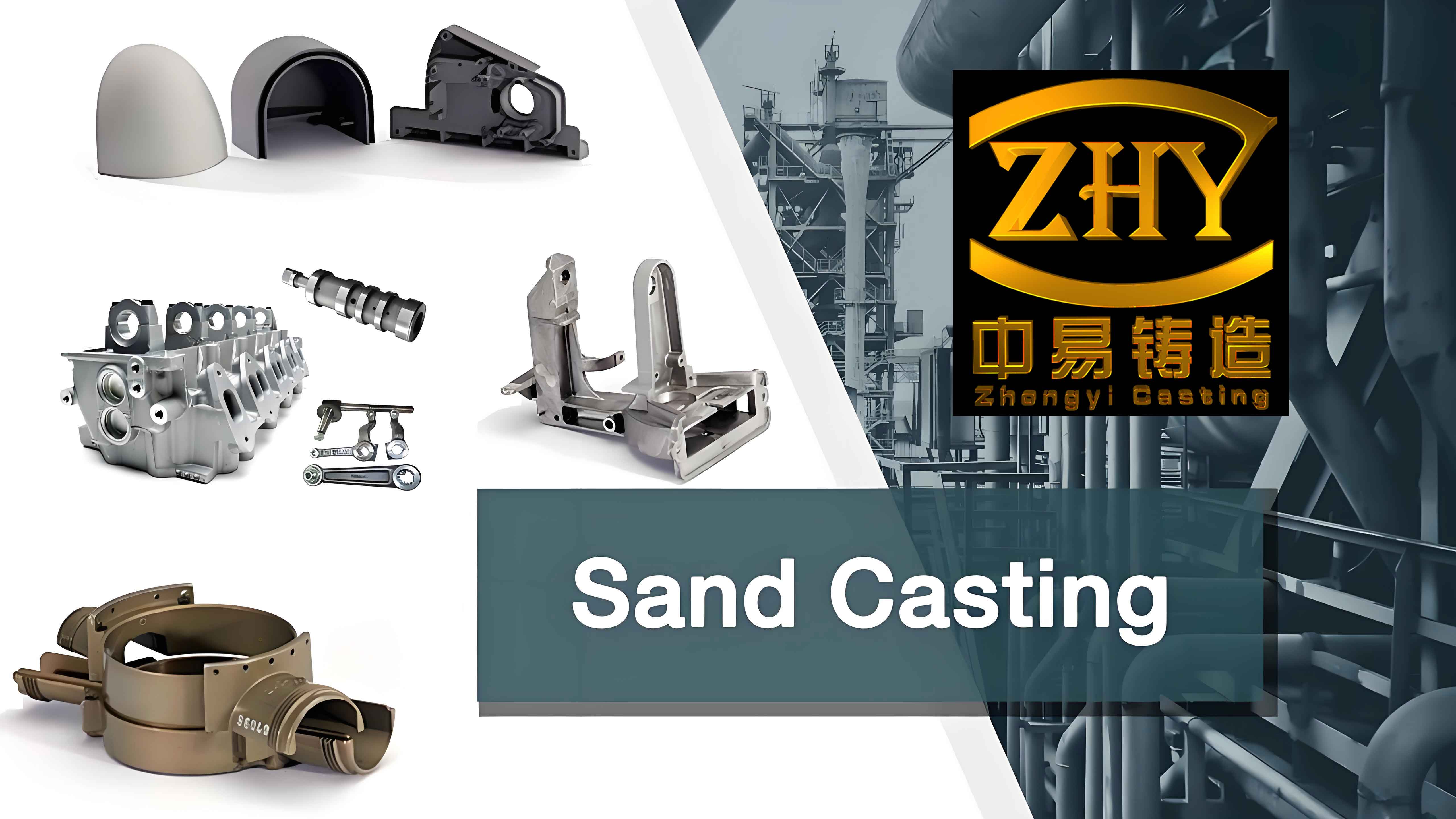
The Paramount Role of the Tooling Designer
The foundation of rapid and optimized tooling lies in the competency of the design team. A proficient tooling designer must possess a dual expertise: deep, experiential knowledge in mold and core box design, and a high level of proficiency in foundry process engineering. Experience enables intuitive problem-solving and efficient design structuring, which is indispensable for complex tooling like that for cylinder blocks or heads. Simultaneously, a strong grasp of casting process design allows for early and influential involvement in the part’s manufacturability review. A designer who can collaborate on or critique the initial casting layout can steer the process toward a solution that is inherently more tooling-friendly. An unoptimized casting process plan invariably creates significant downstream obstacles, complicating and prolonging the tooling design and proving phases. Furthermore, this core competency must be supported by skilled CNC programming personnel who can translate complex 3D models into efficient machining strategies, ensuring the design’s intent is realized accurately and swiftly in metal.
Optimizing the Casting Process for Tooling Efficiency
The intrinsic link between casting process design and tooling design cannot be overstated. Optimization for tooling begins with the casting process itself. Key areas include:
Core Design Optimization: For a cylinder block, strategic enlargement of core prints (e.g., on the crankcase and front/rear face cores) serves multiple purposes. It improves cavity venting, allows for rational placement of feeders (risers), and, crucially, reduces the number of machining interfaces and parting lines on the tooling. This simplification directly accelerates design and fabrication. The benefits for the final sand casting parts are equally significant, yielding better soundness and dimensional consistency.
Feeder System Optimization: Employing optimized feeder systems, such as edge feeders for cylinder blocks, enhances liquid metal feeding, slag trapping, and venting within the mold cavity. This optimization often reduces the number of feeders required in the cope (upper mold), thereby simplifying the upper pattern plate design and its associated tooling.
Core Machine Layout Strategy: The arrangement of cores within a multi-cavity core box, especially for horizontal parting machines, has profound implications. A traditional “inverted” layout for a crankcase core can complicate the placement of ejector pins and heater cartridge holes, leading to cumbersome design and manufacturing challenges. Adopting a “sequential” or aligned layout streamlines these elements, making the core box design more logical, easier to dimension, and faster to manufacture. This principle ensures that the tooling for producing cores for sand casting parts is inherently more efficient.
Leveraging 3D CAD and Simulation
The adoption of advanced 3D CAD software is no longer optional for rapid and optimized tooling design. It enables several critical functions:
- Direct Modeling from Process Data: The tooling can be modeled directly based on the “casting” 3D model (part geometry + all allowances), ensuring perfect synchronization between the process engineering data and the tooling geometry.
- Assembly Management and Interference Checking: Complex tooling assemblies with multiple inserts, ejectors, and cooling lines can be managed digitally. Comprehensive interference checks prevent costly mistakes before metal is cut.
- Integration with Flow and Solidification Simulation: While simulation primarily optimizes the casting process, its results directly inform tooling design. Locations predicted to have shrinkage porosity may necessitate a redesign of cooling channels in permanent molds or a revision of core print design in sand molds to improve feeding. The feedback loop between simulation and tooling design is vital for achieving high integrity in sand casting parts.
- Direct Generation of CNC Code: The 3D model serves as the sole source for generating machining paths, eliminating errors from manual 2D interpretation and drastically reducing programming time.
The relationship between simulation results (Y) and a required tooling modification parameter (X, e.g., local cooling intensity) can often be guided by empirical relationships, which can be framed conceptually as seeking an optimal condition:
$$ \frac{\partial Y}{\partial X} = 0 \text{ for Y = Defect Probability} $$
where minimizing the defect probability guides the tooling adjustment.
Rational Datum Establishment for Complex Tooling
Clear and consistent datum definition is the backbone of efficient design communication and manufacturing accuracy for intricate tooling. The following methodology has proven effective:
Coordinate Axis Notation: Using distinct letters to denote the primary casting axes avoids confusion, especially when different shrinkage allowances apply to each direction. For a cylinder block:
- L (Length): Axis parallel to the crankshaft bore centerline.
- H (Height): Axis parallel to the cylinder bore centerline.
- W (Width): Axis representing the pan rail or open-deck direction.
This unambiguous notation is used consistently across all process and tooling drawings.
Datum Plane Selection: Wherever possible, tooling datums should be inherited from the component’s product drawing datums. However, practical considerations are paramount:
| Rule | Description | Rationale |
|---|---|---|
| Non-Machined Surfaces | Avoid using non-machined casting surfaces as primary datums. | Their as-cast dimensional variance is too high for precise tooling alignment. |
| Functional Priority | Prefer datums on functionally critical features (e.g., main bore centerline, deck face). | Ensures tooling accuracy is concentrated on areas most critical to the performance of the final sand casting parts. |
| Manufacturability | The chosen datum must be easily and accurately identifiable and reproducible on the tooling block. | Facilitates precise setup during machining and inspection. |
| Single Plane Preference | For a given direction (e.g., Height), use one stable, continuous plane as the datum instead of multiple disconnected points. | Simplifies measurement and reduces stack-up errors. |
Efficient Dimensioning Through Size Chain Management
Moving away from redundant coordinate dimensioning to a disciplined size chain approach is crucial for clarity and error prevention. The key is to define closed loops of dimensions that originate from the established datums. This practice offers significant advantages:
- Clarity: It explicitly shows the functional relationship between features.
- Error Reduction: It prevents the common error of over-dimensioning (double-dimensioning a feature), which creates ambiguity for the machinist.
- Process Control: It aligns the tooling dimensions directly with the critical control points for the sand casting parts.
A simple example for a core box pocket depth involves a closed loop from the parting plane datum:
$$ D_{pocket} = D_{core\_print} + A_{allowance} $$
where all dimensions are part of a single, traceable chain back to the primary datum. For complex tooling, managing these chains is done within the CAD system, ensuring all related dimensions update correctly if a master parameter is changed.
| Dimensioning Type | Application in Tooling | Benefit |
|---|---|---|
| Base Datum Chains | Locating major features (e.g., bore centers, wall intersections) from L0, H0, W0 planes. | Establishes the fundamental geometry framework. |
| Local Feature Chains | Defining details like rib thickness, fillet radii, and insert pockets relative to their local parent feature. | Keeps detailed design modular and manageable. |
| Controlling critical fits between mold plates, ejector pin locations, and guide pin bores. | Ensures proper function and interchangeability of tooling components. |
Maximizing Standardization and Commonality
A cornerstone of rapid and cost-effective tooling development is the aggressive application of standardization. This occurs at multiple levels:
Standard Components: Utilizing commercial off-the-shelf (COTS) items wherever possible: guide pins/bushes, ejector pins, screws, locators, heater cartridges, and thermocouples. This reduces design time, ensures reliability, and simplifies maintenance.
In-house Standardized Units: Developing and reusing common sub-assemblies. For instance, standard ejector plates, shot plate assemblies for core boxes, or base frames for pattern plates can be designed once and adapted for multiple projects with minimal modification.
Commonality Across Similar Parts: This is where significant optimization is achieved. For families of sand casting parts (e.g., different cylinder block variants), the goal is to maximize the commonality of the tooling’s major components. A practical example is designing the upper ejector plate and water-cooled shot sleeve plate for a hotbox core machine to be identical for two different engine block core sets. When a third, similar block is developed, these major plates can often be reused with little to no change. This approach:
- Drastically reduces design effort (“optimizes” the design process).
- Cuts manufacturing cost and lead time for new tooling.
- Minimizes setup and changeover time on the foundry floor, increasing machine utilization.
The economic benefit can be modeled as a reduction in total project cost (C_total):
$$ C_{total} = C_{design} + C_{fabrication} + C_{setup} $$
where applying commonality directly reduces $$ C_{design} $$ and $$ C_{fabrication} $$, while also reducing the operational cost $$ C_{setup} $$ over the tooling’s lifecycle.
Advanced Manufacturing Considerations: The Case of Vibration Compaction
While the focus has been on the tooling for the mold and cores, the equipment used to process the sand around the tooling also requires optimization for high-quality sand casting parts. This is exemplified in EPC (Lost Foam) casting, where the vibration table used to compact dry sand around the foam cluster is critical. Traditional tables often have fixed, low vibration acceleration (e.g., 1-2 g), limiting their ability to achieve uniform compaction in complex clusters, leading to poor surface finish or dimensional issues in the final casting.
An optimized, rapidly adaptable system employs a Variable-Frequency, Microprocessor-Controlled 3D Vibration Table. Its advantages are direct analogs to the principles of optimized tooling design:
| Feature | Benefit | Analogy to Tooling Design |
|---|---|---|
| Variable Frequency Control (Acceleration 0.5-3g+) | Sand compaction can be tailored to the complexity and fragility of the specific foam cluster. | Like customizing tooling geometry for a specific sand casting part. |
| Microprocessor with Programmable Recipes | Different vibration programs (sequences of acceleration, time, and directional combinations) can be stored and selected. | Like having standardized, yet adaptable, design templates for families of parts. |
| Real-time Feedback via Sensors | Vibration parameters are monitored and displayed, ensuring process consistency and control. | Like the precision and verification inherent in CNC-machined tooling from a 3D model. |
| Rapid Start/Stop (Instant Braking) | Improves process cycle time and control. | Emphasizes the importance of speed and repeatability in the overall manufacturing system. |
The optimal vibration profile for a given cluster (V_opt) can be seen as a function of multiple parameters, seeking to maximize compaction density (ρ) while minimizing foam deformation (δ):
$$ V_{opt} = f(A_{x,y,z}(t), ω(t), t_{total}) \text{ such that } ρ \to max \text{ and } δ \to min $$
where A is acceleration in three axes, ω is frequency, and t is time. This level of process control complements precision tooling to ensure the mold cavity for the sand casting parts is perfectly formed.
Conclusion
The rapid and optimized design and manufacture of metal tooling for sand casting is a multifaceted engineering discipline. It extends far beyond mere drafting or machining. It requires a systems-thinking approach that begins with a highly competent design team intimately familiar with both tooling and process engineering. The journey mandates early optimization of the casting process itself, leveraging advanced 3D CAD and simulation tools to create a digital twin of the tooling before any metal is cut. Meticulous attention to rational datums and disciplined size chain dimensioning is essential for clarity and accuracy. The strategic application of standardization and commonality, especially across families of parts, delivers profound gains in speed and cost reduction. Finally, viewing the tooling as part of a larger system—including supporting equipment like advanced vibration tables—ensures that the potential locked in the precision tooling is fully realized in the production of flawless, high-performance sand casting parts. By adhering to these integrated principles, foundries and tooling shops can significantly shorten development cycles, reduce costs, and achieve a superior level of quality and consistency in their cast components.