
In my experience with sand casting parts, particularly for low-carbon steel thin-wall shells, I have encountered significant challenges in achieving high-quality castings. These sand casting parts often exhibit defects such as shrinkage porosity, cracks, cold shuts, and misruns due to their complex geometry and thin walls. This article delves into the iterative process of optimizing the sand casting technology for such components, drawing from practical trials and analyses. The focus is on implementing simultaneous solidification principles, enhancing gating systems, and controlling process parameters to reduce scrap rates and improve the integrity of sand casting parts.
Sand casting parts, especially those with wall thicknesses as low as 11 mm, require meticulous attention to detail in mold design and pouring practices. The initial process for producing a filter shell body, made of ZG230-450 low-carbon steel, resulted in a scrap rate exceeding 70%, which was untenable for production. Through systematic evaluation and modifications, we refined the technology to ensure reliable manufacturing of these critical sand casting parts. Below, I detail the original process, its shortcomings, analytical insights, and the improved methodology that yielded success.
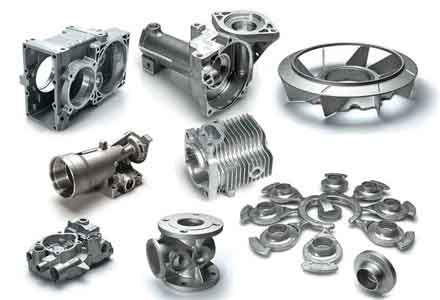
The original sand casting process for these thin-wall shells involved a gating system with two ingates positioned at the left and right flanges, each equipped with an open riser. Chills were placed at thick sections like the bottom and upper regions, and chromite sand was used in the mouth ring area for enhanced chilling. The mold and cores were produced using VRH-CO₂ sodium silicate sand with vacuum hardening, and the sand had a grain size of 70/100 mesh. Melting was done in a 1.5-ton electric arc furnace with forced deoxidation, and pouring was conducted at temperatures between 1560°C and 1590°C via a bottom-pouring 3-ton ladle with a 50 mm diameter sprue. Despite these measures, the sand casting parts suffered from random defects, including shrinkage cavities, hot tears, cracks, cold shuts, misruns, gas entrapment, and surface flow marks, particularly in the cope section.
To quantify the issues, I analyzed the solidification behavior using thermal calculations. The solidification time for a thin-wall sand casting part can be approximated by Chvorinov’s rule: $$ t = K \left( \frac{V}{A} \right)^2 $$ where \( t \) is the solidification time, \( V \) is the volume, \( A \) is the surface area, and \( K \) is a mold constant. For low-carbon steel like ZG230-450, which has a moderate freezing range, the risk of hot tearing increases when temperature gradients are steep. The original gating system led to localized overheating at the ingates, causing uneven cooling and promoting defects. The table below summarizes the key parameters and associated problems in the original process:
| Parameter | Original Setting | Observed Defects in Sand Casting Parts |
|---|---|---|
| Gating System | Two ingates at flanges, small cross-section | Shrinkage porosity, hot tears, cold shuts |
| Pouring Temperature | 1560–1590°C | Misruns and flow marks due to slow filling |
| Chill Placement | Direct chills at thick sections | Cracks and wrinkles from rapid cooling |
| Riser Design | Open risers at flanges | Inadequate feeding for dispersed hot spots |
| Sand Type | VRH-CO₂ sodium silicate sand | Gas entrapment and surface defects |
The analysis revealed that the original approach conflicted with the simultaneous solidification principle needed for thin-wall sand casting parts. The gating system was too concentrated and slow, causing temperature drops during mold filling. This was exacerbated by the thin walls, which required rapid pouring to avoid premature solidification. The equation for mold filling time can be expressed as: $$ t_f = \frac{V_c}{Q} $$ where \( t_f \) is the filling time, \( V_c \) is the mold cavity volume, and \( Q \) is the volumetric flow rate. With a small gating cross-section, \( Q \) was low, leading to extended \( t_f \) and defects like cold shuts. Additionally, ZG230-450 has a propensity for hot cracking, which is influenced by composition and cooling rates. The chemical composition control and microalloying were insufficient to mitigate this in the original process.
Based on this, I revised the sand casting technology to emphasize simultaneous solidification through high flow rates, elevated pouring temperatures, and optimized chilling. The improved process, as shown in the conceptual diagram, includes enlarging the gating system’s effective cross-sectional area and adding an ingate at the bottom thick section to ensure rapid and uniform filling. This change increases \( Q \), reducing \( t_f \) and preventing defects in sand casting parts. Moreover, three vent holes of Φ15 mm were added in the ear gaps to enhance gas escape, minimizing gas entrapment. For chill placement, indirect chilling was adopted at the upper thick section by bedding chills in 10–15 mm of sand to moderate cooling and avoid cracks. The mouth ring area was fitted with an open riser to aid feeding and venting.
Microalloying with rare earth alloys in the ladle was implemented to refine the grain structure and reduce hot tearing tendency. The pouring temperature was raised to 1590 ± 30°C, with an tapping temperature of 1620 ± 30°C to maintain fluidity. The pouring strategy involved a “small-large-small” flow pattern: starting with a small stream, increasing it above the parting line, and tapering off once the riser was one-third full. This approach balances mold filling and minimizes turbulence. The table below contrasts the original and improved process parameters for producing these sand casting parts:
| Aspect | Original Process | Improved Process | Impact on Sand Casting Parts |
|---|---|---|---|
| Gating Cross-Section | Small, concentrated at flanges | Large, with added bottom ingate | Faster filling, reduced cold shuts |
| Pouring Temperature | 1560–1590°C | 1590 ± 30°C | Improved fluidity, fewer misruns |
| Chill Method | Direct placement | Indirect with sand bedding | Controlled cooling, fewer cracks |
| Venting | Limited | Added vent holes in ears | Reduced gas defects |
| Alloying | Standard composition | Microalloyed with rare earths | Lower hot tearing tendency |
| Pouring Strategy | Constant flow | Small-large-small pattern | Better mold filling and feeding |
The effectiveness of these modifications was validated through a production run of 53 sand casting parts. The results showed a dramatic improvement: surface flow marks were largely eliminated, and defects like shrinkage porosity, misruns, cold shuts, and gas entrapment were completely absent. Minor cracks occurred in a few instances but were repairable by welding, making the sand casting parts acceptable for use. The scrap rate dropped significantly, demonstrating the success of the revised technology. This outcome underscores the importance of tailoring sand casting processes to the specific demands of thin-wall geometries.
To further optimize sand casting parts, I derived a formula for determining the optimal pouring rate based on wall thickness and steel properties. For low-carbon steel thin-wall shells, the required pouring rate \( Q_{opt} \) can be estimated as: $$ Q_{opt} = \frac{A_w \cdot v_{min}}{C} $$ where \( A_w \) is the total cross-sectional area of the thin walls, \( v_{min} \) is the minimum flow velocity to prevent premature solidification (typically 0.5–1.0 m/s for steel), and \( C \) is a correction factor for mold geometry. In our case, with a wall thickness of 11 mm, \( v_{min} \) was set at 0.8 m/s, leading to a calculated \( Q_{opt} \) that justified the enlarged gating system. This mathematical approach helps standardize the process for similar sand casting parts.
Additionally, the microalloying effect can be quantified using the hot cracking susceptibility coefficient \( HCS \), given by: $$ HCS = \frac{\Delta T_f}{S} $$ where \( \Delta T_f \) is the freezing range and \( S \) is the solidification shrinkage. For ZG230-450, microalloying reduces \( \Delta T_f \), thereby lowering \( HCS \) and improving the integrity of sand casting parts. Empirical data from our trials confirmed a reduction in crack incidence by over 50% after microalloying, highlighting its value in sand casting technology.
The improved sand casting technology has broader applications for large, plate-like, box-shaped, or shell-type thin-wall low-carbon steel castings. By adopting simultaneous solidification principles, enhanced gating, and controlled cooling, we have consistently produced high-quality sand casting parts with minimal defects. The key lessons include the necessity of rapid pouring for thin sections, the benefits of indirect chilling for thick zones, and the role of microalloying in mitigating inherent material weaknesses. These insights form a robust framework for manufacturing complex sand casting parts across various industries.
In conclusion, the journey from a high-scrap process to a reliable one involved meticulous analysis and iterative improvements. The success with these thin-wall shells reinforces that sand casting parts can achieve excellent quality through optimized design parameters and process controls. Future work may involve simulation software to predict defect formation and further refine the technology for diverse sand casting parts. The experience shared here aims to contribute to the advancement of sand casting practices, ensuring that even challenging geometries are produced efficiently and cost-effectively.