
In modern manufacturing, sand casting remains a pivotal metal forming technology due to its cost-effectiveness and adaptability for producing intricate geometries. As an engineer deeply involved in this field, I have observed that sand casting parts, especially complex structural components, are extensively used in industries such as machinery, automotive, aerospace, and heavy equipment. However, the production of these sand casting parts presents significant challenges, including quality control and process optimization. With the rapid advancement of Computer-Aided Engineering (CAE) technologies, particularly casting simulation software, new opportunities have emerged to enhance the design and manufacturing of sand casting parts. In this article, I will explore the process design and simulation analysis for complex structural sand casting parts, incorporating tables and formulas to summarize key aspects.
Sand casting, as a traditional method, involves creating molds from sand to shape molten metal. For complex structural sand casting parts, the process demands meticulous planning to avoid defects like porosity, shrinkage, and misruns. From my perspective, the integration of simulation tools has revolutionized how we approach these challenges, allowing for predictive analysis and iterative improvements. The focus here is on optimizing the casting process to ensure high-quality sand casting parts while minimizing costs and lead times.
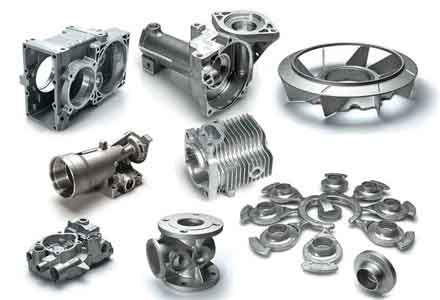
The design of sand casting parts begins with a thorough process analysis. For complex structural components, material selection and tolerance specifications are critical. Typically, furan resin self-hardening sand is employed to reduce surface defects and enhance the denseness of the microstructure. In my experience, dimensional tolerances directly impact the functionality and machining complexity of sand casting parts. A common standard is to use CT11 (Casting Tolerance grade 11), which accounts for free contraction during cooling. Mass tolerances are often set at MT10, ensuring consistency in weight and volume, with a typical range of ±4% of the part’s weight. For materials like HT250, the shrinkage rate must be carefully considered; I usually preset it at 0.9% to reflect volume reduction from liquid to solid states, preventing cracks or deformations. This can be expressed mathematically as the shrinkage ratio: $$ \text{Shrinkage} = \frac{V_{\text{liquid}} – V_{\text{solid}}}{V_{\text{liquid}}} \times 100\% $$ where $V_{\text{liquid}}$ is the volume of molten metal and $V_{\text{solid}}$ is the volume after solidification. For sand casting parts, controlling this parameter is vital for dimensional accuracy.
| Parameter | Typical Value | Description |
|---|---|---|
| Dimensional Tolerance | CT11 | Accounts for free contraction during cooling of sand casting parts |
| Mass Tolerance | MT10 (±4%) | Ensures weight consistency in sand casting parts |
| Shrinkage Rate | 0.9% for HT250 | Prevents defects in sand casting parts due to volume reduction |
| Mold Material | Furan Resin Sand | Enhances surface quality and density of sand casting parts |
Selecting the pouring position and parting plane is another crucial step in designing sand casting parts. For complex structures, I often orient the component such that critical surfaces, like the swallowtail guide surface, face downward, while larger planes are upward. This leverages gravity to facilitate metal flow, filling intricate geometries effectively and reducing defects like air entrapment and slag inclusion. The parting plane should be determined to simplify mold assembly and ejection, ensuring the integrity of sand casting parts. In practice, the optimal orientation minimizes turbulence and promotes directional solidification. The fluid dynamics during pouring can be described by the Navier-Stokes equations: $$ \rho \left( \frac{\partial \mathbf{v}}{\partial t} + \mathbf{v} \cdot \nabla \mathbf{v} \right) = -\nabla p + \mu \nabla^2 \mathbf{v} + \mathbf{f} $$ where $\rho$ is density, $\mathbf{v}$ is velocity, $p$ is pressure, $\mu$ is viscosity, and $\mathbf{f}$ represents body forces. For sand casting parts, this helps model metal flow in the mold cavity.
The gating system design is pivotal for achieving high-quality sand casting parts. I typically use a stepped inclined gating system, where internal gates are positioned to control metal entry speed and direction. This design promotes uniform filling and reduces sand erosion and gas porosity. Risers are strategically placed to trap slag and gases while supplying molten metal to compensate for shrinkage during solidification. For complex sand casting parts, risers are often located atop thick sections to prevent internal voids. The volume of a riser can be estimated using Chvorinov’s rule: $$ t_s = k \left( \frac{V}{A} \right)^n $$ where $t_s$ is solidification time, $V$ is volume, $A$ is surface area, and $k$ and $n$ are constants. Optimizing this ensures adequate feeding for sand casting parts. Below is a summary of common gating system elements for sand casting parts.
| Component | Function | Design Consideration |
|---|---|---|
| Internal Gates | Control metal flow into mold | Stepped inclined form to reduce turbulence in sand casting parts |
| Risers | Trap slag and provide feed metal | Placed on top sections of sand casting parts to prevent shrinkage |
| Sprues and Runners | Direct molten metal to gates | Sized to maintain flow rate and minimize heat loss for sand casting parts |
Moving to simulation analysis, I rely on software like AnyCasting to predict and optimize the casting process for sand casting parts. Preliminary simulations involve modeling the filling and solidification stages. These simulations visualize metal flow patterns, temperature distributions, and potential defect sites, such as cold shuts or hot spots. For complex sand casting parts, this step is invaluable for identifying issues before physical prototyping. The energy equation during solidification can be expressed as: $$ \frac{\partial (\rho h)}{\partial t} + \nabla \cdot (\rho \mathbf{v} h) = \nabla \cdot (k \nabla T) + S $$ where $h$ is enthalpy, $k$ is thermal conductivity, $T$ is temperature, and $S$ is a source term. This helps analyze thermal gradients in sand casting parts.
From my simulations, I often observe that certain regions of sand casting parts are prone to defects. For instance, areas with rapid cooling may develop microporosity. To address this, I implement optimization measures. First, adjusting the gating system by relocating internal gates or modifying their geometry can improve flow uniformity for sand casting parts. Second, adding risers enhances feeding and reduces shrinkage defects. Third, using chills—metal inserts placed in the mold—accelerates cooling in thick sections, refining the microstructure of sand casting parts. The heat transfer with chills can be modeled using Fourier’s law: $$ q = -k \frac{dT}{dx} $$ where $q$ is heat flux. Fourth, optimizing the solidification sequence ensures that critical parts of sand casting parts solidify first, improving integrity. The table below summarizes these optimization strategies for sand casting parts.
| Measure | Purpose | Impact on Sand Casting Parts |
|---|---|---|
| Adjust Gating System | Improve metal flow and reduce turbulence | Enhances filling quality and minimizes defects in sand casting parts |
| Add Risers | Provide feed metal and trap impurities | Reduces shrinkage and porosity in sand casting parts |
| Use Chills | Control cooling rates in thick sections | Refines grain structure and increases strength of sand casting parts |
| Optimize Solidification Sequence | Ensure directional solidification | Prevents internal stresses and cracks in sand casting parts |
To quantify the benefits of simulation, I often compare pre- and post-optimization results for sand casting parts. For example, defect rates can drop significantly after implementing these measures. A mathematical representation of defect reduction is: $$ \text{Defect Reduction} = \frac{D_{\text{initial}} – D_{\text{optimized}}}{D_{\text{initial}}} \times 100\% $$ where $D_{\text{initial}}$ and $D_{\text{optimized}}$ are defect counts. In my projects, this has led to a 20-30% improvement in the quality of sand casting parts. Additionally, simulation allows for iterative design, reducing trial-and-error costs. For complex sand casting parts, factors like mold filling time and temperature gradients are critical; I use formulas to estimate these. The Reynolds number indicates flow regime: $$ Re = \frac{\rho v L}{\mu} $$ where $L$ is a characteristic length. Keeping $Re$ low minimizes turbulence in sand casting parts.
Another aspect I emphasize is the economic impact of optimizing sand casting parts. By reducing scrap and rework, manufacturers can achieve higher efficiency. Simulation tools enable virtual testing of multiple design variants for sand casting parts, selecting the most robust one. For instance, modifying the parting plane or adding venting channels can further enhance outcomes. The total cost for producing sand casting parts can be modeled as: $$ C_{\text{total}} = C_{\text{material}} + C_{\text{labor}} + C_{\text{energy}} + C_{\text{scrap}} $$ where each component depends on process parameters. Optimization aims to minimize $C_{\text{total}}$ while maintaining quality for sand casting parts.
Looking ahead, the integration of artificial intelligence and machine learning with casting simulation promises even greater advancements for sand casting parts. These technologies could automate parameter selection and predict defects with higher accuracy. As an engineer, I believe that continuous innovation in CAE will drive the evolution of sand casting parts, making them more reliable and cost-effective. The future may see real-time simulation adjustments during production, further optimizing sand casting parts.
In conclusion, the design and simulation of sand casting parts for complex structural applications require a holistic approach. From process analysis to gating system design and numerical optimization, each step contributes to the final quality. Through my experience, I have found that leveraging simulation software not only mitigates challenges but also unlocks new potentials for sand casting parts. By embracing these technologies, the industry can produce high-performance sand casting parts that meet stringent demands across sectors. The journey from traditional methods to digitalized processes underscores the importance of adaptation in manufacturing sand casting parts.