
In the manufacturing of critical sand casting parts, such as copper crystallizers used in electroslag remelting, achieving high density, leak-tightness, and dimensional stability presents a significant challenge. Traditional gravity sand casting often falls short, resulting in parts prone to leakage, deformation, and premature failure. This research details a systematic investigation into an optimized low-pressure casting process using resin-bonded sand molds specifically for producing red copper crystallizers. The transition to this controlled filling method has demonstrably improved product quality, yield, and cost-effectiveness for these demanding sand casting parts.
Introduction and Problem Statement
The production of high-integrity copper alloy components via sand casting is notoriously difficult due to copper’s high thermal conductivity, significant oxidation tendency, and proneness to gas absorption. For a tubular crystallizer—a quintessential complex sand casting part—the internal cavity formed by sand cores must withstand the severe thermal and mechanical shock of molten copper while allowing gases to escape. Gravity pouring often leads to turbulent flow, promoting oxide inclusion and shrinkage porosity, which compromises the part’s pressure integrity. This study focuses on overcoming these limitations by integrating controlled low-pressure filling with precisely engineered resin sand systems. The core objective is to establish a reproducible process window that ensures sound metallurgical structure and defect-free geometry in the final sand casting parts.
Sand Mold Design and Core Manufacturing
The foundation of quality sand casting parts lies in the mold. For the crystallizer, two vertical sand cores (Core A and B) are designed to form the intricate internal passage. The demands on the core sand are extreme: it must possess sufficient green strength for handling, high dry strength to resist metal pressure and erosion, and adequate permeability to vent gases generated during casting.
Core Sand Requirements and Composition
A phenolic resin-bonded sand system was selected for its excellent combination of strength, collapsibility, and surface finish. The target properties for the core sand mixture are critical:
- Moisture Content: 8%
- Green Permeability: >70 mDa
- Green Compression Strength: 0.02 – 0.03 MPa
- Dry Tensile Strength: 0.1 – 0.2 MPa
The base silica sand must be clean and carefully graded. Its chemical and granulometric composition directly affects the final mold properties and the surface quality of the sand casting parts.
| Component | Al2O3 | Fe2O3 | CuO | MgO | TiO2 | K2O | Na2O | SiO2 | LOI* |
|---|---|---|---|---|---|---|---|---|---|
| wt.% | 3.45 | 0.45 | 0.10 | 0.07 | 0.07 | 1.95 | 0.75 | Balance | 0.45 |
*LOI: Loss on Ignition
| Sieve Mesh | 20 | 30 | 40 | 50 | 70 | 100 | 140 | 200 | 270 | Pan |
|---|---|---|---|---|---|---|---|---|---|---|
| wt.% Retained | 1.8 | 2.4 | 6.2 | 37.8 | 41.5 | 7.6 | 1.8 | 0.3 | 0.3 | 1.4 |
The phenolic resin, with a viscosity of approximately 690 cP, is diluted with alcohol (4-6% of sand weight) to ensure uniform coating on sand grains. The mixing sequence is vital: pre-dried sand (160-200°C for >2 hours) is charged into the mixer, followed by the gradual addition of the resin-alcohol solution. Mixing continues until the sand is uniformly coated and exhibits a “bread-crumb” consistency—cohesive but non-sticky. The final sand mixture formulation is summarized below:
$$ \text{Sand Mixture} = 93\%\,(\text{Base Sand}) + 2.3\%\,(\text{Phenolic Resin}) + 4.7\%\,(\text{Alcohol Diluent}) $$
Core Production, Drying, and Coating
Cores are compacted in core boxes with high uniformity to avoid soft spots. Adequate venting is incorporated. The curing/drying cycle is a critical thermal process that transforms the resin binder. The recommended cycle involves a rapid temperature rise through the resin’s plastic range (80-90°C) to a holding temperature of 180-200°C, followed by controlled cooling. Properly cured cores exhibit a uniform brown-yellow color.
After curing, cores are finished by smoothing rough surfaces and applying a refractory coating to improve surface finish and prevent metal penetration. A water-based graphite wash is typically used:
$$ \text{Coating Slurry} = 70\%\,(\text{Graphite Powder}) + 1\%\,(\text{Sodium Silicate}) + 29\%\,(\text{Water}) $$
The coated cores are then dried at 120-140°C for 2 hours before mold assembly.
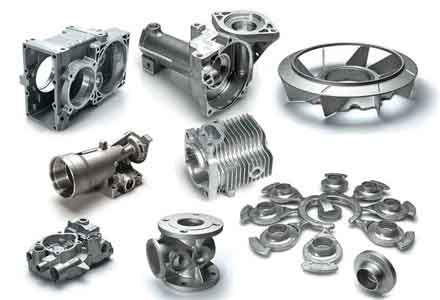
Red Copper Melting and Metallurgical Treatment
The melting and treatment of red copper is arguably the most sensitive phase in producing sound sand casting parts. Copper’s high affinity for oxygen and hydrogen requires a “fast melt” principle under a protective atmosphere to minimize gas pickup.
Melting Practice and Parameters
Melting is conducted in a medium-frequency induction furnace, which promotes efficient stirring and temperature uniformity. Key operational parameters are strictly controlled:
- Charge Materials: High-purity cathode copper is primary. Returns from previous sand casting parts are limited to less than 30% and must be clean and dry.
- Protective Cover: A layer of calcined charcoal (100-150 mm thick) is maintained throughout melting to create a reducing atmosphere.
- Melt Temperature: The target pouring temperature range is 1200-1220°C. Overheating significantly increases oxidation and hydrogen solubility.
The solubility of hydrogen in copper is a primary concern and is a function of temperature and atmospheric humidity. The equilibrium can be described by the relation:
$$ \text{Cu}_2\text{O} + \text{H}_2 \rightleftharpoons 2\text{Cu} + \text{H}_2\text{O}_{(g)} $$
Therefore, a dry melting environment is paramount to prevent the reaction from proceeding to the right, introducing hydrogen into the melt.
Deoxidation and Degassing
Despite protective measures, some oxygen pickup is inevitable. Oxygen in solution forms Cu2O, which can lead to embrittlement and contribute to porosity upon solidification. Phosphorus, in the form of phosphor-copper (P-Cu) master alloy, is added as a deoxidizer:
$$ 5\text{Cu}_2\text{O} + 2\text{P} \rightarrow 10\text{Cu} + \text{P}_2\text{O}_{5\,(g)} $$
The phosphorus pentoxide (P2O5) formed is a gas and escapes. The addition must be precise; excess phosphorus can form low-melting-point phosphides that weaken the casting. The optimal addition is below 0.05% P.
For the highest quality sand casting parts, vacuum degassing is employed after deoxidation. This process reduces the partial pressure of gases above the melt, forcing dissolved hydrogen and other gases to nucleate, rise, and escape, significantly reducing the risk of microporosity. The rate of gas removal can be modeled by Sieverts’ Law and kinetic principles:
$$ [H] = K_H \sqrt{p_{H_2}} $$
$$ \frac{d[H]}{dt} = -k A ([H] – [H]_e) $$
where $[H]$ is hydrogen concentration, $K_H$ is Sieverts’ constant, $p_{H_2}$ is partial pressure, $k$ is a mass transfer coefficient, $A$ is melt surface area, and $[H]_e$ is equilibrium concentration at the reduced pressure.
| Process Step | Parameter | Target Value / Specification |
|---|---|---|
| Melting | Furnace Type | Medium-Frequency Induction |
| Protection | Calcined Charcoal Cover (>100mm) | |
| Superheat Temperature | 1200 – 1220 °C | |
| Treatment | Deoxidizer | Phosphor-Copper (P-Cu) |
| Deoxidizer Addition | < 0.05% P (of melt weight) | |
| Degassing | Method | Vacuum Degassing (Preferred) |
Low-Pressure Casting Process Integration
The low-pressure casting process is the enabling technology that marries the prepared sand mold with the treated molten copper. In this setup, the mold is placed atop a sealed furnace containing the melt. A refractory riser tube (stalk) extends from the mold cavity down into the liquid metal.
Process Principle and Advantages for Sand Casting
Pressure, typically from compressed air or inert gas, is applied to the surface of the molten metal in the sealed furnace. This pressure forces metal up the riser tube and into the mold cavity in a smooth, laminar, and counter-gravity manner. The pressure is maintained until the casting solidifies. For complex sand casting parts like the crystallizer, this method offers distinct advantages:
- Controlled Fill: Turbulence is minimized, reducing oxide film formation and gas entrapment.
- Directional Solidification: The constant pressure feed promotes feeding from the bottom (the riser tube acts as a live feeder), reducing shrinkage defects in thick sections.
- Improved Yield: The gating system is extremely simple and efficient, with minimal metal in runners compared to gravity systems.
- Reduced Aspiration: The system is sealed, limiting contact between the melt stream and atmospheric air.
The governing equation for the process relates the applied pressure to the height of metal rise and metallostatic head:
$$ P_{applied} = \rho g h + \Delta P_{loss} $$
where $P_{applied}$ is the gauge pressure in the furnace, $\rho$ is the density of molten copper, $g$ is gravity, $h$ is the height from the bath surface to the top of the mold cavity, and $\Delta P_{loss}$ accounts for friction losses in the riser tube and mold channels.
Critical Process Controls and Precautions
Successful implementation for sand casting parts requires vigilant control:
- Riser Tube Integrity: The stalk must be perfectly dry and free of cracks. Regular hydrostatic testing is mandatory. A leaking stalk introduces high-pressure gas directly into the mold cavity, creating severe porosity.
- Fill Profile: The pressure ramp-up curve must be tuned to the mold’s permeability. A rate that is too fast can cause “core blow” or erosion, while too slow can lead to mist runs or cold shuts. The fill velocity $v_{fill}$ should be optimized based on the core gas evolution rate.
- Mold Preheating: Controlling mold temperature is essential to prevent surface defects like laps or cold shuts, especially on thin sections of the sand casting parts.
Defect Analysis and Quality Control for Sand Casting Parts
Even with optimized processes, sand casting parts can exhibit defects. A root-cause analysis is essential for continuous improvement.
| Defect Type | Potential Causes | Corrective Actions |
|---|---|---|
| Porosity (Gas) | Wet/damp cores, leaking riser tube, excessive melt hydrogen, insufficient deoxidation. | Ensure core drying/coating, test riser tube, implement vacuum degassing, control P-Cu addition. |
| Porosity (Shrinkage) | Inadequate feeding pressure, incorrect solidification profile. | Optimize pressure curve and holding time; consider chill placement in mold design. |
| Surface Scabs/Veins | High moisture in sand, rapid gas generation from core. | Control sand moisture (<8%), improve core permeability, apply adequate coating. |
| Inclusions (Oxide/Slag) | Turbulent filling, dirty melt, erosion of mold/coating. | Optimize low-pressure fill profile, maintain clean melt practice, use robust coatings. |
| Dimensional Inaccuracy | Core distortion during handling/baking, poor core box maintenance. | Use core drying plates/supports, maintain proper curing cycle, inspect tooling. |
Quantitative quality metrics can be established. For instance, the density of cast samples measured via Archimedes’ principle is a direct indicator of soundness. The percentage porosity $P$ can be estimated:
$$ P = \left(1 – \frac{\rho_{casting}}{\rho_{theoretical}}\right) \times 100\% $$
A target of $P < 1\%$ is typically required for pressure-tight sand casting parts like crystallizers.
Case Study and Performance Evaluation
The implementation of this resin sand low-pressure casting process for red copper crystallizers has shown marked improvement over the previous gravity sand casting method. The controlled fill and pressurized solidification have led to a denser grain structure, as evidenced by metallographic analysis. Pressure testing of the finished sand casting parts shows a dramatic increase in leak-tightness and burst pressure performance.
The economic benefits are also significant. The improved yield from the efficient gating system, combined with the higher product合格率, has reduced the cost per unit. Furthermore, the enhanced service life of the crystallizers due to improved density and reduced leakage translates to lower operational costs for the end-user.
| Performance Metric | Gravity Sand Casting | Low-Pressure Sand Casting (This Process) |
|---|---|---|
| Casting Yield | ~55-65% | ~85-90% |
| Leak Test Pass Rate | ~70% | > 95% |
| Typical Density | ~8.75 g/cm³ | > 8.90 g/cm³ |
| Grain Structure | Coarse, columnar | Finer, more equiaxed |
Conclusion and Future Outlook
This comprehensive research outlines a viable and superior manufacturing route for producing high-integrity red copper sand casting parts, specifically crystallizers, via low-pressure casting with resin-bonded sand molds. The synergistic optimization of three pillars—sand system design (phenolic resin sand with 8% moisture, >70 mDa permeability, 0.02-0.03 MPa green strength, cured at 180-200°C), metallurgical control(medium-frequency melting under charcoal at 1200-1220°C, <0.05% P deoxidation, vacuum degassing), and controlled filling (low-pressure counter-gravity process)—is essential for success.
Key precautions, such as ensuring riser tube integrity and controlling fill velocity relative to core permeability, are non-negotiable for preventing defects. The transition to this process has proven its value in enhancing the density, leak-tightness, mechanical performance, and cost-effectiveness of these critical sand casting parts.
Future work may focus on further refinement through advanced simulation of mold filling and solidification under pressure, the development of even more resistant resin systems for longer core life, and the integration of real-time process monitoring to close the control loop and ensure consistent quality in every batch of sand casting parts produced.